February 21, 2012
A Guide for the Perplexed is a short book by E. F. Schumacher, published in 1977. The title is a reference to Maimonides’s ‘The Guide for the Perplexed.’ Schumacher himself considered ‘A Guide for the Perplexed’ to be his most important achievement, although he was better known for his 1974 environmental economics bestseller ‘Small Is Beautiful,’ which made him a leading figure within the ecology movement.
His daughter wrote that her father handed her the book on his deathbed, five days before he died and he told her ‘this is what my life has been leading to.’ The book is a statement of the philosophical underpinnings that inform ‘Small is Beautiful.’
read more »
Posted in Language, Philosophy, Science |
1 Comment »
February 19, 2012
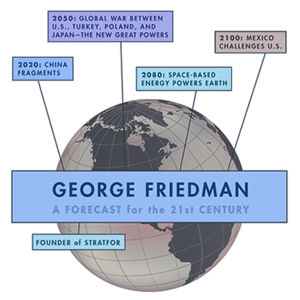
The Next 100 Years is a 2009 non-fiction book by American political scientist George Friedman. In the book, Friedman attempts to predict the major geopolitical events and trends of the 21st century. Friedman also speculates in the book on changes in technology and culture that may take place during this period. Friedman predicts a second American cold war with Russia in the 2010s. Friedman asserts that around 2015, the United States will become a close ally to some Eastern European countries, who will be dedicated to resisting Russian geopolitical threats during this period.
Friedman speculates in the book that the United States will probably become a close ally of Poland, the Czech Republic, Hungary, and Romania, who may form a military alliance during this period. According to Friedman’s prediction, around the year 2020, Russia will collapse, fragment, and disintegrate from the economic and political pressure of a second cold war.
read more »
Posted in Language, Politics, War |
Leave a Comment »
February 18, 2012

The Limits to Growth is a 1972 book modeling the consequences of a rapidly growing world population and finite resource supplies, commissioned by the Club of Rome (a global think tank) and firstly presented at the 3. St. Gallen Symposium (an annual conference taking place at the University of St. Gallen in Switzerland, aimed at fostering intergenerational and intercultural dialogue between the decision makers of today and tomorrow). The book echoes some of the concerns and predictions of the Reverend Thomas Robert Malthus in ‘An Essay on the Principle of Population’ (1798).
Its authors were Donella H. Meadows, Dennis L. Meadows, Jørgen Randers, and William W. Behrens III. The book used World3, a computer model to simulate the consequence of interactions between the Earth’s and human systems. Five variables were examined in the original model, on the assumptions that exponential growth accurately described their patterns of increase, and that the ability of technology to increase the availability of resources grows only linearly. These variables are: world population, industrialization, pollution, food production and resource depletion.
read more »
Posted in Politics, Technology, World |
Leave a Comment »
February 15, 2012

Robopocalypse is a science fiction book by Daniel H. Wilson published in 2011. The author has a PhD in robotics from Carnegie Mellon University, and many of the robots in the novel were inspired by real-world robotics research. The setting of the novel is the near future, where an increasingly robot-reliant society faces extinction after a computer scientist accidentally unleashes a sentient artificial intelligence named Archos.
After failed attempts at AI, Archos becomes self aware and immediately takes steps to stop his destruction. By infecting all devices that are chip controlled (cars, elevators, robots, etc.), Archos begins a systematic attack on mankind. Small bands of survivors find ways to circumvent the eradication. This is a story of those survivors in the months and days leading up to and following Archos’ self-awareness. Steven Spielberg has committed to direct a film based on the novel.
Posted in Art, Language, Technology |
Leave a Comment »
February 2, 2012
The Celestine Prophecy is a 1993 novel by James Redfield that discusses various psychological and spiritual ideas which are rooted in many ancient Eastern Traditions and New Age spirituality. The main character of the novel undertakes a journey to find and understand a series of nine spiritual insights on an ancient manuscript in Peru. The book is a first-person narrative of the narrator’s spiritual awakening as he goes through a transitional period of his life and begins to notice instances of synchronicity, which is the realization that coincidences may have deep meaning. Redfield has acknowledged that the work of Dr. Eric Berne, the developer of Transactional Analysis, and his 1964 bestseller ‘Games People Play’ as a major influence on his work. Specifically, the ‘games’ which Berne refers in his theories are tools used in an individual’s quest for energetic independence.
The novel has received some criticism, mostly from the literary community, who point out that the plot of the story is not well developed and serves only as a delivery tool for the author’s ideas about spirituality. Redfield has admitted that, even though he considers the book to be a novel, his intention was to write a story in the shape of a parable, a story meant to illustrate a point or teach a lesson. Critics point to Redfield’s heavy usage of subjective validation (a cognitive bias by which a person will consider a piece of information to be correct if it has any personal significance to them) and reification (making something real). Another point of criticism has been directed at the book’s attempt to explain important questions about life and human existence in an overly simplified fashion.
Posted in Language, Philosophy |
Leave a Comment »
February 2, 2012

‘Games People Play: The Psychology of Human Relationships’ is a 1964 bestselling book by psychiatrist Eric Berne. Since its publication it has sold more than five million copies. The book describes both functional and dysfunctional social interactions.
In the first half of the book, Berne introduces transactional analysis as a way of interpreting social interactions. He describes three roles or ego states, known as the Parent, the Adult, and the Child, and postulates that many negative behaviors can be traced to switching or confusion of these roles. The book uses casual, often humorous phrases such as ‘See What You Made Me Do,’ ‘Why Don’t You — Yes But,’ and ‘Ain’t It Awful’ as a way of briefly describing each game. In reality, the ‘winner’ of a mind game is the person that returns to the Adult ego-state first.
read more »
Posted in Games, Health, Language |
1 Comment »
January 30, 2012

The Yiddish Policemen’s Union is a 2007 novel by American author Michael Chabon. The novel is a detective story set in an alternative history version of the present day, based on the premise that during World War II, a temporary settlement for Jewish refugees was established in Sitka, Alaska, in 1941, and that the fledgling State of Israel was destroyed in 1948.
The novel is set in Sitka, which it depicts as a large, Yiddish-speaking metropolis. As a result, two million Jews are killed in the Holocaust, instead of the six million in reality.
read more »
Posted in Language, Philosophy, War |
Leave a Comment »
January 16, 2012


‘Slaughterhouse-Five, or The Children’s Crusade: A Duty-Dance with Death’ is a 1969 satirical novel by Kurt Vonnegut about World War II experiences and journeys through time of a soldier called Billy Pilgrim.
The work is also known under the lengthy title: ‘Slaughterhouse-Five, or The Children’s Crusade: A Duty Dance with Death, by Kurt Vonnegut, a Fourth-Generation German-American Now Living in Easy Circumstances on Cape Cod [and Smoking Too Much], Who, as an American Infantry Scout Hors de Combat, as a Prisoner of War, Witnessed the Fire Bombing of Dresden, Germany, ‘The Florence of the Elbe,’ a Long Time Ago, and Survived to Tell the Tale. This Is a Novel Somewhat in the Telegraphic Schizophrenic Manner of Tales of the Planet Tralfamadore, Where the Flying Saucers Come From. Peace.’
read more »
Posted in Humor, Language, War |
Leave a Comment »
January 12, 2012

‘The End of The Line: How Overfishing Is Changing the World And What We Eat is a 2004 book by journalist Charles Clover about overfishing. Clover, an environment editor of the ‘Daily Telegraph,’ describes how modern fishing is destroying ocean ecosystems. He concludes that current worldwide fish consumption is unsustainable. The book provides details about overfishing in many of the world’s critical ocean habitats, such as the New England fishing grounds, west African coastlines, the European North Atlantic fishing grounds, and the ocean around Japan.
The book was made into a documentary film of the same name in 2009, featuring Clover, along with tuna farmer turned whistle blower Roberto Mielgo, top scientists from around the world, indigenous fishermen and fisheries enforcement officials, who predict that seafood could potentially extinct in 2048. The film also challenges the notion that farmed fish is a solution. Furthermore, it advocates consumer responsibility to purchase sustainable seafood and for no-take zones in the sea to protect marine life.
Posted in Food, Money, Politics |
Leave a Comment »
January 11, 2012


‘Bobos in Paradise: The New Upper Class and How They Got There’ is a book by David Brooks, first published in 2000. The word ‘bobo,’ Brooks’s most famous coinage, is a portmanteau of the words bourgeois and bohemian.
The term is used by Brooks to describe the 1990s descendants of the yuppies. Often of the corporate upper class, they claim highly tolerant views of others, purchase expensive and exotic items, and believe American society to be meritocratic.
read more »
Posted in Language, Money, Politics |
Leave a Comment »
December 20, 2011
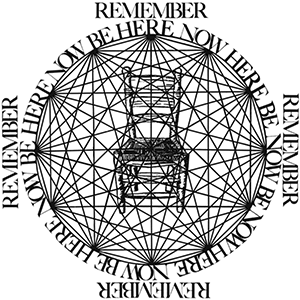
Be Here Now is a seminal 1971 book on spirituality, yoga and meditation by the Western born yogi and spiritual teacher Ram Dass. The title comes from a statement his guide, Bhagavan Das, made during Ram Dass’s journeys in India. The cover features a Mandala incorporating the title, a chair, radial lines, and the word ‘remember.’
It is one of the first guides, for those not born as Hindus, to becoming a yogi, by a person himself not born a Hindu. For its influence on the Hippie movement and subsequent spiritual movements, it has been described as a ‘countercultural bible.’ In addition to introducing its title phrase into common use, the book has influenced numerous other writers and yoga practitioners, including Wayne Dyer and Michael Crichton.
read more »
Posted in Language, Philosophy |
1 Comment »
December 11, 2011

The Millennium series (1954 – 2004) is a series of bestselling novels originally written in Swedish by the late Stieg Larsson. The primary characters in the series are Lisbeth Salander, an intelligent, eccentric woman in her twenties with a photographic memory and poor social skills, and Mikael Blomkvist, an investigative journalist and editor of a magazine called ‘Millennium.’ Blomkvist, the character, has a history similar to Larsson, the author.
There are three books in the series: ‘The Girl with the Dragon Tattoo,’ ‘The Girl Who Played with Fire,’ and ‘The Girl Who Kicked the Hornets’ Nest.’ When he died suddenly of a heart attack in 2004, Larsson left behind manuscripts of the completed but unpublished novels written as a series. He had written them for his own pleasure after returning home from his job in the evening, and had made no attempt to get them published until shortly before his death.
read more »
Posted in Art, Language |
Leave a Comment »


 The Daily Omnivore