March 7, 2017

The bicycle pedal is the part of a bicycle that the rider pushes with their foot to propel the bicycle. It provides the connection between the cyclist’s foot or shoe and the bike’s drivetrain. The rider pushes the pedals, which turns the crank arms, which power the gearset, which propels the wheels.
Pedals usually consist of a spindle that threads into the end of a crank arm and a body, on which the foot rests or is attached, that is free to rotate on bearings with respect to the spindle.
read more »
Posted in Games, Technology |
Leave a Comment »
February 6, 2017

In automobiles, a start-stop system automatically shuts down and restarts the internal combustion engine to reduce the amount of time the engine spends idling, thereby reducing fuel consumption and emissions. This is most advantageous for vehicles which spend significant amounts of time waiting at traffic lights or frequently come to a stop in traffic jams. Start-stop technology may become more common with more stringent government fuel economy and emissions regulations.
For non-electric vehicles, fuel economy gains from this technology are typically in the range of 3-10 percent. Hybrid/electric assist vehicles experience almost no delay in power from a stop, due to the instant availability of power from the traction battery to the electric motor(s). Gasoline powered cars on the other hand generally experience slight delays (albeit fractions of a second).
read more »
Posted in Technology |
Leave a Comment »
March 27, 2016

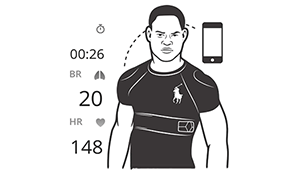
A conductive textile is a fabric which can conduct electricity. Conductive textiles can be made with metal strands woven into the construction of the textile. There is also an interest in semiconducting textiles, made by impregnating normal textiles with carbon- or metal-based powders.
Conductive fibers consist of a non-conductive or less conductive substrate, which is then either coated or embedded with electrically conductive elements, often carbon, nickel, copper, gold, silver, or titanium. Substrates typically include cotton, polyester, nylon, and stainless steel to high performance synthetic fibers like Kevlar and Zylon. Straddling the worlds of textiles and wires, conductive fibers are sold either by weight or length, and measured in gauge.
read more »
Posted in Technology |
Leave a Comment »
January 14, 2016

The ADE 651 is a fake bomb detector produced by ATSC (UK), which claimed that the device could effectively and accurately, from long range, detect the presence and location of various types of explosives, drugs, ivory, and other substances. The device has been sold to 20 countries in the Middle East and Asia, including Iraq and Afghanistan, for as much as US$60,000 each. The Iraqi government is said to have spent £52 million on the devices.
Investigations by the BBC and other organizations found that the device is little more than a ‘glorified dowsing rod’ with no ability to perform its claimed functions. In 2010, export of the device was banned by the British government and the managing director of ATSC was arrested on suspicion of fraud. The company was dissolved in 2013, and the founder, Jim McCormick, was sentenced to ten years’ imprisonment. Similar ‘bomb sniffing’ devices, which are still widely used, have also come under scrutiny in the wake of the revelations about the ADE 651.
read more »
Posted in Money, Technology, War |
Leave a Comment »
January 11, 2016
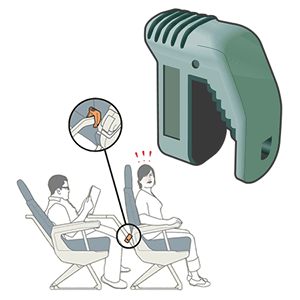
The Knee Defender is a device that an airplane passenger can place on the struts that support his/her drop-down airplane seat tray table to limit the extent to which the seat directly in front of him/her can be reclined. The device was invented by Ira Goldman, and it was first sold to the public in 2003.
In August 2014, on a United Airlines flight from Newark to Denver, an argument developed between a passenger using a Knee Defender and the passenger seated in front of him who wanted to recline. Ultimately the pilot diverted the flight to Chicago and both of those passengers were deplaned.
Posted in Money, Politics, Technology |
Leave a Comment »
December 16, 2015

The Dreamachine is a stroboscopic flicker device that produces visual stimuli. Artist Brion Gysin and William S. Burroughs’s ‘systems adviser’ Ian Sommerville created the device after reading neurophysiologist and robotician William Grey Walter’s 1963 book, ‘The Living Brain.’ In its original form, a Dreamachine is made from a cylinder with slits cut in the sides. The cylinder is placed on a turntable and rotated at 78 or 45 revolutions per minute. A light bulb is suspended in the center of the cylinder and the rotation speed allows the light to come out from the holes at a constant frequency of between 8 and 13 pulses per second.
This frequency range corresponds to alpha waves, electrical oscillations normally present in the human brain while relaxing. A Dreamachine is ‘viewed’ with the eyes closed: the pulsating light stimulates the optic nerve and thus alters the brain’s electrical oscillations. Users experience increasingly bright, complex patterns of color, which become shapes and symbols, swirling around. It is claimed that by using a Dreamachine one may enter a hypnagogic state (the dreamlike transfer from wakefulness to sleep). This experience may sometimes be quite intense, but to escape from it, one needs only to open one’s eyes.
Posted in Art, Technology |
Leave a Comment »
April 22, 2015


The StingRay is an IMSI-catcher (International Mobile Subscriber Identity), a controversial cellular phone surveillance device, manufactured by the Harris Corporation. Initially developed for the military and intelligence community, the StingRay and similar Harris devices are in widespread use by local and state law enforcement agencies across the US. Stingray has also become a generic name to describe these kinds of devices.
The StingRay has with both passive (digital analyzer) and active (cell site simulator) capabilities. When operating in active mode, the device mimics a wireless carrier cell tower in order to force all nearby mobile phones and other cellular data devices to connect to it. The devices can be mounted on cars, airplanes, helicopters, and unmanned aerial vehicles, as well as carried by hand. They are primarily used for surveillance, but can also conduct denial of service attacks (radio jamming).
read more »
Posted in Politics, Technology, War |
Leave a Comment »
April 16, 2015


‘The Mosquito’ or Mosquito alarm is an electronic device used to deter loitering by young people by emitting sound at high frequency that older people have lost the ability to hear. It has two frequency settings, one of approximately 17.4 kHz that can generally be heard only by young people, and another at 8 kHz that can be heard by most people. The maximum potential output sound pressure level is stated by the manufacturer to be 108 decibels. The range of the sound is 140 feet with the sound baffle, and 200 feet without.
The sound can typically only be heard by people below 25 years of age, as the ability to hear high frequencies deteriorates with age (a phenomenon known as presbycusis). Crafty teenagers turned the sounds into a mobile phone ringtone, which could not be heard by older teachers if the phone rang during a class. Mobile phone speakers are capable of producing frequencies above 20 kHz. This ringtone became informally known as ‘Teen Buzz’ or ‘the Mosquito ringtone’ and has since been sold commercially.
read more »
Posted in Health, Politics, Technology |
Leave a Comment »
December 5, 2014

Body worn video (BWV), including what is referred to as a body worn camera (BWC), is a video recording system that is typically utilized by law enforcement to record their interactions with the public, gather video evidence at crime scenes, and has been known to increase both officer and citizen accountability. BWCs are notable because their placement, often on the front of a shirt, provides for first person perspective and ultimately a more complete chain of evidence.
Body worn video was first adopted by British police in 2005, appearing in the form of small-scale tests conducted by the Devon and Cornwall Police. In 2006, the first significant deployments of BWV were undertaken as part of the Domestic Violence Enforcement Campaign. The basic command units equipped with the head cameras recorded everything that happened during an incident from the time of arrival which led to the ‘preservation of good-quality first disclosure evidence from the victim.’
read more »
Posted in Politics, Technology, World |
1 Comment »
May 19, 2014

A cyanometer [sahy-uh-nom-i-ter] (from cyan and -meter) is an instrument for measuring ‘blueness,’ specifically the color intensity of blue sky. It is attributed to Swiss aristocrat, physicist, and mountaineer Horace-Bénédict de Saussure. It consists of squares of paper dyed in graduated shades of blue and arranged in a color circle or square that can be held up and compared to the color of the sky. The blueness of the atmosphere indicates transparency and the amount of water vapor.
De Saussure is credited with inventing a cyanometer in 1789 with 53 sections, ranging from white to varying shades of blue (dyed with Prussian blue) and then to black, arranged in a circle; he used the device to measure the color of the sky at Geneva, Chamonix and Mont Blanc. He concluded, correctly, that the color of the sky was dependent on the amount of suspended particles in the atmosphere.
Posted in Science, Technology, World |
Leave a Comment »
May 15, 2014


Roller skates are devices worn on the feet to enable the wearer to roll along on wheels. The first roller skates were converted ice skates, with two inline wheels instead of a blade. Later the ‘quad’ style of roller skate became more popular consisting of four wheels arranged in the same configuration as a typical car.
The first patented roller skate was introduced in 1760 by Belgian inventor John Joseph Merlin. His inline two wheelers were hard to steer and hard to stop because they didn’t have brakes, and as such were not very popular. In 1863, James Plimpton from Massachusetts invented the ‘rocking’ skate using a four wheel configuration for stability, and independent axles that turned by pressing to one side when the skater wanted to create an edge. It was a vast improvement on the Merlin design and was easier to use, driving the huge popularity roller skating through the 1930s. The Plimpton skate is still used today.
read more »
Posted in Games, Technology |
1 Comment »
May 4, 2014

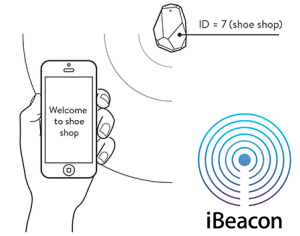
An indoor positioning system (IPS, or micromapping) is a network of devices that wirelessly locate objects or people inside a building. Instead of using satellites like GPS, it relies on nearby anchors (nodes with a known position), which either actively locate tags or provide ambient location or environmental context for devices. Systems use optical, radio, or even acoustic technologies. Integration of data from several navigation systems with different physical principles can increase the accuracy and robustness of the overall solution.
Wireless transmission indoors faces several obstacles including signal attenuation caused by construction materials, multiple reflections at surfaces causing transmission errors, and interference with devices that emit or receive electromagnetic waves (e.g. microwave ovens, cellular phones). Error correction systems that don’t rely on wireless signals are being used to compensate for these shortcomings, such as Inertial Measurement Units (reports velocity, orientation, and gravitational forces using accelerometers and gyroscopes), and Simultaneous Localization and Mapping (SLAM, a technique used by robots and autonomous vehicles to build up a map within an unknown environment).
Posted in Money, Technology |
Leave a Comment »


 The Daily Omnivore