May 3, 2014
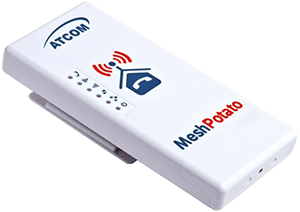

A wireless mesh network (WMN) is a communications network made up of radio nodes organized in a mesh topology; each node is connected to one or more other nodes, and information is passed from one node to the next, until it reaches its target destination. As in most cases, there is more than one path from one node to another, making such networks very reliable. When a node fails, the data will simply take another route. This type of infrastructure can be decentralized (with no central server) or centrally managed (with a central server).
The coverage area of the radio nodes working as a single network is sometimes called a mesh cloud. Mesh architecture sustains signal strength by breaking long distances into a series of shorter hops. Intermediate nodes not only boost the signal, but cooperatively make forwarding decisions based on their knowledge of the network, i.e. perform routing. Such an architecture may with careful design provide high bandwidth, spectral efficiency, and economic advantage over the coverage area.
read more »
Posted in Money, Technology |
Leave a Comment »
April 7, 2014
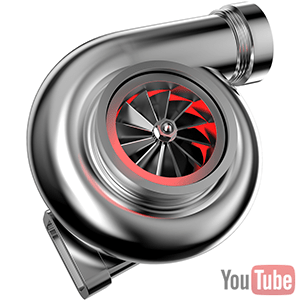
A supercharger is an air compressor that increases the pressure or density of air supplied to an internal combustion engine. This gives each intake cycle of the engine more oxygen, letting it burn more fuel and do more work, thus increasing power. Power for the supercharger can be provided mechanically by means of a belt, gear, shaft, or chain connected to the engine’s crankshaft. When power is provided by a turbine powered by exhaust gas, a supercharger is known as a turbosupercharger – typically referred to simply as a turbocharger or just turbo.
Supercharging increases power, but turbocharging can improve power and efficiency. Turbochargers were known as turbosuperchargers when all forced induction devices were classified as superchargers. Currently, the term supercharger is only applied to mechanically driven forced induction devices.
read more »
Posted in Technology |
Leave a Comment »
February 15, 2014

A holodeck, in the fictional ‘Star Trek’ universe, is a simulated reality facility located on starships and starbases. It first appeared in the pilot episode of ‘Star Trek: The Next Generation,’ ‘Encounter at Farpoint,’ although a conceptually similar ‘recreation room’ appeared in an episode of ‘Star Trek: the Animated Series’ in 1974. In the timeline of the fictional universe, the concept of a holodeck was first shown to humans in an encounter with the Xyrillian race in the ‘Star Trek: Enterprise’ episode ‘Unexpected.’
The holodeck is depicted as an enclosed room in which objects and people are simulated by a combination of transported matter, replicated matter, tractor beams, and shaped force fields onto which holographic images are projected. Most holodeck programs shown in the episodes run in first person ‘subjective mode,’ in which the user actively interacts with the program and its characters. The user may also employ third-person ‘objective mode,’ in which he or she is unseen by program characters.
read more »
Posted in Art, Technology |
1 Comment »
August 17, 2013
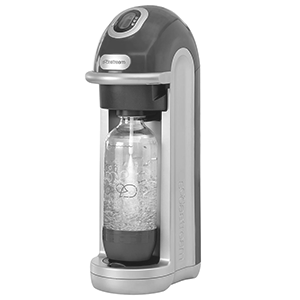
SodaStream is the maker of a consumer home carbonation product based on the principles of making a carbonated drink as originally invented by Guy Gilbey in 1903. The device allows users to take ordinary tap water and carbonate it to create soda water (or carbonated water) to drink.
With the addition of one of over 100 different types of concentrated syrups and flavorings produced by Sodastream, owners can create carbonated beverages. After the company merged with Soda-Club in 1998, it was relaunched with an emphasis on healthier drinks. It went public on the Nasdaq stock exchange in 2010. Sodastream is currently headquartered in Israel, and has 13 production plants.
read more »
Posted in Food, Money |
Leave a Comment »
August 6, 2013

Sentinels are a fictional variety of mutant-hunting robots, appearing in the Marvel Comics Universe. Created by Stan Lee and Jack Kirby, they first appeared in ‘The X-Men’ (vol. 1) #14 (1965). Sentinels are programmed to locate mutants and capture or kill them using energy weapons and restraining devices; they are capable of flight, and can detect mutants at long range. Several groups of the robots have been created or led by a single, massive Sentinel, called Master Mold.
Because Sentinels are designed to hunt mutants (who often represent the protagonists of Marvel stories) they are usually employed as supervillains or as the tools of other villains. While many are capable of tactical thought, only a handful are self-aware. In the ‘Days of Future Past’ story, which takes place in an alternate future, the ‘Omega Sentinels’ have advanced technologically and become the de facto rulers of the United States. The most powerful among them is Nimrod.
Posted in Art |
Leave a Comment »
May 6, 2013

An espresso machine is used to produce a traditional Italian espresso, a concentrated coffee drink served in small portions (shots). The first machine for making espresso was built and patented by Angelo Moriondo, who demonstrated a working example at the Turin General Exposition of 1884. He patented his invention that year as a: ‘New steam machinery for the economic and instantaneous confection of coffee beverage.’
In 1901, Luigi Bezzera of Milan patented improvements to the machine; four years later, the patent was bought by Desiderio Pavoni who founded the ‘La Pavoni’ company and began to produce the machine commercially (one a day) in a small Milanese workshop.
read more »
Posted in Food, Technology |
Leave a Comment »
April 21, 2013
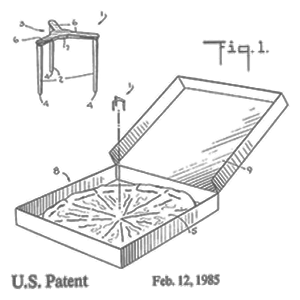
A pizza saver is a device used to prevent the top of a food container, such as a pizza box or cake box, from collapsing in at the center and touching the food inside. A pizza saver is made of plastic and has three (sometimes four) legs. They are often white, and the common practice is to place one pizza saver in the center of the pizza before the box lid is closed for delivery.
The pizza saver is not re-used and is thrown away or recycled by the patron, although some people have found secondary uses for them such as egg holders when turned upside down.
read more »
Posted in Food, Money, Technology |
Leave a Comment »
March 14, 2013
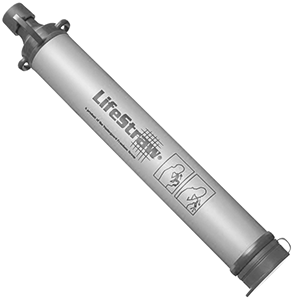
LifeStraw is a water filter that filters a maximum of 1000 liters of water, enough for one person for one year that was designed by the Swiss-based Vestergaard Frandsen for people living in developing nations and for distribution in humanitarian crisis. LifeStraw Family filters a maximum of 18,000 liters of water, providing safe drinking water for a family of five for up to three years. The LifeStraw is a plastic tube 310 millimeters long and 30 millimeters in diameter, Water that is drawn up through the straw first passes through hollow fibers that filter water particles down to 0.2 microns across, using only physical filtration methods and no chemicals.
LifeStraw has been generally praised for its effective and instant method of bacteria and protozoa removal and consumer acceptability. Paul Hetherington, of the charity WaterAid, has criticized the LifeStraw for being too expensive for the target market. He also points to other important problems linked with accessing the water in developing countries, which wait to be solved, but are not addressed by the device itself.
Posted in Food, Health, Technology |
Leave a Comment »
February 27, 2013
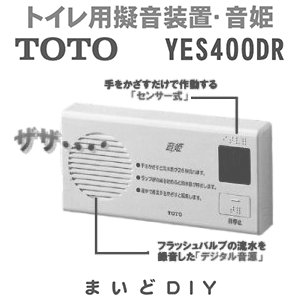
Many Japanese women are embarrassed at the thought of being heard by others during urination. To cover the sound of bodily functions, many women used to flush public toilets continuously while using them, wasting a large amount of water in the process.
As education campaigns did not stop this practice, a device was introduced in the 1980s that, after activation, produces the sound of flushing water without the need for actual flushing. A Toto brand name commonly found is the ‘Otohime’ (literally ‘Sound Princess‘ also homophone with a legendary goddess Otohime). This device is now routinely placed in most new public women’s rooms, and many older public women’s rooms have been upgraded.
Posted in Money, Technology |
Leave a Comment »
February 11, 2013
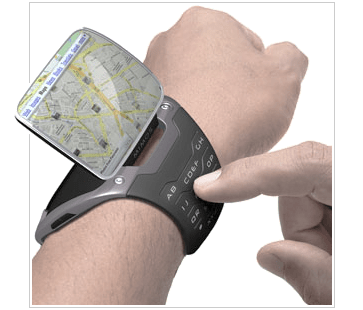
Wearable computers, also known as body-borne computers, are miniature electronic devices that are worn by the bearer under, with or on top of clothing. One of the main advantages of a wearable computer is consistency: there is a constant interaction between the computer and user, i.e. there is no need to turn the device on or off. Another useful feature is the ability to multi-task: it is not necessary to stop what you are doing to use the device; it is augmented into all other actions.
These devices can be incorporated by the user to act like a prosthetic. It can therefore be an extension of the user’s mind and/or body. Many issues are common to the wearables as with mobile computing, ambient intelligence (electronic environments that are sensitive and responsive to the presence of people), and ubiquitous computing research communities, including power management and heat dissipation, software architectures, wireless and personal area networks.
read more »
Posted in Technology |
Leave a Comment »
February 2, 2013
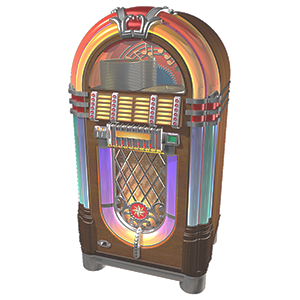
A jukebox is a partially automated music-playing device, usually a coin-operated machine, that will play a patron’s selection from self-contained media. The classic jukebox has buttons with letters and numbers on them that, when entered in combination, are used to play a specific selection. Coin-operated music boxes and player pianos were the first forms of automated coin-operated musical devices.
These instruments used paper rolls, metal disks, or metal cylinders to play a musical selection on the instrument, or instruments, enclosed within the device. In the 1890s these devices were joined by machines which used actual recordings instead of physical instruments. In 1890, Louis Glass and William S. Arnold invented the nickel-in-the-slot phonograph, the first of which was an Edison Class M Electric Phonograph retrofitted with a device patented under the name of Coin Actuated Attachment for Phonograph. The music was heard via one of four listening tubes.
read more »
Posted in Money, Technology |
Leave a Comment »
December 15, 2012
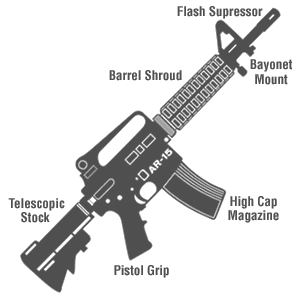
Assault weapon is a political term, often used by gun control advocates, typically referring to firearms ‘designed for rapidly firing at human targets from close range,’ sometimes described as military-style features useful in combat. The term was most notably used in the language of the now-expired Public Safety and Recreational Firearms Use Protection Act of 1994, more commonly known as the Federal Assault Weapons Ban, which expired in 2004.
The federal assault weapons ban specifically prohibited 19 guns considered to be assault weapons. These were all semi-automatic firearms, meaning that they can eject spent shell casings and chamber the next round without additional human action, but (as opposed to automatic firearms) only one round is fired per pull of the trigger.
read more »
Posted in Death, Politics, War |
1 Comment »



 The Daily Omnivore