January 11, 2012
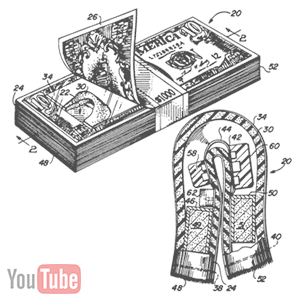
A dye pack is a radio-controlled incendiary device used by some banks to preemptively foil a bank robbery by causing stolen cash to be permanently marked with red dye shortly after a robbery. In most cases, a dye pack is placed in a hollowed-out space within a stack of banknotes, usually $10 or $20 bills. This stack of bills looks and feels similar to a real one, with new technology allowing for the manufacturing of flexible dye packs which are difficult to detect by handling the stack.
When the marked stack of bills is not used, it is stored next to a magnetic plate near a bank cashier, in standby or safe mode, ready to be handed over to a potential robber by a bank employee. When it is removed from the magnetic plate, the pack is armed, and once it leaves the building and passes through the door frame, a radio transmitter located at the door will trigger a timer (typically 10 seconds), after which the dye pack will explode and release an aerosol (sometimes tear gas, but usually of Disperse Red 9, a dye used in smoke grenades) intended to permanently stain and destroy the stolen money and mark the robber’s body with a bright red color. The chemical reaction causing the explosion of the pack and the release of the dye creates high temperatures of about 400 degrees Fahrenheit which further discourages a criminal from touching the pack or removing it from the bag or getaway vehicle.
Posted in Money, Politics, Technology |
Leave a Comment »
January 1, 2012
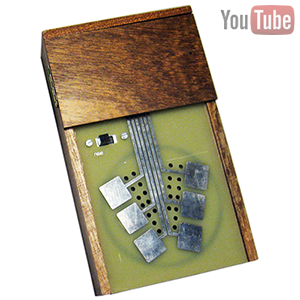
The Kraakdoos (or Cracklebox) is a custom made battery-powered noise-making device. It is a small box with six metal contacts on top, which when pressed by fingers generate all manner of unusual sounds and tones. The human body becomes a part of the circuit and determines the range of sounds possible — different people will generate different results.
The concept was first conceived by Michel Waisvisz and Geert Hamelberg in the 1960s, and developed further in the 1970s when Waisvisz joined STEIM (STudio for Electro Instrumental Music) in Amsterdam. The kraakdoos is a simple device, based around a single operational amplifier (one of the earliest models to be produced) and a few transistors, and can be easily constructed by someone with a basic understanding of electronics.
Posted in Art, Technology |
Leave a Comment »
December 6, 2011

The Tweel (a portmanteau of tire and wheel) is an experimental tire design developed by the French tire company Michelin. The tire uses no air, and therefore cannot burst or become flat.
Instead, the Tweel’s hub connects to flexible polyurethane spokes which are used to support an outer rim and assume the shock-absorbing role of a traditional tire’s pneumatic properties.
read more »
Posted in Money, Technology |
Leave a Comment »
November 29, 2011
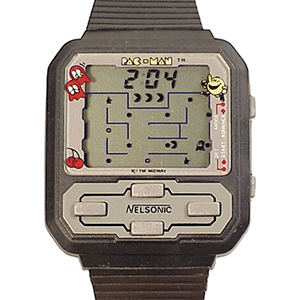
Nelsonic Industries is the name of an electronics manufacturing and development company that operated from Queens, NY in the early 1980s and throughout the 1990s when it was acquired by the watch-manufacturer, M.Z. Berger. Nelsonic produced numerous toy-themed wrist-watches during their existence, often targeting younger audiences with likenesses of characters from popular franchises such as Barbie, the Ghostbusters, and Mario. Nelsonic became notable during the early mid-1980s for being the first electronics company in the United States to produce game-watches (multi-purpose electronic devices capable of functioning as both a time-piece and as a typically electronic game). Today the original Nelsonic Game Watch line has entered the secondary market and individual Game Watches have become highly sought-after collectibles that often fetch high prices on online auction websites.
Throughout its existence, Nelsonic produced pop-culture-themed wrist-watches for children and young adults. The chronograph digital watches, typically made of molded plastic, invariably featured an alarm and utilized LCD display-screens to display the time for their wearers. In time the company began manufacturing multi-purpose units that used the LCD screen to combine time display functions with simple video game functions. These simple video games were variations on the theme of the Calculator watch.
Posted in Games, Money, Technology |
Leave a Comment »
November 21, 2011
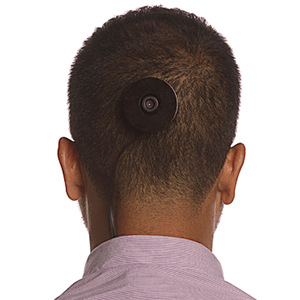
In body modification, an implant is a device placed under the human skin for decorative purposes. Such implants may be subdermal (beneath the skin) or transdermal (partially below and partially above the skin). In the context of body modification, some may consider injections of silicone and other substances a type of implant as well. Some types of implants may be performed by doctors or other medical professionals, while others are performed by body modification artists.
Examples include collarbone piercing, deep chest piercing, eyeball implants, flesh stapling, genital beading, magnetic implants, and scrotal implants. A clavicle or collarbone piercing is a very deep piercing that passes beneath the collarbone, and therefore enters the body cavity. These are highly prone to rejection as the collarbone placement is a high movement area.
read more »
Posted in Art, Health, Technology |
Leave a Comment »
November 10, 2011
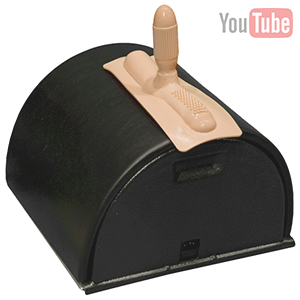
A Sybian is a masturbation device designed for use by females, developed by dance instructor Dave Lampert in the 1980s. It consists of a saddle-like seat containing an electric motor connected to a rod that protrudes from a hole in the center. Various attachments can be added to the rod, which vibrates, rotates and may also stimulate the clitoris externally. The intensity of the movements produced can be increased or decreased through a control box attached to the Sybian’s base. Lampert and his team initially called the device Master Better, shortened to ‘MB’ for about four years before selecting a new name for it. The prefix syb was derived from Sybaris, an Ancient Greek city in southern Italy which was associated with luxurious living.
Generally, the user of the Sybian straddles the machine and inserts the attachment vaginally. The vibration and rotation can be controlled by separate on/off switches and two rotary controls. The Sybian is sold with up to four phallus-shaped washable attachments of varying sizes made from synthetic rubber. Although the Sybian has been featured in many pornographic video productions since the early 2000s, primarily on the Internet, the device came to prominence on The Howard Stern Show since the show’s arrival on Sirius Satellite Radio. Howard Stern was given a Sybian as a birthday gift in 2006 and it remains in the Stern studio for use by willing guests.
Posted in Sex, Technology |
1 Comment »
November 10, 2011

A sex machine, also known as a fucking machine, is a mechanical device used to simulate human sexual intercourse. It is a more sophisticated version of the vibrator. These devices may be associated with, but are not limited to, BDSM play. Devices can be penetrative or extractive. A typical penetrative machine works by the transfer of rotational or reciprocating force from a motor to a directional motion on a shaft, which is tipped by a dildo. A hand-held modified reciprocating saw device is sometimes called a ‘fucksaw’ and a hand-held modified drill motor rotating device is sometimes called a ‘drilldo.’ An extractive device works like a milking machine and can be attached to the penis, breast, or other body part.
Modern automated erotic stimulation device differ from vibrators because they penetrate as well as throb. Mass attention is drawn to them on the Internet, while appetite for these powerful appliances has induced the establishment and growth of manufacturers to satisfy rising demand. Recently a new generation of these devices has hit the market under the name teledildonics. These devices are sometimes used as part of auto-erotic or partnered bondage play. Today the sex machines on the market include vacuum pumps, instruments that deliver calibrated electrical shocks to the nipples and genitals, and lifesize inflatable male and female dolls with penetrable and vibrating orifices.
Posted in Sex, Technology |
Leave a Comment »
November 9, 2011
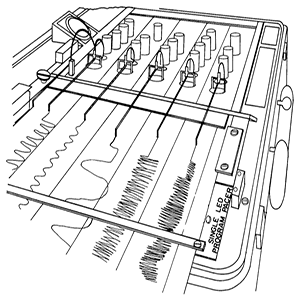
A polygraph (popularly referred to as a lie detector) measures and records several physiological indices such as blood pressure, pulse, respiration, and skin conductivity while the subject is asked and answers a series of questions. The belief is that deceptive answers will produce physiological responses that can be differentiated from those associated with non-deceptive answers. The polygraph was invented in 1921 by John Augustus Larson, a medical student at the University of California at Berkeley and a police officer of the Berkeley Police Department.
Many members of the scientific community consider polygraphy to be pseudoscience. Nonetheless, in some countries polygraphs are used as an interrogation tool with criminal suspects or candidates for sensitive public or private sector employment. US federal government agencies such as the FBI and the CIA and many police departments use polygraph examinations to interrogate suspects and screen new employees. Within the US federal government, a polygraph examination is also referred to as a psychophysiological detection of deception (PDD) examination.
read more »
Posted in Politics, Technology |
1 Comment »
October 13, 2011

A mind machine (or psychowalkman) uses pulsing rhythmic sound and/or flashing light to alter the brainwave frequency of the user. Mind machines are said to induce deep states of relaxation, concentration, and in some cases altered states of consciousness that have been compared to those obtained from meditation and shamanic rituals. The process applied by these machines is also known as brainwave synchronization or entrainment. Mind machines typically consist of a control unit, a pair of headphones and/or strobe light goggles. The unit controls the sessions and drives the LEDs in the goggles. Professionally, they are usually referred to as Auditory Visual Stimulation devices (AVS). Sessions will typically aim at directing the average brainwave frequency from a high level to a lower level by ramping down in several sequences. Target frequencies typically correspond to delta (1-3 hertz), theta (4–7 Hz), alpha (8–12 Hz) or beta brain waves (13–40 Hz), and can be adjusted by the user based on the desired effects.
There have been a number of claims regarding binaural beats (auditory processing artifacts or apparent sounds), among them that they may help people memorize and learn, stop smoking, tackle erectile dysfunction and improve athletic performance. However, research into binaural beats is very limited. No conclusive studies have been released to support marketing claims for binaural beat systems. Mind machines are often used together with biofeedback or neurofeedback equipment in order to adjust the frequency on the fly. Modern mind machines can connect to the Internet to update the software and download new sessions. When sessions are used in conjunction with meditation, neurofeedback, etc. the effect can be amplified. Rapidly flashing lights may be dangerous for people with photosensitive epilepsy or other nervous disorders. It is thought that one out of 10,000 adults will experience a seizure while viewing such a device; about twice as many children will have a similar ill effect.
Posted in Health, Money, Technology |
Leave a Comment »
October 10, 2011

A beer koozie [koe-zie] is a fabric or foam device that is designed to insulate a beverage can or bottle. It began as a marketing tool. The primary use of a beer koozie is to keep one’s hand warm while keeping the beer cold.
A secondary use of a beer koozie is to easily identify one’s beverage from another. Many different companies have used the koozie as a promotional giveaway because it is not only inexpensive to manufacture, but its frequent use is more likely to bring the company’s name to a household presence. Originally this logo or image was screen-printed on a round foam cylinder with a foam base (generally a hole is provided in the base to alleviate creation of a vacuum). A koozie can be made from many materials like neoprene, polyester or open cell foam.
Posted in Food, Language, Money |
1 Comment »
September 21, 2011

The Leslie speaker is a specially constructed amplifier/loudspeaker used to create special audio effects using the Doppler effect. Named after its inventor, Donald Leslie, it is particularly associated with the Hammond organ, an electric organ invented by Laurens Hammond in 1934 and manufactured by the Hammond Organ Company. While the Hammond organ was originally sold to churches as a lower-cost alternative to the wind-driven pipe organ, in the 1960s and 1970s it became a standard keyboard instrument for jazz, blues, rock music, church and gospel music. The Hammond/Leslie combination has become an element in many genres of music. Both brands are currently owned by Suzuki Musical Instrument Corporation.
Unlike a high fidelity loudspeaker, the Leslie is specifically designed, via reproduction of the Doppler effect, to alter or modify sound. Although there have been many variations over the years, the classic Leslie speaker consists of two driver units – a treble unit with horns, and a bass unit, and a crossover that divided the frequencies between the horn and the woofer. The key feature is that both the horns (in reality one working horn with a dummy to counter-balance it) and a sound baffle or scoop for the bass are electrically rotated to create ‘Doppler effect based’ vibrato, tremolo and chorus effects. The rotating elements can be stopped, switched between slow (chorale) and fast (tremolo), or transitioned between the two settings.
read more »
Posted in Art, Money, Technology |
Leave a Comment »
August 17, 2011
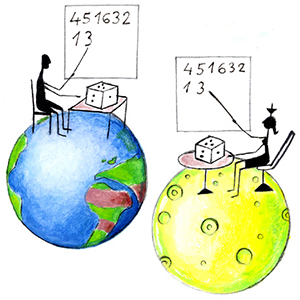
An ansible [an-si-bull] is a hypothetical machine capable of instantaneous or superluminal (faster-than-light) communication. They are used as science fiction plot devices and in thought experiments of theoretical physics. The word was coined by American author Ursula K. Le Guin in her 1966 novel, ‘Rocannon’s World.’
She derived the name from ‘answerable,’ as the device would allow its users to receive answers to their messages in a reasonable amount of time, even over interstellar distances. The name of the device has since been borrowed by authors such as Orson Scott Card and Vernor Vinge; similar devices are present in the works of numerous others, such as Frank Herbert. One ansible-like device which predates Le Guin’s is the ‘Dirac communicator’ in James Blish’s 1954 short story ‘Beep.’ The device received the sum of all transmitted messages in universal space-time, in a single pulse, so that demultiplexing yielded information about the past, present, and future.
read more »
Posted in Language, Science, Technology |
Leave a Comment »


 The Daily Omnivore