March 4, 2011

Pixel art is a form of digital art, created through the use of raster graphics software, where images are edited on the pixel level. Graphics in most old (or relatively limited) computer and video games, graphing calculator games, and many mobile phone games are mostly pixel art. The term pixel art was first published by Adele Goldberg and Robert Flegal of Xerox Palo Alto Research Center in 1982. The concept, however, goes back about 10 years before that, for example in Richard Shoup’s SuperPaint system in 1972, also at Xerox PARC.
Some traditional art forms, such as counted-thread embroidery (including cross-stitch) and some kinds of mosaic and beadwork, are very similar to pixel art. These art forms construct pictures out of small colored units similar to the pixels of modern digital computing. Image filters (such as blurring or alpha-blending) or tools with automatic anti-aliasing are considered not valid tools for pixel art, as such tools calculate new pixel values automatically, contrasting with the precise manual arrangement of pixels associated with pixel art.
Posted in Art, Technology |
2 Comments »
March 2, 2011


ASCII art is a graphic design technique that uses computers for presentation and consists of pictures pieced together from the 95 printable (from a total of 128) characters of the ASCII compliant character sets. The term is also loosely used to refer to text based art in general. ASCII art can be created with any text editor, and is often used with free-form languages. Most examples of ASCII art require a fixed-width font (non-proportional fonts, as on a traditional typewriter) such as Courier for presentation.
Among the oldest known examples of ASCII art are the creations by computer-art pioneer Kenneth Knowlton from around 1966, who was working for Bell Labs at the time. One of the main reasons ASCII art was born was because early printers often lacked graphics ability and thus characters were used in place of graphic marks. Also, to mark divisions between different print jobs from different users, bulk printers often used ASCII art to print large banners, making the division easier to spot so that the results could be more easily separated by a computer operator or clerk. ASCII art was also used in early e-mail when images could not be embedded.
Posted in Art, Language, Technology |
Leave a Comment »
February 23, 2011

Britpop is a subgenre of alternative rock that that grew out of the British independent music scene of the early 1990s and was characterized by bands influenced by British guitar pop music of the 1960s and 1970s. The movement developed as a reaction against various musical and cultural trends in the late 1980s and early 1990s, particularly the grunge phenomenon from the United States. In the wake of the musical invasion into the UK of American grunge bands, new British groups such as Suede and Blur launched the movement by positioning themselves as opposing musical forces, referencing British guitar music of the past and writing about uniquely British topics and concerns.
These bands were soon joined by others including Oasis, Pulp, Supergrass, Sleeper and Elastica. Britpop groups brought British alternative rock into the mainstream and formed the backbone of a larger British cultural movement called ‘Cool Britannia.’ Although its more popular bands were able to spread their commercial success overseas, especially to the United States, the movement largely fell apart by the end of the decade.
Posted in Art, Language, World |
Leave a Comment »
February 16, 2011

Anti-art is a loosely-used term applied to an array of concepts and attitudes that reject prior definitions of art and question art in general. The term is associated with the Dada movement and is generally accepted as attributable to Marcel Duchamp pre-World War I, when he began to use found objects as art. Anti-art has become generally accepted by fine art collectors, although some still reject Duchamp’s readymades as art, for instance the Stuckist group of artists who are ‘anti-anti-art.’
Posted in Art, Language, Politics |
Leave a Comment »
February 14, 2011

The New Wave (French: La Nouvelle Vague) was a term coined by critics for a group of French filmmakers of the late 1950s and 1960s, influenced by Italian Neorealism (a style of film characterized by stories set amongst the poor and working class) and classical Hollywood cinema. French New Wave was a product of the social and political upheavals of the era; radical experiments with editing, visual style and narrative broke with the conservative paradigm.
read more »
Posted in Art, Language, World |
Leave a Comment »
February 10, 2011
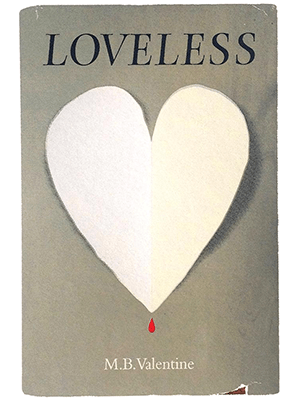
Shoegazing (also known as shoegaze) is a subgenre of alternative rock that emerged from the United Kingdom in the late 1980s. It lasted there until the mid 1990s, with a critical zenith reached in 1990 and 1991. The British music press named this style shoegazing because the musicians in these bands stood relatively still during live performances in a detached, introspective, non-confrontational state, hence the idea that they were gazing at their shoes. The heavy use of effects pedals also contributed to the image of performers looking down at their feet (shoegazing) during concerts.
Posted in Art, Language |
Leave a Comment »
February 7, 2011

A guy-cry film is the masculine version of the chick flick genre, a film that addresses a male audience, but has strong emotional material. Sports films are important to the guy-cry genre, but sports action is not necessarily essential to qualify a film as a genuine guy-cry. Some notable sports films that could be defined as guy-cry would be Field of Dreams, Rudy, Brian’s Song, and The Wrestler.
While it may seem that ‘guy-cry’ is a neologism, it is a genre that has been around for many years and is now receiving critical attention from scholars and trade publications. Early popular guy-cry films date back to the early 1970s with films such as Five Easy Pieces and One Flew Over the Cuckoo’s Nest. Important themes to the guy-cry genre are concepts of brotherhood, sacrifice, loyalty, and family.
Posted in Art, Humor, Language |
Leave a Comment »
January 31, 2011

Spaghetti Western, also known as Italo-western, is a nickname for a broad sub-genre of Western film that emerged in the mid-1960s, so named because most were produced and directed by Italians. The typical team was made up of an Italian director, Italo-Spanish technical staff, and a cast of Italian and Spanish actors, sometimes a fading Hollywood star and sometimes a rising one like the young Clint Eastwood in three of Sergio Leone’s films. The films were typically shot in inexpensive locales resembling the American Southwest, primarily the Andalusia region of Spain, Almería, Sardinia, and Abruzzo.
Because of the desert setting and the readily available low-cost southern Spanish or southern Italian extras, typical themes in spaghetti westerns include the Mexican Revolution, Mexican bandits, and the border region shared by Mexico and the United States. Originally, spaghetti westerns were characterized by their production in the Italian language, low budgets, and a recognizable highly fluid and minimalist cinematography which eschewed many of the conventions of earlier Westerns. This was partly intentional and partly the context of a different cultural background.
Posted in Art, Money, World |
Leave a Comment »
January 24, 2011

Electro (short for either electro-funk or electro-boogie) is a genre of electronic music directly influenced by the use of funk samples, Roland TR-808 synthesizers, and Moog keytars. Records in the genre typically feature drum machines and heavy electronic sounding deprived of vocals in general, although if present, they are delivered in a deadpan manner, often through an electronic distortion such as vocoding.
This is the main distinction of electro from previously prominent late-1970s genres such as disco and boogie, in which electronic sound was only part of the instrumentation rather than basis of the whole song. In 1982, Bronx based producer Afrika Bambaataa released the seminal track ‘Planet Rock,’ which contained elements of Kraftwerk’s Trans-Europe Express and ‘Numbers’ (from Kraftwerk’s Computer World album). ‘Planet Rock’ is widely regarded as a turning point in the electro genre.
read more »
Posted in Art, Language |
Leave a Comment »
January 20, 2011

A mashup is a song or composition created by blending two or more pre-recorded songs, usually by overlaying the vocal track of one song seamlessly over the instrumental track of another. To the extent that such works are ‘transformative’ of original content, they may find protection from copyright claims under the ‘fair use’ doctrine. Though the term ‘bastard pop’ first became popular in 2001, the practice of assembling new songs from purloined elements of other tracks stretches back to the beginnings of recorded music.
If one extends the definition beyond the realm of pop, precursors can be found in Musique concrète, as well as the classical practice of (re-)arranging traditional folk material and the jazz tradition of reinterpreting standards. In addition, many elements of bastard pop culture have antecedents in hip hop and the DIY ethic of punk.
Posted in Art, Money, Politics |
Leave a Comment »
January 6, 2011

Googie architecture (also known as populuxe or Doo-Wop) is a form of modern architecture and a subdivision of futurist architecture, influenced by car culture and the Space and Atomic Ages. Originating in Southern California during the late 1940s and continuing approximately into the mid-1960s, the types of buildings that were most frequently designed in a Googie style were motels, coffee houses and bowling alleys.
The school later became widely-known as part of the Mid-Century modern style, and some of those more notable variations represent elements of the populuxe aesthetic, as in Eero Saarinen’s TWA Flight Center. Features of Googie include upswept roofs, curvaceous, geometric shapes, and bold use of glass, steel and neon. Googie was also characterized by Space Age designs that depict motion, such as boomerangs, flying saucers, atoms and parabolas, and free-form designs such as ‘soft’ parallelograms and the ubiquitous artist’s palette motif.
Posted in Art |
Leave a Comment »
December 24, 2010

Dubstep is a genre of electronic dance music, originating from Croydon, UK. Its overall sound has been described as ‘tightly coiled productions with overwhelming bass lines and reverberant drum patterns, clipped samples, and occasional vocals.’
The earliest dubstep releases, which date back to 1998, were darker, more experimental, instrumental dub remixes of 2-step garage tracks attempting to incorporate the funky elements of breakbeat, or the dark elements of drum and bass into 2-step.
read more »
Posted in Art, Technology |
1 Comment »


 The Daily Omnivore