June 4, 2012

Retro-futurism is a trend in the creative arts showing the influence of depictions of the future produced prior to about 1960. Characterized by a blend of old-fashioned ‘retro’ styles with futuristic technology, retro-futurism explores the themes of tension between past and future, and between the alienating and empowering effects of technology.
Primarily reflected in artistic creations and modified technologies that realize the imagined artifacts of its parallel reality, retro-futurism has also manifested in the worlds of fashion, architecture, literature and film.
read more »
Posted in Art, Language, Technology |
2 Comments »
June 4, 2012
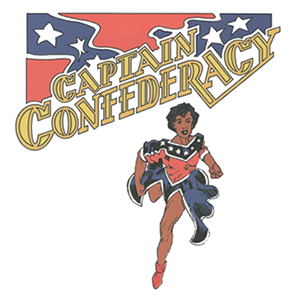
Alternate history is a genre of fiction consisting of stories that are set in worlds in which history has diverged from the actual history of the world. It can be variously seen as a sub-genre of literary fiction, science fiction, and historical fiction.
Since the 1950s, this type of fiction has to a large extent merged with science fictional tropes involving cross-time travel between alternate histories or psychic awareness of the existence of ‘our’ universe by the people in another; or ordinary voyaging uptime (into the past) or downtime (into the future) that results in history splitting into two or more time-lines. Cross-time, time-splitting, and alternate history themes have become so closely interwoven that it is impossible to discuss them fully apart from one another.
read more »
Posted in Art, Language, War |
Leave a Comment »
May 30, 2012


A government simulation is a game that attempts to simulate the government and politics of all or part of a nation. These games may include geopolitical situations (involving the formation and execution of foreign policy), the creation of domestic political policies, or the simulation of political campaigns. They differ from the genre of classical wargames due to their discouragement or abstraction of military or action elements.
Beyond entertainment, these games have practical applications in training and education of government personnel. Training simulations have been created for subjects such as managing law enforcement policies (such as racial profiling), the simulation of a military officer’s career, and hospital responses to emergency situations.
read more »
Posted in Education, Games, Politics |
Leave a Comment »
May 26, 2012
Glitch is a term used to describe a style of electronic music that emerged in the mid to late 1990s that adheres to an ‘aesthetic of failure,’ where the deliberate use of glitch based audio media, and other sonic artifacts, is a central concern.
Sources of glitch sound material are usually malfunctioning or abused audio recording devices or digital technology, such as CD skipping, electric hum, digital or analog distortion, bit rate reduction, hardware noise, computer bugs, crashes, vinyl record hiss or scratches, and system errors. In a ‘Computer Music Journal’ article published in 2000, composer and writer Kim Cascone classifies glitch as a sub-genre of electronica, and used the term ‘post-digital’ to describe the glitch aesthetic.
read more »
Posted in Art, Language, Technology |
Leave a Comment »
May 21, 2012

Magic realism is an aesthetic style or genre of fiction in which magical elements blend with the real world. The story explains these magical elements as real occurrences, presented in a straightforward manner that places the ‘real’ and the ‘fantastic’ in the same stream of thought. One example, is when a character in the story continues to be alive beyond the normal length of life and this is subtly depicted by the character being present throughout many generations.
On the surface the story has no clear magical attributes and everything is conveyed in a real setting, but such a character breaks the rules of our real world. The author may give precise details of the real world such as the date of birth of a reference character and the army recruitment age, but such facts help to define an age for the fantastic character of the story that would turn out to be an abnormal occurrence like someone living for two hundred years.
read more »
Posted in Art, Language, World |
Leave a Comment »
May 15, 2012

Acid Western is a sub-genre of the Western film that emerged in the 1960s and 1970s that combines the metaphorical ambitions of top-shelf Westerns, like ‘Shane’ and ‘The Searchers,’ with the excesses of the Spaghetti Westerns and the outlook of the counter-culture. Acid Westerns subvert many of the conventions of earlier Westerns to ‘conjure up a crazed version of autodestructive white America at its most solipsistic, hankering after its own lost origins.’
The term ‘Acid Western’ was coined in 1996 by Jonathan Rosenbaum in a review of Jim Jarmusch’s film, ‘Dead Man.’ Rosenbaum expanded upon the idea in a subsequent interview with Jarmusch for ‘Cineaste’ and later in the book ‘Dead Man’ from BFI Modern Classics. In the book, Rosenbaum illuminates several aspects of this re-revisionist Western: from Neil Young’s haunting score to the role of tobacco, to Johnny Depp’s performance, to the film’s place in the acid-Western genre.
read more »
Posted in Art, Drugs |
Leave a Comment »
April 22, 2012

Liquid funk is a sub-genre of drum and bass. While it uses similar basslines and bar layouts to other styles, it contains fewer bar-oriented samples and more instrumental layers (both synthesized and natural), harmonies, and ambience, producing a calmer atmosphere directed at both home listeners and nightclub audiences. In 2000, Fabio began championing a new form of drum and bass he called ‘Liquid funk,’ with a compilation release of the same name on his Creative Source label. This was characterized by influences from disco and house music, and widespread use of vocals. Although slow to catch on at first, the style grew massively in popularity around 2003–2004, and by 2005 it was established as one of the biggest-selling subgenres in drum and bass.
Liquid funk is very similar to intelligent drum and bass, but has subtle differences. Liquid funk has stronger influences from soca, latin, disco, jazz, and funk music, while IDB creates a calmer yet more synthetic sound, using smooth synth lines and samples in place of the organic element achieved by use of real instruments.
Posted in Art |
Leave a Comment »
April 19, 2012

Pornochanchada is the name given to a genre of sexploitation films produced in Brazil that was popular during the 1970s and early 1980s. ‘Chanchada’ means ‘light comedy’ in Portuguese. Pornochanchadas were initially produced in the downtown quarter of São Paulo that was nicknamed ‘Boca do Lixo’ (‘Garbage Mouth’). The genre was usually seen as a part of low-budget films produced there, collectively known as ‘cinema da Boca’ (‘movies of the Mouth’).
Later, there were productions in Rio de Janeiro as well, creating the sub-genre ‘pornochanchada carioca,’ which was to find its star in Alba Valeria during early 1980s. Pornochanchadas were generally in line with ‘sex comedies’ produced in other countries, but also featured some Brazilian peculiarities. Despite conditions of strict censorship in Brazil in that era, the state-run film company Embrafilme was generally eager to support pornochanchadas, because they weren’t critical of the government and did not depict explicit sex.
Posted in Humor, Sex, World |
Leave a Comment »
April 19, 2012

Bavarian porn is a campy subgenre of softcore porn comedy. The apogee of the genre was the late 1960s and early 1970s, corresponding roughly to the chancellorship of Willy Brandt, but these films continued to be produced up to about 1980. Today they live on as staples of late night European cable and satellite channels. Alois Brummer was the producer of many of these films.
After some ‘Report’ movies (so-called documentaries about ‘German housewifes’ or ‘schools for girls,’ as a reaction to serious documentaries about sexual items in Germany’s late 60’s) he became produced a number of films, which were mainly situated in the Alpes. Director Franz Marischka got the idea from a newspaper article in 1972 about wealthy female tourists in Bavaria who tried to seduce local young men or the landlord of the inn where they were staying.
read more »
Posted in Humor, Sex, World |
Leave a Comment »
April 17, 2012
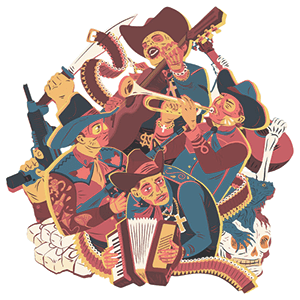
A Narcocorrido [nahr-koh-koh-ree-doh] is a type of Mexican music and song tradition which evolved out of the norteño folk corrido tradition. This type of music is heard on both sides of the US–Mexican border. It uses a danceable, accordion-based polka as a rhythmic base. The first corridos that focus on drug smugglers dated to the 1930s. Early corridos (non-narco) go back as far to the Mexican Revolution of 1910, telling the stories of revolutionary fighters. Music critics have compared narcocorrido music to gangster rap. Narcocorrido lyrics refer to particular events and include real dates and places. The lyrics tend to speak approvingly of illegal criminal activities such as murder, torture, racketeering, extortion, drug smuggling, illegal immigration, and sometimes political protest due to government corruption.
Among the earliest exponents of narcocorrido music were Los Alegres de Teran, who recorded many. In the 1980s, Rosalino ‘Chalino’ Sánchez contributed to narcocorridos. Known throughout Mexico as ‘l Pelavacas’ (‘Cow Skin Peeler’), El Indio (The Indian, from his corrido ‘El Indio Sánchez’), and ‘Mi Compa’ (‘My Friend’), Sánchez was a Mexican immigrant living in Los Angeles. He then began distributing his music. His lyrics composed of heartbreak, revolution, and socioeconomic issues. Soon he was selling mass copies. Chalino Sánchez was murdered in 1992 after a concert in Culiacán. In death, he became a legend and one of the most influential musicians to emerge from California, he was known throughout Mexico and United States as El Rey del Corrido (‘The King of the Corrido’).
Posted in Art, Death, Drugs |
1 Comment »
April 17, 2012

Madchester was a music scene that developed in Manchester, England, towards the end of the 1980s and into the early 1990s. The music that emerged from the scene mixed alternative rock, psychedelic rock, and dance music. Artists associated with the scene included New Order, The Stone Roses, Happy Mondays, Inspiral Carpets, Northside, 808 State, James, The Charlatans, The Fall, and A Guy Called Gerald.
At that time, the Haçienda nightclub was a major catalyst for the distinctive musical ethos in the city that was called the ‘Second Summer of Love.’ The music scene in Manchester immediately before the Madchester era had been dominated by bands such as The Smiths, New Order, The Fall and James. These bands were to become a significant influence on the Madchester scene.
read more »
Posted in Art, Drugs, World |
Leave a Comment »
April 17, 2012

Paisley Underground is an early genre of alternative rock, based primarily in Los Angeles, which was at its most popular in the mid-1980s. The term refers to a comment made by Michael Quercio of the band The Three O’Clock during a radio interview. Paisley Underground bands incorporated psychedelia, rich vocal harmonies, and guitar interplay in a folk rock style that owed a particular debt to The Byrds, but more generally referenced the whole range of 1960s West Coast pop and garage rock, from the Seeds to the Beach Boys.
The Dream Syndicate channeled Crazy Horse and Creedence Clearwater Revival via The Velvet Underground, while The Bangles recalled The Mamas & the Papas, Green on Red came on as a cousin to The Doors, The Long Ryders honored Gram Parsons and Buffalo Springfield, The Three O’Clock owed debt to the Bee Gees and The Monkees, and so on. The 1970s Memphis cult band Big Star, whose ‘eptember Gurls’ was covered by The Bangles, was also influential, as were Britain’s Soft Boys. Although there were accomplished musicians among them, it was also rooted—as was the punk rock that preceded it—in an inspired amateurism.
read more »
Posted in Art |
Leave a Comment »


 The Daily Omnivore