December 20, 2011

A horse opera, or hoss opera, is a western movie or television series that is extremely clichéd or formulaic (in the manner of a soap opera). The term, which was originally coined by silent film-era Western star William S. Hart, is used variously to convey either disparagement or affection.
The name “horse opera” was also derived in part from the musical sequences frequently featured in these films and TV series which depicted a cowboy singing to his horse on-screen. The term “horse opera” is quite loosely defined; it does not specify a distinct sub-genre of the western (as “space opera” does with regard to the science fiction genre).
Posted in Art, Money |
Leave a Comment »
December 20, 2011

Planetary romance is a type of science fiction or science fantasy story in which the bulk of the action consists of adventures on one or more exotic alien planets, characterized by distinctive physical and cultural backgrounds. Some planetary romances take place against the background of a future culture where travel between worlds by spaceship is commonplace; others, particularly the earliest examples of the genre, do not, and invoke flying carpets, astral projection, or other methods of getting between planets. In either case, it is the planetside adventures which are the focus of the story, not the mode of travel.
As the name of the genre suggests, the planetary romance is an extension of late 19th and early 20th century adventure novels and pulp romances to a planetary setting. The pulp romance (of writers like H. Rider Haggard and Talbot Mundy) featured bold characters in exotic settings and ‘lost worlds’ such as South America, Africa, the Middle or Far East; a variant type took place in real or fictional countries of ancient and medieval times, and eventually contributed to the modern fantasy genre.
read more »
Posted in Art, Language, Love |
Leave a Comment »
December 20, 2011

Sword and Planet is a subgenre of science fantasy that features rousing adventure stories set on other planets, and usually featuring Earthmen as protagonists. The name derives from the heroes of the genre engaging their adversaries in hand to hand combat primarily with simple melee weapons such as swords, even in a setting that often has advanced technology.
Though there are works that herald the genre such as Percy Greg’s ‘Across The Zodiac’ (1880) and Edwin Lester Arnold’s ‘Lieutenant Gullivar Jones: His Vacation’ (1905; published in the US in 1964 as ‘Gulliver of Mars’), the prototype for the genre is ‘A Princess of Mars’ by Edgar Rice Burroughs originally serialized by ‘All-Story’ in 1912.
read more »
Posted in Art, Language |
Leave a Comment »
December 17, 2011
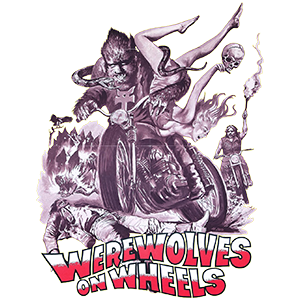
Psychotronic is a film genre made up of horror films, spaghetti westerns, low-budget independent features, exploitation films that was coined by author Michael J. Weldon. The genre takes its name from the movie ‘The Psychotronic Man.’
After seeing this movie, Weldon created an extensive list of reviews of obscure quirky films that he felt were underappreciated by the mainstream and then marketed it as the ‘Psychotronic Encyclopedia,’ which has become known as a reference work for film buffs. The book prompted the creation of the Psychotronic Film Society.
Posted in Art, Language |
Leave a Comment »
December 3, 2011

Op art is a style of visual art that makes use of optical illusions. ‘Optical art is a method of painting concerning the interaction between illusion and picture plane, between understanding and seeing.’ Op art works are abstract, with many of the better known pieces made in only black and white. When the viewer looks at them, the impression is given of movement, hidden images, flashing and vibration, patterns, or alternatively, of swelling or warping.
Op art is derived from the constructivist practices of the Bauhaus, a German design school, founded by Walter Gropius, which stressed the relationship of form and function within a framework of analysis and rationality. Students were taught to focus on the overall design, or entire composition, in order to present unified works. When the Bauhaus was forced to close in 1933, many of its instructors fled to the US where the movement took root in Chicago and eventually at the Black Mountain College in Asheville, North Carolina, where Anni and Josef Albers would come to teach.
read more »
Posted in Art |
Leave a Comment »
November 30, 2011
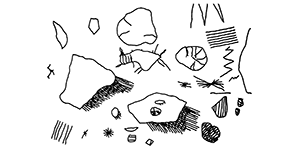

Generative art refers to art that has been generated, composed, or constructed in an algorithmic manner through the use of systems defined by computer software algorithms, or similar mathematical or mechanical or randomized autonomous processes.
Generative art is a system oriented art practice where the common denominator is the use of systems as a production method. To meet the definition of generative art, an artwork must be self-contained and operate with some degree of autonomy. The workings of systems in generative art might resemble, or rely on, various scientific theories such as Complexity science and Information theory.
read more »
Posted in Art, Technology |
Leave a Comment »
November 28, 2011

Novelty architecture is a type of architecture in which buildings and other structures are given unusual shapes as a novelty, such as advertising, notoriety as a landmark, or simple eccentricity of the owner or architect. Many examples of novelty architecture take the form of buildings that resemble the products sold inside to attract drive-by customers.
Others are attractions all by themselves, such as giant animals, fruits, and vegetables, or replicas of famous buildings. And others are merely unusual shapes or made of unusual building materials.
read more »
Posted in Art, Humor, Money |
1 Comment »
November 25, 2011

Big History is a field of historical study that examines history on large scales across long time frames through a multidisciplinary approach, focusing on both the history of the non-human world and on major adaptations and alterations in the human experience. It arose as a distinct field in the late 1980s and is related to, but distinct from, world history, as the field examines history from the beginning of time to the present day. In some respects, the field is thus similar to the older universal history (the presentation of the history of humankind as a whole, as a coherent unit).
Big history looks at the past on all time scales, from the Big Bang to modernity, seeking out common themes and patterns. It draws on the latest findings from many disciplines, such as biology, astronomy, geology, climatology, prehistory, archeology, anthropology, cosmology, natural history, and population and environmental studies. Big History arose from a desire to go beyond the specialized and self-contained fields that emerged in the 20th century and grasp history as a whole, looking for common themes across multiple time scales in history. Conventionally, the study of history concerns only the period of time since the invention of writing, and is limited to past events relating directly to the human race; yet this only encompasses the past 5,000 years or so and covers only a small fraction of the period of time that humans have existed on Earth, and an even smaller fraction of the age of the universe.
Posted in Education, Science |
Leave a Comment »
November 17, 2011

Skweee is a musical style, with origin in Sweden and Finland. Skweee combines simple synth leads and basslines with funk, r’n’b or soul-like rhythms, overall rendering a stripped-down funky sound. The tracks are mostly entirely instrumental, though there are exceptions. The name Skweee was coined by Daniel Savio, one of the originators of the emerging sound. The name refers to the use of vintage synthesizers in the production process, where the aim is to ‘squeeze out’ the most interesting sounds possible.
The major outlets of skweee music are the Swedish record label Flogsta Danshall and Finnish record label Harmönia. The preferred media format of skweee enthusiasts is the 7″ vinyl record. Early releases were exclusively released in this format. More recently, however, a series 12″ vinyl records, digital releases and CD compilations have been released through these outlets as well. Skweee has during late 2008 and early 2009 started to influence the sound of dubstep. Producers such as Rusko, Gemmy, Joker, Zomby, Rustie, and Jamie Vex’d, among others, have given their take on the sound resulting in several interesting releases on the boundary between skweee and dubstep.
Posted in Art |
Leave a Comment »
October 25, 2011

The Theatre of the Absurd is a designation for particular plays of absurdist fiction, written by a number of primarily European playwrights in the late 1940s, 1950s, and 1960s, as well as to the style of theater which has evolved from their work. Their work expressed the belief that, in a godless universe, human existence has no meaning or purpose and therefore all communication breaks down.
Logical construction and argument gives way to irrational and illogical speech and to its ultimate conclusion, silence. Plays within this group are absurd in that they focus not on logical acts, realistic occurrences, or traditional character development; they, instead, focus on human beings trapped in an incomprehensible world subject to any occurrence, no matter how illogical. The theme of incomprehensibility is coupled with the inadequacy of language to form meaningful human connections.
read more »
Posted in Art, Humor, Philosophy |
Leave a Comment »
September 27, 2011

Nazisploitation is a subgenre of exploitation film and sexploitation film that involves villainous Nazis committing criminal acts of a sexual nature often as camp or prison overseers in World War II settings. Most follow the standard women in prison formula, only relocated to a death camp or Nazi brothel, with an added emphasis on sadism, gore, and degradation.
The most infamous and influential title (and the one that set the standards of the genre) is perhaps ‘Ilsa, She Wolf of the SS’ (1974), a Canadian production. Its surprise success and sequels led European film makers, mostly in Italy, to produce dozens of similar films depicting Nazi atrocities. While the Ilsa series and Salon Kitty were profitable, the other films were mostly box-office flops and the genre all but vanished by the mid 1980s.
read more »
Posted in Money, Sex, War |
Leave a Comment »
September 26, 2011


A simulation video game describes a diverse super-category of video games, generally designed to closely simulate aspects of a real or fictional reality. Construction and management simulation (CMS) is a subtype in which players build, expand or manage fictional communities or projects with limited resources.
Strategy games sometimes incorporate CMS aspects into their game economy, as players must manage resources while expanding their project. But pure CMS games differ from strategy games in that ‘the player’s goal is not to defeat an enemy, but to build something within the context of an ongoing process.’ Games in this category are sometimes also called ‘management games.’
read more »
Posted in Games, Technology |
Leave a Comment »


 The Daily Omnivore