January 28, 2011

To grok is to share the same reality or line of thinking with another physical or conceptual entity. Author Robert A. Heinlein coined the term in his best-selling 1961 book ‘Stranger in a Strange Land.’ Grokking is the intermingling of intelligence that necessarily affects both the observer and the observed. According to the novel: ‘Grok means to understand so thoroughly that the observer becomes a part of the observed—to merge, blend, intermarry, lose identity in group experience. It means almost everything that we mean by religion, philosophy, and science—and it means as little to us (because of our Earthly assumptions) as color means to a blind man.’
To grok something is both to comprehend (relate intellectually) and to apprehend (relate emotionally and spiritually) its quiddity, its essence, its being. In an ideological context, a grokked concept becomes part of the person who contributes to its evolution by improving the doctrine, perpetuating the myth, espousing the belief, adding detail to the social plan, refining the idea or proving the theory.
Posted in Education, Language, Philosophy |
Leave a Comment »
January 25, 2011


Prole drift, short for proletarian drift, is a trend in which products, styles or other aspects of culture previously considered to be upscale or upper class become popular among working class people. Prole drift can also go the other way, as when things that were once the purview of the working class become fashionable in the middle or upper classes. The term was coined by, American literary historian, Paul Fussell in 1983 to describe the phenomenon of most aspects of high culture eventually joining the lowest common denominator.
Examples include sales of premium coffee, Burberry clothing or Coach Inc. handbags to working class people. Examples of reverse prole drift include Mockney, the skinhead and punk subcultures, hip hop, rockabilly, dressing down, slumming it (e.g. going to a working class bar) and NASCAR. BMW cars (particularly the 3 series) have also suffered from this phenomenon, in some instances the 3 series outselling more mainstream cars such as the Ford Mondeo and Vauxhall Vectra.
Posted in Language, Money, Politics |
Leave a Comment »
January 25, 2011

A chav is a stereotype of certain people in the United Kingdom. Also known as a charver in Yorkshire and North East England, ‘chavs’ are said to be aggressive teenagers, of white working class background, who repeatedly engage in antisocial behaviour such as street drinking, drug abuse and rowdiness, or other forms of juvenile delinquency. The derivative Chavette has been used to refer to females.
Chav probably has its origins in the Romani word ‘chavi,’ meaning ‘child’ (or ‘chavo,’ meaning ‘boy,’ or ‘chavvy,’, meaning ‘youth’). This word may have entered the English language through the Geordie dialect word charva, meaning a rough child. This is similar to the colloquial Spanish word chaval, meaning ‘kid’ or ‘guy.’ In Italy, chavs are termed as coatto, which basically means ‘working class’ and vulgar.
read more »
Posted in Language, Money, World |
Leave a Comment »
January 24, 2011

Helicopter parent is a colloquial, early 21st-century term for a parent who pays extremely close attention to his or her child’s or children’s experiences and problems, particularly at educational institutions. The term was originally coined by Foster W. Cline, M.D. and Jim Fay in their 1990 book ‘Parenting with Love and Logic.’
Helicopter parents are so named because, like helicopters, they hover closely overhead, rarely out of reach, whether their children need them or not. They try to resolve their child’s problems, and try to stop them coming to harm by keeping them out of dangerous situations.
read more »
Posted in Education, Language, Politics |
2 Comments »
January 18, 2011


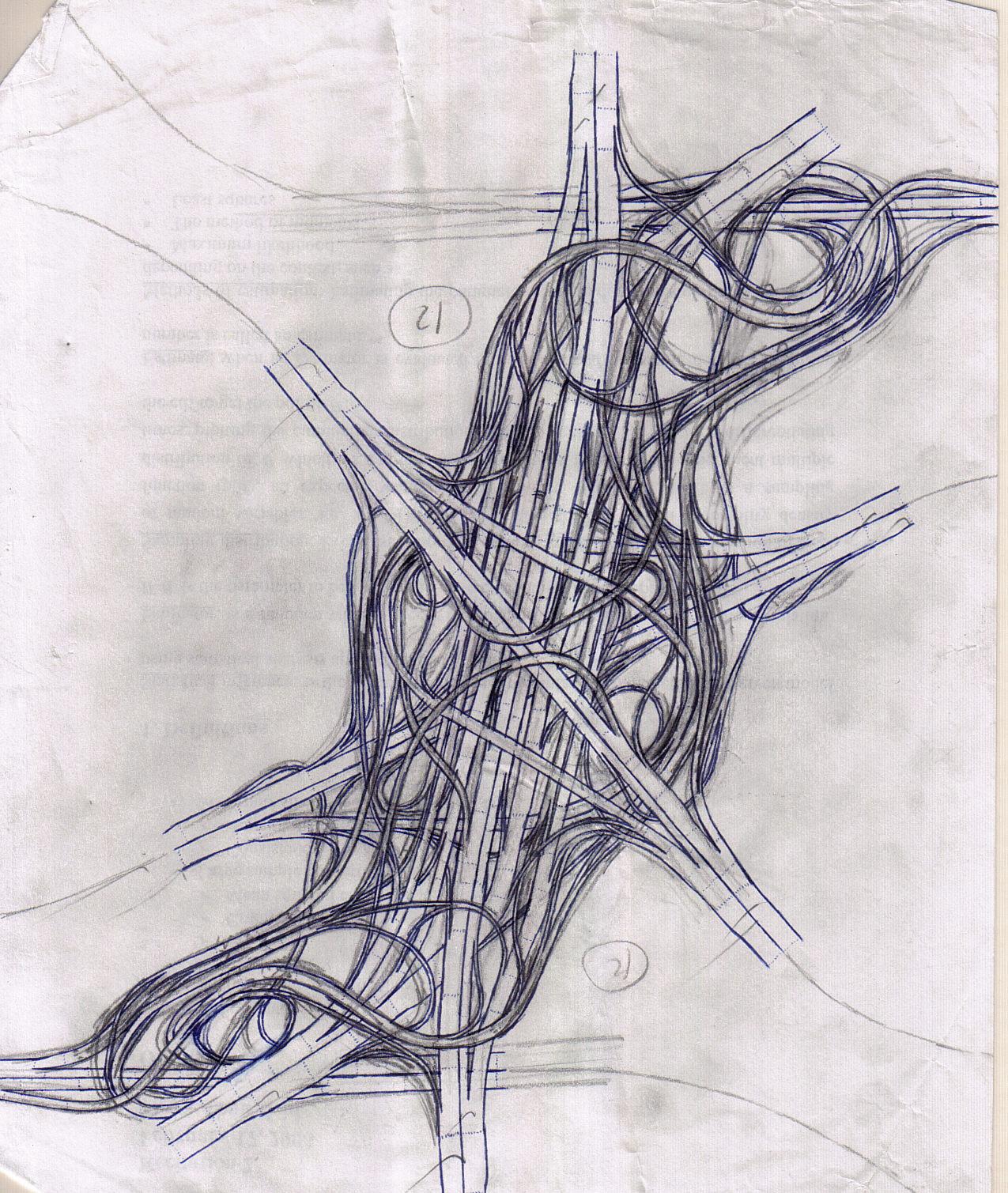
Spaghetti Junction is a nickname sometimes given to a complicated or massively intertwined road traffic interchange that resembles a plate of spaghetti. The term is believed to have been coined by a journalist at the Birmingham Evening Mail in the 1970s to refer to the Gravelly Hill Interchange on the M6 motorway in Birmingham, United Kingdom. Since then many complex interchanges around the world have acquired the nickname.
Posted in Humor, Language, Technology |
Leave a Comment »
December 14, 2010

The term life hack refers to productivity tricks that programmers devise and employ to cut through information overload and organize their data. The original definition of the term referred to utilities that filtered and processed data streams like email and RSS feeds. Examples of these types of life hacks might include utilities to synchronize files, track tasks, remind yourself of events or filter email. As the meme spread, the definition of the term expanded. Today, anything that solves an everyday problem in a clever or non-obvious way might be called a life hack. The term became popularized in the blogosphere and is primarily used by geeks who suffer from information overload or those with a playful curiosity in the ways they can accelerate their workflow.
The terms hack, hacking, and hacker have a long history of ambiguity in the computing and geek communities, particularly within the free and open source software crowds. However, in the context used here a ‘hack’ is a clever trick or stratagem. British technology journalist Danny O’Brien coined the term after polling a group of productive geeks on the details of their work processes. O’Brien discovered a pattern among these super-productive programmers: that they devised and used ’embarrassing’ scripts and shortcuts to get their work done.
Posted in Language, Technology |
Leave a Comment »
December 13, 2010

Chartjunk refers to all visual elements in charts and graphs that are not necessary to comprehend the information represented on the graph, or that distract the viewer from this information. Examples of unnecessary elements which might be called chartjunk include heavy or dark grid lines, unnecessary text or inappropriately complex typefaces, ornamented chart axes and display frames, pictures or icons within data graphs, ornamental shading and unnecessary dimensions.
Another kind of chartjunk skews the depiction and makes it difficult to understand the real data being displayed. Examples of this type include items depicted out of scale to one another, noisy backgrounds making comparison between elements difficult in a chart or graph, and 3-D simulations in line and bar charts. The term was coined by American statistician Edward Tufte in his 1983.
Posted in Art, Technology |
Leave a Comment »
November 18, 2010

Cisgender [sis-jen-der] is a neologism that refers to individuals who are comfortable in the gender they were assigned at birth. It contrasts ‘transgender’ on the gender spectrum. A more popular term is ‘gender normative.’ The word has its origin in the Latin-derived prefix cis, meaning ‘on the same side’. In this case, ‘cis’ refers to the alignment of gender identity with assigned gender.
The word was coined in 1995 by Carl Buijs, a transsexual man from the Netherlands. Buijs said in a usenet posting, ‘As for the origin, I just made it up. I just kept running into the problem of what to call non-trans people in various discussions, and one day it just hit me: non-trans equals cis. Therefore, cisgendered.’
Posted in Language, Politics, Sex |
Leave a Comment »
November 16, 2010


Fnord is the typographic representation of disinformation or irrelevant information intending to misdirect, with the implication of a worldwide conspiracy. The word was coined as a nonsensical term with religious undertones in the Discordian religious text Principia Discordia (1965) by Kerry Thornley and Greg Hill, but was popularized by The Illuminatus! Trilogy (1975) of satirical conspiracy fiction novels by Robert Shea and Robert Anton Wilson.
read more »
Posted in Humor, Language, Philosophy |
Leave a Comment »
November 8, 2010

Agnotology is the study of culturally-induced ignorance or doubt, particularly the publication of inaccurate or misleading scientific data. The neologism was coined by Robert N. Proctor, a Stanford University professor specializing in the history of science and technology. More generally, the term also highlights the increasingly common condition where more knowledge of a subject leaves one more uncertain than before. Proctor studied the tobacco industry’s conspiracy to manufacture doubt about the cancer risks of tobacco use. Under the banner of science, the industry produced research about everything except tobacco hazards to exploit public uncertainty.
Some of the root causes for culturally-induced ignorance are media neglect, corporate or governmental secrecy and suppression, document destruction, and myriad forms of inherent or avoidable culturopolitical selectivity, inattention, and forgetfulness. Agnotology also focuses on how and why diverse forms of knowledge do not ‘come to be’,’ or are ignored or delayed. For example, knowledge about plate tectonics was delayed for at least a decade because key evidence was classified military information related to underseas warfare.
Posted in Language, Science |
Leave a Comment »
November 8, 2010

A snowclone is a type of cliché and phrasal template originally defined as ‘a multi-use, customizable, instantly recognizable, time-worn, quoted or misquoted phrase or sentence that can be used in an entirely open array of different variants.’
An example of a snowclone is ‘grey is the new black,’ a version of the template ‘X is the new Y.’ Both the generic formula and the new phrases produced from it are called snowclones.
read more »
Posted in Language |
Leave a Comment »
October 28, 2010

Plunderphonics is a term coined by composer John Oswald in 1985 in his essay ‘Plunderphonics, or Audio Piracy as a Compositional Prerogative.’ It has since been applied to any music made by taking one or more existing audio recordings and altering them in some way to make a new composition. Plunderphonic music is known for heavy sampling of educational films of the 1950s, news reports, radio shows, or anything with trained vocal announcers.
The process of sampling other sources is found in various genres (notably hip-hop), but in plunderphonic works the sampled material is often the only sound used. These samples are usually uncleared, and sometimes result in legal action being taken due to copyright infringement. Some plunderphonic artists use their work to protest what they consider to be overly-restrictive copyright laws. Many plunderphonic artists claim their use of other artists’ materials falls under the fair use doctrine.
Posted in Art, Money, Technology |
Leave a Comment »





 The Daily Omnivore