November 8, 2010

Agnotology is the study of culturally-induced ignorance or doubt, particularly the publication of inaccurate or misleading scientific data. The neologism was coined by Robert N. Proctor, a Stanford University professor specializing in the history of science and technology. More generally, the term also highlights the increasingly common condition where more knowledge of a subject leaves one more uncertain than before. Proctor studied the tobacco industry’s conspiracy to manufacture doubt about the cancer risks of tobacco use. Under the banner of science, the industry produced research about everything except tobacco hazards to exploit public uncertainty.
Some of the root causes for culturally-induced ignorance are media neglect, corporate or governmental secrecy and suppression, document destruction, and myriad forms of inherent or avoidable culturopolitical selectivity, inattention, and forgetfulness. Agnotology also focuses on how and why diverse forms of knowledge do not ‘come to be’,’ or are ignored or delayed. For example, knowledge about plate tectonics was delayed for at least a decade because key evidence was classified military information related to underseas warfare.
Posted in Language, Science |
Leave a Comment »
November 8, 2010

A snowclone is a type of cliché and phrasal template originally defined as ‘a multi-use, customizable, instantly recognizable, time-worn, quoted or misquoted phrase or sentence that can be used in an entirely open array of different variants.’
An example of a snowclone is ‘grey is the new black,’ a version of the template ‘X is the new Y.’ Both the generic formula and the new phrases produced from it are called snowclones.
read more »
Posted in Language |
Leave a Comment »
October 28, 2010

Plunderphonics is a term coined by composer John Oswald in 1985 in his essay ‘Plunderphonics, or Audio Piracy as a Compositional Prerogative.’ It has since been applied to any music made by taking one or more existing audio recordings and altering them in some way to make a new composition. Plunderphonic music is known for heavy sampling of educational films of the 1950s, news reports, radio shows, or anything with trained vocal announcers.
The process of sampling other sources is found in various genres (notably hip-hop), but in plunderphonic works the sampled material is often the only sound used. These samples are usually uncleared, and sometimes result in legal action being taken due to copyright infringement. Some plunderphonic artists use their work to protest what they consider to be overly-restrictive copyright laws. Many plunderphonic artists claim their use of other artists’ materials falls under the fair use doctrine.
Posted in Art, Money, Technology |
Leave a Comment »
October 18, 2010


Freeganism is the practice of reclaiming and eating food that has been discarded. Freegans and Freeganism are often seen as part of a wider ‘anti-consumerist’ ideology, and freegans often employ a range of alternative living strategies based on limited participation in the conventional economy and minimal consumption of resources. Freegans ’embrace community, generosity, social concern, freedom, cooperation, and sharing in opposition to a society based on materialism, moral apathy, competition, conformity, and greed.’
The word ‘freegan’ is a portmanteau of ‘free’ and ‘vegan’; not all dumpster divers are vegan, but the ideology of veganism is inherent in freeganism. Freeganism started in the mid 1990s, out of the antiglobalization and environmentalist movements. The movement also has elements of Diggers, an anarchist street theater group based in Haight-Ashbury in San Francisco in the 1960s, that gave away rescued food.
read more »
Posted in Food, Money, Philosophy |
Leave a Comment »
October 13, 2010

A meme [meem] is a unit of cultural ideas, symbols or practices, which can be transmitted from one mind to another through writing, speech, gestures, rituals or other imitable phenomena. Supporters of the concept regard memes as cultural analogues to genes, in that they self-replicate and respond to selective pressures. The British scientist Richard Dawkins coined the word in ‘The Selfish Gene’ (1976) as a concept for discussion of evolutionary principles in explaining the spread of ideas and cultural phenomena.
Examples of memes given in the book included melodies, catch-phrases, beliefs (notably religious beliefs), clothing fashion, and the technology of building arches. Meme-theorists contend that memes evolve by natural selection (in a manner analogous to that of biological evolution) through the processes of variation, mutation, competition, and inheritance influencing an individual meme’s reproductive success. Memes spread through the behaviors that they generate in their hosts. Memes that propagate less prolifically may become extinct, while others may survive, spread, and (for better or for worse) mutate.
Posted in Humor, Language, Philosophy |
Leave a Comment »
September 11, 2010

Strawberry Generation is a Chinese language neologism for Taiwanese people born between 1981 and 1991 who ‘bruise easily’ like strawberries — meaning they can’t withstand social pressure or work hard like their parents’ generation; the term refers to people who are insubordinate, spoiled, selfish, arrogant, and sluggish in work. Persons from this generation have grown up being overprotected by their parents and in an environment of economic prosperity, in a similar manner to how strawberries are grown in protected greenhouses and command a higher price compared to other fruits.
Posted in Philosophy, Politics, World |
Leave a Comment »
August 2, 2010

Manhattanhenge (sometimes referred to as the Manhattan Solstice) is a semiannual occurrence in which the setting sun aligns with the east–west streets of the main street grid in the borough of Manhattan in New York City. The term is derived from Stonehenge, at which the sun aligns with the stones on the solstices. It was coined in 2002 by Neil deGrasse Tyson, an astrophysicist at the American Museum of Natural History. It applies to those streets that follow the Commissioners’ Plan of 1811, which laid out a grid offset 28.9 degrees from true east–west.
The same phenomenon occurs in other cities with a uniform street grid. In Toronto, Ontario, Canada, for instance, the setting sun lines up with the east–west streets on October 25 and Feb 16, a phenomenon known locally as Torontohenge. In Chicago, Illinois, the sun lines up with the grid system on September 25, a phenomenon known similarly as Chicagohenge.
Posted in Science |
Leave a Comment »
June 29, 2010
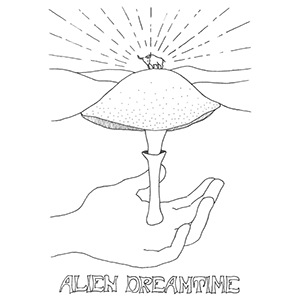
Machine elves (also known as fractal elves) is a term coined by the late ethnobotanist, writer and philosopher Terence McKenna to describe the apparent entities that are often reported by individuals using tryptamine-based psychedelic drugs, especially DMT. References to such encounters can be found in many cultures ranging from shamanic traditions of Native Americans to indigenous Australians and African tribes, as well as among Western users of these substances.
McKenna’s first published mention of the machine elves is in his and his brother Dennis’ book ‘The Invisible Landscape’ (1975): ‘We especially refer to the apparently autonomous and intelligent, chaotically mercurial and mischievous machine elves encountered in the trance state, strange teachers whose marvelous singing makes intricate toys out of the air and out of their own continually transforming body geometries.’
read more »
Posted in Drugs |
1 Comment »