July 17, 2012


Abandonware are discontinued products for which no product support is available, or whose copyright ownership may be unclear for various reasons. Abandonware may be computer software or physical devices which are usually computerized in some fashion, such as personal computer games, productivity applications, utility software, or mobile phones.
Definitions of ‘abandoned’ vary; generally it refers to a product that is no longer available for legal purchase, over the age where the product creator feels an obligation to continue to support it, or where operating systems or hardware platforms have evolved to such a degree that the creator feels continued support cannot be financially justified. Software companies and manufacturers may change their names, go bankrupt, enter into mergers, or cease to exist for a variety of reasons. When this happens, product rights are usually transferred to another company that may elect not to sell or support products acquired.
read more »
Posted in Money, Politics, Technology |
Leave a Comment »
July 12, 2012
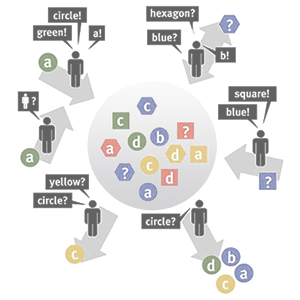
A folksonomy [fohk-son-uh-mee] is a system of classification derived from the practice and method of collaboratively creating and managing tags to annotate and categorize content; this practice is also known as collaborative tagging, social classification, social indexing, and social tagging. Folksonomy, a term coined by Thomas Vander Wal, is a portmanteau of folk and taxonomy.
Folksonomies became popular on the Web around 2004 as part of social software applications such as social bookmarking and photograph annotation. Tagging, which is one of the defining characteristics of Web 2.0 services, allows users to collectively classify and find information. Some websites include tag clouds as a way to visualize tags in a folksonomy. A good example of a social website that utilizes folksonomy is ’43 Things.’ However, tag clouds visualize only the vocabulary but not the structure of folksonomies, as do tag graphs.
read more »
Posted in Language, Technology |
1 Comment »
June 26, 2012

Speciesism [spee-shee-ziz-uhm] involves assigning different values or rights, or special consideration, to individuals solely on the basis of their species membership. The term was coined in 1973 by British psychologist Dick D. Ryder to denote prejudice against non-humans based on morally irrelevant physical differences.
The term is mostly used by animal rights advocates, who argue that species membership has no moral significance, and that it is both irrational and morally wrong to regard sentient beings as objects or property. Philosopher Tom Regan argues that all animals have inherent rights and that we cannot assign them a lesser value because of a perceived lack of rationality, while assigning a higher value to infants and the mentally impaired solely on the grounds of membership of a certain species. Peter Singer’s philosophical arguments against speciesism are based on the principle of equal consideration of interests.
read more »
Posted in Philosophy, Politics |
1 Comment »
June 26, 2012

Boombox is a colloquial expression for a portable music player with two or more loudspeakers. It is a device capable of receiving radio stations and playing recorded music (usually cassettes or CDs), usually at relatively high volume. Many models are also capable of recording (onto cassette) from radio and (sometimes) other sources. Designed for portability, most boomboxes can be powered by batteries, as well as by line current.
The first Boombox was developed by the inventor of the C-Cassette, Philips of the Netherlands. Their first ‘Radiorecorder’ was released in 1969. The Philips innovation was the first time that radio broadcasts could be recorded onto C-Cassette tapes without cables or microphones. Early sound quality of tape recordings was poor but as the C-Cassette technology evolved, with stereo recording, Chromium tapes and noise reduction, soon HiFi quality devices become possible. Several European electronics brands such as Grundig also introduced similar devices.
read more »
Posted in Art, Money, Technology |
Leave a Comment »
June 18, 2012

Transculturation [trans-kuhl-chuh-rey-shuhn] is a term coined by Cuban anthropologist Fernando Ortiz in 1940 to describe the phenomenon of merging and converging cultures. Transculturation encompasses more than transition from one culture to another; it does not consist merely of acquiring another culture (acculturation) or of losing or uprooting a previous culture (deculturation).
Rather, it merges these concepts and additionally carries the idea of the consequent creation of new cultural phenomena (neoculturation). Ortiz also referred to the devastating impact of Spanish colonialism on Cuba’s indigenous peoples as a ‘failed transculturation.’ Transculturation can often be the result of colonial conquest and subjugation, especially in a postcolonial era as native peoples struggle to regain their own sense of identity.
read more »
Posted in Philosophy, Politics, World |
Leave a Comment »
May 13, 2012

Gauche [gohsh] caviar [kav-ee-ahr] (‘Caviar left’) is a pejorative French term to describe someone who claims to be a socialist while living in a way that contradicts socialist values. The expression is a political neologism dating from the 1980s and implies a degree of hypocrisy. It is broadly similar to the English ‘champagne socialist,’ the American ‘Limousine liberal,’ the German ‘Salonkommunist,’ the Italian ‘Radical Chic,’ and the Danish ‘Kystbanesocialist’ (referring to well-off coastal neighborhoods north of Copenhagen). French encyclopedia ‘Petit Larousse’ defines ‘left caviar’ as a pejorative expression for a, ‘Progressivism combined with a taste for society life and its accoutrements.’
The term was once prevalent in Parisian circles, applied deprecatingly to those who professed allegiance to the Socialist Party, but who maintained a far from proletariat lifestyle that distinguished them from the working-class base of the French Socialist Party. It was often employed by detractors of former French President François Mitterrand. In early 2007, French politician Ségolène Royal was identified with the ‘gauche caviar’ when it was revealed that she had been avoiding paying taxes. The description damaged her campaign for the French presidency. The weekly French news magazine, ‘Le Nouvel Observateur,’ has been described as the ‘quasi-official organ of France’s ‘gauche caviar.”
Posted in Food, Money, Politics |
Leave a Comment »
April 23, 2012

BosWash is a name coined by futurist Herman Kahn in a 1967 essay describing a theoretical United States megalopolis extending from the metropolitan area of Boston to that of Washington, D.C. The publication also coined ‘SanSan’ for the areas on the Pacific coast of California.
The general concept for the area described by BosWash was first identified in French geographer Jean Gottmann’s 1961 book ‘Megalopolis: The Urbanized Northeastern Seaboard of the United States.’ Kahn’s essay was the product of a study commissioned in 1965 by the American Academy of Arts and Sciences. Kahn discussing urbanization, began by writing: ‘The United States in the year 2000 will probably see at least three gargantuan megalopolises. We have labeled these—only half frivolously—’Boswash,’ ‘Chipitts,’ and ‘SanSan.”
read more »
Posted in Politics, Science, World |
Leave a Comment »
April 12, 2012
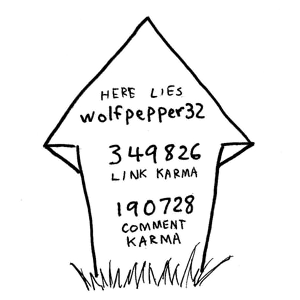
Egoboo is a colloquial expression for the pleasure received from public recognition of voluntary work. The term was in use in science fiction fandom no later than 1947, when it was used (spelled ‘ego boo’) in a letter from Rick Sneary published in the letter column of ‘Thrilling Wonder Stories.’
It was originally simply used to describe the ‘ego boost’ someone feels on seeing their name in print. As a reliable way for someone to get their name in print was to do something worth mentioning, it became caught up with the idea of voluntary community participation. As a result of this, in later years, the term grew to mean something akin to an ephemeral currency, e.g., ‘ got a lot of egoboo for editing that newsletter.’
read more »
Posted in Language, Money |
Leave a Comment »
March 8, 2012

Obesogens are foreign chemical compounds that disrupt normal lipid metabolism, which can lead to obesity.
Obesogens are functionally defined as chemicals that inappropriately alter lipid homeostasis and fat storage, change metabolic setpoints, disrupt energy balance, or modify the regulation of appetite and satiety to promote fat accumulation and obesity. The term obesogen was coined by Bruce Blumberg of UC, Irvine. The topic of this proposed class of chemical compounds and how to counteract their effects is explored at length in the book ‘The New American Diet.’
Posted in Drugs, Food, Health |
1 Comment »
March 5, 2012

A greeble or nurnie is a small piece of detailing added to break up the surface of an object to add visual interest to a surface or object, particularly in movie special effects. They serve no real purpose other than to add complexity to the object, and cause the flow of the eye over the surface of the object to be interrupted, usually giving the impression of increased size. It is essentially the small detailed technical part of a larger object. The detail can be made from geometric primitives, including cylinders, cubes, and rectangles, combined to create intricate, but meaningless, surface detail.
Greebles are commonly found on models or drawings of fictional spacecraft in science fiction. The earliest recorded use of the term ‘greeble’ found to date was by those working on the special effects for ‘Star Wars’ — the group who would later become Industrial Light and Magic. They also described this design method as ‘guts on the outside.’ Ron Thornton is widely believed to have coined the term ‘nurnies’ referring to CGI technical detail that his company Foundation Imaging produced for the ‘Babylon 5’ series.
read more »
Posted in Art, Language, Technology |
Leave a Comment »
March 1, 2012

Structuring, also known as smurfing in banking industry jargon, is the practice of parceling what would otherwise be a large financial transaction into a series of smaller transactions to avoid scrutiny by regulators or law enforcement. Structuring often appears in federal indictments related to money laundering, fraud, and other financial crimes. The term ‘smurfing’ is derived from the image of the cartoon characters, the ‘Smurfs,’ having a large group of many small entities. Miami-based lawyer Gregory Baldwin is said to have coined the term in the 1980s.
Typically each of the smaller transactions is executed in an amount below some statutory limit that normally does not require a financial institution to file a report with a government agency. Criminal enterprises often employ several agents (smurfs) to make the transaction. The term is also applied to activity associated with controlled substances such as pseudoephedrine. In this context the agent will make purchases of small, legal amounts from several drug and grocery stores, with the intent to aggregate the lot for use in the illegal production of methamphetamine.
Posted in Money, Politics |
Leave a Comment »
February 25, 2012

Radical chic is a term coined by journalist Tom Wolfe in his 1970 essay ‘Radical Chic: That Party at Lenny’s,’ to describe the adoption and promotion of radical political causes by celebrities, socialites, and high society. The concept has been described as ‘an exercise in double-tracking one’s public image: on the one hand, defining oneself through committed allegiance to a radical cause, but on the other, vitally, demonstrating this allegiance because it is the fashionable, au courant way to be seen in moneyed, name-conscious Society.’
Unlike dedicated activists, revolutionaries, or dissenters, those who engage in radical chic remain frivolous political agitators. They are ideologically invested in their cause of choice only so far as it advances their social standing. ‘Terrorist chic’ is a modern expression with similar connotations. This derivative, however, de-emphasizes the class satire of Wolfe’s original term, instead accentuating concerns over the semiotics of radicalism (such as the aestheticization of violence).
read more »
Posted in Money, Politics |
Leave a Comment »



 The Daily Omnivore