January 2, 2012
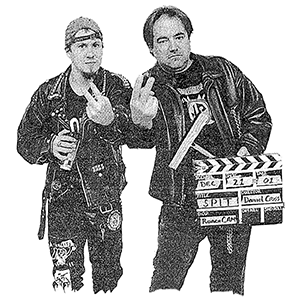
A squeegee [skwee-jee] man is a person who, washcloth and squeegee in hand, wipes windshields of cars stopped in traffic and then solicits money from drivers. While squeegee men are a feature of life in many cities around the world, the phenomenon first became prevalent in New York City in the 1980s.
Although some merely provided a service, in other cases the windshield-washing would be carried out without asking, often perfunctorily, and with subsequent demands for payment, sometimes with added threats of smashing the car’s windshield if their demands were not met. Upon his election, mayor Rudy Giuliani famously embarked on a crusade against squeegee men as part of his quality-of-life campaign, claiming that their near-ubiquitous presence created an environment of disorder that encouraged more serious crime to flourish.
Posted in Money, Politics, World |
Leave a Comment »
December 31, 2011

Poverty pimp is a pejorative label used to convey that an individual or group is benefiting unduly by acting as an intermediary on behalf of the poor, the disadvantaged, or some other ‘victimized’ groups. Those who use this appellation suggest that those so labeled profit unduly from the misfortune of others, and therefore do not really wish the societal problems that they appear to work on to be eliminated permanently, as it is not in their own interest for this to happen.
The most frequent targets of this accusation are those receiving government funding or that solicit private charity to work on issues on behalf of various disadvantaged individuals or groups, but who never seem to be able to show any amelioration of the problems experienced by their target population. Some even suggest that that if profit were eliminated as a factor, greater steps in the alleviation of the oppressive situations could begin to truly occur.
Posted in Money, Politics |
Leave a Comment »
December 31, 2011

A welfare queen is a pejorative phrase used in the United States to describe people who are accused of collecting excessive welfare payments through fraud or manipulation. Reporting on welfare fraud began during the early 1960s, appearing in general interest magazines such as ‘Readers Digest.’
The term entered the American lexicon during Ronald Reagan’s 1976 presidential campaign when he described a ‘welfare queen’ from Chicago’s South Side. Since then, it has become a stigmatizing label placed on recidivist poor mothers, with studies showing that it often carries gendered and racial connotations. Although American women can no longer stay on welfare indefinitely due to the Personal Responsibility and Work Opportunity Act, the term continues to shape American dialogue on poverty.
read more »
Posted in Language, Money, Politics |
Leave a Comment »
December 30, 2011

‘Breeder‘ is a denigrating term for heterosexuals used in LGBT slang. It is often used pejoratively. The use in homosexual groups is drawn from the fact that their sexual activity cannot lead to reproduction, where as heterosexual sexual intercourse can, with implicit mocking by connotation of animal husbandry, the original usage of the word. Along these lines a particularly fecund woman may be referred to as a ‘brood sow,’ implying low ethical standards and an absence of due diligence in the reproductive process.
‘Breeder’ may also be used as a derogatory term by childfree people of any sexual orientation, to refer to parents who focus on their children and abandon their previous friends and lifestyle. The phrases ‘breeder, not parent’ (BNP) or ‘parent, not breeder’ (PNB) are used by some childfree communities to differentiate between what they regard as positive and negative parenting.
Posted in Politics, Sex |
1 Comment »
December 20, 2011


‘Monkey Tennis‘ is a British pop culture phrase, first used in the late 1990s and popular throughout the 2000s. Originating as a joke in a television sitcom, it has come to be commonly used as an example of the hypothetical lowest common denominator television program that it is possible to make.
The term originates from the opening episode of the sitcom ‘I’m Alan Partridge,’ originally broadcast on BBC Two in 1997. In one scene the eponymous character of Partridge, a failed chat show host, desperately attempts to pitch program ideas to uninterested BBC executive who cancelled his first series. After failing to interest him in ideas plucked from thin air such as ‘Arm Wrestling With Chas & Dave,’ ‘Youth Hostelling with Chris Eubank,’ ‘Inner-City Sumo’ and ‘Cooking in Prison,’ Partridge comes up with a final spur-of-the-moment suggestion, ‘Monkey Tennis?,’ which is met with similar disdain.
Posted in Art, Humor, Money |
Leave a Comment »
December 19, 2011


In computing, spamdexing (also known as search spam or Search Engine Poisoning) is the deliberate manipulation of search engine indexes. The earliest known reference to the term is by Eric Convey in 1996 in an article, ‘Porn sneaks way back on Web,’ for ‘The Boston Herald.’ It involves a number of methods, such as repeating unrelated phrases, to manipulate the relevance or prominence of resources indexed in a manner inconsistent with the purpose of the indexing system.
Common spamdexing techniques can be classified into two broad classes: content spam (or term spam) and link spam. Content spam methods include keyword stuffing, hidden or invisible text, meta-tag stuffing, doorway pages, scraper sites, and article spinning. Link spamming methods include link farms, hidden links, Sybil attacks, spam blogs, page hijacking, buying lapsed domains (cybersquatting), and cookie stuffing.
read more »
Posted in Money, Technology |
Leave a Comment »
November 29, 2011
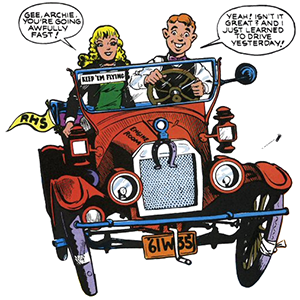
A jalopy [juh-lop-ee] (also clunker or hooptie or beater) is a decrepit car, often old and in a barely functional state. A jalopy is not a well kept antique car, but a car which is mostly rundown or beaten up.
As a slang term in American English, ‘jalopy’ was noted in 1924 but is now slightly passé. The term was used extensively in the book ‘On the Road’ by Jack Kerouac, first published in 1957, although written from 1947. The equivalent English term is old banger, often shortened to banger, a reference to older poorly maintained vehicles’ tendency to backfire.
read more »
Posted in Language, Money, Technology |
1 Comment »
November 25, 2011

Junk food news is a sardonic term for news stories that deliver ‘sensationalized, personalized, and homogenized inconsequential trivia,’ especially when such stories appear at the expense of serious investigative journalism.
It implies a criticism of the mass media for disseminating news that, while not very nourishing, is ‘cheap to produce and profitable for media proprietors.’
read more »
Posted in Language, Money, Politics |
1 Comment »
November 24, 2011

Software bloat is a process whereby successive versions of a computer program include an increasing proportion of unnecessary features that are not used by end users, or generally use more system resources than necessary, while offering little or no benefit to its users.
Software developers in the 1970s had severe limitations on disk space and memory. Every byte and clock cycle counted, and much work went into fitting the programs into available resources. Achieving this efficiency was one of the highest values of computer programmers, and the best programs were often called ‘elegant’; —seen as a form of high art.
read more »
Posted in Money, Technology |
Leave a Comment »
November 24, 2011

Shovelware is a derogatory computer jargon term that refers to software noted more for the quantity of what is included than for the quality or usefulness. The term is also used to refer to software that is ported from one computer platform or storage medium to another with little thought given to adapting it for use on the destination platform or medium, resulting in poor quality. The metaphor implies that the creators showed little care for the original software, as if the new compilation or version had been indiscriminately created / ported with a shovel, without any care shown for the condition of the software on the newly created product. The term ‘shovelware’ is coined with semantic analogy to phrases like shareware and freeware, which describe methods of software distribution.
Shovelware was often used to refer to conversions in the manner floppy disc collections were aggregated onto CD-ROMs. Today there is potential for similar shovelware in converting PC websites into mobile websites with little thought to optimizing for the new platform or the conversion of console games to PC games. The practice of shovelware has largely decreased due to the wide availability of high speed networking and software downloading and the limited capacity of removable media in modern computers compared to the growing massive file sizes of newer software packages. It continues in some cases with bundled or pre-installed software, where many extra programs of dubious quality and usefulness are included with a piece of hardware, often called derisively ‘crapware.’
Posted in Games, Money, Technology |
Leave a Comment »
November 22, 2011
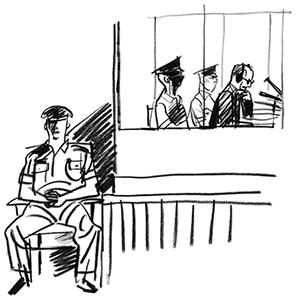
Little Eichmanns [ahyk-muhn] is a phrase used to describe the complicity of those who participate in destructive and immoral systems in a way that, although on an individual scale may seem indirect, when taken collectively would have an effect comparable to Nazi official Adolf Eichmann’s role in The Holocaust. Anarcho-primitivist John Zerzan used the phrase in his essay ‘Whose Unabomber?’ in 1995. The phrase gained prominence in American political culture four years after 9/11, when an essay written by Ward Churchill shortly after the attacks received renewed media scrutiny. In the essay, ‘On the Justice of Roosting Chickens,’ Churchill reiterated the phrase to describe technocrats working at the World Trade Center; his statement caused much controversy.
The use of ‘Eichmann’ as an archetype stems from Hannah Arendt’s 1963 book ‘Eichmann in Jerusalem.’ Arendt wrote that aside from a desire for improving his career, Eichmann showed no trace of anti-Semitism or psychological damage. She called him the embodiment of the ‘banality of evil’ as he appeared at his trial to have an ordinary and common personality and displayed neither guilt nor hatred. She suggested that this most strikingly discredits the idea that the Nazi criminals were manifestly psychopathic and fundamentally different from ordinary people. Lewis Mumford collectively refers to people willing to placidly carry out the extreme goals of megamachines as ‘Eichmanns.’
Posted in Language, Politics, War |
1 Comment »
November 20, 2011

Famous for being famous, in popular culture terminology, refers to someone who attains celebrity status for no particular identifiable reason, or who achieves fame through association with a celebrity. The term is a pejorative, suggesting that the individual has no particular talents or abilities. Even when their fame arises from a particular talent or action on their part, the term will sometimes still apply if their fame is perceived as disproportionate to what they earned through their own talent or work.
The term originates from an analysis of the media dominated world called ‘The Image: A Guide to Pseudo-events in America’ (1961), by historian and social theorist Daniel J. Boorstin. In it, he defined the celebrity as ‘a person who is known for his well-knownness.’ He further argued that the graphic revolution in journalism and other forms of communication had severed fame from greatness, and that this severance hastened the decay of fame into mere notoriety. Over the years, the phrase has been glossed as ‘a celebrity is someone who is famous for being famous’.
read more »
Posted in Humor, Language, Money |
1 Comment »



 The Daily Omnivore