October 21, 2011

Michael Manning is a fetish artist based in Los Angeles. NBM has published several collections of his work, including ‘Cathexis’ and ‘Lumenagerie,’ and a series of graphic novels, ‘The Spider Garden’ series. Born in Queens, New York, and raised on Massachusetts’ North Shore, Manning began self-publishing his black & white erotic comix in 1987 while working as an animator and director of short films, commercials, and music videos.
Early exposure to Japanese animation, fairy-tale book illustration, American and European comix, and mythology of many cultures has contributed to the formation of Manning’s style. Manning’s work draws heavily on Japanese influences, being somewhat stylized and almost exclusively black-and-white. His themes are notable, even amongst fetish artists, for depicting potentially taboo subjects such as zoophilia. Many of his images include beings that are mythological (such as centaurs) or at least biologically uncommon, such as hermaphrodites.
read more »
Posted in Art, Language, Sex |
Leave a Comment »
October 19, 2011

Joshua Milton Blahyi (b. 1971), better known by his nom de guerre General Butt Naked, is a former leader for the Liberian warlord Roosevelt Johnson in the First Liberian Civil War known for his fierce, violent and eccentric measures in the first half of the 1990s. He was originally a tribal priest, and has returned to preaching after the war. Blahyi’s nom de guerre was appropriated for comical effect by the creators of the Broadway musical ‘The Book of Mormon’ as their fictional Ugandan warlord ‘General Butt Fucking Naked.’
Blahyi got his nickname, ‘General Butt Naked,’ from his nakedness which was supposedly demanded by the Devil. In his account of a typical battle Blahyi claimed, ‘So, before leading my troops into battle, we would get drunk and drugged up, sacrifice a local teenager, drink their blood, then strip down to our shoes and go into battle wearing colorful wigs and carrying dainty purses we’d looted from civilians. We’d slaughter anyone we saw, chop their heads off and use them as soccer balls. We were nude, fearless, drunk and homicidal. We killed hundreds of people – so many I lost count.’ Blahyi also purported that during that period he had ‘magical powers that made him invisible’ and a ‘special power’ to capture a town singlehandedly, then call in his troops afterwards to ‘clean up.’
read more »
Posted in Death, War, World |
1 Comment »
October 18, 2011

Cool “Disco” Dan is the pseudonym of graffiti artist Dan Hogg (b. 1969). His standard mark, a particularly styled rendering of his name, has proliferated in the Washington metropolitan area, notably on surfaces along the route of the Washington Metro Red Line.
He has been spraying his tag since 1984. Part of the Go-Go scene of the 80’s in Washington; he managed to avoid being jailed or killed unlike a lot of his contemporaries by devoting himself to graffiti rather than becoming involved with drugs or gangs. The pervasiveness of his mark was reported frequently in the local press.
Posted in Art, Politics |
Leave a Comment »
September 27, 2011
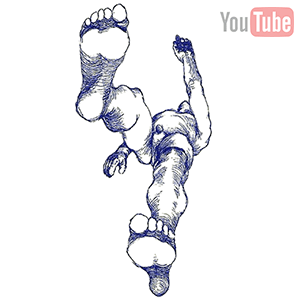
Ryan Larkin (1943 – 2007) was a Canadian animator who rose to fame with the psychedelic 1969 Oscar-nominated short ‘Walking’ and the acclaimed ‘Street Musique’ (1972). In later years Ryan was plagued by a downward spiral of drug abuse, alcoholism and homelessness, but towards the end of his life found himself back in the limelight when a 14-minute computer-animated documentary on his life, ‘Ryan’ by fellow Canadian animator, Chris Landreth, won the Academy Award for Animated Short Film and screened to acclaim at film festivals around the world. ‘Alter Egos’ (2004), directed by Laurence Green, is a documentary about the making of ‘Ryan’ that includes interviews with both Larkin and Chris Landreth as well as with various people who knew Ryan at the peak of his success.
Larkin studied under Arthur Lismer (a member of the Group of Seven, Canadian landscape painters in the 1920s) before starting to work at the National Film Board (NFB) of Canada in the early 1960s. At the NFB, Larkin learned animation techniques from the ground-breaking and award-winning animator, Norman McLaren. Larkin made two acclaimed short animated films, ‘Syrinx’ (1965) and ‘Cityscape’ (1966), before going on to create ‘Walking’ (1969). ‘Walking’ was nominated for an Academy Award in 1970 in the category Best Short Subject, Cartoon, but lost to ‘It’s Tough to Be a Bird’ by director Ward Kimball (one of Disney’s ‘Nine Old Men’). He went on to direct the award-winning short ‘Street Music,’ which premiered in 1972 and would be his last project.
Posted in Art, Drugs |
Leave a Comment »
September 22, 2011

Michael Murdock (b. 1946) is a televangelist and pastor of the Wisdom Center ministry based in Fort Worth, Texas. His father, J.E. Murdock, is also a pastor. Murdock was educated in LaGrange High School in Lake Charles, and in Southwestern Assemblies of God University in Waxahachie for three semesters. He received an honorary doctorate from International Seminary in Florida which is not accredited. Murdock preaches around the world and is best known for his promotion of prosperity theology, whose claim the Bible teaches that financial blessing is the will of God for Christians.
He often preaches with Benny Hinn and has also preached with Tammy Faye Bakker. Additionally, he hosts the Wisdom Keys with Mike Murdock television program. Mike Murdock preached his first public sermon at the age of eight and began full-time evangelism at the age of 19. Murdock receives hundreds of invitations to speak in churches, colleges, and business corporations. He has a weekly television program, Wisdom Keys with Mike Murdock. Murdock is a Founding Trustee on the Board of International Charismatic Ministries along with the late Dr. Oral Roberts.
read more »
Posted in Money, Philosophy, Politics |
Leave a Comment »
September 8, 2011

Gilberto Hernández (b. 1957), also known by the nickname Beto, is an American comics writer/artist. Along with his brothers Jaime and Mario he co-created the acclaimed independent comic book ‘Love and Rockets,’ published by Fantagraphics Books.
The style of Gilbert’s work has been described as magic realism or as a ‘magic-realist take on Central American soap opera.’ A common theme is the portrayal of independent women, and their strength, with the main example being Luba of Palomar, who character that appears in much of his work. His stories often deal with issues relevant to Latino culture in the United States.
read more »
Posted in Art, Humor, Language |
Leave a Comment »
September 6, 2011

Norman Bel Geddes [bel-ged-eez] (1893 – 1958) was an American theatrical and industrial designer who focused on aerodynamics. His book ‘Horizons’ (1932) had a significant impact: ‘By popularizing streamlining when only a few engineers were considering its functional use, he made possible the design style of the thirties.’
He designed the General Motors Pavilion, known as Futurama, for the 1939 New York World’s Fair. For that famous and enormously influential installation, Bel Geddes exploited his earlier work in the same vein: he had designed a “Metropolis City of 1960′ in 1936.
read more »
Posted in Art, Technology |
Leave a Comment »
August 23, 2011

David Foster Wallace (1962 – 2008) was an American author of novels, essays, and short stories, and a professor at Pomona College in Claremont, California. He was widely known for his 1996 novel ‘Infinite Jest.’ In 1997, Wallace received a MacArthur Fellowship. He was born in Ithaca, New York. His father teaches philosophy at the University of Illinois and his mother teaches English at a community college in Champaign. In fourth grade, he moved to Urbana, Illinois. As an adolescent, he was a regionally ranked junior tennis player.
He attended his father’s alma mater, Amherst College, and majored in English and philosophy, with a focus on modal logic and mathematics. His philosophy senior thesis on modal logic, titled ‘Richard Taylor’s ‘Fatalism’ and the Semantics of Physical Modality’ was awarded the Gail Kennedy Memorial Prize by Amherst. His other senior thesis, in English, would later become his first novel, ‘The Broom of the System,’ which centers on an emotionally challenged, 24-year-old telephone switchboard operator who has issues about whether or not she’s real.
read more »
Posted in Art, Language, Philosophy |
Leave a Comment »
August 22, 2011
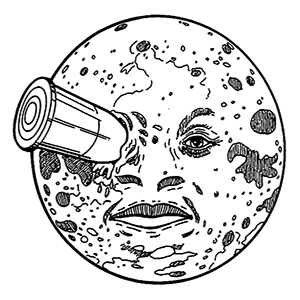
Georges Méliès [mey-lyes] (1861 – 1938) was a French filmmaker famous for leading many technical and narrative developments in the earliest cinema. He was very innovative in the use of special effects. He accidentally discovered the ‘stop trick,’ or substitution, in 1896, and was one of the first filmmakers to use multiple exposures, time-lapse photography, dissolves, and hand-painted color in his films. Because of his ability to seemingly manipulate and transform reality through cinematography, Méliès is sometimes referred to as the First ‘Cinemagician,’ and before making films, he was a stage magician at the Theatre Robert-Houdin.
His most famous film is ‘A Trip to the Moon’ (‘Le voyage dans la Lune’) made in 1902, which includes the celebrated scene in which a spaceship hits the eye of the man in the moon.
read more »
Posted in Art, Money, Technology |
Leave a Comment »
August 18, 2011
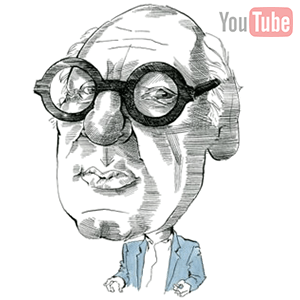
Michael Nyman (b. 1944) is an English composer of minimalist music, pianist, and musicologist, known for the many film scores he wrote during his lengthy collaboration with the filmmaker Peter Greenaway, and his soundtrack album to Jane Campion’s ‘The Piano.’ He has composed operas, concertos, string quartets, and many other chamber works, many for his Michael Nyman Band, with and without whom he tours as a performing pianist. Nyman has stated his preference for writing opera to other sorts of music.
In 1969, he provided the libretto for Harrison Birtwistle’s opera, ‘Down by the Greenwood Side’ and directed the short film ‘Love Love Love’ (based on, and identical length to, The Beatles’ ‘All You Need Is Love’) before settling into music criticism, where he is generally acknowledged to have been the first to apply the term ‘minimalism’ to music (in a 1968 article in The Spectator magazine about the English composer Cornelius Cardew).
read more »
Posted in Art |
Leave a Comment »
August 16, 2011

Raymond Loewy [loh-ee] (1893 – 1986) was an industrial designer. Born in France, he spent most of his professional career in the United States. Among his work were the Shell and former BP logos, the Greyhound bus, the Coca-Cola bottle, the Pennsylvania Railroad GG1 and S-1 locomotives, the Lucky Strike package, Coldspot refrigerators, the Studebaker Avanti and Champion, and the Air Force One livery. His career spanned seven decades.
Loewy was born in Paris in 1893, the son of a Jewish Viennese journalist and French woman. He served in the French army during World War I, attaining the rank of captain. He boarded a ship to America in 1919 with only his French officer’s uniform and $50 in his pocket. He lived in New York and found work as a window designer for department stores, including Macy’s, Wanamaker’s and Saks in addition to working as a fashion illustrator for Vogue and Harper’s Bazaar.
read more »
Posted in Art, Money, Technology |
Leave a Comment »
August 16, 2011


Henry Dreyfuss (1904 – 1972) was an American industrial designer. Dreyfuss was a native of Brooklyn, New York. As one of the celebrity industrial designers of the 1930s and 1940s, Dreyfuss dramatically improved the look, feel, and usability of dozens of consumer products.
As opposed to Raymond Loewy and other contemporaries, Dreyfuss was not a stylist: he applied common sense and a scientific approach to design problems. His work both popularized the field for public consumption, and made significant contributions to the underlying fields of ergonomics, anthropometrics, and human factors.
Posted in Art, Money, Technology |
Leave a Comment »




 The Daily Omnivore