February 25, 2013

The Kit-Cat Klock is an art deco novelty style wall clock in the shape of a grinning black cat with cartoon eyes that roll horizontally in sync with a pendulum tail that wags beneath. The clock is traditionally colored black, but models in other colors/styles are available. It first appeared during the 1930s. The clock is an iconic symbol of kitchens in pop culture. Having changed very little in the intervening years, the first clock was made in 1932 by the California Clock Company in Portland, Oregon.
The first generation of clocks, manufactured in the 1930s, 1940s and 1950s, have two paws, while newer models have four paws and a bow tie. The words ‘Kit-Cat’ were added to the clock face in the 1980s. The original clocks were plug-in, but most models sold since the late 1980s use batteries. The manufacturer estimates that the clock has sold on average at the rate of one every three minutes for the last 50 years.
Posted in Art, Humor |
Leave a Comment »
November 21, 2012
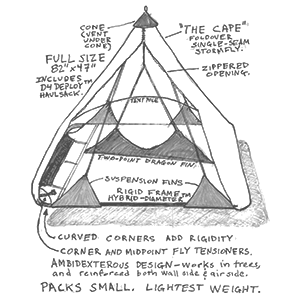
A portaledge is a deployable hanging tent system designed for rock climbers who spend multiple days and nights on a big wall climb. An assembled portaledge is a fabric-covered platform surrounded by a metal frame that hangs from a single point and has adjustable suspension straps. A separate cover, called a ‘stormfly,’ covers the entire system in the event of bad weather.
The first portaledges used in Yosemite were non-collapsible cots purloined from Housekeeping Camp, a Yosemite Valley campground that featured primitive metal framed bunks for the campers. These heavy cots were used on multi-day climbs on granite monoliths like El Capitan, and then sometimes tossed off the summit for later retrieval.
read more »
Posted in Games, Money, Technology |
Leave a Comment »
October 27, 2012
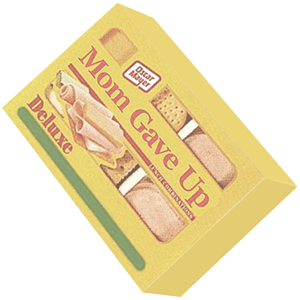
Lunchables is a line of lunch combinations manufactured by Kraft Foods, Inc, beginning in 1988. They are marketed under the Oscar Mayer brand in the United States and Dairylea in the United Kingdom. Many Lunchables products are produced at Kraft Foods, Inc.’s Fullerton factory in Fullerton, California, and are then distributed across the nation.
A typical Lunchables meal combination includes crackers, small slices of meat, and an equal number of slices of cheese. Other varieties include pizza, small hot dogs, small burgers, nachos, subs, and wraps. Overall there are 25 different kinds of Lunchables meals. ‘Deluxe’ versions, which were originally developed for adults, included two types of meats and two types of cheeses. Deluxe versions usually also contained a sauce and a mint.
read more »
Posted in Food, Health, Money |
Leave a Comment »
October 14, 2012

The Kill A Watt is an electricity usage monitor marketed by P3 International. It features a large LCD display and it enables cost forecasting.
It measures the energy used by individual appliances plugged into the meter, as opposed to in-home energy use displays, which display the energy used by an entire household. The name is a play on the word kilowatt. The device can give an indication of the standby power used by appliances.
Posted in Money, Technology |
Leave a Comment »
September 27, 2012

Most heated clothing is designed for cold-weather sports and activities, such as motorcycle riding, downhill skiing, winter biking, and snowmobiling, trekking and for outdoor workers such as construction workers and carpenters. Normal insulation works by trapping body heat, so if it gets wet from sweat or rain, or if a person stops exercising, the insulation may not keep them warm.
With heated garments, a person can keep warm even if they are resting and not producing heat, or if their coat is damp from sweat. The most widely-available types of heated clothing are products for the extremities- the hands and feet. These body parts are the most likely to suffer frostbite or frostnip in severe cold. As such, many manufacturers make heated gloves, mittens, socks, and boot liners, and they can be purchased at workers’ supply stores (serving construction workers) and motor sports stores. Heated torso coverings (vests or jackets) or leggings are available from specialty retailers that cater to motorcyclists and downhill skiers.
read more »
Posted in Games, Money, Technology |
Leave a Comment »
September 14, 2012
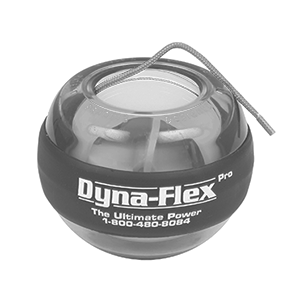
A gyroscopic exercise tool is a device used to exercise the wrist as part of physical therapy or in order to build palm, forearm, and finger strength. It can also be used as a unique demonstration of some aspects of rotational dynamics. The non impact nature of the products combined with the soothing resistance of the spinning rotor have made them good rehabilitation devices for persons suffering from carpal tunnel syndrome, arthritis, RSI, bone breakage etc.
The device consists of a tennis ball-sized plastic or metal shell around a free-spinning mass, which is started with a short rip string. Once the gyroscope inside is going fast enough, a person holding the device can accelerate the spinning mass to high revolution rates by moving the wrist in a circular motion. The shell almost completely covers the mass inside, with only a small round opening allowing the gyroscope to be manually started.
Posted in Games, Health |
Leave a Comment »
September 11, 2012

Cards Against Humanity is a multiplayer party game currently available as a free download or a published hardcopy. The game is available under a Creative Commons license. Its title references the phrase ‘crimes against humanity,’ reflecting its politically incorrect content.
Cards Against Humanity was created by a group of alumni of Highland Park High School as a party game for a New Year’s Eve celebration. The project was financed through the website Kickstarter. Co-creator Ben Hantoot stated in an interview that the game was developed by ‘8 of us who are the core writer-creators, 5 or 6 additional ‘part time’ developers’ and ‘dozens of friends and acquaintances who have played the game.’
read more »
Posted in Games, Humor, Language |
Leave a Comment »
August 9, 2012

Elastic therapeutic tape, commonly referred to as ‘kinesiology tape,’ is an elastic cotton strip with an acrylic adhesive that is used with the intention of treating athletic injuries and a variety of physical disorders.
Numerous studies have failed to show that elastic therapeutic taping produces clinically significant benefits. A 2012 systematic review found that the efficacy of Kinesio Tape in pain relief was trivial.
read more »
Posted in Games, Health, Money |
Leave a Comment »
August 1, 2012

Project Glass is a research and development program by Google to develop an augmented reality head-mounted display (HMD). The intended purpose of Project Glass products would be the hands free displaying of information currently available to most smartphone users, and allowing for interaction with the Internet via natural language voice commands, in a manner which has been compared to the iPhone feature Siri.
The functionality and physical appearance (minimalist design of the aluminium strip with 2 nose pads) has been compared to the EyeTap (developed by Steve Mann at the University of Toronto), which was also referred to as ‘Glass’ (‘EyeTap Digital Eye Glass’). Though head-worn displays for augmented reality are not a new idea, the project has drawn media attention primarily due to its backing by Google, as well as the prototype, which is smaller and slimmer than previous designs for head-mounted displays.
read more »
Posted in Money, Technology |
Leave a Comment »
July 31, 2012


Kinect is a motion sensing input device released by Microsoft in 2010 for the Xbox 360 game console, and in 2012 for Windows PC. Based around a webcam-style add-on peripheral, it enables users to control and interact with software without the need to touch a game controller (through a natural user interface using gestures and spoken commands).
The project is aimed at broadening the Xbox 360’s audience beyond its typical gamer base. Kinect competes with the Wii Remote Plus and PlayStation Move with PlayStation Eye motion controllers for the Wii and PlayStation 3 home consoles, respectively. After selling a total of 8 million units in its first 60 days, the Kinect holds the Guinness World Record of being the ‘fastest selling consumer electronics device.’
read more »
Posted in Games, Money, Technology |
Leave a Comment »
July 31, 2012

The Dreameye is a digital camera released for the Dreamcast in 2000 in Japan only. It was designed to be used as a webcam and a digital still camera, and there were plans for games to involve the Dreameye. The Dreameye was only released in Japan, and Dreameye functionality was absent in non-Japanese versions of the games it could be used with. It came with the Divers 2000 Dreamcast (a rare all-in-one console unit developed by Fuji, intended as a video communications and gaming device for the consumer and hospitality markets) but was also sold separately. The DreamEye can be seen as the first use of a digital camera on a video games console.
The Dreameye came with a microphone headset, a stand, batteries, software, a cable to connect it to the Dreamcast, and a Dreameye microphone plug card. The Dreameye takes pictures at approximately 0.3 megapixels (640×480 pixels), but in order to send them via e-mail the pictures in question had to be first saved to a Dreamcast memory card. Upon transferring the pictures off of the card they resized to a resolution of 320px by 240px.
Posted in Games, Technology |
Leave a Comment »
July 31, 2012
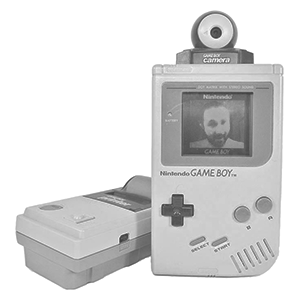
The Game Boy Camera is an official Nintendo accessory for the handheld Game Boy and Super Game Boy gaming consoles and was released in 1998. It is also compatible with all of the Game Boy platforms (with the exception of Game Boy Micro). The camera can take 256×224 (down scaled to half resolution on the unit with anti-aliasing), black & white digital images using the 4-color palette of the Game Boy system.
It interfaced with the Game Boy Printer, which utilized thermal paper to print any saved images, making a hard copy. Both the camera and the printer were marketed by Nintendo as light-hearted entertainment devices aimed mainly at children. The Game Boy Camera was used to take the photographs for the album cover of Neil Young’s album ‘Silver & Gold.’
Posted in Games, Technology |
Leave a Comment »


 The Daily Omnivore