October 23, 2014
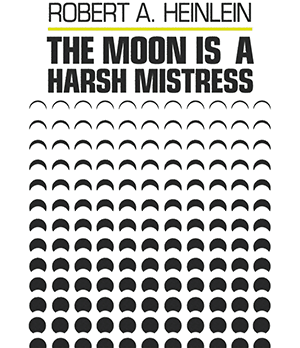
‘There ain’t no such thing as a free lunch’ (TANSTAAFL) is a popular adage communicating the idea that it is impossible to get something for nothing. The phrase dates to the 1930s and 1940s, but its first appearance is unknown. The ‘free lunch’ in the saying refers to the nineteenth-century practice in American bars of offering a ‘free lunch’ in order to entice drinking customers.
The phrase and the acronym are central to Robert Heinlein’s 1966 science-fiction novel ‘The Moon Is a Harsh Mistress,’ about the revolt of a lunar colony and the installation of a libertarian regime. Free-market economist Milton Friedman used it as the title of a 1975 book, and it is often mentioned in economics literature to describe opportunity cost (the value of the next best thing you give up whenever you make a decision). Macroeconomist Campbell McConnell writes that the idea is ‘at the core of economics.’
read more »
Posted in Language, Money, Science |
Leave a Comment »
November 8, 2013
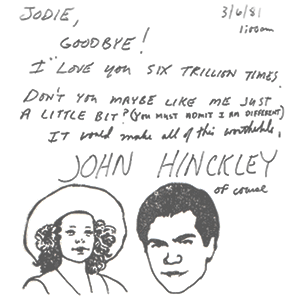
Cherchez la femme [sher-shey la-fam] is a French phrase which literally means ‘look for the woman.’ The implication is that a man behaves out of character or in an otherwise inexplicable manner because he is trying to cover up an affair with a woman, or trying to impress or gain favor with a woman. The expression comes from the 1854 novel ‘The Mohicans of Paris’ by Alexandre Dumas. In his 1864 theatrical adaptation the expression translates as: ‘There is a woman in every case; as soon as they bring me a report, I say, ‘Look for the woman!”
The phrase embodies a cliché of detective pulp fiction: no matter what the problem, a woman is often the root cause. It has come to refer to explanations that automatically find the same root cause, no matter the specifics of the problem.
Posted in Love, Sex, World |
1 Comment »
September 11, 2013
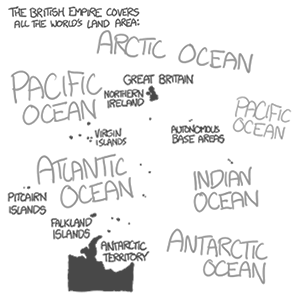
The phrase “the empire on which the sun never sets” has been used with variations to describe certain global empires that were so extensive that there was always at least one part of their territory in daylight.
It was originally used for the Spanish Empire in the 16th and 17th centuries, and for the British Empire in the 19th and early 20th centuries. German historian of language Georg Büchmann traces the idea to a speech in Herodotus’ Histories, made by Xerxes I of Persia before invading Greece.
read more »
Posted in Language, Politics, World |
3 Comments »
August 20, 2013
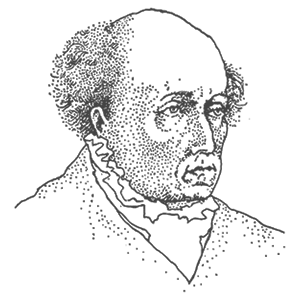
The dose makes the poison, a principle of toxicology, was first expressed by German-Swiss Renaissance physician Paracelsus. It means that a substance can produce the harmful effect associated with its toxic properties only if it reaches a susceptible biological system within the body in a high enough concentration (dose).
The principle relies on the finding that all chemicals—even water and oxygen—can be toxic if too much is eaten, drunk, or absorbed. ‘The toxicity of any particular chemical depends on many factors, including the extent to which it enters an individual’s body.’ This finding provides also the basis for public health standards, which specify maximum acceptable concentrations of various contaminants in food, public drinking water, and the environment.
read more »
Posted in Drugs, Health |
Leave a Comment »
August 17, 2013
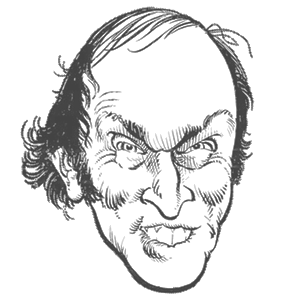
‘Just watch me‘ is a phrase made famous by Canadian Prime Minister Pierre Trudeau on October 13, 1970, during the October Crisis (two kidnappings of government officials by Québécois separatists). The term is still regularly used in Canadian political discussion. Trudeau, who had in previous years been a strong proponent of civil liberties, spoke of the need for drastic action to restore order in Quebec.
When questioned by CBC reporter Tim Ralfe on how far he would go in the suspension of civil liberties to maintain order, Trudeau replied ‘Well, just watch me.’ Three days later he invoked the ‘War Measures Act,’ which led to police action against many Quebec dissidents and great public controversy.
Posted in Language, Politics |
1 Comment »
May 21, 2013

‘Praise the Lord and Pass the Ammunition‘ is an American patriotic song written by Frank Loesser and published as sheet music in 1942 by Famous Music Corp. The song was a response to the attack on Pearl Harbor that marked United States involvement in World War II.
The song describes a chaplain (‘sky pilot’) being with some fighting men who are under attack from an enemy. He is asked to say a prayer for the men who were engaged in firing at the oncoming planes. The chaplain puts down his Bible, mans one of the ship’s gun turrets and begins firing back, saying, ‘Praise the Lord and pass the ammunition.’
read more »
Posted in Philosophy, War |
Leave a Comment »
May 8, 2013
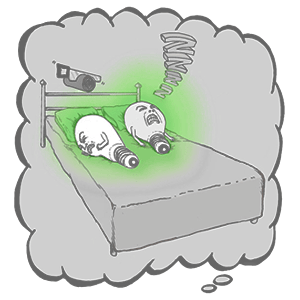
‘Colorless green ideas sleep furiously‘ is a sentence composed by linguist Noam Chomsky in his 1957 book ‘Syntactic Structures’ as an example of a sentence that is grammatically correct, but semantically nonsensical. The term was originally used in his 1955 thesis ‘Logical Structures of Linguistic Theory.’
Although the sentence is grammatically correct, no obvious understandable meaning can be derived from it, and thus it demonstrates the distinction between syntax (linguistic rules) and semantics (symbolic meaning). As an example of a category mistake (a property is ascribed to a thing that could not possibly have that property), it was used to show inadequacy of the then-popular probabilistic models of grammar, and the need for more structured models.
read more »
Posted in Games, Language, Philosophy |
1 Comment »
March 9, 2013
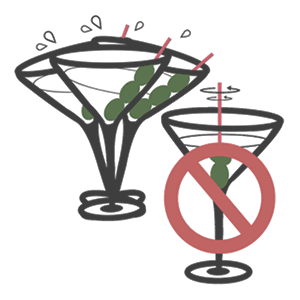
‘Shaken, not stirred‘ is a catchphrase of Ian Fleming’s fictional British Secret Service agent James Bond, and his preference for how he wished his martini prepared. The phrase first appears in the novel ‘Diamonds Are Forever’ (1956), though Bond does not actually say the line until ‘Dr. No’ (1958) but says it ‘shaken and not stirred’ instead of ‘shaken, not stirred.’ It was first uttered in the films by Sean Connery in Goldfinger in 1964 (though the villain Dr. Julius No offers this drink and utters those words in the first film, Dr. No, in 1962).
It was used in numerous Bond films thereafter with the notable exceptions of ‘You Only Live Twice,’ in which the drink is offered stirred, not shaken (Bond, ever the gentleman, ignores his host’s gaffe, telling him the drink is perfect), and ‘Casino Royale,’ in which Bond, after losing millions of dollars in a game of poker, is asked if he wants his martini shaken or stirred, and snaps, ‘Do I look like I give a damn?’
read more »
Posted in Food, Language |
Leave a Comment »
December 4, 2012
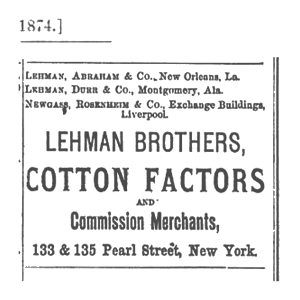
‘Too big to fail‘ describes financial institutions that are so large and so interconnected that their failure is widely held to be disastrous to the economy, and which therefore must be supported by government when they face difficulty. The term was popularized by Congressman Stewart McKinney in a 1984 hearing discussing the FDIC’s intervention with a failing bank, Continental Illinois.
Proponents of this theory believe that the importance of some institutions means they should become recipients of beneficial financial and economic policies from governments or central banks. One of the problems that arises is moral hazard (where costs that could incur will not be felt by the party taking the risk), in this case companies insulated by protective policies will seek to profit by it, and take positions that are high-risk high-return, as they are able to leverage these risks based on the policy preference they receive.
read more »
Posted in Money, Politics |
Leave a Comment »
September 10, 2012

‘I would rather cry in a BMW‘ is a quotation that became an online sensation in China in 2010. It originated from Ma Nuo, a 20-year-old female contestant on the television show ‘Fei Cheng Wu Rao’ (also known in English as ‘If you are the One’).
The line was in response to a question by an unemployed suitor who asked if Ma would ‘ride a bicycle with him’ on a date. The series of events have been summed up in the media with the quip ‘I would rather cry in a BMW than laugh on a bicycle.’
read more »
Posted in Games, Money, World |
1 Comment »
August 13, 2012
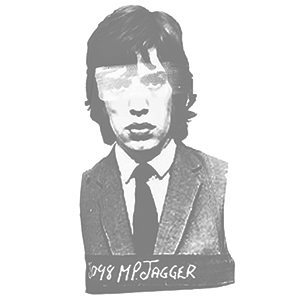
‘Who breaks a butterfly upon a wheel?‘ is a quotation – sometimes misquoted with ‘on’ in place of ‘upon’ – from Alexander Pope’s ‘Epistle to Dr Arbuthnot’ of 1735. It can be taken as referring to putting massive effort into achieving something minor or unimportant, and alludes to ‘breaking on the wheel,’ a form of torture in which victims had their long bones broken by an iron bar while tied to a Catherine wheel.
William Rees-Mogg, as editor of ‘The Times’ newspaper, used the ‘on a wheel’ version of the quotation as the heading (set in capital letters) for an editorial in 1967 about the ‘Redlands’ court case, which had resulted in prison sentences for Rolling Stones members Keith Richards and Mick Jagger. The philosopher Mary Midgley used a variation on the phrase in an article in the journal ‘Philosophy’ written to counter a review praising ‘The Selfish Gene’ by Richard Dawkins, where she cuttingly said that she had ‘not attended to Dawkins, thinking it unnecessary to break a butterfly upon a wheel.’
Posted in Language, Politics, Sex |
1 Comment »
July 3, 2012

‘The medium is the message‘ is a phrase coined by Marshall McLuhan meaning that the form of a medium embeds itself in the message, creating a symbiotic relationship by which the medium influences how the message is perceived. The phrase was introduced in his most widely known book, ‘Understanding Media: The Extensions of Man,’ published in 1964.
McLuhan proposes that a medium itself, not the content it carries, should be the focus of study. He said that a medium affects the society in which it plays a role not only by the content delivered over the medium, but also by the characteristics of the medium itself. McLuhan frequently punned on the word ‘message’ changing it to ‘mass age,’ ‘mess age,’ and ‘massage’; a later book, ‘The Medium is the Massage’ was originally to be titled ‘The Medium is the Message,’ but McLuhan preferred the new title which is said to have been a printing error.
read more »
Posted in Language, Politics, Technology |
1 Comment »


 The Daily Omnivore