April 7, 2012

Geoffrey Barrow (b. 1971) is an English producer, composer, disc jockey, and is the instrumentalist for the band Portishead. Portishead—formed in 1991—was named after the small town near Bristol where Barrow grew up. On his intentions in forming Portishead, he has stated, ‘I just wanted to make interesting music, proper songs with a proper life span and a decent place in people’s record collections.’ After being involved in many local rock bands, playing drums and DJing in hip hop groups, Barrow got his first job at the Coach House Studios as a tape operator soon after it opened in 1989.
In 1991, while he was assisting on Massive Attack’s breakthrough album ‘Blue Lines,’ the band allowed him spare studio time to get his own ideas on tape. A few years later, when the Portishead project had been assembled, the group came back to record ‘Sour Times’ in that same studio. At the dawn of the ’90s, Barrow was making a name for himself as a remixer, working with such artists as Primal Scream, Paul Weller, Gabrielle, and Depeche Mode. In addition, Barrow had produced a track for Tricky and written songs for Neneh Cherry.
Posted in Art |
Leave a Comment »
April 4, 2012

Gil Evans (1912 – 1988) was a jazz pianist, arranger, composer and bandleader, active in the United States. He played an important role in the development of cool jazz, modal jazz, free jazz and jazz fusion, and collaborated extensively with Miles Davis.
Between 1941 and 1948, he worked as an arranger for the Claude Thornhill Orchestra. Evans’ modest basement apartment behind a New York City Chinese laundry soon became a meeting place for musicians looking to develop new musical styles outside of the dominant bebop of the day. Those present included the leading bebop performer Charlie Parker himself, as well as Gerry Mulligan and John Carisi.
read more »
Posted in Art |
1 Comment »
April 3, 2012


Simian Mobile Disco are an electronic music duo and production team from London, formed in 2005 by James Ford and Jas Shaw. Musically, they are known for their analog production. In addition to his work with Simian Mobile Disco, Ford is a producer and has worked with artists such as Florence and the Machine, Peaches, Arctic Monkeys, and Klaxons. Simian Mobile Disco originally formed as a DJ duo, on the side of their early four-piece band Simian. They released a number of early tastemaker singles, such as ‘The Mighty Atom / Boatrace / Upside Down’ on I’m a Cliché and ‘The Count’ on Kitsuné, but gained more fame for their remixes of artists such as Muse, Klaxons, The Go! Team, Air, and others.
In 2006, Kitsuné released the duo’s underground hit ‘Hustler,’ which features guest vocals from New York singer Char Johnson. The band’s debut album, ‘Attack Decay Sustain Release’ was released in 2007 on Wichita Recordings. The lead single, ‘It’s the Beat,’ features Ninja from UK indie band The Go! Team on vocals. Their sophomore studio album, ‘Temporary Pleasure’ was released in 2009, and featured many guests including Gruff Rhys of Super Furry Animals, Alexis Taylor of Hot Chip, Beth Ditto of Gossip, and Chris Keating of Yeasayer.
Posted in Art, Technology |
Leave a Comment »
March 27, 2012

BS 2000 is the name of a musical side project of Beastie Boys’ Adam ‘Adrock’ Horovitz and Amery ‘AWOL’ Smith also with tracks featuring Janay North. In 1997, BS 2000 released their vinyl-only self-titled debut.
BS 2000 later released a limited-edition vinyl/CD, ‘Buddy,’ in 2000 and ‘Simply Mortified’ on vinyl and CD in 2001. Their song ‘The Scrappy’ was featured on the American and European versions of the Xbox video game, ‘Jet Set Radio Future.’
Posted in Art |
Leave a Comment »
March 26, 2012
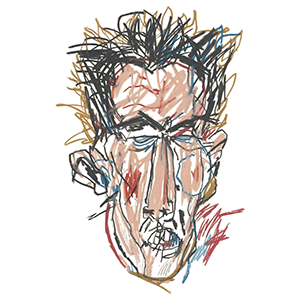
John Lurie (b. 1952) is an American actor, musician, painter, director and producer. He is co-founder of The Lounge Lizards, a jazz ensemble. Lurie has acted in 19 films including ‘Stranger than Paradise’ and ‘Down by Law,’ composed and performed music for 20 television and film works, and he produced and starred in ‘Fishing with John,’ a 1991 television series.
In 1996 his soundtrack for ‘Get Shorty’ was nominated for a Grammy Award. For five years he appeared in the HBO television show ‘Oz.’ Suffering from chronic Lyme disease since 2000, Lurie refocused his attention on painting. His primitivist art works have shown in galleries around the world. His painting ‘Bear Surprise’ became an internet meme in Russia in 2006.
read more »
Posted in Art |
Leave a Comment »
March 20, 2012

The Abnuceals Emuukha Electric Symphony Orchestra was a group of Hollywood session musicians organized by Frank Zappa in 1967 to record music for his first solo album ‘Lumpy Gravy.’ Some of these musicians are thought to have worked together in various combinations under the leadership of Ken Shroyer as far back as 1959. However, it was Zappa who gave them the name several years later.
In 1975 Zappa organized another group using the same name which involved a few of the same musicians. This group recorded music for the album ‘Orchestral Favorites.’ In 1983 soundtrack music for ‘The Chipmunks’ was recorded by yet another permutation using the same name but organized without the involvement of Zappa or Shroyer. The last appearance by this later ensemble was on the ‘Who Framed Roger Rabbit’ soundtrack in 1988.
Posted in Art |
Leave a Comment »
March 19, 2012
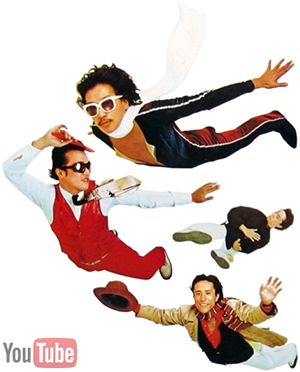
Sadistic Mika Band was a Japanese rock group formed in 1972. Its name is a parody of the ‘Plastic Ono Band.’ Produced by Masatoshi Hashiba on Toshiba-EMI Records (now EMI Music Japan), the band was led by the then husband and wife team of guitarist Kazuhiko Kato, and his wife, singer Mika Fukui. The word ‘sadistic’ is reported to be inspired by her insensitive sense of humor.
Kazuhiko Kato moved to London in 1972 and impressed by the burgeoning glam rock scene led by T. Rex and David Bowie, he set about forming a new group in Japan to emulate the style. Kato passed the album to Malcolm McLaren who at the time had a shop with Vivienne Westwood, and McLaren passed it on to Bryan Ferry, whose band Roxy Music would later support on a tour.
Posted in Art, Humor, World |
Leave a Comment »
March 16, 2012


Zigaboo Modeliste (b. 1948) is an American drummer best known as a founding member of the funk group The Meters. Considered to be one of the most innovative, and highly acclaimed drummers ever to hail from New Orleans. Modeliste is a pioneer of second-line funk. He remains a strong influence for drummers and his syncopated style is the source of a great many hip-hop and drum and bass samplers.
He also cofounded The Wild Tchoupitoulas and has worked extensively with other musicians, notably Keith Richards, Robert Palmer, and Dr. John. Zigaboo released his first solo CD in 2000 – ‘Zigaboo.com.’ In 2011, he released his fourth solo album entitled ‘New Life.’ This record has elements of rock, funk and blues and features such artists as arranger Wardell Quezerque and Trumpeter Mic Gillet of Tower of Power fame. He resides in Oakland, California and continues to teach, release records, as well as manage his publishing Company Jomod Music and record label JZM records.
Posted in Art |
Leave a Comment »
February 16, 2012

The three individuals most closely associated with the birth of Detroit techno as a genre are Juan Atkins, Kevin Saunderson and Derrick May, also known as ‘The Belleville Three.’ High school friends from Belleville, Michigan, the trio created electronic music tracks in their basement(s). Eventually, they were in demand at local dance clubs, thanks in part to seminal Detroit radio personality ‘The Electrifying Mojo.’
Ironically, Derrick May once described Detroit techno music as being a ‘complete mistake…like George Clinton and Kraftwerk caught in an elevator, with only a sequencer to keep them company.’ The location of Belleville was key to the formation of the three as musicians. Because the town was still ‘pretty racial at the time,’ according to Saunderson, ‘we three kind of gelled right away.’
read more »
Posted in Art, Technology |
1 Comment »
February 16, 2012
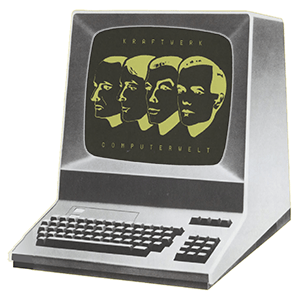
Emil Schult (b. 1946) is a German painter, poet and musician. He is most famous for his collaborations with the electronic music band Kraftwerk. He has created most of their sleeve designs since 1973. He also co-wrote the lyrics of some famous Kraftwerk songs.
For a short while around 1973, Schult also played guitar in the group; this was to be short-lived, since Schult by his own admission is not quite good enough to be a professional musician, and since the group had started to develop its synth-based sound it no longer had any use for a guitarist.
Posted in Art |
Leave a Comment »
February 16, 2012

Kraftwerk (German: ‘power plant’ or ‘power station’) is an influential electronic music band from Germany. The group was formed by Ralf Hütter and Florian Schneider in 1970, and was fronted by them until Schneider’s departure in 2008. The signature Kraftwerk sound combines driving, repetitive rhythms with catchy melodies, mainly following a Western Classical style of harmony, with a minimalistic and strictly electronic instrumentation.
The group’s simplified lyrics are at times sung through a vocoder or generated by computer-speech software. Kraftwerk were one of the first groups to popularize electronic music and are considered pioneers in the field. In the 1970s and early 1980s, Kraftwerk’s distinctive sound was revolutionary, and has had a lasting effect across many genres of modern music.
read more »
Posted in Art, Technology, World |
Leave a Comment »
February 16, 2012


8-Bit Operators: The Music of Kraftwerk was released in 2007 by the group 8-Bit Operators on Kraftwerk’s US homelabel Astralwerks and EMI Records worldwide. It features cover versions of Kraftwerk songs by several prominent chiptune artists. Inspiration for the project as quoted by Jeremy Kolosine (credited as Executive Producer of the release, and noted founder of the early 80’s electronic group Futurisk and chipmusic band Receptors.) ‘Well the first thing that comes to my mind when I saw a gameboy show was Kraftwerk’s Computer World Tour from 1981, where four of them played various handheld devices during the song ‘Pocket Calculator.’ Plus it came up in a print from a Glomag quote, and an 8 Bit Weapon April Fool’s joke that backfired.’
This Kraftwerk covers compilation was somewhat unique in the fact that Kraftwerk’s Ralf Hütter selected the final track line-up, ‘So Jeremy was a little nervous when meeting Kraftwerk’s Ralf Hütter after a concert by the group in New York last year. He passed along to him a sample of the compilation. Later Hutter said he enjoyed it and even offered some editing suggestions.’ In a subsequent interview, when asked about the 8-Bit Operators release, Ralf Hütter responded, ‘It is mind stimulating, the minimum/maximum coming from sound levels and thoughts and ideas. Like ‘Autobahn’ and ‘Trans-Europe Express’ are very basic and elementary ideas, but they offer a pattern or concept for improvisation.’
Posted in Art, Technology |
Leave a Comment »



 The Daily Omnivore