February 22, 2014
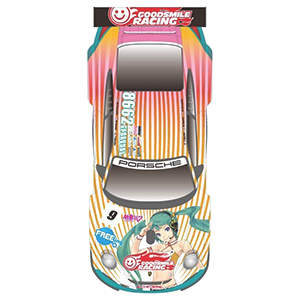
Itasha [ee-tah-sha] (literally ‘painful car’) is a Japanese term for a fashion of individuals decorating the bodies of their cars with fictional characters of anime, manga, or video games (especially ‘bishojo game’ and ‘eroge’ – dating and porn games). These characters are predominantly ‘cute’ females. The decorations usually involve paint schemes and stickers. Automobiles are called ‘itasha,’ while similar motorcycles and bicycles are called ‘itansha’ and ‘itachari,’ respectively.
In the 1980s, when Japan was at the zenith of its economic might, Tokyo’s streets were a parade of luxury import cars. Among them, the ‘itasha’—originally Japanese slang meaning an imported Italian car—was the most desired. Since then, ‘itasha’ (as the decorated vehicle) was derived from combining the Japanese words for ‘itai’ (‘painful’) and ‘sha’ (‘vehicle’). ‘Painful’ can be interpreted as ‘painfully embarrassing’ or ‘painful for the wallet’ due to the high costs involved.
Posted in Art, Technology, World |
Leave a Comment »
August 25, 2013
A shyster [shahy-ster] is a slang word for someone who acts in a disreputable, unethical, or unscrupulous way, especially in the practice of law, politics or business. The etymology of the word is not generally agreed upon. The Merriam-Webster Dictionary says it is based on the German ‘Scheißer’ (literally ‘defecator’ but also used to refer to deceivers), but the Oxford English Dictionary describes it as ‘of obscure origin,’ possibly deriving from a historical sense of ‘shy’ meaning disreputable. Various false etymologies have suggested an anti-Semitic origin, but there is no proof for that. One source claims that the term originated in Philadelphia in 1843 from a disreputable attorney named ‘Schuster.’
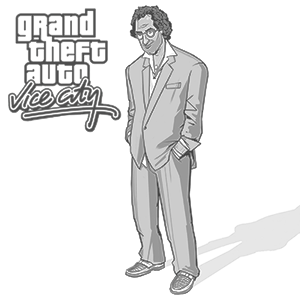
Notable ‘shysters’ of fiction include Sylvester Shyster (a Walt Disney cartoon character introduced in 1930), a disbarred attorney who schemes to deprive Minnie Mouse of her inheritance; and Dave Kleinfeld, a mob lawyer in ‘Carlito’s Way’ (1993) who was parodied in ‘Grand Theft Auto: Vice City’ as Ken Rosenberg.
Posted in Language, Money, Politics |
1 Comment »
August 7, 2013

Guido [gwee-doh] is a slang term for a lower-class or working-class urban Italian American. Originally, it was used as a demeaning term for Italian Americans in general. More recently, it has come to refer to Italian Americans who conduct themselves in a thuggish, overtly macho manner.
The time period in which it obtained the latter meaning is not clear, but some sources date it to the 1970s or 1980s. The term is derived from either the proper name ‘Guido’ or the Italian verb ‘guidare’ (‘to drive’). Fishermen of Italian descent were once often called ‘Guidos’ in medieval times.
read more »
Posted in Language, Politics |
Leave a Comment »
August 7, 2013
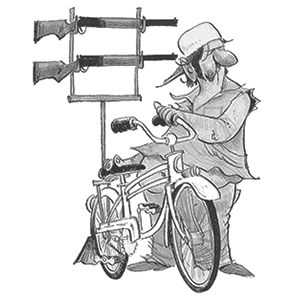
Redneck is a derogatory slang term used in reference to poor, uneducated white farmers, especially from the southern United States. It is similar in meaning to ‘cracker’ (especially regarding Georgia and Florida), ‘hillbilly’ (especially regarding Appalachia and the Ozarks), and ‘white trash’ (but without the last term’s suggestions of immorality).
By the 2000s, the term had expanded in meaning to refer to bigoted, loutish reactionaries who are opposed to modern ways, and has often been used to attack white Southern conservatives. The term is also used broadly to degrade working class and rural whites that are perceived by urban progressives to be insufficiently liberal. At the same time, some Southern whites have reclaimed the word, using it with pride and defiance as a self-identifier.
read more »
Posted in Language, Money, Politics |
Leave a Comment »
August 6, 2013

Blockbuster, as applied to film, theater, and sometimes also video games, denotes a very popular or successful production. The term began to appear in the American press in the early 1940s, describing the largest of aerial bombs: single bombs capable of destroying a city block, also known as ‘cookies’ during the firebombing of Hamburg. Later figurative use referred to anything making a public impact:
‘Broadway reacted to the request of War Mobilization Director Byrnes to close all places of entertainment by midnight Feb. 26 as if a blockbuster had landed on Manhattan’ (1945). Some entertainment histories cite it as originally referring to a play that is so successful that competing theaters on the block are ‘busted’ and driven out of business, but the OED cites a 1957 use which is simply as a term of ‘biggest,’ after the bombs.
read more »
Posted in Art, Language, Money |
Leave a Comment »
July 24, 2013
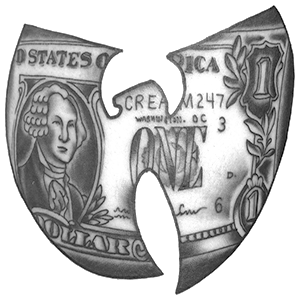
‘C.R.E.A.M.‘ (‘Cash Rules Everything Around Me’) is a song by the Wu-Tang Clan, from their 1993 studio album, ‘Enter the Wu-Tang (36 Chambers).’
The song was produced by Wu-Tang Clan leader RZA, and samples The Charmels’ 1967 song, ‘As Long As I’ve Got You.’ The track features a verse from Raekwon, a long verse from Inspectah Deck, and the hook performed by Method Man: ‘Cash rules everything around me, C.R.E.A.M./Get the money; dollar, dollar bill, y’all.’
read more »
Posted in Art, Money |
Leave a Comment »
July 14, 2013
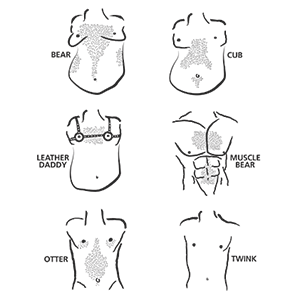
In gay culture, a Bear is a large, hairy man who projects an image of rugged masculinity. As a rising subculture in the gay and bisexual male communities, Bears are one of many LGBT communities with events, codes, and a culture-specific identity.
The term was popularized by Richard Bulger, who, along with his then partner Chris Nelson (1960–2006) founded ‘Bear Magazine’ in 1987. There is some contention surrounding whether Bulger originated the term and the subculture’s conventions. Author George Mazzei, for example, wrote an article for ‘The Advocate’ in 1979 called ‘Who’s Who in the Zoo?,’ that characterized homosexuals as seven types of animals, including bears.
read more »
Posted in Language, Sex |
1 Comment »
July 14, 2013
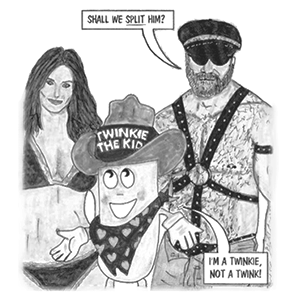
Twink [twingk] is a gay slang term describing a young or young-looking man with a slender, ectomorph build (long and thin), little or no body hair, and no facial hair. In some societies, the terms ‘fox,’ ‘plum,’ ‘chick,’ or ‘chicken’ are preferred. The related term ‘twinkle-toes,’ which implies that a man is effeminate, tends to be used in a derogatory manner. The terms can be complimentary or pejorative. The opposite of a twink in gay slang is a ‘bear,’ a large, hairy man who projects an image of rugged masculinity.
The term’s namesake is the ‘golden-colored phallic-shaped snack cake’ Hostess Twinkie, commonly regarded as the quintessential junk food: ‘little nutritional value, sweet to the taste and creme-filled.’ In ‘Queering Pornography: Desiring Youth, Race and Fantasy in Gay Porn,’ essayist Zeb J. Tortorici notes that gay twink porn thrives on the production and performance of ‘consumable and visually/anally receptive masculinity.’
read more »
Posted in Language, Sex |
Leave a Comment »
May 31, 2013
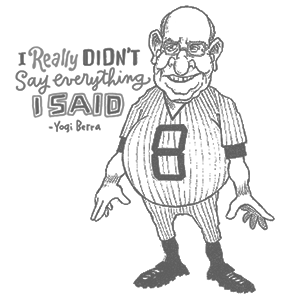
A howler is a glaring blunder, typically an amusing one. Eric Partridge’s ‘A Dictionary of Slang and Unconventional English’ (1951) defined it in part as: ‘… A glaring (and amusing) blunder: from before 1890; … also, a tremendous lie … Literally something that howls or cries for notice, or perhaps … by way of contracting howling blunder.’ Another common interpretation of this usage is that a howler is a mistake fit to make one howl with laughter.
All over the world, probably in all natural languages, there are many informal terms for blunders; the English term ‘howler’ occurs in many translating dictionaries. There are other colloquial English words for howler, in particular the mainly United States and Canadian slang term ‘boner’ which has various interpretations, including that of blunder. Like howler, boner can be used in any sense to mean an ignominious and usually laughable blunder, and also like howler, it has been used in the titles of published collections of largely schoolboy blunders since at least the 1930s.
read more »
Posted in Humor, Language |
Leave a Comment »
May 2, 2013

The phrases ‘no homo‘ and ‘pause’ are slang terms. They parenthetically assert that the speaker of such does not have any homosexual intent and are usually used after an utterance that may have given that impression. The term originated in East Harlem slang of the early 1990s.
It was used by many to distance themselves from the stereotype of closeted gay and bisexual men. Several social commentators have criticized the use of both ‘no homo’ and ‘pause’ in hip hop and in the mainstream. It has been said that the phrases, ‘uphold an unhealthy relationship with homosexuality, a relationship based in fear.’ Fox News commentator Marc Lamont Hill encouraged the hip-hop community to stop using the terms.
read more »
Posted in Language, Politics, Sex |
Leave a Comment »
March 5, 2013

Mat is a term for strong obscene profanity in Russian and some other Slavic language communities. Mat is censored in the media and the use of mat in public constitutes a form of disorderly conduct, or mild hooliganism (although, such laws are only enforced episodically, in particular due to the vagueness of the legal definition).
However, despite the public ban, mat is used by Russians of all ages and nearly all social groups, with particular fervor in male-dominated military and the structurally similar social strata.
read more »
Posted in Language, World |
Leave a Comment »
September 18, 2012
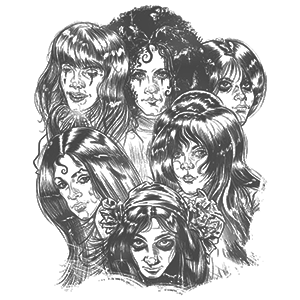
A groupie is a person who seeks emotional and sexual intimacy with a musician or other celebrity or public figure. ‘Groupie’ is derived from group in reference to a musical group, but the word is also used in a more general sense, especially in casual conversation. The word ‘groupie’ is commonplace, a derisive term used to describe a particular kind of female fan assumed to be more interested in sex with rock stars than in their music.
Groupies became prominent in the music scene in the 1960s and 1970s. This was prior to the murder of John Lennon in 1980, and before security levels for bands increased significantly. Female groupies in particular have a long-standing reputation of being available to celebrities, pop stars, rock stars, and other public figures. Led Zeppelin singer Robert Plant is quoted as distinguishing between fans who wanted brief sexual encounters, and ‘groupies’ who traveled with musicians for extended periods of time, acting as a surrogate girlfriend or mother, often taking care of the musician’s valuables, drugs, wardrobe, and social life.
read more »
Posted in Games, Money, Sex |
1 Comment »


 The Daily Omnivore