September 27, 2011
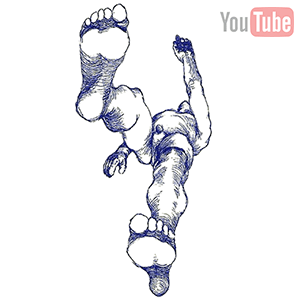
Ryan Larkin (1943 – 2007) was a Canadian animator who rose to fame with the psychedelic 1969 Oscar-nominated short ‘Walking’ and the acclaimed ‘Street Musique’ (1972). In later years Ryan was plagued by a downward spiral of drug abuse, alcoholism and homelessness, but towards the end of his life found himself back in the limelight when a 14-minute computer-animated documentary on his life, ‘Ryan’ by fellow Canadian animator, Chris Landreth, won the Academy Award for Animated Short Film and screened to acclaim at film festivals around the world. ‘Alter Egos’ (2004), directed by Laurence Green, is a documentary about the making of ‘Ryan’ that includes interviews with both Larkin and Chris Landreth as well as with various people who knew Ryan at the peak of his success.
Larkin studied under Arthur Lismer (a member of the Group of Seven, Canadian landscape painters in the 1920s) before starting to work at the National Film Board (NFB) of Canada in the early 1960s. At the NFB, Larkin learned animation techniques from the ground-breaking and award-winning animator, Norman McLaren. Larkin made two acclaimed short animated films, ‘Syrinx’ (1965) and ‘Cityscape’ (1966), before going on to create ‘Walking’ (1969). ‘Walking’ was nominated for an Academy Award in 1970 in the category Best Short Subject, Cartoon, but lost to ‘It’s Tough to Be a Bird’ by director Ward Kimball (one of Disney’s ‘Nine Old Men’). He went on to direct the award-winning short ‘Street Music,’ which premiered in 1972 and would be his last project.
Posted in Art, Drugs |
Leave a Comment »
September 25, 2011

Whole body vibration (WBV) therapy was explored by Russian scientist Vladimir Nazarov, who tested vibration on cosmonauts in an effort to decrease the loss of muscle and bone mass in space. As there is minimal gravitational force in space, muscles and bones are not loaded as they normally are on earth. Humans in space lose their muscular strength very quickly, which is why they are not able to easily walk when they come back to earth. The decrease of bone density increases the risk of bone fractures, so it’s not safe to stay in space for extended periods. The aerospace industry in the former Soviet Union worked with vibration training. Before their departure, cosmonauts were subjected to special training sessions so that the density of their bones would increase and their muscular strength would rise.
A particular form of WBV is vibration training, which is becoming increasingly popular. Initially, vibration training was mainly used in the fitness industry, but the use of vibration equipment is expanding quickly. It is now widely used in physical therapy, rehabilitation and professional sports, but it is also increasingly used for beauty and wellness applications.
read more »
Posted in Health, Money, Technology |
Leave a Comment »
September 25, 2011
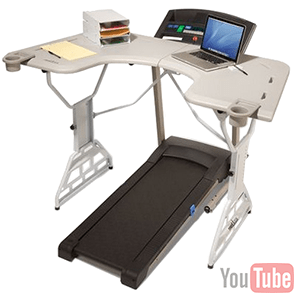
A treadmill desk is a work desk built around a treadmill. A person using the treadmill desk walks slowly on the treadmill while continuing to perform office tasks at the desk. There are several types of treadmill desks available on the open market. Some incorporate a traditional treadmill with a desktop built over it, while most are now commercially built for this specific use. The aim of a treadmill desk is to integrate movement and gentle exercise into the working day of an otherwise sedentary office worker. Rather than sitting all day in a chair, a treadmill desk allows desk-based workers to stand and take a slow walk while working.
A treadmill desk is not typically used for a cardio workout, as most users find walking at a speed of 1.0 – 2.0 mph the ideal range. At slower walking speeds, most able-bodied people can undertake desk-based tasks such as typing or talking on the telephone. However, even at these slower speeds, a person may burn 100 – 150 calories per hour, which may result in increased fitness and weight loss. The aim of the treadmill desk is to improve fitness and reduce obesity in office workers. Scientific research has also shown that walking, like other forms of mild exercise, can also improve one’s mental alertness, heighten creativity, fight depression, increase productivity and improve one’s mood.
Posted in Health, Money, Technology |
Leave a Comment »
September 21, 2011

The Leslie speaker is a specially constructed amplifier/loudspeaker used to create special audio effects using the Doppler effect. Named after its inventor, Donald Leslie, it is particularly associated with the Hammond organ, an electric organ invented by Laurens Hammond in 1934 and manufactured by the Hammond Organ Company. While the Hammond organ was originally sold to churches as a lower-cost alternative to the wind-driven pipe organ, in the 1960s and 1970s it became a standard keyboard instrument for jazz, blues, rock music, church and gospel music. The Hammond/Leslie combination has become an element in many genres of music. Both brands are currently owned by Suzuki Musical Instrument Corporation.
Unlike a high fidelity loudspeaker, the Leslie is specifically designed, via reproduction of the Doppler effect, to alter or modify sound. Although there have been many variations over the years, the classic Leslie speaker consists of two driver units – a treble unit with horns, and a bass unit, and a crossover that divided the frequencies between the horn and the woofer. The key feature is that both the horns (in reality one working horn with a dummy to counter-balance it) and a sound baffle or scoop for the bass are electrically rotated to create ‘Doppler effect based’ vibrato, tremolo and chorus effects. The rotating elements can be stopped, switched between slow (chorale) and fast (tremolo), or transitioned between the two settings.
read more »
Posted in Art, Money, Technology |
Leave a Comment »
September 12, 2011

Easy Cheese is the trademark for a processed cheese product distributed by Kraft Foods, also referred to as aerosol cheese or spray cheese, and is a descendant of squeeze cheese (a semi-solid cheesefood from the 1970s packaged in a squeezable plastic tube). It comes packaged in a spray can, much like canned whipped cream and does not require refrigeration. Easy Cheese contains milk, water, whey protein concentrate, canola oil, milk protein concentrate, sodium citrate, sodium phosphate, calcium phosphate, lactic acid, sorbic acid, sodium alginate, apocarotenal, annatto, cheese culture, and enzymes.
Although sometimes called ‘aerosol cheese,’ its container is not actually an aerosol spray can. Rather, the can contains a piston and a barrier plastic cap which squeezes the cheese through the nozzle in a solid column when the nozzle is pressed and the propellant expands in volume. The propellant, therefore, does not mix with the cheese. This explains why the can has a small rubber plug on its base. The can design also ensures that the cheese can be dispensed with the can upright or inverted.
Posted in Food, Money, Technology |
Leave a Comment »
September 11, 2011

Figure 8 racing is a form of automobile racing that combines elements of oval racing, demolition derby, and road racing. Racing is done on a track shaped like an 8. The cars cross paths at the center of the 8, which is known as the ‘crossover.’ Because of this layout, crashes are inevitable. Figure 8 racing is a unique sport that requires strict attention to detail and timing to successfully navigate the crossover. The oldest operating figure 8 track in the United States is Indianapolis Speedrome in Indianapolis, Indiana. The track has been in operation since the 1940s. It hosts the annual World Figure 8 race, which is considered the world championship event. The first 3 hour long endurance race was held in 1977.
Figure 8 track racing began right after World War II in the late 1940s. The track may have had an overpass so that the cars did not cross each other’s paths. Most historians believe that the first track where drivers crossed each other’s paths was the 1/5 mile long Indianapolis Speedrome. The sport received nationwide publicity when it was frequently televised on ABC’s ‘Wide World of Sports’ in the 1960s, usually from the Islip Speedway in New York. The cars used are often standard cars, but are usually modified for lightness and safety. A wing much like a sprint car may be placed on the roof to increase downforce. The cars’ bodies are typically made out of sheet metal.
Posted in Games, Humor |
Leave a Comment »
September 11, 2011

Jeju Loveland is an outdoor sculpture park which opened in 2004 on Jeju Island in South Korea. The park is focused on a theme of sex, running sex education films, and featuring 140 sculptures representing humans in various sexual positions. It also has other elements such as large phallus statues, stone labia, and hands-on exhibits such as a ‘masturbation-cycle.’ The park’s website describes the location as ‘a place where love oriented art and eroticism meet.’ In 2002, graduates of Seoul’s Hongik University began creating sculptures for the park. Encompassing an area the size of two soccer fields, all of the sculptures can be viewed in approximately one hour, and there is an additional monthly rotating exhibit featuring works by different Korean artists. Visitors are required to be at least 18 years old, and a separate play area is available for minors while adults visit.
After the Korean War, the island became a popular honeymoon destination for Korean couples, due to the island’s warm climate. Many of the couples had wed because of arranged marriages, and the island also became known for being a center of sex education. According to an article in Germany’s ‘Der Spiegel’ magazine, in the late 1980s journalist and travel writer Simon Winchester reported that some hotel employees on the island performed as ‘professional icebreakers.’ In the evenings, the hotel would offer an entertainment program featuring erotic elements, to help newlyweds relax.
Posted in Art, Sex, World |
Leave a Comment »
September 8, 2011

PFFR (or Pre-natal Fighting Frightening Remembrances Forever Ltd.) is a Brooklyn based production company/art collective/electro-rock band consisting of Alyson Levy, Vernon Chatman, Jim Tozzi, and John Lee. The group has been active since 2000. The group’s portfolio of work includes albums, live performances, various art exhibits such as ‘An Attack On All Americans Or The Tyranny Of Weed’ shown at the LFL Galley in New York, and the script for the film ‘Final Flesh.’
PFFR are also active in television comedy. They wrote, directed, produced and starred in the MTV2 variety program ‘Wonder Showzen’ (2005–2006) and the Adult Swim CGI series ‘Xavier: Renegade Angel.’ For both these shows, Chatman and Lee are the directors and main voice talent, whilst Tozzi and Levy are the animation/character designer and art director, respectively. Levy provides additional voices for both shows whilst Tozzi does only for ‘Xavier.’ PFFR are also responsible for producing, directing and co-writing Jon Glaser’s Adult Swim show ‘Delocated.’
read more »
Posted in Art, Humor |
Leave a Comment »
September 8, 2011
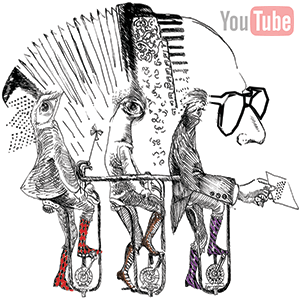
Motion Trio is a Polish accordion trio founded in 1996 by Janusz Wojtarowicz. The group has worked with such artists as Bobby McFerrin and Michał Urbaniak.
Its members consist of accordionists Janusz Wojtarowicz, Paweł Baranek, and Marcin Gałażyn.
Posted in Art, World |
Leave a Comment »
September 7, 2011
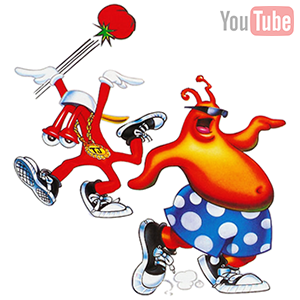
ToeJam & Earl is an action video game for the Sega Genesis (Mega Drive elsewhere). Released in 1991, it centers on the titular ToeJam and Earl—alien rappers who have crash-landed on Earth. As they attempt to escape the planet, players assume the role of either character and collect pieces of their wrecked spacecraft. ToeJam & Earl’s design was heavily influenced by the computer role-playing game Rogue, and took from it such features as the random generation of levels and items. It references and parodies 1990s urban culture and is set to a funk soundtrack. The game was positively received by critics, who praised its originality, soundtrack, humor and two-player cooperative mode. It attained sleeper hit status despite low initial sales, and its protagonists were used as mascots by Sega. Several sequels were produced for other consoles, but their commercial and critical success was mixed.
The game has been called a surreal, comic satire, and a ‘daringly misanthropic commentary on Earthly life.’ ToeJam, a red, three-legged alien, wears a large gold medallion and a backwards baseball cap, while the rotund and orange Earl is marked by high-tops and oversized sunglasses; both outfits are ‘over-the-top appropriations’ of 1990s urban culture. Their speech features California slang. The game is set to a jazz-funk and hiphop soundtrack inspired by Herbie Hancock.
read more »
Posted in Art, Games, Humor |
Leave a Comment »
September 7, 2011

Mountainboarding is a well established, if little-known extreme sport, derived from snowboarding. A mountainboard is made up of components including a deck, bindings to secure the rider to the deck, four wheels with pneumatic tires, and two steering mechanisms known as trucks.
Mountainboarders ride specifically designed boardercross tracks, slopestyle parks, grass hills, woodlands, gravel tracks, streets, skateparks, ski resorts, BMX courses and mountain bike trails. It is this ability to ride such a variety of terrain that separates mountainboarding from other board sports.
read more »
Posted in Games, Technology |
Leave a Comment »
September 6, 2011

Slip-Slop-Slap is the name of a health campaign in Australia exhorting people to ‘slip on a shirt, slop on sunscreen, and slap on a hat’ when they go out into the sun, in order to protect themselves against an increased risk of skin cancer. ‘Seek shade’ and ‘Slide on some sunglasses’ was added a year later. It is probably Australia’s most recognizable health message. The campaign started in 1981; its mascot is a seagull called Sid. It is also used in New Zealand, where the mascot is a lobster, and some Canadian cities have also started their own Slip-Slop-Slap campaigns.
Since the campaign was introduced along with advertisements and a jingle, the incidence of the two most common forms of skin cancer (basal and squamous cell carcinoma) in Australia has decreased. However, the incidence of melanoma – the most lethal form of skin cancer – has increased. An epidimological study published in 2002 concluded that skin cancer increases could not be associated with the use of sun creams, and recommended continued use of the current campaigns as a means to reduce melanoma risk. Vitamin D deficiency has also greatly increased (which can lead to cancers, since sunblock also prevents vitamin D production in the skin. Doctors recommend spending small amounts of time in the sun without sun protection to ensure adequate production of vitamin D.
Posted in Health, Politics, World |
Leave a Comment »


 The Daily Omnivore