June 27, 2011

Inside Job is a 2010 documentary film about the financial crisis of 2007–2010 directed by Charles H. Ferguson, who has described the film as being about ‘the systemic corruption of the United States by the financial services industry and the consequences of that systemic corruption.’ In five parts the film explores how changes in the policy environment and banking practices helped create the 2008 financial crisis.
The film focuses on changes in the financial industry in the decade leading up to the crisis, the political movement toward deregulation, and how the development of complex trading such as the derivatives market allowed for large increases in risk taking that circumvented older regulations that were intended to control systemic risk.
read more »
Posted in Money, Politics |
Leave a Comment »
June 24, 2011


This Is Your Life is an American television documentary series broadcast on NBC, originally hosted by its producer, Ralph Edwards from 1952 to 1961. In the show, the host surprises a guest, and proceeds to take them through their life in front of an audience including friends and family. The format originated as a radio show on NBC Radio airing from 1948 to 1952.
The idea for ‘This Is Your Life’ arose while Edwards was working on ‘Truth or Consequences.’ He had been asked by the U.S. Army to ‘do something’ for paraplegic soldiers at a California Army rehabilitation hospital. Edwards chose a ‘particularly despondent young soldier and hit on the idea of presenting his life on the air, in order to integrate the wreckage of the present with his happier past and the promise of a hopeful future.’
read more »
Posted in Art, Money |
1 Comment »
June 23, 2011

The dolly zoom effect is an unsettling in-camera special effect that appears to undermine normal visual perception in film. In its classic form, the camera is pulled away from a subject while the lens zooms in, or vice-versa.
Thus, during the zoom, there is a continuous perspective distortion, the most directly noticeable feature being that the background appears to change size relative to the subject.
read more »
Posted in Art, Language, Technology |
Leave a Comment »
June 23, 2011
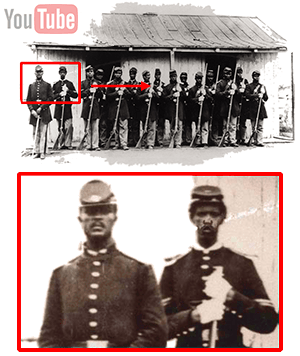
The Ken Burns effect is a popular name for a type of panning and zooming effect used in video production from still imagery. The name derives from extensive use of the technique by American documentarian Ken Burns. The technique predates his use of it, but his name has become associated with the effect in much the same way as Alfred Hitchcock is associated with the Hitchcock zoom.
The name ‘The Ken Burns Effect’ was used by Apple in 2003 for a feature in its iMovie 3 software. The feature enables a widely used technique of embedding still photographs in motion pictures, displayed with slow zooming and panning effects, and fading transitions between frames.
read more »
Posted in Art, Technology |
Leave a Comment »
June 23, 2011

Helmholtz [helm-hohlts] resonance is the phenomenon of air resonance in a cavity, such as when one blows across the top of an empty bottle. The name comes from a device created in the 1850s by Hermann von Helmholtz, the ‘Helmholtz resonator,’ which he, the author of the classic study of acoustic science, used to identify the various frequencies or musical pitches present in music and other complex sounds.
When air is forced into a cavity, the pressure inside increases. When the external force pushing the air into the cavity is removed, the higher-pressure air inside will flow out. However, this surge of air flowing out will tend to over-compensate, due to the inertia of the air in the neck, and the cavity will be left at a pressure slightly lower than the outside, causing air to be drawn back in. This process repeats with the magnitude of the pressure changes decreasing each time.
read more »
Posted in Art, Science, Technology |
Leave a Comment »
June 23, 2011

The army ant genus Dorylus, also known as driver ants, safari ants, or siafu, is found primarily in central and east Africa, although the range also extends to tropical Asia. The term siafu is a loanword from Swahili. All Dorylus species are blind, though they, like most varieties of ants, communicate primarily through pheromones. As with their New World counterparts, there is a soldier class among the workers, which is larger, with a very large head and pincer-like mandibles. They are capable of stinging, but very rarely do so, relying instead on their powerful shearing jaws.
Such is the strength of the ant’s jaws, in East Africa they are used as natural, emergency sutures. Various East African indigenous tribal peoples (e.g. Maasai moran), when they suffer a gash in the bush, will use the soldiers to stitch the wound by getting the ants to bite on both sides of the gash, then breaking off the body. This seal can hold for days at a time, and if necessary, the procedure repeated – allowing sufficient time for natural healing to commence.
read more »
Posted in Science |
Leave a Comment »
June 21, 2011

Clive Wearing (b. 1938) is a British musician and musicologist suffering from an acute and long-lasting case of anterograde and retrograde amnesia. Specifically, this means he lacks the ability to form new memories, dubbed the ‘memento’ syndrome by laypeople and the media, after a film of the same name based on the subject.
Clive Wearing is an accomplished musician, and is known for editing the works of composer, Orlande de Lassus. Wearing sang at Westminster Cathedral as a tenor lay clerk for many years and also had a successful career as a chorus master and worked as such at Covent Garden and the London Sinfonietta Chorus. In 1968 he founded the Europa Singers of London, an amateur choir specialising in music of the 17th, 18th and 20th centuries. It won critical approval especially for performances of the Monteverdi Vespers.
read more »
Posted in Art, Health |
Leave a Comment »
June 16, 2011
Barry Lyndon is a 1975 period film directed by Stanley Kubrick based on the 1844 novel ‘The Luck of Barry Lyndon’ by William Makepeace Thackeray which recounts the exploits of an 18th century a man of the Irish gentry trying to become a member of the English aristocracy.
The film is divided into two halves each headed with a title card: ‘I. By What Means Redmond Barry Acquired the Style and Title of Barry Lyndon.’ ‘II. Containing an Account of the Misfortunes and Disasters Which Befell Barry Lyndon.’ The epilogue read: ‘It was in the reign of King George III that the aforesaid personages lived and quarreled; good or bad, handsome or ugly, rich or poor, they are all equal now.’
read more »
Posted in Art, Money |
Leave a Comment »
June 16, 2011

Jimmy Joe Roche is an American visual artist and underground filmmaker, based in Baltimore, Maryland. He is a long-time collaborator of the Baltimore-based musician Dan Deacon. His recent collaboration, ‘Ultimate Reality’, with musician Dan Deacon has gained critical attention.
In 2006 he shot and edited the Neil Young ‘Heart of Gold: Behind the Scenes’ featurette. Recently Roche’s short film ‘Baltimore Shopping Network’ was featured on the New Museum’s website Rizhome, and his music video for Deacon’s ‘Crystal Cat’ was featured on the front page of YouTube, gathering over a million views.
Posted in Art, Technology |
Leave a Comment »
June 16, 2011

Ghosts I–IV is the sixth studio album by American industrial rock act Nine Inch Nails, released in 2008. The team behind the project included Nine Inch Nails front man Trent Reznor, studio-collaborators Atticus Ross and Alan Moulder, and instrumental contributions from Alessandro Cortini, Adrian Belew, and Brian Viglione.
Reznor described the music of Ghosts as ‘a soundtrack for daydreams,’ a sentiment echoed by many critics who compared it with the work of Brian Eno and Robert Fripp. The songs are unnamed, and are identified only by their track listing and group number.
read more »
Posted in Art |
Leave a Comment »
June 15, 2011

Kief [keef] (from Arabic, meaning ‘well-being’ or ‘pleasure’) refers to the resin glands (or trichomes) of cannabis which may accumulate in containers or be sifted from loose dry cannabis buds with a mesh kiefing screen or sieve.
Kief contains a much higher concentration of desired psychoactive cannabinoids, such as THC, than other preparations of cannabis buds from which it is derived. Traditionally kief has been pressed and baked into cakes as hashish for convenience in storage and shipping, but can be vaporized or smoked in its powder form.
Posted in Drugs, Language |
Leave a Comment »
June 15, 2011

Derek Parfit (b. 1942) is a British philosopher who specializes in problems of personal identity, rationality and ethics, and the relations between them. His 1984 book ‘Reasons and Persons’ has been very influential. His most recent book, ‘On What Matters’ (2011), has already been widely discussed, having circulated in draft form for many years.
He has worked at Oxford for the whole of his academic career, and is presently an Emeritus Senior Research Fellow at All Souls College, Oxford. ‘Reasons and Persons’ is a four-part work, with each successive section building on the last. Parfit believes that nonreligious ethics is a young and fertile field of inquiry. He asks questions about which actions are right or wrong and shies away from meta-ethics, which focuses more on logic and language.
read more »
Posted in Philosophy |
Leave a Comment »


 The Daily Omnivore