March 9, 2011
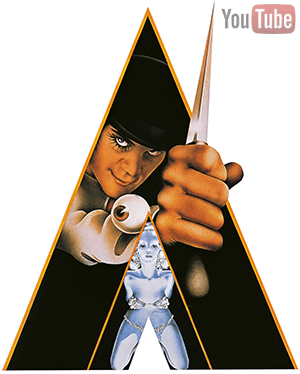
A Clockwork Orange is a 1971 darkly satirical science fiction film adaptation of Anthony Burgess’s 1962 novel of the same name. The film, which was made in England, concerns Alex (Malcolm McDowell), a charismatic delinquent whose pleasures are classical music (especially Beethoven), rape, and so-called ‘ultra-violence.’He leads a small gang of thugs, whom he calls his droogs (Russian, ‘buddy’).
The film tells the horrific crime spree of his gang, his capture, and attempted rehabilitation via a controversial psychological conditioning technique. Alex narrates most of the film in Nadsat, a fractured, contemporary adolescent slang comprising Slavic (especially Russian), English, and Cockney rhyming slang.
read more »
Posted in Art, Politics |
Leave a Comment »
March 8, 2011

Yves Rossy (b. 1959) is a Swiss pilot and inventor. He is the first person to achieve sustained human flight using a jet-powered fixed wing strapped to his back. This jet pack has led to his being nicknamed Airman, Jetman, Rocketman and, later, Fusionman, according to his project steps. Rossy developed and built a system comprising a backpack with semi-rigid carbon-fiber wings with a span of about 2.4 metres (7.9 ft), powered by four attached Jet-Cat P200 jet engines modified from large-model, kerosene fueled, aircraft engines.
His first flight occurred in 2006, lasting nearly six minutes and nine seconds. Yves later successfully flew across the English Channel in 2008 in 9 minutes 7 seconds, reaching a speed of 299 km/h (186 mph) during the crossing. Later in 2008, he made a flight over the Alps, reaching a top descent speed of 304 km/h (189 mph) and an average speed of 124 mph.
Posted in Games, Technology |
Leave a Comment »
March 8, 2011

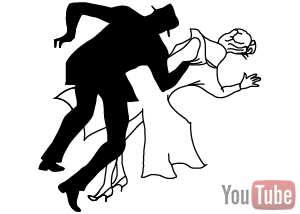
Saul Bass (1920 – 1996) was an American graphic designer and filmmaker, best known for his design on animated motion picture title sequences. During his 40-year career he worked for some of Hollywood’s greatest filmmakers, including most notably Alfred Hitchcock, Otto Preminger, Stanley Kubrick, and Martin Scorsese. His most famous title sequences are the animated paper cut-out of a heroin addict’s arm for Preminger’s ‘The Man with the Golden Arm,’ the text racing up and down what eventually becomes a high-angle shot of the UN building in Alfred Hitchcock’s ‘North by Northwest,’ and the disjointed text that races together and apart in ‘Psycho’ (1960).
Saul Bass designed the sixth AT&T Bell System logo. He also designed AT&T’s ‘globe’ logo after the breakup of the Bell System. Bass also designed Continental Airlines’ 1968 ‘jetstream’ logo which became the most recognized airline industry logo of the 1970s, and several other major corporate logos.
Posted in Art, Money |
Leave a Comment »
March 8, 2011

Kwaito is a music genre that emerged in Johannesburg, South Africa, during the late 1990s. It is house music combined with local African sounds. Typically at a slower tempo, Kwaito often contains catchy melodic and percussive loop samples, deep bass lines, and vocals. Although bearing similarities to hip hop music, a distinctive feature of Kwaito is the manner in which the lyrics are often shouted, ‘blabbered,’ and chanted. American music producer, Diplo described Kwaito as ‘slowed-down garage music,’ popular among the black youth of South Africa.
The word kwaito riginates from the Afrikaans word kwaai, which traditionally means strict or angry, although in its more common and contemporary use, the word is a translation of the loose English term ‘cool.’ Despite the fact that the Afrikaans language is associated with the apartheid regime and racial oppression, Afrikaans words are often drawn into the indigenous vocabulary, typically reshaped and used in a related or new context.
Posted in Art, World |
Leave a Comment »
March 7, 2011

Twin Peaks is an American TV drama created by David Lynch and Mark Frost. The series follows the investigation of the brutal murder of a popular teenager and homecoming queen, Laura Palmer, by FBI Special Agent Dale Cooper. The pilot episode was broadcast in April 1990 on ABC, which led to another seven episodes being produced and a second season, which aired until June 1991.
As with much of Lynch’s other work (notably ‘Blue Velvet’), ‘Twin Peaks’ explores the gulf between the veneer of small-town respectability and the seedier layers of life lurking beneath it. Each character from the town leads a double life that is slowly uncovered as the series progresses.
read more »
Posted in Art, Philosophy |
Leave a Comment »
March 7, 2011

Arzell ‘Z. Z.’ Hill (1935 – 1984) was an American blues singer, in the soul blues tradition, known for his 1970s and 1980s recordings for Malaco. His 1982 album, Down Home, stayed on the Billboard soul album chart for nearly two years. The track ‘Down Home Blues’ has been called the best-known blues song of the 1980s. This track plus the songs ‘Taxi,’ ‘Someone Else Is Steppin’ In,’ and ‘Open House’ have become R&B/Southern soul standards
Posted in Art |
Leave a Comment »
March 7, 2011

ZZ Top is an American rock band, sometimes referred to as ‘That Little Ol’ Band from Texas.’ Their style, which is rooted in the blues, has come to incorporate elements of arena, Southern, and boogie rock. The band is from Houston, Texas, formed in 1969. Musician Billy Gibbons and drummer Dan Mitchell, originally in a band called the ‘Moving Sidewalks,’ got together with bassist Lanier Greig, forming ZZ Top. In 1969, Greig and Mitchell were replaced by Dusty Hill and Frank Beard from the band ‘American Blues.’
They were signed to London Records in 1970 and released several albums. After years of touring, the band went on a two-year break in 1977, which resulted in Gibbons and Hill growing chest-length beards. The band’s name was rumored to have derived from Zig-Zag and TOP rolling papers. Gibbons, however it actually refers to an apartment Gibbons lived in, with a row of flyers on a wall, including Z. Z. Hill and B.B. King posters. Coming to the conclusion that B.B. King was on the ‘top,’ Gibbons settled with the name ‘ZZ Top.’
Posted in Art, Money |
Leave a Comment »
March 7, 2011
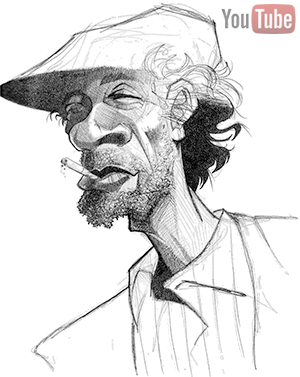
Gil Scott-Heron (b. 1949) is an American poet, musician, and author known primarily for his late 1970s and early 1980s work as a spoken word performer and his collaborative soul works with musician Brian Jackson, which featured a musical fusion of jazz, blues and soul music, as well as lyrical content concerning social and political issues of the time, delivered in both rapping and melismatic vocal styles by Scott-Heron.
The music of these albums, most notably ‘Pieces of a Man’ and ‘Winter in America’ in the early 1970s, influenced and helped engender later African-American music genres such as hip hop and neo soul. Scott-Heron’s recording work is often associated with black militant activism and has received much critical acclaim for one of his most well-known compositions ‘The Revolution Will Not Be Televised.’
Posted in Art, Money, Politics |
Leave a Comment »
March 6, 2011

Louis’ Lunch in New Haven, Connecticut, advertises itself as the first restaurant to serve hamburgers and as being the oldest hamburger restaurant still operating. Opened as a small lunch wagon in 1895, it was also one of the first places in the US to serve steak sandwiches. Louis Lassen, a butter dealer, operated a lunch wagon where he served steak and ground steak hamburger sandwiches, made from scrap trimmings, to local factory workers. According to family legend, one day in 1900 a local businessman dashed into the small New Haven lunch wagon and pleaded for a lunch to go. Lassen hurriedly sandwiched a broiled hamburger between two slices of bread and sent the customer on his way, so the story goes, with America’s first hamburger being served.
The fourth generation of Lassens own and operate Louis’ Lunch today. The restaurant flame broils the hamburgers, the original way, in antique 1898 vertical cast iron gas stove with hinged steel wire gridirons to hold the hamburgers in place while they cook simultaneously on both sides. The patties are hand formed from ground steak made from a secret blend of five different cuts of beef. The hamburgers are prepared with cheese, tomato or onion as the only condiments or garnish; never any mustard, ketchup or mayonnaise on two square pieces of toasted white bread.
Posted in Food, Money |
1 Comment »
March 6, 2011

The Snurfer was the first marketed snowboard. It uses a noboard type of snowboard binding alternative. It was created in 1965 by Sherman Poppen in Muskegon, Michigan.
Poppen was outside his house one day sledding with his daughters, when his 11 year old was going down the hill, standing on her old sled. Poppen then ran inside his shop and bound two skis together. Poppen used a string and tied it to the nose of the board so the rider could have control of the board. Poppen’s wife called it the Snurfer. He licensed the concept to Brunswick Corporation to manufacture the Snurfer. Brunswick sold about a million Snurfers for $10 to $30.
Posted in Games, Money, Technology |
Leave a Comment »
March 6, 2011

Skimboarding is a boardsport in which a skimboard (a smaller counterpart to a surfboard) is used to glide across the water’s surface. Unlike surfing, skimboarding begins on the beach, it starts with the dropping of the board onto the thin wash of previous waves. They may use their momentum to ‘skim’ out to breaking waves, which they then catch back into shore in a manner similar to surfing.
Another aspect of skimboarding is ‘flatland’ which involves performing tricks derived from skateboarding such as ollies and shove-its on the wash of waves without catching shore breaks. Skimboarding originated in Southern california when lifeguards wanted an easy way to get across the beaches of Laguna.
Posted in Games |
Leave a Comment »
March 6, 2011

Wardriving is the act of searching for Wi-Fi wireless networks by a person in a moving vehicle. The term originated from wardialing, a technique popularized by a character played by Matthew Broderick in the film WarGames, and named after that film. Wardialing in this context refers to the practice of using a computer to dial many phone numbers in the hopes of finding an active modem.
Warbiking is essentially the same as wardriving, but it involves searching for wireless networks while on a moving bicycle or motorcycle. This activity is sometimes facilitated by the mounting of a Wi-Fi capable device on the vehicle itself. Warwalking (sometimes warjogging) is done on foot rather than conducted from a moving vehicle. Warkitting is a combination of wardriving and rootkitting (installation of software that enables privileged access to a computer while actively hiding its presence from administrators). In a warkitting attack, a hacker replaces the firmware of an attacked router.
Posted in Money, Politics, Technology |
Leave a Comment »



 The Daily Omnivore