January 13, 2011


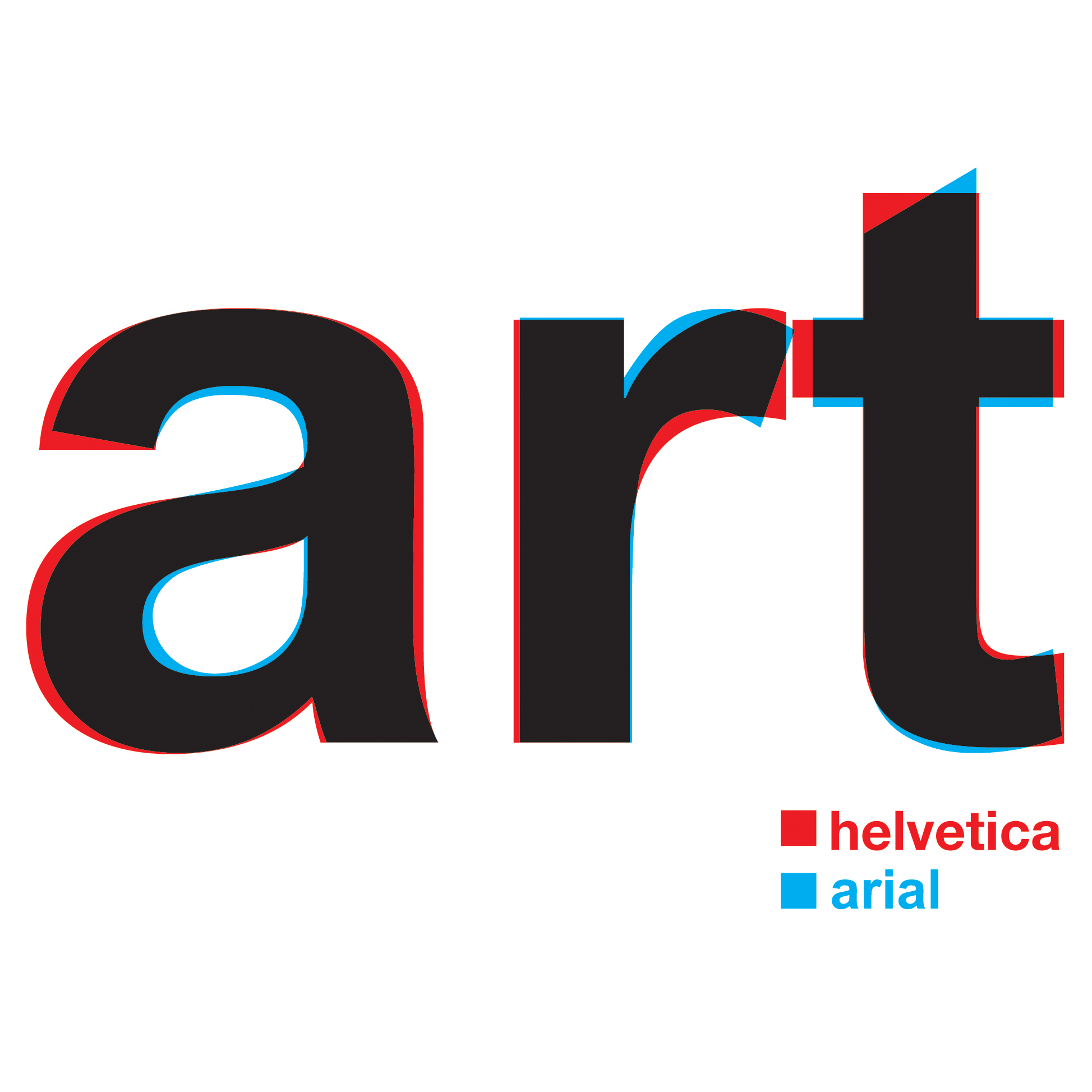
Helvetica is a widely used sans-serif typeface developed in 1957 by Swiss typeface designer Max Miedinger with Eduard Hoffmann to create a neutral typeface that had great clarity, no intrinsic meaning in its form, and could be used on a wide variety of signage. It’s original name was ‘Neue Haas Grotesk’; it was changed to ‘Helvetica’ (the Latin name for Switzerland) in 1960 in order to make it more marketable internationally. Generic versions of Helvetica have been made by various vendors; Monotype’s Arial, designed in 1982 has identical character widths and is indistinguishable by most non-specialists.
Helvetica is a popular choice for commercial wordmarks, including: 3M, American Airlines, American Apparel, BMW, Jeep, JCPenney, Lufthansa, Microsoft, Target, RE/MAX, Toyota, Panasonic, Motorola, Kawasaki, and Verizon Wireless. Apple Inc. has used Helvetica widely in its software. Helvetica is also widely used by the U.S. government; for example, federal income tax forms are set in Helvetica, and NASA uses the type on the Space Shuttle orbiter. New York City has been using Helvetica since 1989 for many of its subway signs. In 2007, director Gary Hustwit released a documentary, ‘Helvetica,’ to coincide with the fiftieth anniversary of the typeface.
Posted in Art, Language, Money |
Leave a Comment »
January 12, 2011

The Pale Blue Dot is a photograph of planet Earth taken in 1990 by Voyager 1 from a record distance, showing it against the vastness of space. By request of Carl Sagan, NASA commanded the Voyager 1 spacecraft, having completed its primary mission and now leaving the Solar System, to turn its camera around and to take a photograph of Earth across a great expanse of space. Subsequently, the title of the photograph was used by Sagan as the primary title of his 1994 book, ‘Pale Blue Dot: A Vision of the Human Future in Space.’
Posted in Science, Technology |
Leave a Comment »
January 11, 2011

The Walker Library of Human Imagination is the private library of Priceline.com founder Jay S. Walker opened in 2002. The library occupies 3,600 square feet in his Connecticut home. It showcases a collection of rare books, artworks, maps and manuscripts as well as artifacts both modern and ancient. Rare books in the collection include: a complete Bible handwritten on sheepskin from 1240; the first illustrated history book (1493); the first illustrated medical book (1499); the first medical book to illustrate the human brain (1550); a copy of ‘Micrographia’ (1664), the first book of illustrations of images seen in the first microscopes; and a 1699 atlas containing the first maps to show the sun, not the earth, as the center of the known universe.
Historical artifacts include: an original 1957 Russian Sputnik backup; an instruction manual for a Saturn V rocket, along with a signed American flag carried to the surface of moon and back on the first lunar landing; and the napkin on which President Franklin D. Roosevelt jotted down his plan to win World War II, just four months after Pearl Harbor; one of two known Anastatic Facsimiles of the original 1776 Declaration of Independence (made directly from the original using a wet-copy process); a leaf from a Gutenberg Bible, the first book printed using movable type; and a Nazi Engima Machine decoder. Distributed around the Library are a series of etched-glass art panels by artist, Clyde Lynds, which illustrate major achievements in the history of human invention.
Posted in Art, Money, Technology |
Leave a Comment »
January 10, 2011
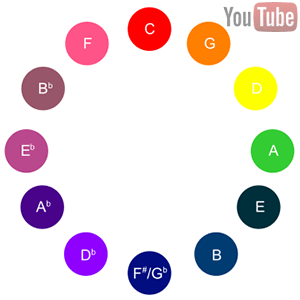
The clavier [kluh-veer] à [ah] lumières [ly-myer] keyboard with lights) was a musical instrument invented by Russian composer, Alexander Scriabin for use in his work Prometheus: Poem of Fire. However, only one version of this instrument was constructed, for the performance in New York in 1915. The instrument’s keyboard lights up as synesthetic system, specified in the score.
Scriabin was a friend of Nikolai Rimsky-Korsakov, who was a synesthete (someone with a neurologically-based condition in which stimulation of one sensory or cognitive pathway leads to automatic, involuntary experiences in a second sensory or cognitive pathway). Scriabin was also heavily influenced by Theosophy, which had its own different system of associating colors and pitches.
Posted in Art, Technology |
Leave a Comment »
January 10, 2011


Music visualization, a feature found in electronic music visualizers and media player software, generates animated imagery based on a piece of music. The imagery is usually generated and rendered in real time and synchronized with the music as it is played, but some visualizations are pre-rendered.
Visualization techniques range from simple ones (e.g., a simulation of an oscilloscope display) to elaborate ones, which often include a plurality of composited effects. The changes in the music’s loudness and frequency spectrum are among the properties used as input to the visualization.
Posted in Art, Technology |
Leave a Comment »
January 6, 2011

Místico (b. 1982) is a Mexican Luchador enmascarado, or masked professional wrestler currently working for the lucha libre promotion Consejo Mundial de Lucha Libre (CMLL). Since 2006 Místico has been the main tecnico (good guy) in CMLL and the biggest box office draw in all of Mexico. Místico is Spanish for ‘Mystic,’ a religious ring character who is the storyline protege of the wrestling priest Fray Tormenta.
Posted in Games, Humor |
Leave a Comment »
January 5, 2011

They Live is a 1988 film directed by John Carpenter, who also wrote the screenplay under the pseudonym Frank Armitage. The film is based on Ray Nelson’s 1963 short story ‘Eight O’Clock in the Morning.’ Part science fiction horror and part dark comedy, the film echoed contemporary fears of a declining economy, within a culture of greed and conspicuous consumption common among Americans in the 1980s.
In They Live, the ruling class within the moneyed elite are in fact aliens managing human social affairs through the use of a signal on top of the TV broadcast that is concealing their appearance and subliminal messages in mass media. The story revolves around a nameless man referred to as Nada (Roddy Piper), a quiet drifter who finds an unusual pair of sunglasses that allow him to see the aliens and their subliminal messages.
Posted in Art, Humor |
Leave a Comment »
January 5, 2011

Déjà vu (‘already seen’) is the experience of feeling sure that one has already witnessed or experienced a current situation, even though the exact circumstances of the previous encounter are uncertain and were perhaps imagined. The term was coined by a French psychic researcher, Émile Boirac (1851–1917). The experience of déjà vu is usually accompanied by a compelling sense of familiarity, and also a sense of eeriness or strangeness.
It is difficult to evoke the déjà vu experience in laboratory settings, therefore making it a subject of few empirical studies. Certain researchers claim to have found ways to recreate this sensation using hypnosis. Déjà vu is is thought to be an anomaly of memory. In particular, it may result from an overlap between the neurological systems responsible for short-term memory and those responsible for long-term memory (events which are perceived as being in the past). The events would be stored into memory before the conscious part of the brain even receives the information and processes it.
Posted in Science |
Leave a Comment »
January 4, 2011

Harajuku is the common name for the area around Harajuku Station in the Shibuya ward of Tokyo, Japan. It is a fashion capital of the world, renowned for its unique street fashion. Every Sunday, young people dressed in a variety of styles including gothic lolita, visual kei, and decora, as well as cosplayers spend the day in Harajuku socializing. The term ‘Harajuku Girls’ has been used by English-language media to describe teenagers dressed in any fashion style who are in the area of Harajuku.
Posted in Art, World |
Leave a Comment »
January 4, 2011

Aerogel is a material with the lowest density of any known solid. It is derived from a gel in which the liquid component of the material has been replaced with a gas. It has notable effectiveness as a thermal insulator. It is nicknamed ‘frozen smoke’ due to its translucent nature and the way light scatters in the material; however, it feels like expanded polystyrene (styrofoam) to the touch. Aerogel was invented by Samuel Stephens Kistler in 1931, as a result of a bet with Charles Learned over who could replace the liquid in ‘jellies’ with gas without causing shrinkage. Kistler’s first aerogels were produced from silica gels (his later work was based on alumina, chromia and tin oxide).
Despite their name, aerogels are rigid, dry materials and do not resemble a gel in their physical properties. Pressing softly on an aerogel typically does not leave a mark; pressing more firmly will leave a permanent depression; further pressure will cause it to shatter. Due to its hygroscopic nature, aerogel feels dry and acts as a strong desiccant. Persons handling aerogel for extended periods should wear gloves to prevent the appearance of dry brittle spots on their skin.
Posted in Technology |
1 Comment »
January 4, 2011

Abu l-Hasan (789–857), nicknamed Ziryab, was a Persian or Kurdish polymath: a poet, musician, courtesan, astronomer, botanist and geographer born in Baghdad and active in Córdoba, Spain. According to some sources, he was a former slave, possibly of East African descent. The name ‘Ziryab’ (Blackbird) was given to him for his dark complexion, eloquence, and melodious voice.
Ziryab introduced musical instruments to Iberia, notably the Persian lute that became the Spanish guitar, as well as passionate songs and dances of Persia and Mesopotamia that later, mixed with Gypsy influence, evolved into the famed Spanish flamenco. He is also credited with inventing and popularizing an early form of toothpaste.
Posted in Art, World |
Leave a Comment »
January 3, 2011

A smudge stick is a bundle of dried herbs (commonly white sage) that releases a pleasant aroma when burnt; it is used in Native American shamanic traditions. Using scent and scented smoke in rites of purification, whether through smudging (the process of using a smudge stick) or burning incense, is common in many traditional cultures around the world.
Smudging in the modern era has been incorporated into many belief systems, including new age spirituality. Smudging rituals are regarded by their practitioners as psychologically and spiritually cleansing, and as a means to ‘clear negative energy.’ Participants can smudge themselves or others by fanning smoke in the appropriate direction, often with other ritual tools such as a bundle of feathers.
Posted in Philosophy |
Leave a Comment »


 The Daily Omnivore