July 22, 2010

Solar puffing refers to the act of using a magnifying lens to heat cannabis for consumption. Utilization of this method avoids residues left by butane or other propellants used in lighters and matches, and a greater amount of THC is extracted due to a lower heating temperature as opposed to that of combustion. This method is similar to that of vaporization.
Posted in Drugs |
Leave a Comment »
July 17, 2010
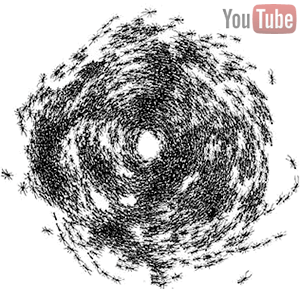
An ant mill is a phenomenon where a small group of army ants separated from the main foraging party lose the pheromone track and begin to follow one another, forming a continuously rotating circle. The ants will eventually die of exhaustion. This phenomenon is a side effect of the self-organizing structure of ant colonies.
Each ant follows the ant in front of it, and this will work until something goes wrong and an ant mill forms. An ant mill was first described by William Beebe who observed a mill 1,200 feet in circumference. It took each ant 2.5 hours to make one revolution. Similar phenomena have been noted in processionary caterpillars and fish.
Posted in Science |
Leave a Comment »
July 15, 2010

Basket stars are a group of brittle stars, which are related to sea stars (also known as starfish). They generally live in deep sea habitats. Their life span in the wild is up to 35 years. They weigh around 11 lbs, or 5 kg. Like other echinoderms, basket stars lack blood and achieve gas exchange via their water vascular system.
Posted in Science |
Leave a Comment »
July 15, 2010

Amerikamura (American Village) is a retail and entertainment area in Osaka, Japan. It contains a small-scale reproduction of the Statue of Liberty that peers down on the streets, and features Western themed restaurants and shops.
Posted in World |
Leave a Comment »
July 11, 2010

Succotash is an Algonquin word for a dish of boiled corn and lima beans. Because of the relatively inexpensive and more readily available ingredients, the dish was popular during the Great Depression in the United States. It was sometimes cooked in a casserole form, often with a light pie crust on top as in a traditional pot pie. Succotash is a traditional dish of many Thanksgiving celebrations in New England as well as in Pennsylvania and other states. In some parts of the American South, any mixture of vegetables prepared with lima beans and topped with lard or butter is called succotash.
Posted in Food |
Leave a Comment »
July 11, 2010


Mechanically separated meat also known as mechanically recovered/reclaimed meat, is a paste-like meat product produced by forcing beef, pork, turkey or chicken bones, with attached edible meat, under high pressure through a sieve or similar device to separate the bone from the edible meat tissue.
Mechanically separated meat has been used in certain meat and meat products since the late 1960s, particularly in hot dogs. This product can be contrasted with meat extracted by advanced meat recovery systems, a newer method that shaves the last traces of meat from bone.
Posted in Food, Health, Technology |
Leave a Comment »
June 30, 2010
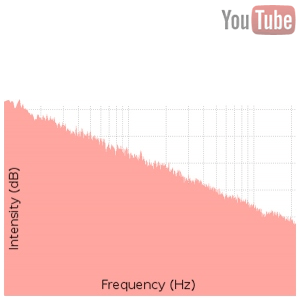
White noise is an audio signal that contains all the frequencies audible to the human ear. It is analogous to white light, which contains all the light frequencies visible to the human eye. Pink noise is a signal that is louder at low frequencies and decreases at a constant rate. It is sometimes referred to as flicker noise particularly, when it describes background noise emitted by an electronic device.
Pink noise is used to make music, sound effects, or merely as a pleasant background sound and is reported to sound more like the ocean than white noise (which is often compared to the sound of rainfall or TV static) because of its bias towards lower frequencies. Other colors of noise include: brown, blue, violet, and grey.
Posted in Science, Technology |
Leave a Comment »
June 30, 2010

The burpee is a full body exercise used in strength and aerobic training. It is performed in four steps: 1) Begin in a standing position; 2) Drop into a squat position with your hands on the ground; 3) Kick your feet back, while keeping your arms extended; and 4) Immediately return your feet to the squat position. The athlete then stands up from squat position and repeats the procedure. There are many variants of the burpee such as the ‘Burpee push up’ (the athlete performs one push-ups after assuming the plank position); ‘Jump up Burpee’ (the athlete jumps up as high as they can in at the end of the movement and before beginning the next Burpee); and the ‘Long-jump burpee’ (the athlete jumps forward, not upward). For the ‘Burpee Mile,’ the athlete performs the Burpee exercise, then performs a Standing long jump. This sequence is repeated until the athlete has traveled one mile.
According to Oxford Dictionaries Online, the exercise was named in the 1930s for American physiologist Royal H. Burpee, who developed the Burpee test. He earned a PhD in Applied Physiology from Columbia University in 1940 and created the exercise as part of his PhD thesis as a quick and simple way to assess fitness. The exercise was popularized when the United States Armed Services adopted it as a way to assess the fitness level of recruits in WWII. Consisting of a series of the exercises performed in rapid succession, the test was meant to be a quick measure of agility, coordination and strength.
Posted in Games, Health |
Leave a Comment »
June 29, 2010


In physics, a moiré [mwah-rey] pattern is an interference pattern created, for example, when two grids are overlaid at an angle, or when they have slightly different mesh sizes. The term originates from moire, a type of textile, traditionally of silk but now also of cotton or synthetic fiber, with a rippled or ‘watered’ appearance.
Posted in Science |
Leave a Comment »
June 28, 2010
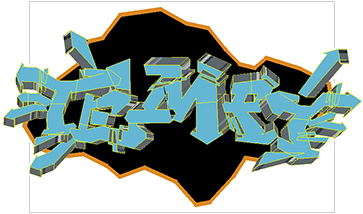

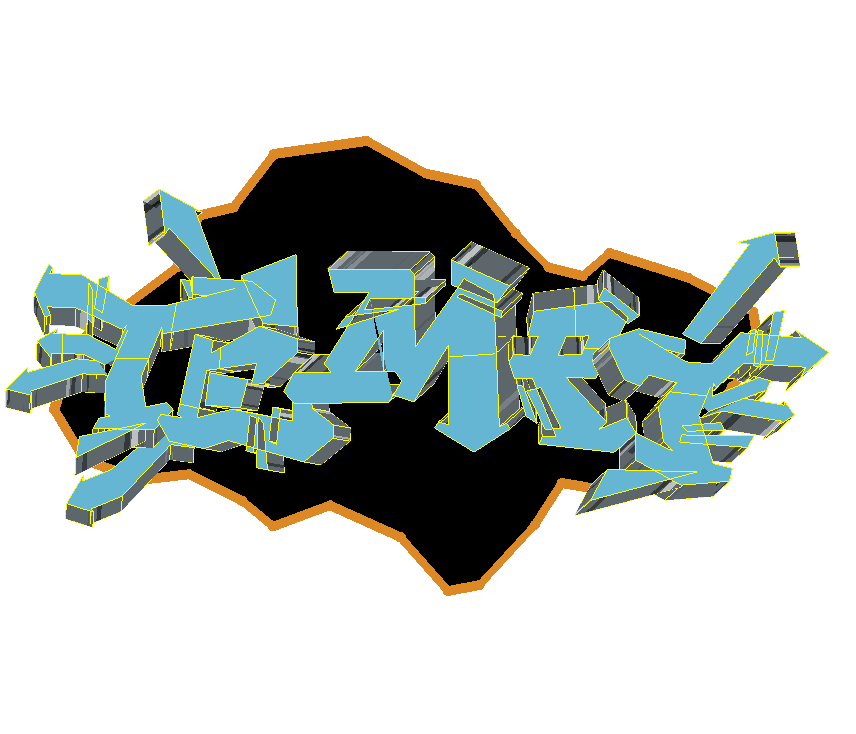
EyeWriter is a low-cost eyetracking system originally designed for paralyzed graffiti artist TEMPT1. The EyeWriter system uses inexpensive cameras and open-source computer vision software to track the wearer’s eye movements of their eye. EyeWriter was developed by artists and engineers from the Free Art & Technology Lab, Graffiti Research Lab and OpenFrameworks teams, including Zachary Lieberman, Evan Roth, James Powderly, Theo Watson and Chris Sugrue. The project received almost $18,000 as a kickstarter project, which surpassed its $15,000 goal. It also received funding support from The Ebeling Group and from Parsons School of Design.
The EyeWriter software consist of eye-tracking software, and a drawing software that allows a user to draw with the movement of their eye. The source code is open source with a Artistic/GPL License (a free use licence). The software for both parts has been developed using openframeworks, a cross platform c++ library for creative development. Eyewriter 2.0 led to the development of Livewriter to be used in the 2010 Cinekid festival: in addition to Eyewriter’s original parameters, a robot arm was integrated allowing the physical recording of visually created content.
Posted in Art, Health, Technology |
Leave a Comment »
June 25, 2010

Bill Brasky was the subject of a series of sketches on Saturday Night Live between 1996 and 1998. The sketches were written by cast member Will Ferrell and writer Adam McKay. The format of the sketches resembles the short-form improv game ‘Two Describe a Third.’ Three or four friends (known as the ‘Bill Brasky Buddies’) gather in a public place to drink Scotch, smoke cigars, and loudly reminisce about their mutual acquaintance Bill Brasky. While the friends refer to Brasky in both present and past tense on occasion, it appears that Brasky is still alive: some sketches end with Brasky’s appearance via a forced perspective shot that makes him look like a giant. One sketch, set at Brasky’s funeral, ends with Brasky breaking out of the coffin holding a glass of Scotch.
Most of the friends’ discussions focus on their admiration of Brasky’s superhuman accomplishments, usually focused on his huge size, virility, celebrity connections, amazing tolerance for drugs and alcohol, and reckless disregard for human life. The stories of Brasky’s life and seemingly legendary accomplishments are exaggerated to absurd levels in the American tradition of tall tales.
Posted in Art, Humor |
Leave a Comment »
June 24, 2010

Namahage is a Japanese ritual which is observed throughout Oga Peninsula, Akita Prefecture in northern Honshu, Japan. On New Year’s Eve, a group of young men dressed up as fierce demons or bogeymen, Namahage, visit each house in the village, shouting, ‘any misbehaving kids live here?’ They then scare children in the houses, telling them not to be lazy or cry, though little children often do burst into tears. Then the parents will assure the Namahage that there is no bad child in their house, and give food or traditional Japanese alcoholic beverages to the demons.
Posted in Philosophy, World |
Leave a Comment »



 The Daily Omnivore