June 17, 2011
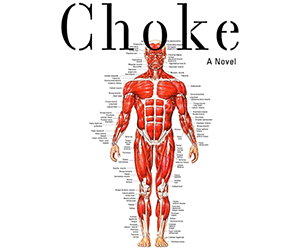

Chuck Palahniuk [pall-uh-nik] (b. 1962) is an American transgressional fiction novelist, a genre of literature that focuses on characters who feel confined by the norms and expectations of society and who break free of those confines in unusual and/or illicit ways. Because they are rebelling against the basic norms of society, protagonists of transgressional fiction may seem mentally ill, anti-social, or nihilistic. The genre deals extensively with taboo subject matters such as drugs, sex, violence, incest, pedophilia, and crime.
He is best known for the award-winning novel ‘Fight Club,’ which was later made into a film directed by David Fincher.
read more »
Posted in Art, Language |
Leave a Comment »
June 17, 2011
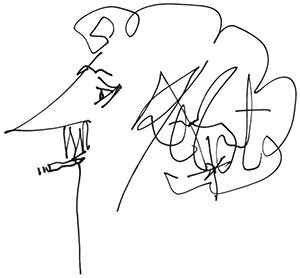
Kurt Vonnegut (1922 – 2007) was an American writer of the 20th century. He wrote such works as ‘Mother Night’ (1961), ‘Slaughterhouse-Five’ (1969), and ‘Breakfast of Champions’ (1973) blending satire, gallows humor, and science fiction. He was known for his humanist beliefs and was honorary president of the American Humanist Association. Vonnegut’s experience in WWII as a soldier and prisoner of war had a profound influence on his later work.
He was captured during the Battle of the Bulge. ‘The other American divisions on our flanks managed to pull out: We were obliged to stay and fight. Bayonets aren’t much good against tanks…’ Imprisoned in Dresden, Vonnegut was chosen as a leader of the POWs because he spoke some German. After telling the German guards ‘…just what I was going to do to them when the Russians came…’ he was beaten and had his position as leader taken away. While a prisoner, he witnessed the fire bombing of Dresden in February 1945 which destroyed most of the city.
read more »
Posted in Art, Humor, Language |
Leave a Comment »
June 15, 2011


David Eagleman (b. 1971) is a neuroscientist at Baylor College of Medicine, where he directs the Laboratory for Perception and Action and the Initiative on Neuroscience and Law. He is best known for his work on time perception, synesthesia, and neurolaw. He is also an internationally bestselling fiction writer.
An early experience of falling from a roof raised his interest in understanding the neural basis of time perception. Eagleman’s scientific work combines psychophysical, behavioral, and computational approaches to address the relationship between the timing of perception and the timing of neural signals.
read more »
Posted in Art, Politics, Science |
Leave a Comment »
June 15, 2011
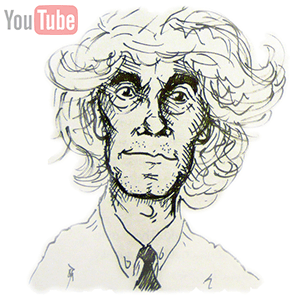
Derek Parfit (b. 1942) is a British philosopher who specializes in problems of personal identity, rationality and ethics, and the relations between them. His 1984 book ‘Reasons and Persons’ has been very influential. His most recent book, ‘On What Matters’ (2011), has already been widely discussed, having circulated in draft form for many years.
He has worked at Oxford for the whole of his academic career, and is presently an Emeritus Senior Research Fellow at All Souls College, Oxford. ‘Reasons and Persons’ is a four-part work, with each successive section building on the last. Parfit believes that nonreligious ethics is a young and fertile field of inquiry. He asks questions about which actions are right or wrong and shies away from meta-ethics, which focuses more on logic and language.
read more »
Posted in Philosophy |
Leave a Comment »
May 31, 2011

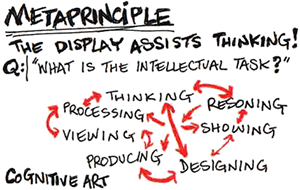
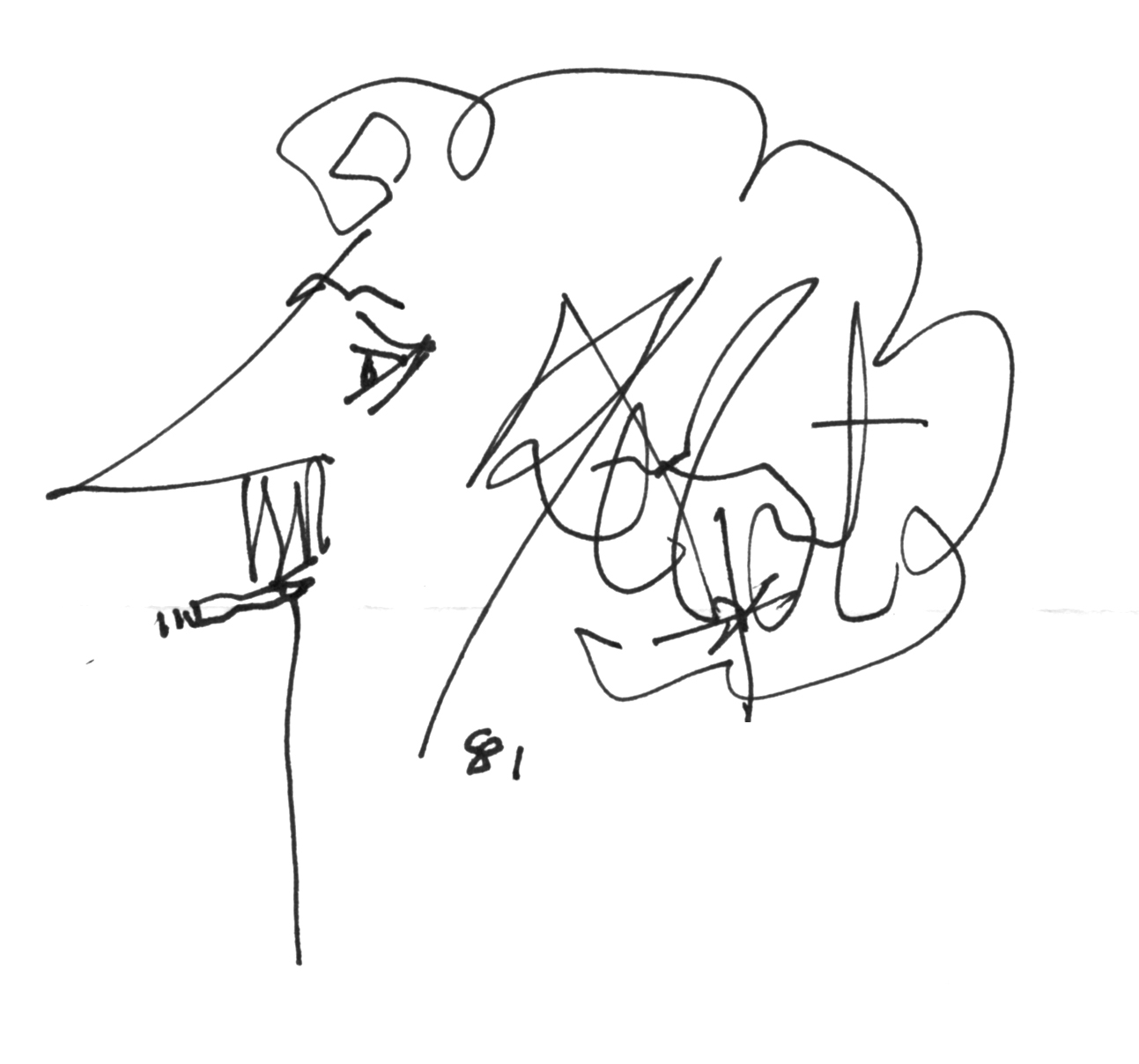
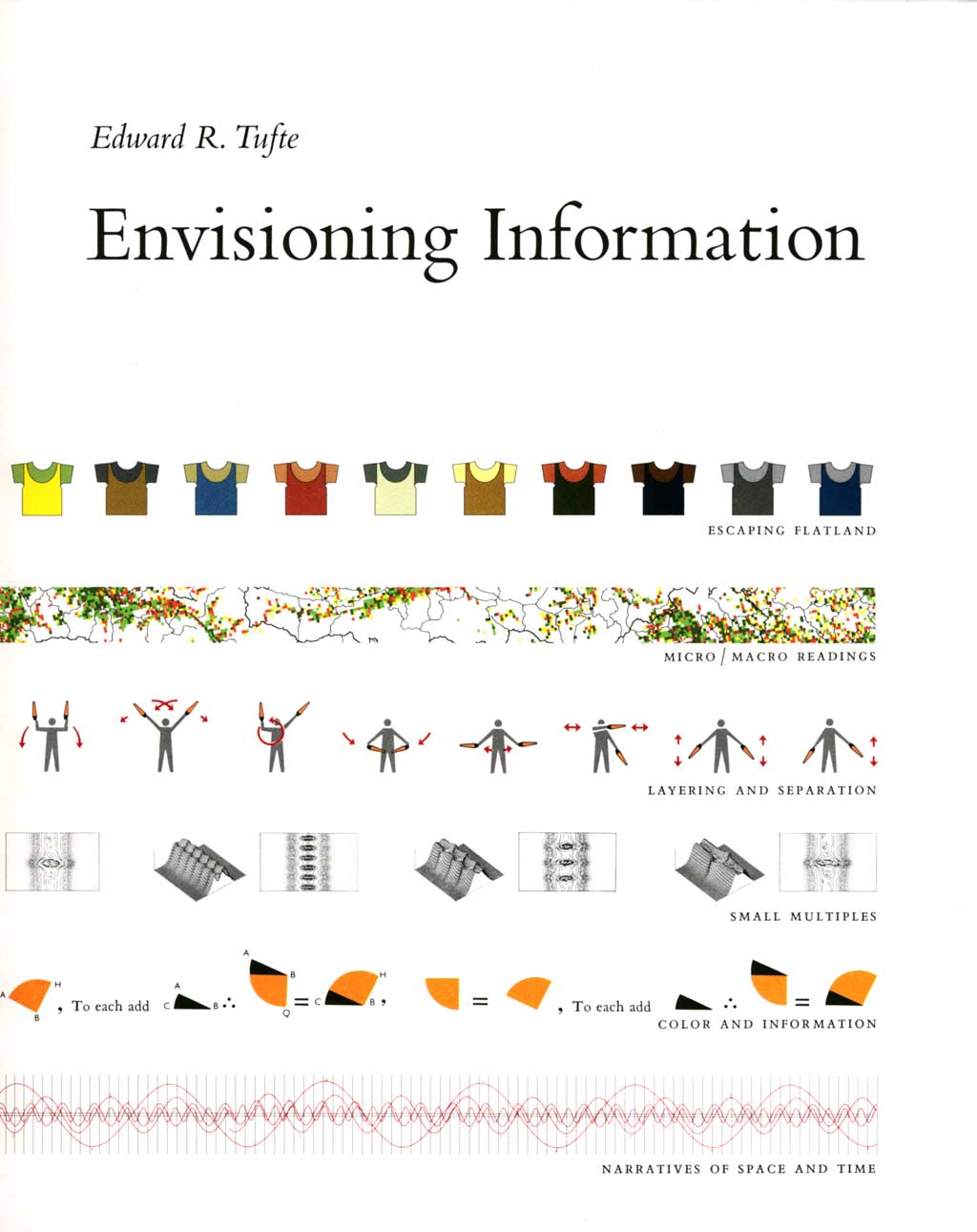
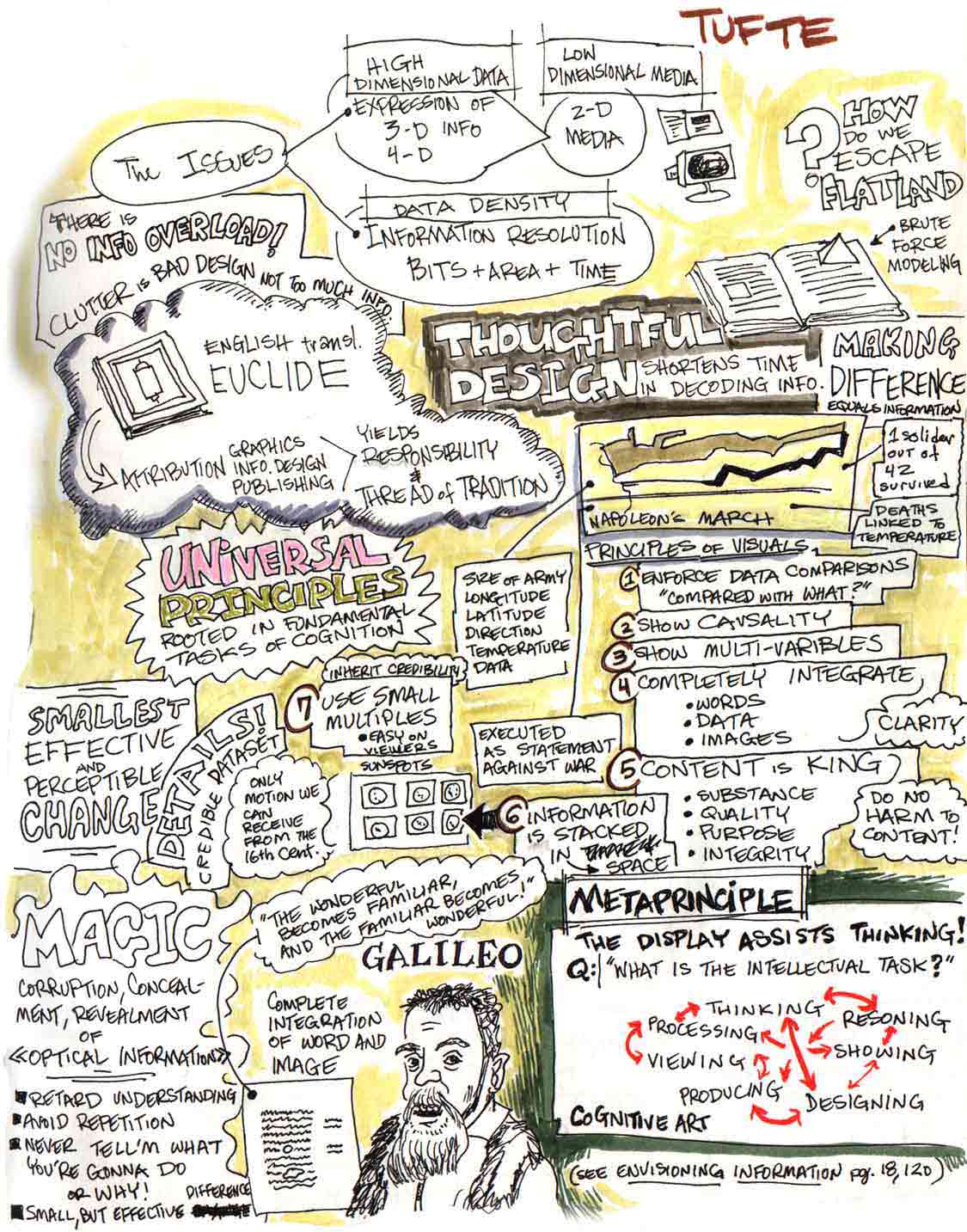
Edward Tufte (b. 1942) is an American statistician and professor emeritus of political science, statistics, and computer science at Yale University. He is noted for his writings on information design and as a pioneer in the field of data visualization.Tufte’s writing is important in such fields as information design and visual literacy, which deal with the visual communication of information. He coined the term ‘chartjunk’ to refer to useless, non-informative, or information-obscuring elements of quantitative information displays. Other key concepts of Tufte are the ‘lie factor,’ the ‘data-ink ratio,’ and the ‘data density’ of a graphic.
He uses the term ‘data-ink ratio’ to argue against using excessive decoration in visual displays of quantitative information. Tufte states, ‘Sometimes decorations can help editorialize about the substance of the graphic. But it’s wrong to distort the data measures—the ink locating values of numbers—in order to make an editorial comment or fit a decorative scheme.’
read more »
Posted in Art, Money, Science |
Leave a Comment »
May 20, 2011

Wallace Wood (1927 – 1981) was an American comic book writer, artist and independent publisher, best known for his work in EC Comics and Mad. He was one of Mad’s founding cartoonists in 1952. Although much of his early professional artwork is signed Wallace Wood, he became known as Wally Wood, a name he claimed to dislike.
EC publisher William Gaines once stated, ‘Wally may have been our most troubled artist… I’m not suggesting any connection, but he may have been our most brilliant.’
read more »
Posted in Art, Money, Sex |
Leave a Comment »
May 20, 2011


Lawrence Lessig (b. 1961) is an American academic and political activist. He is best known as a proponent of reduced legal restrictions on copyright, trademark, and radio frequency spectrum, particularly in technology applications. He is a professor of law at Harvard Law School. Lessig is a founding board member of Creative Commons, a board member of the Software Freedom Law Center, an advisory board member of the Sunlight Foundation, and a former board member of the Electronic Frontier Foundation.
After graduating from law school, he clerked for a year for Judge Richard Posner, at the 7th Circuit Court of Appeals in Chicago, Illinois and another year for Justice Antonin Scalia at the Supreme Court. Lessig has emphasized in interviews that his philosophy experience at Cambridge radically changed his values and career path. Previously, he had held strong conservative or libertarian political views, desired a career in business, was a highly active Teenage Republican, and in 1978 and almost pursued a Republican political career.
Posted in Money, Politics |
Leave a Comment »
May 19, 2011
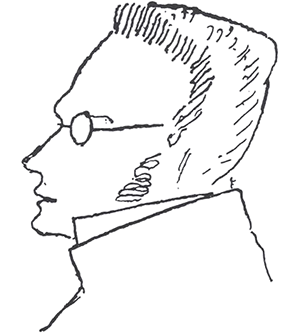
Johann Kaspar Schmidt (1806 – 1856), better known as Max Stirner (the nom de plume he adopted from a schoolyard nickname he had acquired as a child because of his high brow, in German ‘Stirn’), was a German philosopher, who ranks as one of the literary fathers of nihilism, existentialism, post-modernism and anarchism.
Stirner’s main work is ‘The Ego and Its Own’ (‘Der Einzige und sein Eigentum’), published in 1844 in Leipzig. It is a a radical anti-authoritarian and individualist critique of contemporary Prussian society, and modern western society.
read more »
Posted in Philosophy, Politics |
Leave a Comment »
May 11, 2011
Stephen Hawking (b. 1942) is an English theoretical physicist and cosmologist, whose scientific books and public appearances have made him an academic celebrity. He is known for his contributions to the fields of cosmology and quantum gravity, especially in the context of black holes (he first predicted that black holes emit radiation, which is today known as Hawking radiation).
He has also achieved success with works of popular science in which he discusses his own theories and cosmology in general. Hawking has a motor neurone disease that is related to ALS (Lou Gehrig’s disease), a condition that has progressed over the years and has left him almost completely paralyzed.
read more »
Posted in Language, Science |
Leave a Comment »
May 9, 2011
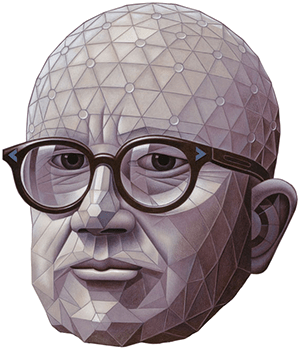
Buckminster Fuller (1895 – 1983) was an American engineer and author. He popularized terms such as ‘Spaceship Earth,’ ephemeralization, and synergetics. He also developed numerous inventions, mainly architectural designs, the best known of which is the geodesic dome. Carbon molecules known as fullerenes were later named by scientists for their resemblance to geodesic spheres.
As a child he had trouble with geometry, being unable to understand the abstraction necessary to imagine that a chalk dot on the blackboard represented a mathematical point, or that an imperfectly drawn line with an arrow on the end was meant to stretch off to infinity. He often made items from materials he brought home from the woods, and sometimes made his own tools.
read more »
Posted in Philosophy, Technology |
Leave a Comment »
May 3, 2011
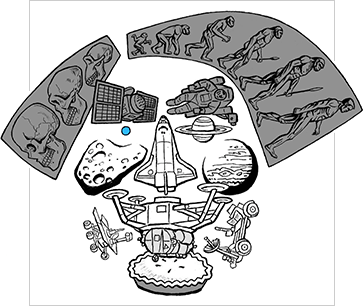
Carl Sagan (1934 – 1996) was an American astronomer. He devoted his life to popularizing science. He speculated about what life from other planets would be like, and promoted the search for extraterrestrial life. He is world famous for his popular science books and the television series Cosmos, which he co-wrote and presented.
He was born in Brooklyn New York where his father, Sam Sagan, was a Jewish clothes maker and his mother, Rachel Molly Gruber, was a housewife. Sagan attended the University of Chicago earning two degrees in physics. He followed with a doctorate in Astronomy in 1960 and taught at Harvard University until 1968, when he moved to Cornell University.
read more »
Posted in Language, Philosophy, Science |
Leave a Comment »
April 29, 2011

Jan Fabre [fah-ber] (b. 1958) is a Belgian multidisciplinary artist, playwright, stage director, choreographer and designer. Fabre is famous for his Bic-art (ballpoint drawings). In 1990, he covered an entire building with ballpoint drawings.
His decoration of the ceiling of the Royal Palace in Brussels ‘Heaven of Delight’ (made out of one million six hundred thousand jewel-scarab wing cases) is widely praised. In 2004 he erected Totem, a giant bug stuck on a 70 foot steel needle in Leuven, Belgium.
Posted in Art |
2 Comments »





 The Daily Omnivore