April 23, 2011
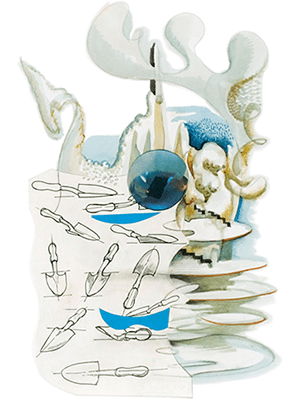
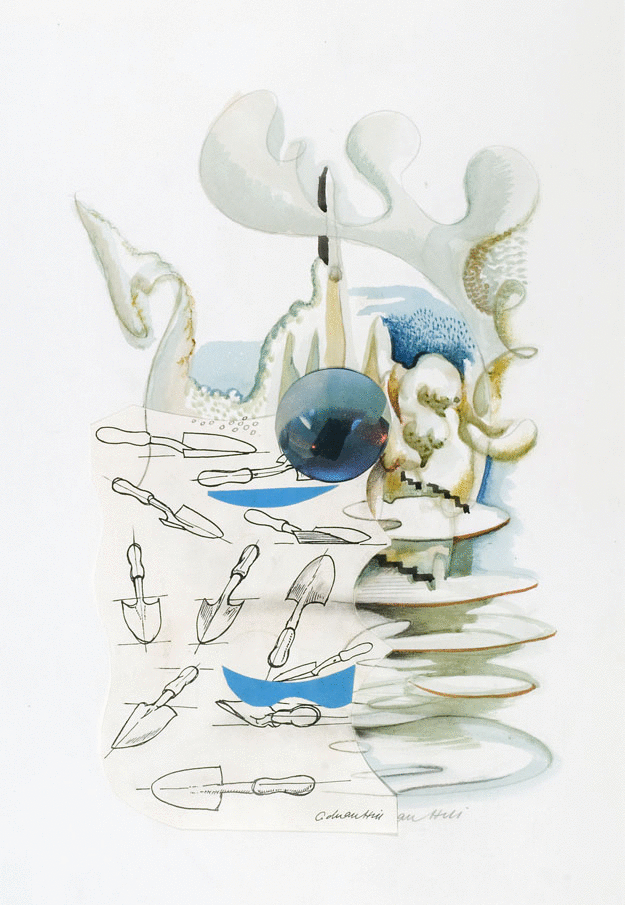
Adrian Hill (1895–1977) was a British artist and pioneering Art Therapist. He wrote many best-selling books about painting and drawing, and in the 1950s and early 1960s presented a BBC children’s television program called ‘Sketch Club.’
His own work combined elements of impressionism and surrealism as well as more conventional representations, and was widely displayed at major art galleries during his lifetime, both in Britain and abroad.
read more »
Posted in Art, Health, Science |
Leave a Comment »
April 20, 2011
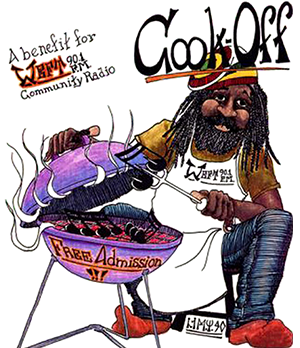
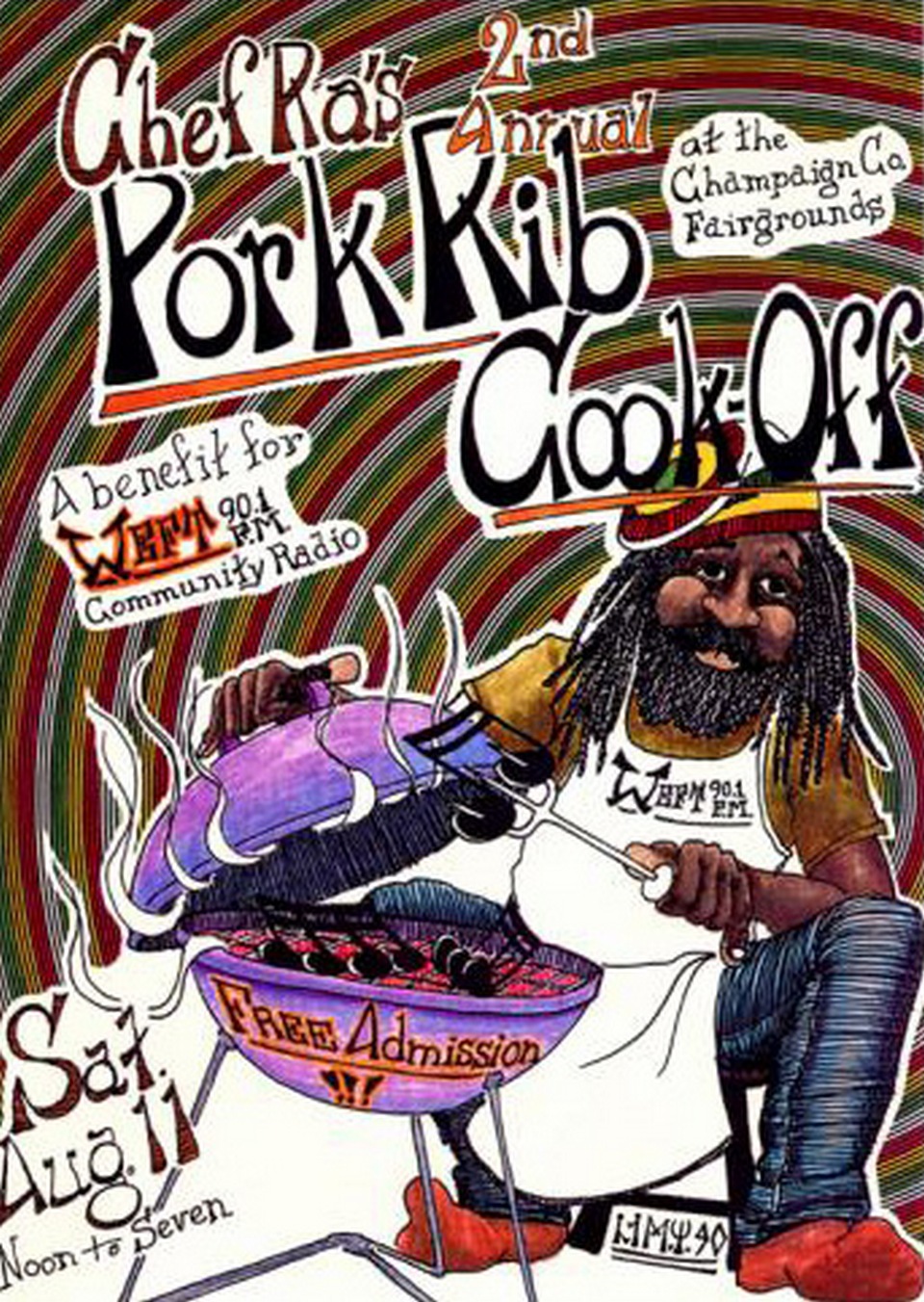
Chef Ra (1950 – 2006), born Jim Wilson, Jr., was an marijuana advocate, author, and cook in the United States. After gaining notoriety as a ganja gourmet, he began writing his High Times column, ‘Chef Ra’s Psychedelic Kitchen,’ in 1988 at the request of editor Steve Hager.
Ra was a fixture of Ann Arbor’s Hash Bash, speaking out about the benefits of cannabis for 19 consecutive years.
Posted in Drugs, Food, Politics |
Leave a Comment »
April 13, 2011

Leslie Conway ‘Lester’ Bangs (1948 – 1982) was an American music journalist and musician. He wrote for ‘Creem’ and ‘Rolling Stone’ magazines and has been called one of the ‘most influential’ voices in rock criticism. In 1969, Bangs began writing freelance after reading an ad in ‘Rolling Stone’ soliciting readers’ reviews.
His first piece was a negative review of the MC5 album ‘Kick Out The Jams,’ which he sent to ‘Rolling Stone’ with a note detailing that should the magazine decide not to publish the review, then they would have to contact Lester and tell him why. They published it.
read more »
Posted in Art, Humor, Money |
Leave a Comment »
April 6, 2011

Isaac Asimov (b. 1920 – 1992) was an American author and professor of biochemistry at Boston University, best known for his works of science fiction and for his popular science books. Asimov was one of the most prolific writers of all time, having written or edited more than 500 books. His works have been published in nine of the ten major categories of the Dewey Decimal System (The sole exception being the 100s: philosophy and psychology). Isaac Asimov is widely considered a master of hard science fiction and, along with Robert A. Heinlein and Arthur C. Clarke, he was considered one of the ‘Big Three’ science fiction writers during his lifetime. Asimov’s most famous works are the ‘Foundation’ and ‘Robot’ series.
The prolific Asimov also wrote mysteries and fantasy, as well as much non-fiction. Most of his popular science books explain scientific concepts in a historical way, going as far back as possible to a time when the science in question was at its simplest stage. He often provides nationalities, birth dates, and death dates for the scientists he mentions, as well as etymologies and pronunciation guides for technical terms. Examples include his ‘Guide to Science,’ the three volume set ‘Understanding Physics,’ ‘Asimov’s Chronology of Science and Discovery,’ as well as numerous works on astronomy, chemistry, mathematics, the Bible, and William Shakespeare’s works.
Posted in Art, Language, Science |
Leave a Comment »
March 28, 2011

Andrei Tarkovsky (1932 – 1986) was a Russian filmmaker, widely regarded as one of the finest of the 20th century. Tarkovsky’s films include ‘Andrei Rublev,’ ‘Solaris,’ ‘The Mirror,’ and ‘Stalker.’ He directed the first five of his seven feature films in the Soviet Union; his last two films were produced in Italy and Sweden, respectively. They are characterized by spirituality and metaphysical themes, long takes, lack of conventional dramatic structure and plot, and distinctively authored use of cinematography.
read more »
Posted in Art, Philosophy, World |
Leave a Comment »
March 23, 2011

Auguste Escoffier [es-kaw-fyey] (1846 – 1935) was a French chef, restaurateur and culinary writer who popularized and updated traditional French cooking methods. He is a legendary figure among chefs and gourmands, and was one of the most important leaders in the development of modern French cuisine.
Much of Escoffier’s technique was based on that of Antoine Carême, one of the codifiers of French haute cuisine, but Escoffier’s achievement was to simplify and modernize Carême’s elaborate and ornate style. Referred to by the French press as ‘roi des cuisiniers et cuisinier des rois’ (‘king of chefs and chef of kings’ —though this had also been previously said of Carême), Escoffier was France’s pre-eminent chef in the early part of the 20th century.
read more »
Posted in Food, Money |
Leave a Comment »
March 21, 2011
Vernor Vinge (b. 1944) is a computer scientist and science fiction author. He is best known for his Hugo Award-winning novels and novellas A Fire Upon the Deep (1992), as well as his 1993 essay ‘The Coming Technological Singularity,’ in which he argues that the creation of superhuman artificial intelligence will mark the point at which ‘the human era will be ended,’ such that no current models of reality are sufficient to predict beyond it.
Vinge came to prominence in 1981 with his novella ‘True Names,’ perhaps the first story to present a fully fleshed-out concept of cyberspace, which would later be central to cyberpunk stories by William Gibson, Neal Stephenson and others.
read more »
Posted in Art, Technology |
Leave a Comment »
March 7, 2011
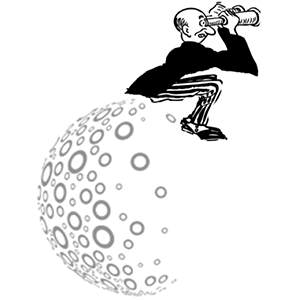
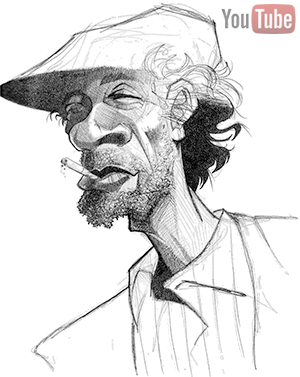
Gil Scott-Heron (b. 1949) is an American poet, musician, and author known primarily for his late 1970s and early 1980s work as a spoken word performer and his collaborative soul works with musician Brian Jackson, which featured a musical fusion of jazz, blues and soul music, as well as lyrical content concerning social and political issues of the time, delivered in both rapping and melismatic vocal styles by Scott-Heron.
The music of these albums, most notably ‘Pieces of a Man’ and ‘Winter in America’ in the early 1970s, influenced and helped engender later African-American music genres such as hip hop and neo soul. Scott-Heron’s recording work is often associated with black militant activism and has received much critical acclaim for one of his most well-known compositions ‘The Revolution Will Not Be Televised.’
Posted in Art, Money, Politics |
Leave a Comment »
February 20, 2011


Paul Verhoeven (b. 1938) is a Dutch film director, screenwriter, and producer who has made movies in both the Netherlands and the United States. Explicitly violent and/or sexual content and social satire are trademarks of both his drama and science fiction films. He is best known for directing the American feature films RoboCop (1987), Total Recall (1990), Basic Instinct (1992), Showgirls (1995), Starship Troopers (1997), and Hollow Man (2000).
Posted in Art, Money |
Leave a Comment »
February 14, 2011

Jean-Luc Godard (b. 1930) is a French-Swiss filmmaker. He is often identified with the group of filmmakers known as the Nouvelle Vague, or ‘French New Wave.’ Many of his films challenge the conventions of traditional Hollywood cinema as well as the French equivalent. He is often considered the most extreme or radical of the New Wave filmmakers. His films express his political ideologies as well as his knowledge of film history. In addition, Godard’s films often cite existentialism as he was an avid reader of existential and Marxist philosophy.
His radical approach in movie conventions, politics and philosophies made him the most influential filmmaker of the French New Wave, inspiring directors as diverse as Quentin Tarantino, Martin Scorsese, Bernardo Bertolucci, Paul Thomas Anderson, Arthur Penn, Hal Hartley, Richard Linklater, Gregg Araki, John Woo, Mike Figgis, Robert Altman, Steven Soderbergh, Richard Lester, Jim Jarmusch, Rainer Werner Fassbinder, Brian De Palma, Wim Wenders, Oliver Stone and Ken Loach.
Posted in Art |
Leave a Comment »
February 14, 2011

Jaron Lanier [lah-neer] (b. 1960) is an American computer scientist and artist. In the early 1980s he popularized the term ‘Virtual Reality’ (VR) for a field in which he was a pioneer. At that time, he founded VPL Research, the first company to sell VR products. His current appointments include Interdisciplinary Scholar-in-Residence, CET, UC Berkeley. In what is probably his most famous paper ‘One-Half of a Manifesto’ (Wired, 2000) Lanier opposes the prospect of so called ‘cybernetic totalism,’ which is ‘a cataclysm brought on when computers become ultra-intelligent masters of matter and life.’
Lanier’s position is that humans may not be considered to be biological computers, i.e., they may not be compared to digital computers in any proper sense, and it is very unlikely that humans could be generally replaced by computers easily in few decades, even economically. While processor performance increases according to Moore’s law, overall performance rises only very slowly. This is because our productivity in developing software increases only slightly, and software becomes more bloated and remains as error-prone as it ever was. He warns that the biggest problem of any theory is not that it is false, ‘but when it claims to be the sole and utterly complete path to understanding life and reality.’
Posted in Philosophy, Politics, Technology |
Leave a Comment »
February 14, 2011
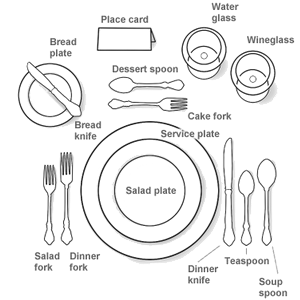
Emily Post (1872 – 1960) was an American author on etiquette. She wrote in various styles, including humorous travel books, early in her career. In 1922 her book Etiquette (full title Etiquette in Society, in Business, in Politics, and at Home) was a best seller, and updated versions continued to be popular for decades. In 1946, she founded The Emily Post Institute which continues her work. She died in 1960 in her New York City apartment at the age of 87.
Today, The Emily Post Institute, located in Burlington, Vermont, provides etiquette experts and advice to news outlets and other corporations. The authors at the Emily Post Institute write books and columns, conduct seminars and workshops, give speeches, and act as spokespeople for select corporations. They give media interviews each year on a variety of topics. Emily Post’s name has become synonymous, at least in North America, with proper etiquette and manners. Nearly half a century after her death, her name is still used in titles of etiquette books.
Posted in Language, Money |
Leave a Comment »



 The Daily Omnivore