March 4, 2011

Pixels is a short film created and directed by French film-maker Patrick Jean. It’s about the invasion of New York by a classic 8-bit video games, such as Space Invaders, Pac-Man, Tetris, Arkanoid, and others. Pixels was picked up by Adam Sandler’s production company to be developed into a feature film.
Posted in Art, Technology |
Leave a Comment »
March 4, 2011

Pixel art is a form of digital art, created through the use of raster graphics software, where images are edited on the pixel level. Graphics in most old (or relatively limited) computer and video games, graphing calculator games, and many mobile phone games are mostly pixel art. The term pixel art was first published by Adele Goldberg and Robert Flegal of Xerox Palo Alto Research Center in 1982. The concept, however, goes back about 10 years before that, for example in Richard Shoup’s SuperPaint system in 1972, also at Xerox PARC.
Some traditional art forms, such as counted-thread embroidery (including cross-stitch) and some kinds of mosaic and beadwork, are very similar to pixel art. These art forms construct pictures out of small colored units similar to the pixels of modern digital computing. Image filters (such as blurring or alpha-blending) or tools with automatic anti-aliasing are considered not valid tools for pixel art, as such tools calculate new pixel values automatically, contrasting with the precise manual arrangement of pixels associated with pixel art.
Posted in Art, Technology |
2 Comments »
March 4, 2011

A joe job is a spamming technique that sends out unsolicited e-mails using spoofed (falsified) sender data. Early joe jobs aimed at tarnishing the reputation of the apparent sender or inducing the recipients to take action against him, but they are now typically used by commercial spammers to conceal the true origin of their messages.
The name ‘joe job’ originated from such a spam attack on Joe Doll, webmaster of Joe’s Cyberpost. One user’s joes.com account was removed due to advertising through spam. In retaliation, the user sent another spam with the ‘reply-to’ headers forged to make it appear to be from Joe Doll. Besides prompting angry replies, it also caused joes.com to fall prey to denial-of-service attacks that temporarily took the web site down.
Posted in Language, Money, Technology |
Leave a Comment »
March 4, 2011

False flag operations are covert operations designed to deceive the public in such a way that the operations appear as though they are being carried out by other entities.
The name is derived from the military concept of flying false colors; that is, flying the flag of a country other than one’s own. False flag operations are not limited to war and counter-insurgency operations, and can be used in peace-time.
Posted in Language, Politics, War |
Leave a Comment »
March 4, 2011


In Internet slang, a troll is someone who posts inflammatory, extraneous, or off-topic messages in an online community, such as an online discussion forum, chat room, or blog, with the primary intent of provoking other users into a desired emotional response or of otherwise disrupting normal on-topic discussion. In addition to the offending poster, the noun troll can also refer to the provocative message itself.
read more »
Posted in Humor, Language, Technology |
Leave a Comment »
March 4, 2011


Eating Animals is the third book by the American writer Jonathan Safran Foer, published in 2009. It is a work of non-fiction exploring the topics of factory farming and commercial fisheries. He examines topics such as by-catch (fish caught unintentionally in a fishery while intending to catch other fish) and slaughterhouse conditions, learning that Indonesian shrimp trawlers kill 58 pounds of sea creatures for every 1 pound of shrimp, and that in American slaughterhouses, cows are consistently ‘bled, dismembered, and skinned while conscious.’
He also explores the health risks which pervade American factory farming, for example that H1N1 originated in a North Carolina factory farm, and that according to Consumer Reports, 98 percent of American chicken is infected with campylobacter or salmonella at the time of consumption. Foer also examines the cultural meaning of food, beginning with the experience of his own grandmother, who survived the holocaust, with a lifelong obsession over food. He builds on and ultimately criticizes the work of Michael Pollan on our relationship to the food we eat.
Posted in Art, Food, Health |
Leave a Comment »
March 4, 2011

Pogo is an electronic music artist living in Perth, Western Australia. His work consists of recording small sounds from a film or a specific scene, and sequencing the sounds together to form a new piece of music, a method of sampling first made popular by House music producer and UK Garage influence Todd Edwards in the 1990s.
His track Alice is a composition of sounds from the Disney film Alice in Wonderland. Pogo took part in a project hosted by Disney/Pixar to produce a track based on their film, Up. He has later since produced two more mixes, ‘Toyz Noize’ and ‘Buzzwing,’ based on the movie Toy Story. Pogo has since produced tracks using samples from films such as Mary Poppins, Snow White, Harry Potter and the Sorcerer’s Stone, The Sword in the Stone, Chitty Chitty Bang Bang, Hook, Toy Story, Willy Wonka & the Chocolate Factory and Terminator 2: Judgment Day.
Posted in Art, Technology |
Leave a Comment »
March 3, 2011

Bridget Riley (b. 1931) is an English painter who is one of the foremost proponents of op art. She was born in London and studied at the Royal College of Art, where her fellow students included artists Peter Blake and Frank Auerbach. Her early work was figurative with a semi-impressionist style. Around 1960 she began to develop her signature style consisting of black and white geometric patterns that explore the dynamism of sight and produce a disorienting effect on the eye.
They present a great variety of geometric forms that produce sensations of movement or color. Visually, these works relate to many concerns of the period: a perceived need for audience participation (this relates them to the ‘Happenings,’ for which the period is famous), challenges to the notion of the mind-body duality which led some people to experiment with hallucinogenic drugs; concerns with a tension between a scientific future which might be very beneficial or might lead to a nuclear war; and fears about the loss of genuine individual experience in a Brave New World.
Posted in Art |
Leave a Comment »
March 3, 2011

C. Allan Gilbert (1873 – 1929) was a prominent American illustrator. He is especially remembered for a widely published drawing (a memento mori) titled ‘All Is Vanity.’ The drawing employs a double image (or visual pun) in which the scene of a woman admiring herself in a mirror, when viewed from a distance, appears to be a human skull.
It is less widely known that Gilbert was an early contributor to animation, and a camouflage artist (or camoufleur) for the U.S. Shipping Board during World War I.
Posted in Art, World |
Leave a Comment »
March 3, 2011
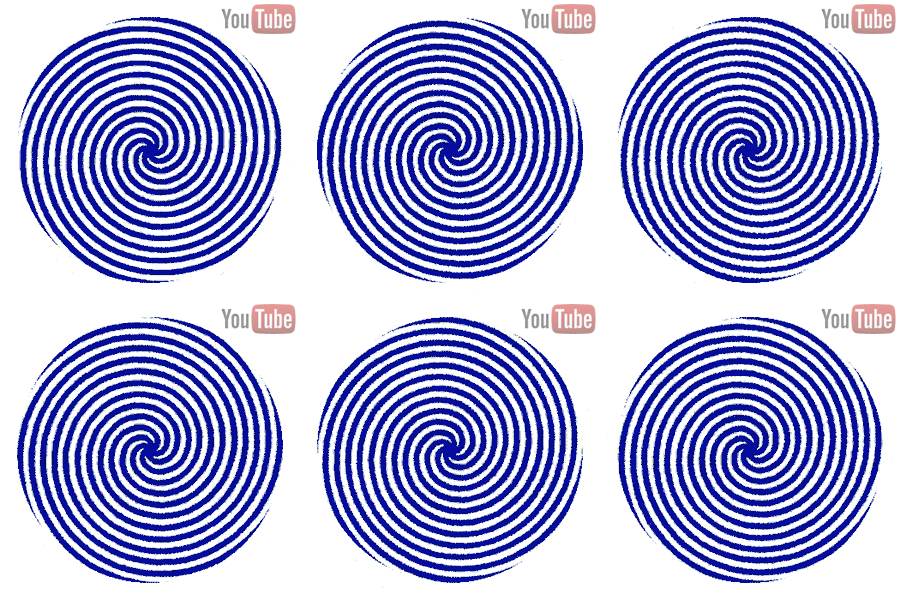
The motion after-effect is a visual illusion experienced after viewing a moving visual stimulus for a time (seconds to minutes) with stationary eyes, and then fixating a stationary stimulus. The stationary stimulus appears to move in the opposite direction to the original (physically moving) stimulus. The illusion is believed to be the result of motion adaptation.
For example, if one looks at a waterfall for about a minute and then looks at the stationary rocks at the side of the waterfall, these rocks appear to be moving upwards slightly. The illusory upwards movement is the motion aftereffect. This particular motion aftereffect is also known as the waterfall illusion. Another example can be seen when one looks at the center of a rotating spiral for several seconds. The spiral can exhibit outward or inward motion. When one then looks at any stationary pattern, it appears to be moving in the opposite direction. This form of the motion aftereffect is known as the spiral aftereffect.
Posted in Science |
Leave a Comment »
March 3, 2011
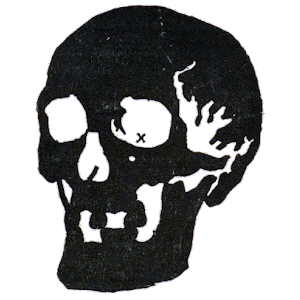
An afterimage or ghost image is an optical illusion that refers to an image continuing to appear in one’s vision after the exposure to the original image has ceased. One of the most common afterimages is the bright glow that seems to float before one’s eyes after looking into a light source for a few seconds. The phenomenon of afterimages may be closely related to persistence of vision, which allows a rapid series of pictures to portray motion, which is the basis of animation and cinema.
Closing the eye can help achieve a better sense of the color in its own aspect. Afterimages come in two forms, negative (inverted) and positive (retaining original color). The process behind positive afterimages is unknown, though thought to be related to neural adaptation. On the other hand, negative afterimages are a retinal phenomenon and are well understood.
Posted in Science |
Leave a Comment »
March 3, 2011
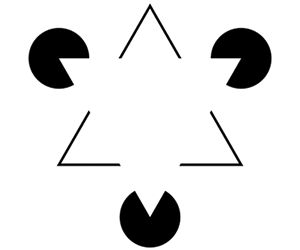
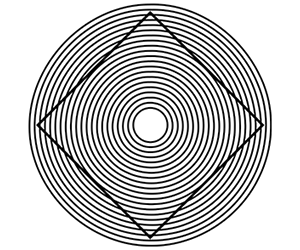
Illusory contours or subjective contours are a form of visual illusion where contours are perceived without a luminance or color change across the contour. A classic example of illusory contours is the Kanizsa triangle. This figure comprises three black circles with equal wedges cut out of them facing the center point and three black angles on a white background.
But many observers see a white triangle on top of three black disks and an outline triangle. The white triangle appears brighter than the white background and shows a contour even in regions where there is no luminance change in the image. The Ehrenstein illusion is another common form of illusory contours. It is thought that early visual cortical regions such as V2 are responsible for forming illusory contours.
Posted in Science |
Leave a Comment »


 The Daily Omnivore