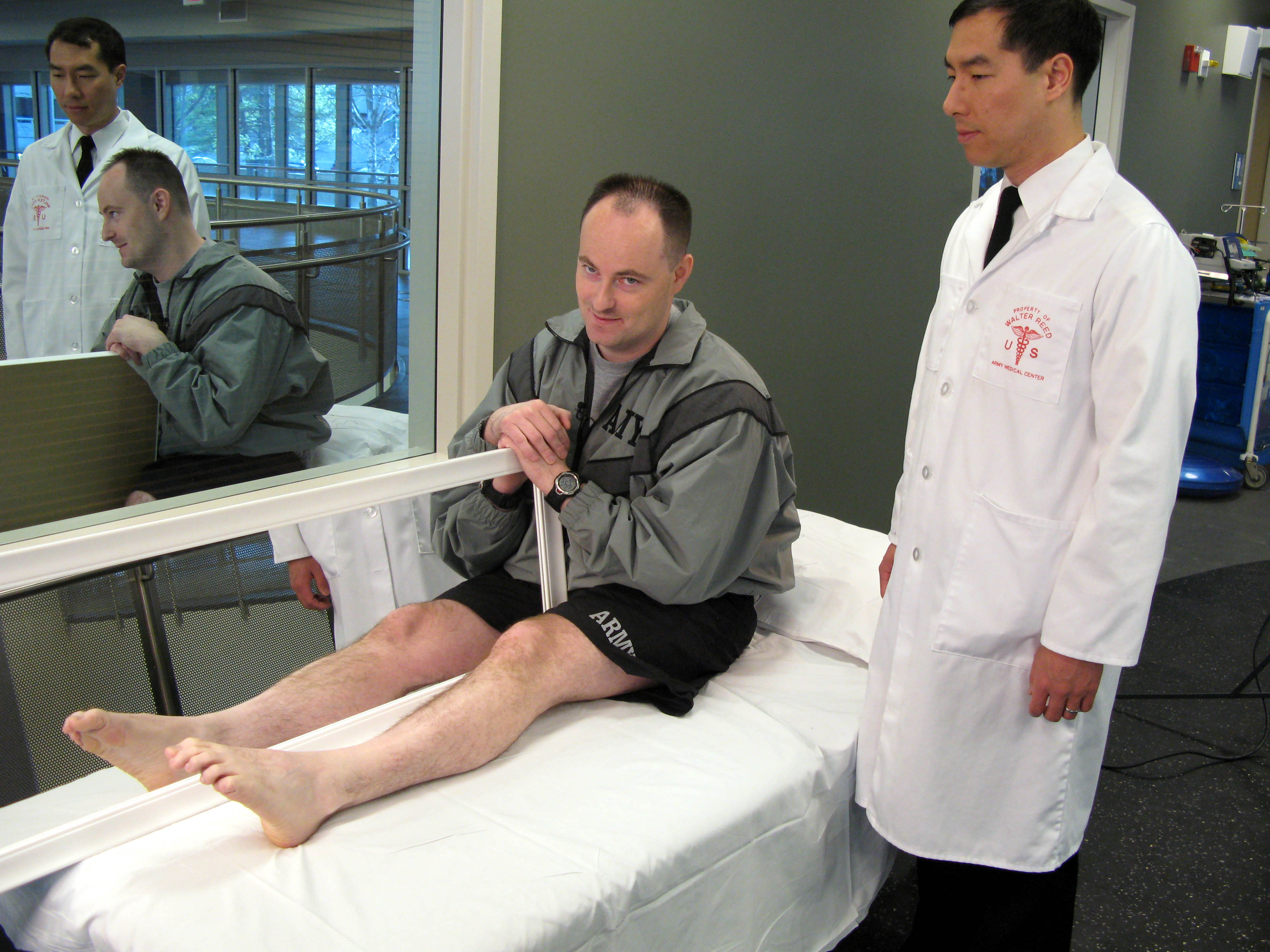
A mirror box is a box with two mirrors in the center (one facing each way), invented by neurologist Vilayanur S. Ramachandran to help alleviate phantom limb pain, in which patients feel they still have a limb after having it amputated.
Based on the observation that phantom limb patients were much more likely to report paralyzed and painful phantoms if the actual limb had been paralyzed prior to amputation, Ramachandran proposed the ‘learned paralysis’ hypothesis of painful phantom limbs. Their hypothesis was that every time the patient attempted to move the paralyzed limb, they received sensory feedback that the limb did not move.
This feedback stamped itself into the brain circuitry through a process of learning, so that, even when the limb was no longer present, the brain had learned that the limb (and subsequent phantom) was paralyzed. Often a phantom limb is painful because it is felt to be stuck in an uncomfortable or unnatural position, and the patient feels they cannot move it.
To retrain the brain, and thereby eliminate the learned paralysis, Ramachandran created the mirror box. The patient places the good limb into one side, and the stump into the other, and then looks into the mirror on the side with good limb and makes ‘mirror symmetric’ movements, as a symphony conductor might, or as we do when we clap our hands.
Because the subject is seeing the reflected image of the good hand moving, it appears as if the phantom limb is also moving. Through the use of this artificial visual feedback it becomes possible for the patient to ‘move’ the phantom limb, and to unclench it from potentially painful positions.
Repeated training in some subjects has led to long-term improvement. Subsequently, the use of the mirror box has been extended to rehabilitation of hemiparesis, or paralysis one side of the body.



Leave a Reply