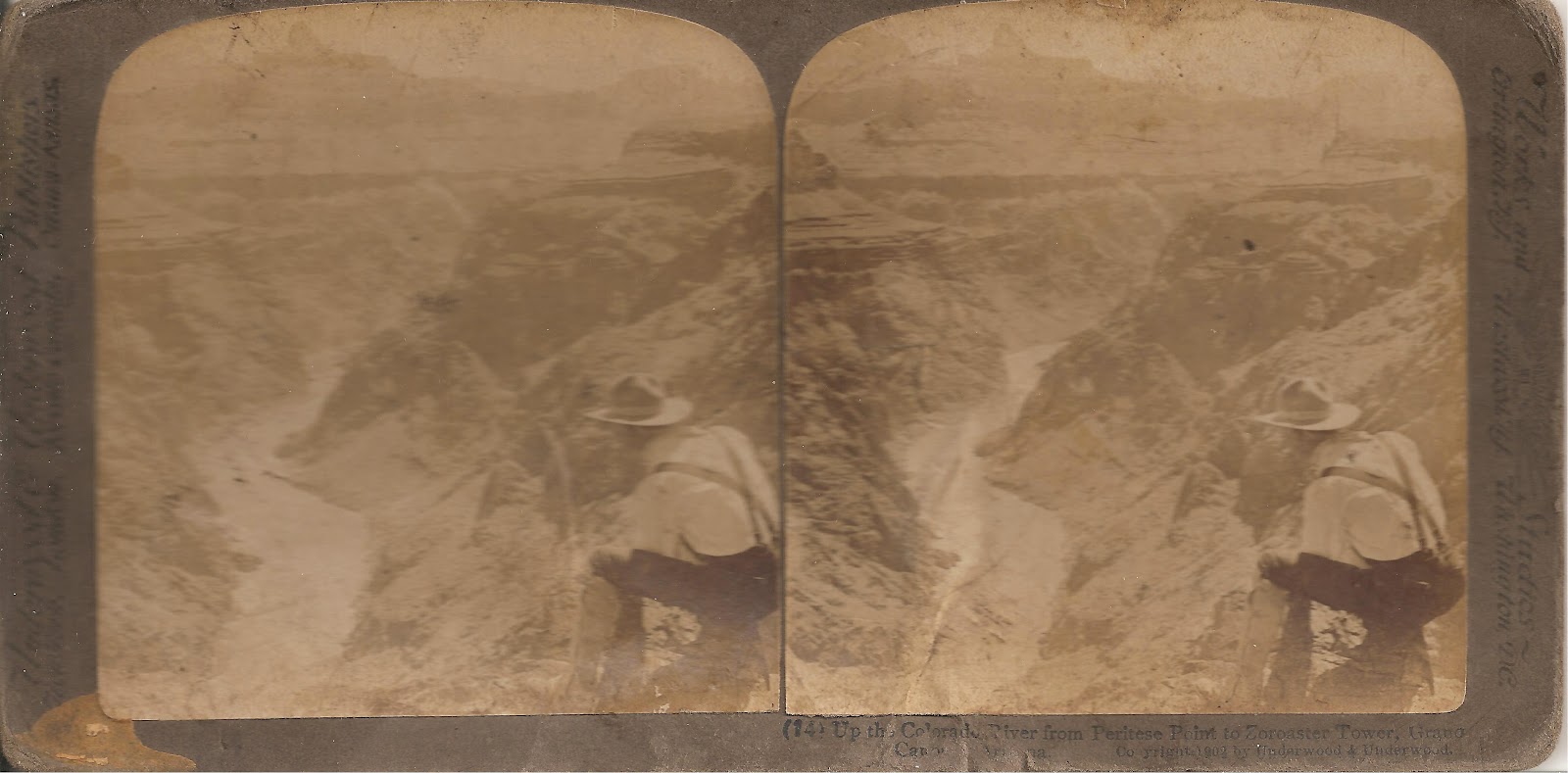
A stereogram [ster-ee-uh-gram] is an optical illusion of depth created from flat, two-dimensional image or images. Originally, the term referred to a pair of stereo images which could be viewed using a stereoscope. Other types of stereograms include anaglyphs and autostereograms. The stereogram was discovered by Victorian scientist, Charles Wheatstone in 1838. He found an explanation of binocular vision which led him to construct a stereoscope based on a combination of prisms and mirrors to allow a person to see 3D images from two 2D pictures. A stereoscope presents 2D images of the same object from slightly different angles to the left eye and the right eye, allowing the brain to reconstruct the original object via binocular disparity.
Oliver Wendell Holmes, Sr. invented an improved form of stereoscope in 1861, which had no mirrors and was inexpensive to produce. These stereoscopes were immensely popular for decades. Salvador Dalí created some impressive stereograms in his exploration in a variety of optical illusions. Stereograms were re-popularized by the creation of autostereograms on computers, wherein a 3D image is hidden in a single 2D image, until the viewer focuses their eyes correctly. The Magic Eye series is a popular example of this. Magic Eye books refer to autostereograms as stereograms, leading most people to believe that the word stereogram is synonymous with autostereogram.


 The Daily Omnivore
Leave a comment