April 20, 2011
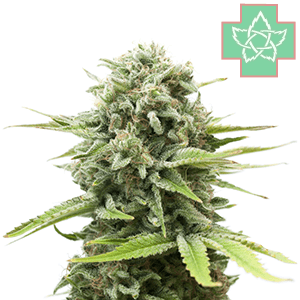
Morning Star is a highly potent strain of cannabis that is distributed in California as part of its medical marijuana program. It is known to have as much as 24% THC content. The amount of THC present in a cannabis sample is generally used as a measure of cannabis potency.
The three main forms of cannabis products are the herb (marijuana), resin (hashish), and oil (hash oil). Marijuana often contains 5% THC content, resin 20%, and cannabis oil may contain more than 60%. The Morning Star strain is available at Leaf Lab located in San Jose, CA.
Posted in Drugs, Health, Science |
Leave a Comment »
April 20, 2011

The Cannabis Buyers Club was the first public medical marijuana dispensary. It opened in February 1994 at 194 Church Street in San Francisco, founded by the Proposition 215 coauthors, a California law concerning the use of medical cannabis.
194 Church had previously been established in 1990 as a lower profile medicinal marijuana retail location by a small collective of people, and mostly to help those suffering from AIDS. The Cannabis Buyers Club, prior to being legalized under California law, was at Ford and Sanchez Street in San Francisco, 1993. Still subject to legal hassles after that date, it eventually changed its name to ‘Cannabis Cultivators Club.’
Posted in Drugs, Health, Politics |
Leave a Comment »
April 20, 2011

A speakeasy, also called a blind pig or blind tiger, is an establishment that illegally sells alcoholic beverages. Such establishments came into prominence. The term ‘blind pig’ originated in the United States in the 19th century; it was applied to lower-class establishments that sold alcoholic beverages illegally. The operator of an establishment (such as a saloon or bar) would charge customers to see an attraction (such as an animal) and then serve a ‘complimentary’ alcoholic beverage, thus circumventing the law.
The difference between a speakeasy and a blind pig was that a speakeasy was usually a higher-class establishment that offered food and entertainment. In large cities, some speakeasies even required a coat and tie for men, and evening dress for women. But a blind pig was usually a low-class dive where only beer and liquor were offered. Blind pigs continue to exist in the United States. Some people sell alcoholic beverages for off-site consumption from their homes during hours when legal sellers are closed by law, and some people operate bars illegally.
Posted in Drugs, Money, Politics |
Leave a Comment »
April 20, 2011
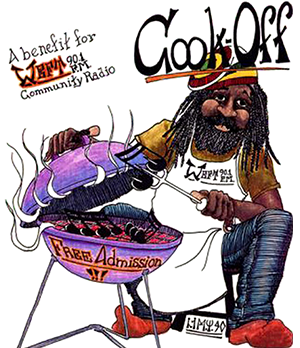
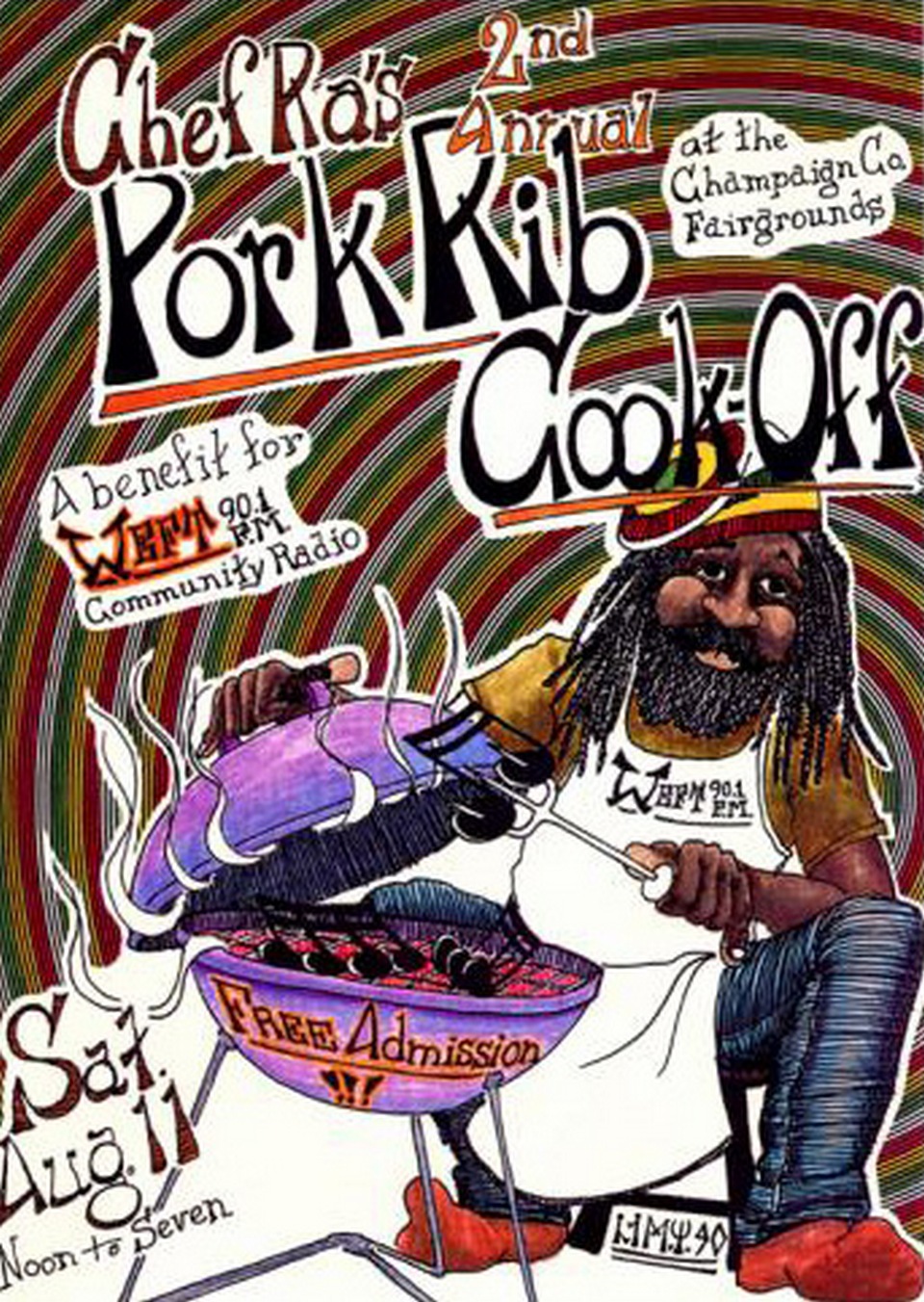
Chef Ra (1950 – 2006), born Jim Wilson, Jr., was an marijuana advocate, author, and cook in the United States. After gaining notoriety as a ganja gourmet, he began writing his High Times column, ‘Chef Ra’s Psychedelic Kitchen,’ in 1988 at the request of editor Steve Hager.
Ra was a fixture of Ann Arbor’s Hash Bash, speaking out about the benefits of cannabis for 19 consecutive years.
Posted in Drugs, Food, Politics |
Leave a Comment »
April 20, 2011
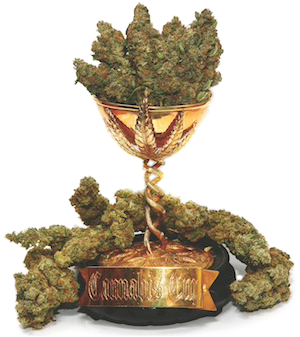
The High Times Cannabis Cup is the world’s preeminent Cannabis festival. Founded in 1987 by Steven Hager, the contest takes place each November in Amsterdam. The event allows judges from around the world to sample and vote for their favorite marijuana strains. These judges-at-large decide the Cannabis Cup (overall winner in the cannabis strain competition), best new product, best booth, best glass, best hash and best Nederhash (a slate-like hash variety). A team of VIP judges decide which seed company has grown the best marijuana.
Recently, High Times created the Medical Cannabis Cup – an event that celebrates the medical marijuana movement in America. The first High Times Medical Cannabis Cup took place in San Francisco in June of 2010. To be a judge one must pay an extra fee, which allows the attendee to vote upon the many different strains. The judge’s pass sells for $199 USD prior to June 1 after which the price increases to $250 USD. A judge’s pass costs 250 euros if purchased at the event. The highest recorded participation was in 2008 with 2,300 judges.
Posted in Drugs, Games, Money |
Leave a Comment »
April 20, 2011
High Times is a New York-based monthly magazine founded in 1974 by American journalist, Tom Forcade. The publication is devoted to, and advocates the legalization of, marijuana. It is the largest cannabis-related magazine in the world.
High Times has long been considered the publication of record for the counterculture. Past contributors include Charles Bukowski, William S. Burroughs, Truman Capote, Hunter S. Thompson and Andy Warhol.
read more »
Posted in Drugs, Money, Politics |
Leave a Comment »
April 20, 2011

Hash Bash is an annual event held in Ann Arbor, Michigan, on the first Saturday of April at high noon on the University of Michigan Diag (a large open space in the middle of the university’s Central Campus). A collection of speeches, live music, street vending and occasional civil disobedience are centered on the goal of reforming federal, state, and local marijuana laws. The first Hash Bash was held on Saturday, April 1 1972 in response to the March 9th 1972 decision by Michigan Supreme Court declaring unconstitutional the law used to convict cultural activist John Sinclair for possession of two marijuana joints.
Ann Arbor has very lenient laws regarding the possession of marijuana, it is a civil infraction rather than a criminal offense. Even so, the campus of the University of Michigan sits upon state property, and so anyone caught with marijuana on any campus location is subject to the more strict state marijuana laws. In addition, since state law takes precedence over municipal law, many people are prosecuted under state law regardless of where in Ann Arbor they are located.
Posted in Drugs, Humor, Politics |
1 Comment »
April 20, 2011

The Global Marijuana March is an annual rally held at different locations across the planet. It refers to cannabis-related events that occur on the first Saturday in May, and feature marches, rallies, concerts, and festivals. It began in 1999, and around 600 different cities worldwide have signed up since. Local names for the event include J-Day, the Million Marijuana March, World Cannabis Day, and Cannabis Liberation Day.
The Global Marijuana March is a celebration embracing cannabis culture as a personal lifestyle choice. Participants unite to discuss, promote, entertain and educate both consumers and non-consumers alike.
read more »
Posted in Drugs, Politics, World |
Leave a Comment »
April 20, 2011


420 (pronounced four-twenty) refers to cannabis subculture. April 20th has evolved into a counterculture holiday, where people gather to celebrate and consume cannabis. Some events have a political nature to them, advocating for the decriminalization of non-medical cannabis. The term was allegedly coined by a group of teenagers in California in 1971. Calling themselves the Waldos, because their chosen hang-out spot was a wall outside the school,’ the group first used the term in connection to a plan to search for an abandoned cannabis crop that they had learned about. They designated the Louis Pasteur statue on the grounds of San Rafael High School as their meeting place, and 4:20 p.m. as their meeting time.
The Waldos referred to this plan with the phrase ‘4:20 Louis.’ Multiple failed attempts to find the crop eventually shortened their phrase to simply ‘4:20,’ which ultimately evolved into a codeword the teens used to mean pot-smoking in general. ‘High Times’ Creative Director Steven Hager was the first person to track down the Waldos and publish their account of the origins of the term. In 1998, Hager wrote ‘Are You Stoner Smart or Stoner Stupid?’ in which he called for 4:20 p.m. to be the socially accepted hour of the day to consume cannabis. ‘I believe 420 is a ritualization of cannabis use that holds deep meaning for our subculture,’ wrote Hager. ‘It also points us in a direction for the responsible use of cannabis.’
Posted in Drugs, Humor, Politics |
Leave a Comment »
April 19, 2011

Dubailand is an entertainment complex under development in the United Arab Emirates. When announced in 2003 it was one of the most ambitious leisure developments ever proposed anywhere in the world, but development has been severely impacted by global recession and Dubai’s financial crisis.
The park is divided into six zones: Attractions and Experience World, Sports and Outdoor World, Eco-Tourism World, Themed Leisure and Vacation World, Retail and Entertainment World, and Downtown. It will be twice the size of Walt Disney World Resort, and will be the largest collection of theme parks in the world; however, no theme park in Dubailand will surpass Disney’s Animal Kingdom as the world’s largest theme park.
Posted in Games, Money, World |
Leave a Comment »
April 19, 2011
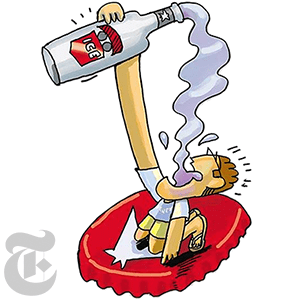
Icing is a drinking game in which players are required to bend down on one knee and chug a bottle of Smirnoff Ice. Participants are encouraged to come up with elaborate ways to present the Ice to their targets by hiding bottles in inconspicuous locations, or in situations where drinking it would be dangerous or embarrassing (e.g. before they drive somewhere, attend a meeting, etc.). Failure to drink, no matter the circumstance, results in the humiliation of the victim, and players are encouraged to mistreat those who refuse to play.
The target of an Icing can perform an ‘ice block’ by grabbing a Smirnoff Ice within arms reach (e.g. on his person). An ice block can be in the form of any size Smirnoff Ice, thus upping the stakes for the challenger. Once the player presents this ice block to the original player, the original player must drink both ices. You can ice block an ice block, even though this would lead to back and forth infinite ice blocks. Refusal to consume an Ice results in excommunication, meaning that that player can no longer ice anyone or get iced. Furthermore, you cannot pour it into any other drinking container to mimic another liquid. This is punishable by drinking that said ice.
Posted in Food, Games, Humor |
Leave a Comment »
April 18, 2011

Genie is the pseudonym for Susan M. Wiley, a feral child who spent nearly all of the first thirteen years of her life locked inside a bedroom strapped to a potty chair. She was a victim of one of the most severe cases of social isolation in American history. Genie was discovered by Los Angeles authorities in 1970.
Genie’s discovery was compared extensively with that of Victor of Aveyron, about whom a film was made, ‘The Wild Child.’ Psychologists, linguists and other scientists exhibited great interest in the case due to its perceived ability to reveal insights into the development of language and linguistic critical periods.
read more »
Posted in Health, Language |
Leave a Comment »



 The Daily Omnivore