April 18, 2011
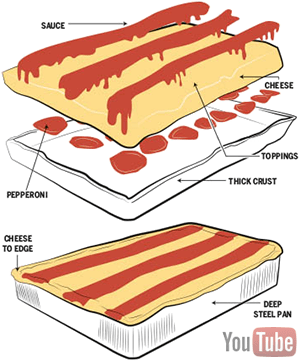
Detroit-style pizza is a square pizza similar to Sicilian-style pizza that has a thick deep-dish crust, cooked toppings such as pepperoni and olives, andis served with the marinara pizza sauce on the top of the pizza. It is known within Detroit as Square pizza. The crust of a Detroit-style pizza is noteworthy because in addition to occasionally being twice-baked, it is usually baked to a chewy medium-well-done state, and many parlors will apply melted butter with a soft brush prior to baking. Some chains, such as Hungry Howie’s (founded in Taylor, Michigan), are also known for their flavored crusts. Popular crust flavors include sesame, butter, garlic and onion.
Southeast Michigan is also known as the headquarters of some of the largest pizza chains in the United States including Domino’s Pizza (Ann Arbor), Little Caesars (Detroit) and Hungry Howie’s (Madison Heights). Although none of those chains specializes in Detroit-style pizza, Little Caesars does sell a square deep dish pizza and offers sauce with it that can be applied on top of the pizza by the customer for the traditional Detroit-style. The origins of ‘Detroit-style’ pizza are from local Detroit pizzeria, Cloverleaf Pizza, which developed and began serving their signature pizza in 1946.
Posted in Food |
Leave a Comment »
April 18, 2011

The RepRap project is an initiative to develop a 3D printer (RepRap, short for ‘replicating rapid prototyper’) that can print most of its own components. As an open design, all of the designs produced by the project are released under a free software license. The device uses a variant of fused deposition modeling, an additive manufacturing technique.
Due to the self-replicating ability of the machine, authors envision the possibility to cheaply distribute RepRap units to people and communities, enabling them to create (or download from the internet) complex products without the need for expensive industrial infrastructure.
Posted in Money, Technology |
1 Comment »
April 18, 2011

A 3D printer is a machine that prints solid copies of objects from computer drawings. Some use powder. Some use liquid plastic. They all make the object by building it up layer by layer in an additive process.
In some industries these printers are called rapid prototyping machines. Car makers use 3D printers to try out new shapes for things like door handles; designers use try new shapes for consumer electronics; artists create sculptures; and jewelry designers can try out new ideas and make molds for rings.
read more »
Posted in Art, Money, Technology |
Leave a Comment »
April 14, 2011
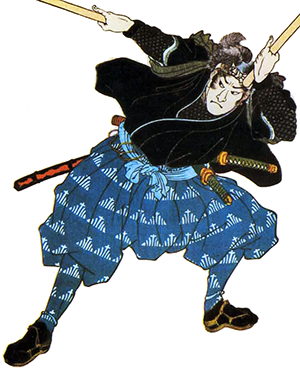
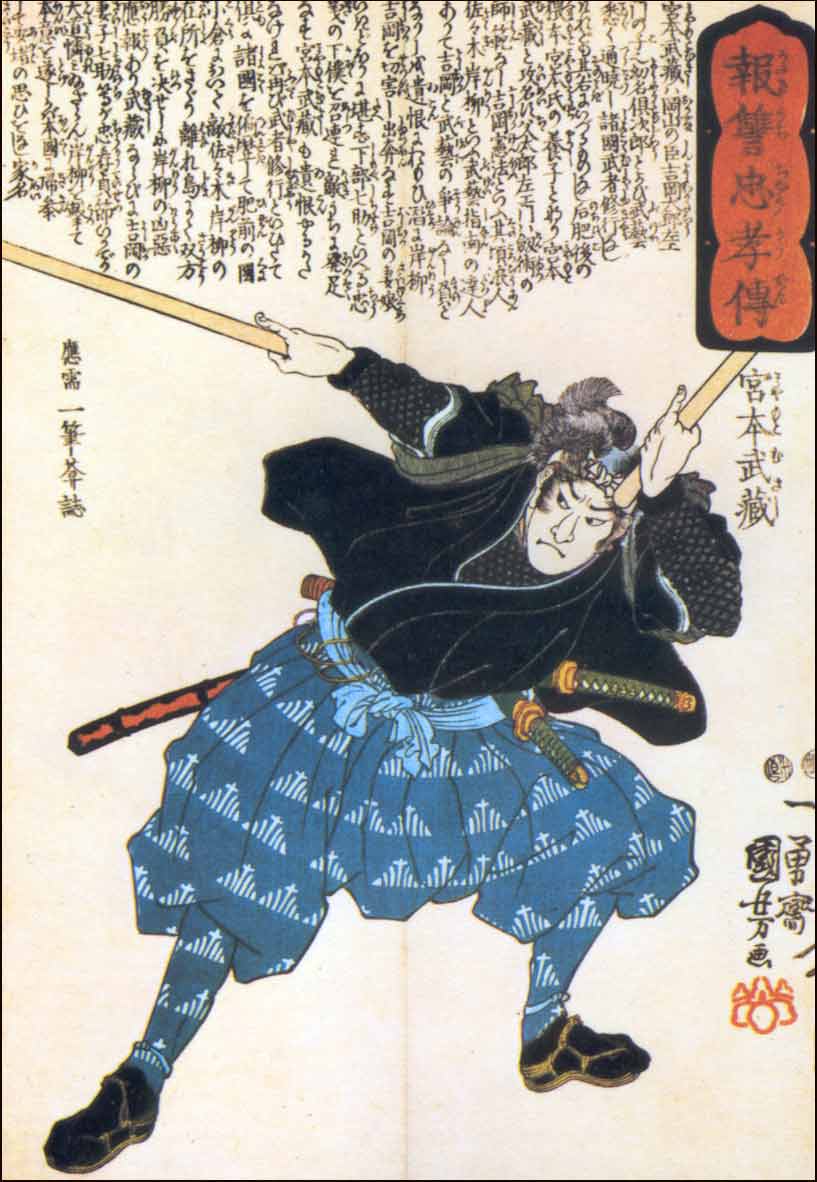
Miyamoto Musashi (c. 1584– 1645) was a Japanese swordsman and samurai famed for his duels and distinctive style. He became renowned through stories of his excellent swordsmanship in numerous duels, even from a very young age.
He was the founder of the Niten-ryū style of swordsmanship and the author of ‘The Book of Five Rings,’ a book on strategy, tactics, and philosophy that is still studied today.
read more »
Posted in Games, Philosophy, War |
Leave a Comment »
April 14, 2011

Downhill biking (DH) is a gravity-assisted time trial mountain biking event. Riders race against the clock, usually starting at intervals of 30 seconds (seeded from slowest to fastest), on courses which typically take two to five minutes to complete. Riders are timed with equipment similar to that used in Downhill skiing. The placing is determined by the fastest times to complete the course; races are often won by margins of under a second.
As the name of this discipline implies, downhill races are held on steep, downhill terrain with no extended climbing sections, resulting in high speed descents with extended air time off jumps and other obstacles. Portugal is the host country of a Unique variety of down hill races, the Urban Down Hill, known as the ‘Lisbon Down Town,’ held annually in May. The ‘Cerro Abajo’ race in Valparaiso, Chile is another annual urban downhill event.
Posted in Games, World |
Leave a Comment »
April 14, 2011

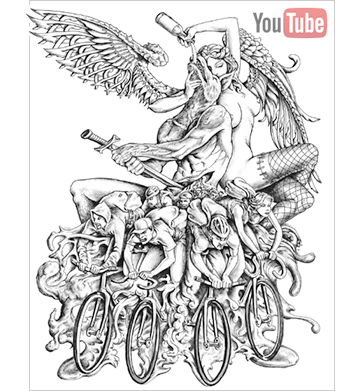
An Alleycat race is an informal bicycle race. Alleycats almost always take place in cities, and are often organized by bicycle messengers. The informality of the organization is matched by the emphasis on taking part, rather than simple competition. Many Alleycats present prizes for the last competitor to finish (sometimes known as Dead Friggin’ Last or DFL).
The first race to be called ‘Alleycat’ was held in Toronto in 1989. Regularly organized Alleycats can be found in cities across North America, Europe and Asia. Many smaller cities with no cycle messenger population are also home to alleycats run by the burgeoning urban cyclist subculture.
read more »
Posted in Games, Humor |
Leave a Comment »
April 14, 2011

The weasel war dance is a colloquial term for a behavior of excited ferrets and weasels. In wild animals, it is speculated that this dance is used to confuse or disorient prey. In domestic animals, the war dance usually follows play or the successful capture of a toy or a stolen object.
It consists of a frenzied series of sideways and backwards hops, often accompanied by an arched back, hissing noises, and a frizzy tail. Ferrets are notoriously clumsy in their surroundings during their dance and will often bump into or fall over objects and furniture. Although the weasel war dance may make a ferret appear frightened or angry, they are often just excited and are usually harmless to humans.
Posted in Humor, Science |
Leave a Comment »
April 14, 2011


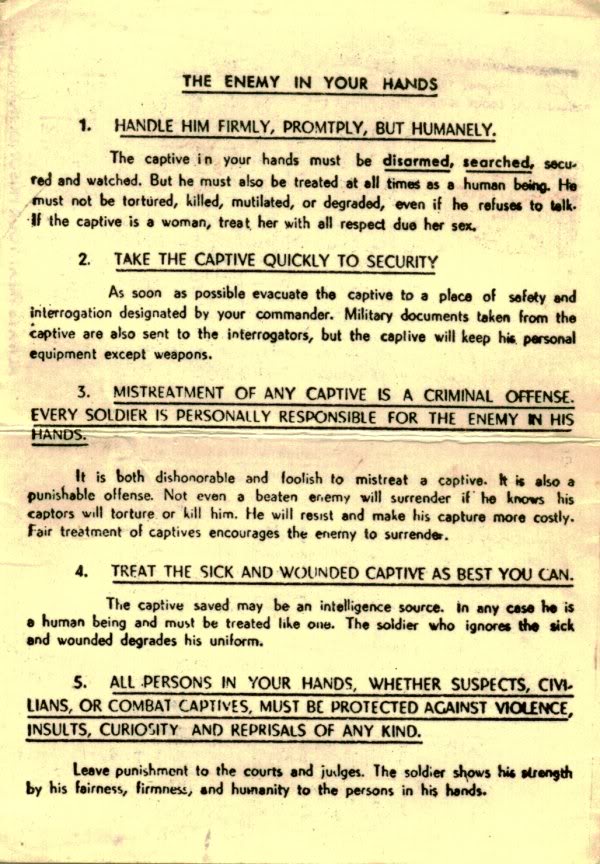
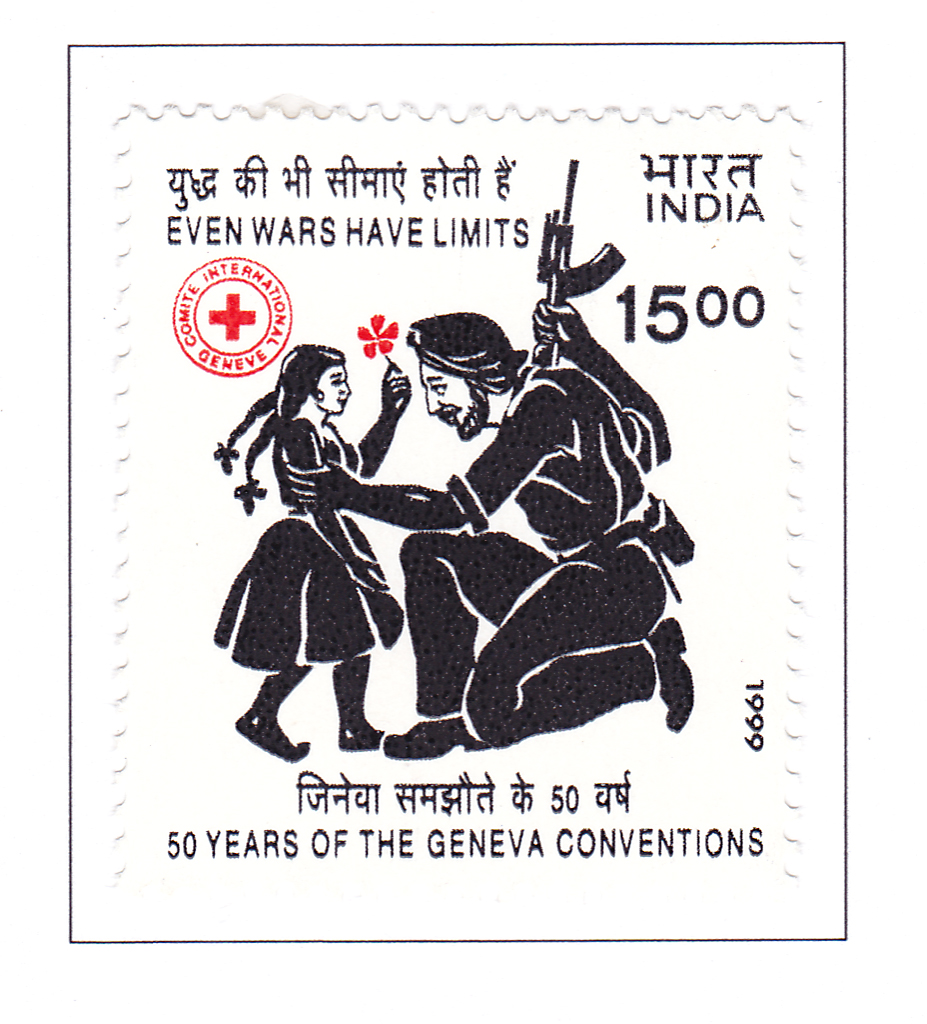
The Geneva Conventions are a set of four treaties of international law. They were formulated in Geneva, Switzerland. All of the four treaties are about humanitarian issues. The first treaty was the product of Swiss activist, Henri Dunant in 1859. The documents require that all states who sign them create national laws to make violations of the Geneva Conventions a crime.
The first Convention, adopted in 1864, was devoted to care for the injured in battle, and required medical teams on the battlefield to provide aid to enemy combatants. The Second Convention, adopted in 1949, expanded the scope of the first treaty to marine battles. The Third Convention, adopted in 1929, addressed the treatment of prisoners of war. The Fourth Convention, adopted in 1949, expanded the scope of the third convention to include civilians. Later conferences have added text that forbids certain methods of warfare.
Posted in Politics, War, World |
Leave a Comment »
April 13, 2011

Mod (from modernist) is a subculture that originated in London in the late 1950s and peaked in the early-to-mid 1960s. Significant elements include: fashion (often tailor-made suits), pop music (including African American soul, Jamaican ska, and British beat music and R&B), and Italian motor scooters.
The original scene was also associated with amphetamine-fueled all-night dancing at clubs. From the mid-to-late 1960s onwards, the mass media often used the term in a wider sense to describe anything that was believed to be popular, fashionable, or modern. There was a mod revival in the United Kingdom in the late 1970s, which was followed by a mod revival in North America in the early 1980s, particularly in Southern California.
read more »
Posted in Art, Drugs, Language |
Leave a Comment »
April 13, 2011

Zentsūji is a town in Japan notable for producing square watermelons by growing the fruits in glass boxes and letting them naturally assume the shape of the receptacle.
The square shape is designed to make the melons easier to stack and store, but the square watermelons are often more than double the price of normal ones. Pyramid shaped watermelons have also been developed.
Posted in Food, Technology, World |
1 Comment »
April 13, 2011


Designer toys are collectibles that are produced in limited editions (as few as 10 or as many as 2000 pieces) and created by artists and designers. Designer toys are made of variety of materials; ABS plastic and vinyl are most common, although wood, metal, and resin are occasionally used. The term also encompasses plush, cloth and latex dolls.
read more »
Posted in Art, Games, Money |
Leave a Comment »
April 13, 2011

The 27 Club is a group of influential rock and blues musicians who all died at the age of 27, including Blues musician Robert Johnson, Brian Jones of the Rolling Stones, Jimi Hendrix, Janis Joplin, Jim Morrison, Kurt Cobain, and Amy Winehouse. Most members of the ‘club’ died as a result of drug and alcohol abuse, or other violent means such as homicide or suicide.
read more »
Posted in Art, Death, Drugs |
Leave a Comment »





 The Daily Omnivore