April 12, 2011

Highway hypnosis, also popularly known as ‘driving without attention mode’ or ‘white line fever,’ is a mental state in which a person can drive a motor vehicle great distances, responding to external events in the expected manner with no recollection of having consciously done so. In this state the driver’s conscious mind is apparently fully focused elsewhere, with seemingly direct processing of the masses of information needed to drive safely. Highway hypnosis is just one manifestation of a relatively commonplace experience, where the conscious and unconscious minds appear to concentrate on different things.
Building on the theories of American psychologist, Ernest Hilgard (1904 – 2001), that hypnosis is an altered state of awareness, some theorists hold that the consciousness can develop hypnotic dissociation. In the example of highway hypnosis, one stream of consciousness is driving the car while the other stream of consciousness is dealing with other matters. Amnesia can even develop for the dissociated consciousness that drove the automobile. The phenomenon is an example of automaticity in cognitive psychology.
Posted in Health, Language, Science |
Leave a Comment »
April 12, 2011

Automaticity [aw-tuh-mah-tis-i-tee] is the ability to do things without occupying the mind with the low-level details required, allowing it to become an automatic response pattern or habit. It is usually the result of learning, repetition, and practice. Examples of automaticity are common activities such as speaking, bicycle-riding, assembly-line work, and driving a car.
After an activity is sufficiently practiced, it is possible to focus the mind on other activities or thoughts while undertaking an automaticized activity (for example, holding a conversation or planning a speech while driving a car). Walking is not an example of automaticity as it is not a cortical function. It is a medullary function, with specific medullary circuits, which can be learnt to be inhibited or altered by higher-order ones.
Posted in Health, Language, Science |
Leave a Comment »
April 12, 2011

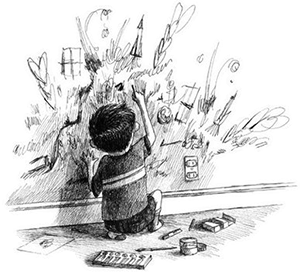
The hunter vs. farmer hypothesis is a hypothesis proposed by American author and former psychotherapist, Thom Hartmann, about the origins of attention-deficit hyperactivity disorder (ADHD), suggesting that the condition may be an adaptive behavior. Hartmann proposes that the high frequency of ADHD in contemporary settings represents otherwise normal behavioral strategies that become maladaptive in such evolutionarily novel environments as the formal school classroom. Genetic variants conferring susceptibility to ADHD are very frequent—implying that the trait had provided selective advantage in the past.
Hartmann notes that most or all humans were nomadic hunter gatherers for hundreds of thousands of years, but that this standard gradually changed as agriculture developed in most societies, and more people worldwide became farmers. Over many years, most humans adapted to farming cultures, but Hartmann speculates that people with ADHD retained some of the older hunter characteristics. The theory also explains the distractibility factor in ADHD individuals and their short attention span, along with various other characteristics, such as apathy towards social norms, poor planning and organizing ability, distorted sense of time, impatience, and impulsiveness.
Posted in Health, Science |
Leave a Comment »
April 11, 2011
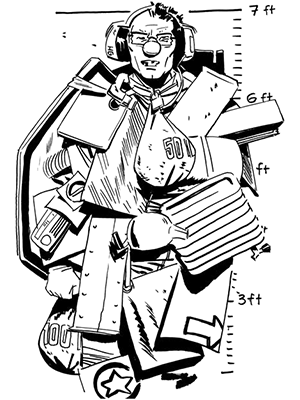
‘Harrison Bergeron‘ is a satirical, dystopian science fiction short story written by Kurt Vonnegut and first published in 1961. The story is set in the year 2081. Due to the 211th, 212th and 213th Amendments to the Constitution of America, all Americans are mandated equal.
‘They were not only equal before God and the law. They were equal every which way.’ In America no one is more intelligent than anyone else, no one is better looking or more athletic than anyone else. In order to stop any sort of competition in society these measures are enforced by the United States Handicapper General.
read more »
Posted in Art, Humor, Politics |
Leave a Comment »
April 11, 2011

A jinx [jingks], in popular superstition and folklore, is: a type of curse placed on a person that makes them prey to many minor misfortunes and other forms of bad luck; a person afflicted with a similar curse, who, while not directly subject to a series of misfortunes, seems to attract them to anyone in his vicinity; and an object/ person that brings bad luck.
Jinx is also a children’s game (although not necessarily played only by children) with myriad rules and penalties that occurs when two people unintentionally or intentionally speak (or type) the same word or phrase simultaneously.
read more »
Posted in Games, Humor, Language |
Leave a Comment »
April 11, 2011

The Candle Problem is a cognitive performance test, measuring the influence of functional fixedness on a participant’s problem solving capabilities. The test was created by Gestalt psychologist Karl Duncker and published posthumously in 1945. The test presents the participant with the following task: how to fix a lit candle on a wall (a cork board) in a way so the candle wax won’t drip onto the table below. To do so, one may only use the following along with the candle: a book of matches and a box of thumbtacks.
The solution is to empty the box of thumbtacks, put the candle into the box, use the thumbtacks to nail the box (with the candle in it) to the wall, and light the candle with the match. The concept of functional fixedness predicts that the participant will only see the box as a device to hold the thumbtacks and not immediately perceive it as a separate and functional component available to be used in solving the task. However, if the task is presented with the tacks piled next to the box (rather than inside it), virtually all of the participants were shown to achieve the optimal solution.
Posted in Games, Science |
Leave a Comment »
April 11, 2011

Beginner’s luck refers to the supposed phenomenon of novices experiencing disproportionate frequency of success or succeeding against an expert in a given activity. One would expect experts to outperform novices – when the opposite happens it is counter-intuitive, hence the need for a term to describe this phenomenon.
The term is most often used in reference to a first attempt in sport or gambling, but is also used in many other diverse contexts. The term is also used when no skill whatsoever is involved, such as a first-time slot machine player winning the jackpot.
read more »
Posted in Games, Language, Philosophy |
Leave a Comment »
April 11, 2011
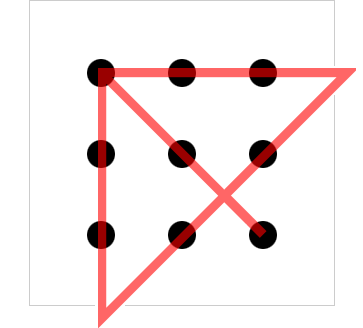
‘Thinking outside the box‘ is to think differently, unconventionally or from a new perspective. This is sometimes called a process of lateral thought. As catchphrase, or cliché, it has become widely used in business environments, especially by management consultants and executive coaches, and has spawned a number of advertising slogans. To think outside the box is to look further and to try not thinking of the obvious things, but to try thinking beyond them.
The origins of the phrase are obscure; but it was popularized in part because of a nine-dot puzzle, which British author, John Adair claims to have introduced in 1969. The puzzle proposed an intellectual challenge—to connect the dots by drawing four straight, continuous lines that pass through each of the nine dots, and never lifting the pencil from the paper. The conundrum is easily resolved, but only if you draw the lines outside the confines of the square area defined by the nine dots themselves.
Posted in Games, Language, Money |
Leave a Comment »
April 11, 2011

The Dream Director is a touring installation by artist Luke Jerram intended to alter dreams. It continues the artist’s exploration of creating art inside people’s heads (‘on the edges of perception’) rather than in the physical world. Participants in the Dream Director (usually 20 in total) stay overnight in specially designed sleep pods.
read more »
Posted in Art, Philosophy, Technology |
Leave a Comment »
April 11, 2011

A street piano is a piano placed in the street which passers-by are encouraged to play. The best known examples is the ‘Play Me, I’m Yours’ project by artist Luke Jerram. The concept originates quite by accident in the early 2000’s in Sheffield, England, where there was a piano on the pavement on Sharrow Vale Road.
It was left outside temporarily because the owner could not get it up the steps into his new house. As a social experiment he attached a sign inviting passers by to play the piano for free. This offer was taken up by a great many people and the piano became a part of the local community.
read more »
Posted in Art, Humor, World |
1 Comment »
April 11, 2011
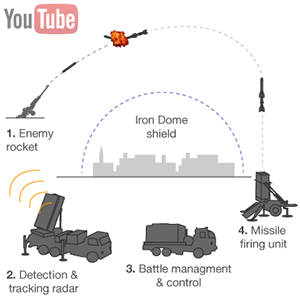
Iron Dome is an Israeli mobile air defense system in development by Rafael Advanced Defense Systems designed to intercept short-range rockets and artillery shells. The system was created as a defensive countermeasure to the rocket threat against Israel’s civilian population on its northern and southern borders, and was declared operational and initially deployed in the first quarter of 2011.
It is designed to intercept very short-range threats up to 70 kilometers in all-weather situations. On April 7, 2011, the system successfully intercepted a Grad rocket launched from Gaza, marking the first time in history a short-range rocket was ever intercepted.
Posted in Technology, War |
Leave a Comment »
April 11, 2011


A macaroni [mak-uh-roh-nee] in mid-18th century England, was a fashionable fellow who dressed and spoke in an outlandishly affected and effeminate manner.
The term pejoratively referred to a man who ‘exceeded the ordinary bounds of fashion’ in terms of clothes, fastidious eating and gambling.
read more »
Posted in Art, Humor, Language |
Leave a Comment »



 The Daily Omnivore