June 12, 2011

Al Hirschfeld (1903 – 2003) was an American caricaturist best known for his simple black and white portraits of celebrities and Broadway stars. Hirschfeld’s art style is unique, and he is considered to be one of the most important figures in contemporary caricature, having influenced countless cartoonists.
His caricatures are almost always drawings of pure line with simple black ink on white paper with little to no shading or crosshatching. His drawings always manage to capture a likeness using the minimum number of lines. Though his caricatures often exaggerate and distort the faces of his subjects, he is often described as being a fundamentally ‘nicer’ caricaturist than many of his contemporaries, and being drawn by Hirschfeld was considered an honor more than an insult. Nonetheless he did face some complaints from his editors over the years.
read more »
Posted in Art, Humor |
Leave a Comment »
June 12, 2011

Every year in the United States, there are approximately 2.5 million weddings, and the wedding industry has grown into a $40 billion a year market. The wedding industry is a modern phenomenon. In the past, women were viewed as possessions and sold as wives; today, couples spend thousands of dollars to have their ideal of the perfect day of union.
Until the Middle Ages, the Wedding ceremony or betrothal involved of the exchange of a ring or a piece of fruit, a kiss, and then the bride moved into the groom’s home. Today however, the ceremonial aspect of marriage has become more extravagant and more detailed. The average couple will spend up to $4,411 for the engagement ring, and $2,067 for his and hers wedding bands, and the average American couple today spends more than $20,000 on their wedding. For a middle class family, this can be about 51 percent of their income.
read more »
Posted in Money |
Leave a Comment »
June 12, 2011

‘The Black Swan: The Impact of the Highly Improbable’ is a book by Lebanese American, philosopher Nassim Nicholas Taleb. The book focuses on the extreme impact of certain kinds of rare and unpredictable events (outliers) and humans’ tendency to find simplistic explanations for these events retrospectively, after the fact. This theory has since become known as the black swan theory. The book also covers subjects relating to knowledge, aesthetics, and ways of life, and uses elements of fiction in making its points.
Taleb, bestselling author of ‘Fooled by Randomness,’ treats uncertainty and randomness as a single idea. The main idea in Taleb’s book is not to attempt to predict Black Swan Events, but to build robustness into negative ones that occur and being able to exploit positive ones. Taleb contends that banks and trading firms are very vulnerable to hazardous Black Swan Events and are exposed to losses beyond those that are predicted by their defective models.
read more »
Posted in Language, Philosophy, Science |
Leave a Comment »
June 11, 2011

A Googlewhack is a type of a contest for finding a Google search query consisting of exactly two words without quotation marks, that returns exactly one hit. A Googlewhack must consist of two actual words found in a dictionary. A Googlewhack is considered legitimate if both of the searched-for words appear in the result page.
Published googlewhacks are short-lived, since when published to a web site, the new number of hits will become at least two, one to the original hit found, and one to the publishing site. The term Googlewhack first appeared on the web at UnBlinking in 2002; the term was coined by Gary Stock. Subsequently, Stock created The Whack Stack, at googlewhack.com, to allow the verification and collection of user-submitted Googlewhacks.
read more »
Posted in Games, Humor, Technology |
Leave a Comment »
June 11, 2011
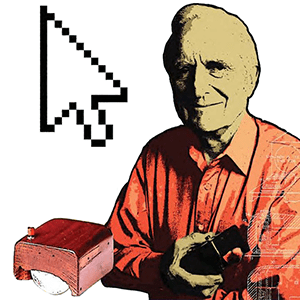
The Mother of All Demos is American inventor, Douglas Engelbart’s 1968 demonstration of experimental computer technologies that are now commonplace. The live demonstration featured the introduction of the computer mouse, video conferencing, teleconferencing, email, hypertext, word processing, object addressing, and a collaborative real-time editor. Engelbart, with the help of his geographically distributed team, demonstrated the workings of the NLS (which stood for oNLine System) to the 1,000 computer professionals in attendance. The project was the result of work done at SRI International’s Augmentation Research Center.
The term ‘Mother of All Demos’ references ‘The Mother of All Battles,’ a name used by Iraqi dictator Saddam Hussein to describe the 1991 Gulf War; the term ‘the mother of all’ subsequently became a widely used stock phrase or snowclone.
Posted in Technology |
1 Comment »
June 10, 2011


Gary Panter (b. 1950) is an illustrator, designer, and part-time musician. Panter’s work is representative of the post-underground, new wave comics movement that began with the end of one periodical, ‘Arcade: The Comics Revue’ and the initiation of another, RAW, one of the second generation in American underground comix. Panter attended Texas A&M University where he studied under commercial illustrator, Jack Unruh.
He has published his work in various magazines and newspapers, including ‘Raw,’ ‘Time,’ and ‘Rolling Stone.’ He has exhibited widely, and won three Emmy awards for his set designs for ‘Pee-Wee’s Playhouse.’ Prior to Panter’s work, kid shows had a more lulling aesthetic: everything was round, ‘cute,’ simplified, and pastel. His set design was the antithesis of pablum-art: it was dense as a jungle and jam-packed with surprises, often loud and abrasive ones.
read more »
Posted in Art, Humor |
Leave a Comment »
June 10, 2011


A DVJ is a DJ who performs live using an audio-visual music player instead of an audio-only setup. This is not to be confused with a VJ, which usually refers to a host of a music video channel, or a visual-only performer separate from the DJ in a live environment. The term comes from the industry-standard Pioneer DVD-turntable, called the DVJ. Liquid Basildon a British nightclub is host to a number of DVJs such as Sander Kleinenberg, Christian S and Kel Sweeney.
Visuals in one form or another have always been a part of live DJ performances, but until the advent of this form of performance, the visual aspect was largely limited to computerized strobes and spotlights, laser projectors, and/or pyrotechnics. With the advent of DVD technology (especially once it became cheap enough for the average individual to create his or her own discs), a push was made for a device that would give a performer the same flexibility in accessing the music and video on the disc as the turntable-style CD players commonly available for DJs.
read more »
Posted in Art, Technology |
Leave a Comment »
June 10, 2011


VJing is a broad designation for realtime visual performance. Characteristics of VJing are the creation or manipulation of imagery in realtime through technological mediation and for an audience, in synchronization to music. VJing often takes place at events such as concerts, nightclubs, music festivals and sometimes in combination with other performative arts. The term VJing became popular in its association with MTV’s Video Jockey but its origins date back to the New York club scene of the 70s. In both situations VJing is the manipulation or selection of visuals, the same way DJing is a selection and manipulation of audio.
One of the key elements in the practice of VJing is the realtime mix of content from a ‘library of media,’ on storage media such as VHS tapes or DVD disks, video and still image files on computer hard drives, live camera input, or from a computer generated visuals. In addition to the selection of media, VJing mostly implies realtime processing of the visual material. The term is also used to describe the performative use of generative software, although the usage is contested since no video is being mixed.
read more »
Posted in Art, Technology |
1 Comment »
June 10, 2011
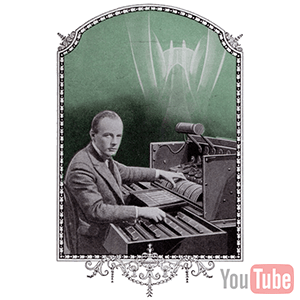
The term color organ refers to a tradition of mechanical (18th century), then electromechanical, devices built to represent sound or to accompany music in a visual medium—by any number of means. In the early 20th century, a silent color organ tradition (Lumia) developed. In the 60s and 70s, the term ‘color organ’ became popularly associated with electronic devices that responded to their music inputs with light shows. The term ‘light organ’ is increasingly being used for these devices; allowing ‘color organ’ to reassume its original meaning.
The dream of creating a visual music comparable to auditory music found its fulfillment in animated abstract films by artists such as Oskar Fischinger, Len Lye and Norman McLaren; but long before them, many people built instruments, usually called ‘color organs,’ that would display modulated colored light in some kind of fluid fashion comparable to music. In 1590, Gregorio Comanini described an invention by the Mannerist painter Arcimboldo of a system for creating color-music based on apparent luminosity (light-dark contrast) instead of hue.
read more »
Posted in Art, Technology |
Leave a Comment »
June 10, 2011
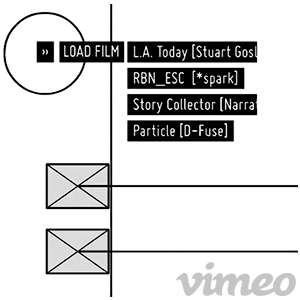
The term ‘Live Cinema‘ formerly described the live musical accompaniment of silent movies, but has grown to include the simultaneous creation of sound and image in real time by sonic and visual artists who collaborate to elaborate concepts on equal terms.
The traditional parameters of narrative cinema are expanded by a much broader conception of cinematographic space, the focus of which is no longer the photographic construction of reality as seen by the camera’s eye, or linear forms of narration. The term ‘Cinema’ is now to be understood as embracing all forms of configuring moving images, beginning with the animation of painted or synthetic images.
Posted in Art |
Leave a Comment »
June 8, 2011


Cognitive behavioral therapy (CBT) is a psychotherapeutic approach, a talking therapy, that aims to solve problems concerning dysfunctional emotions, behaviors and cognitions through a goal-oriented, systematic procedure. The title is used in diverse ways to designate behavior therapy, cognitive therapy, and to refer to therapy based upon a combination of basic behavioral and cognitive research.
There is empirical evidence that CBT is effective for the treatment of a variety of problems, including mood, anxiety, personality, eating, substance abuse, and psychotic disorders. Some clinicians and researchers are more cognitive oriented (e.g. cognitive restructuring), while others are more behaviorally oriented (in vivo exposure therapy). Other interventions combine both (e.g. imaginal exposure therapy).
read more »
Posted in Health, Science |
Leave a Comment »
June 8, 2011


Cognitive therapy (CT) is a type of psychotherapy developed by American psychiatrist Aaron T. Beck. CT is one of the therapeutic approaches within the larger group of cognitive behavioral therapies (CBT) and was first expounded by Beck in the 1960s.
Cognitive therapy seeks to help the patient overcome difficulties by identifying and changing dysfunctional thinking, behavior, and emotional responses. This involves helping patients develop skills for modifying beliefs, identifying distorted thinking, relating to others in different ways, and changing behaviors. Treatment is based on collaboration between patient and therapist and on testing beliefs. Therapy may consist of testing the assumptions which one makes and identifying how certain of one’s usually unquestioned thoughts are distorted, unrealistic and unhelpful. Once those thoughts have been challenged, one’s feelings about the subject matter of those thoughts are more easily subject to change.
read more »
Posted in Health, Science |
1 Comment »



 The Daily Omnivore