September 12, 2011

Easy Cheese is the trademark for a processed cheese product distributed by Kraft Foods, also referred to as aerosol cheese or spray cheese, and is a descendant of squeeze cheese (a semi-solid cheesefood from the 1970s packaged in a squeezable plastic tube). It comes packaged in a spray can, much like canned whipped cream and does not require refrigeration. Easy Cheese contains milk, water, whey protein concentrate, canola oil, milk protein concentrate, sodium citrate, sodium phosphate, calcium phosphate, lactic acid, sorbic acid, sodium alginate, apocarotenal, annatto, cheese culture, and enzymes.
Although sometimes called ‘aerosol cheese,’ its container is not actually an aerosol spray can. Rather, the can contains a piston and a barrier plastic cap which squeezes the cheese through the nozzle in a solid column when the nozzle is pressed and the propellant expands in volume. The propellant, therefore, does not mix with the cheese. This explains why the can has a small rubber plug on its base. The can design also ensures that the cheese can be dispensed with the can upright or inverted.
Posted in Food, Money, Technology |
Leave a Comment »
September 12, 2011


Processed cheese is a food product made from normal cheese and sometimes other unfermented dairy ingredients, plus emulsifiers, extra salt, food colorings, or whey. Many flavors, colors, and textures of processed cheese exist. In the United States, the most recognizable variety of processed cheese is sold under the name American cheese, although this name also has other meanings. The Laughing Cow is an example of processed cheese.
Although processed cheese was first invented in 1911 by Walter Gerber of Thun, Switzerland, it was James L. Kraft who first applied for an American patent for his method in 1916. Kraft Foods also created the first commercially available sliced processed cheese, which was introduced in 1950. This form of sliced cheese and its derivatives have become commonplace in the United States, most notably used for cheeseburgers and grilled cheese sandwiches.
read more »
Posted in Food, Health, Money |
Leave a Comment »
September 12, 2011

Kraft Singles is a processed ‘cheese product’ manufactured and sold by Kraft Foods, introduced in 1949. Although processed cheese was first invented in 1911 by Walter Gerber of Thun, Switzerland, it was James L. Kraft who first applied for an American patent for his method in 1916. Kraft Foods also created the first commercially available sliced processed cheese, which was introduced in 1950.
One of the more famous ad campaigns in the 1980s claimed that each ¾ ounce slice contained ‘five ounces of milk’ (with milk being poured into a glass next to Kraft Singles), which makes them taste better than imitation cheese slices made mostly with vegetable oil and water (with oil being poured into a glass next to imitation cheese) and hardly any milk. The campaign was lambasted for its implications that each slice contained the same amount of calcium as a five ounce glass of milk and also more calcium than imitation cheese slices, which eventually led to a ruling by the Federal Trade Commission in 1992 that ordered Kraft to stop making false claims in its advertising. Kraft removed the ads, but continues to taut the use of milk in its ‘cheese products.’
Posted in Food, Money, Politics |
Leave a Comment »
September 12, 2011
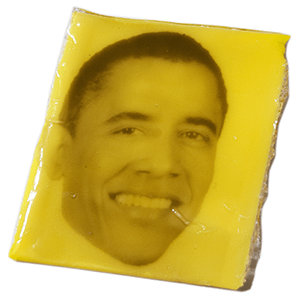
American cheese is a processed cheese, mild in flavor, with a medium-firm consistency, which melts easily. It was originally only white in color, but is usually now darkened to yellow or orange, typically with annatto, a natural food coloring.
At one time it was made from a blend of cheeses, most often Colby and Cheddar, but today’s American cheese is typically manufactured from raw ingredients, such as milk, whey, milkfat, milk protein concentrate, whey protein concentrate, and salt. In many jurisdictions, it does not meet the legal definition of cheese and must be labeled as ‘cheese analogue,’ ‘cheese product,’ ‘processed cheese,’ or similar and is commonly referred to as ‘plastic cheese’ or ‘burger cheese’ in the UK.
read more »
Posted in Food, Money, World |
1 Comment »
September 11, 2011

Figure 8 racing is a form of automobile racing that combines elements of oval racing, demolition derby, and road racing. Racing is done on a track shaped like an 8. The cars cross paths at the center of the 8, which is known as the ‘crossover.’ Because of this layout, crashes are inevitable. Figure 8 racing is a unique sport that requires strict attention to detail and timing to successfully navigate the crossover. The oldest operating figure 8 track in the United States is Indianapolis Speedrome in Indianapolis, Indiana. The track has been in operation since the 1940s. It hosts the annual World Figure 8 race, which is considered the world championship event. The first 3 hour long endurance race was held in 1977.
Figure 8 track racing began right after World War II in the late 1940s. The track may have had an overpass so that the cars did not cross each other’s paths. Most historians believe that the first track where drivers crossed each other’s paths was the 1/5 mile long Indianapolis Speedrome. The sport received nationwide publicity when it was frequently televised on ABC’s ‘Wide World of Sports’ in the 1960s, usually from the Islip Speedway in New York. The cars used are often standard cars, but are usually modified for lightness and safety. A wing much like a sprint car may be placed on the roof to increase downforce. The cars’ bodies are typically made out of sheet metal.
Posted in Games, Humor |
Leave a Comment »
September 11, 2011

Placentophagy [pluh-sen-tof-uh-jee] is the act of mammals eating the placenta of their young after childbirth. The placenta contains high levels of prostaglandin which stimulates shrinking or return to a former size of the uterus. The placenta also contains small amounts of oxytocin which eases birth stress and causes the smooth muscles around the mammary cells to contract and eject milk. Although the placenta is revered in many cultures, very few customarily eat the placenta after the newborn’s birth. Those who advocate placentophagy in humans believe that eating the placenta prevents postpartum depression and other pregnancy complications. The Royal College of Obstetricians and Gynaecologists states that there is no medical reason to eat the placenta: ‘Animals eat their placenta to get nutrition – but when people are already well-nourished, there is no benefit, there is no reason to do it.’ Human placenta has also been an ingredient in some traditional Chinese medicines.
There is a school of thought that holds that placentophagy naturally occurred to hide any trace of childbirth from predators in the wild, though the fact that amniotic fluid is not similarly ingested by the mother seems to discredit this theory. Most placental mammals participate in placentophagy, including, surprisingly, herbivorous ones. Whales and seals are exceptions to mammalian placentophagy, as is the camel. Marsupials (pouched mammals) resorb rather than deliver the placenta, and therefore cannot engage in placentophagia; they do, however, vigorously lick birth fluids as they are excreted.
Posted in Food, Health |
1 Comment »
September 11, 2011

Jeju Loveland is an outdoor sculpture park which opened in 2004 on Jeju Island in South Korea. The park is focused on a theme of sex, running sex education films, and featuring 140 sculptures representing humans in various sexual positions. It also has other elements such as large phallus statues, stone labia, and hands-on exhibits such as a ‘masturbation-cycle.’ The park’s website describes the location as ‘a place where love oriented art and eroticism meet.’ In 2002, graduates of Seoul’s Hongik University began creating sculptures for the park. Encompassing an area the size of two soccer fields, all of the sculptures can be viewed in approximately one hour, and there is an additional monthly rotating exhibit featuring works by different Korean artists. Visitors are required to be at least 18 years old, and a separate play area is available for minors while adults visit.
After the Korean War, the island became a popular honeymoon destination for Korean couples, due to the island’s warm climate. Many of the couples had wed because of arranged marriages, and the island also became known for being a center of sex education. According to an article in Germany’s ‘Der Spiegel’ magazine, in the late 1980s journalist and travel writer Simon Winchester reported that some hotel employees on the island performed as ‘professional icebreakers.’ In the evenings, the hotel would offer an entertainment program featuring erotic elements, to help newlyweds relax.
Posted in Art, Sex, World |
Leave a Comment »
September 11, 2011

Engrams [en-gram] are a hypothetical means by which memory traces are stored as biophysical or biochemical changes in the brain (and other neural tissue) in response to external stimuli. They are also sometimes thought of as a neural network or fragment of memory, sometimes using a hologram analogy to describe its action in light of results showing that memory appears not to be localized in the brain. The existence of engrams is posited by some scientific theories to explain the persistence of memory and how memories are stored in the brain. The existence of neurologically defined engrams is not significantly disputed, though their exact mechanism and location has been a focus of persistent research for many decades.
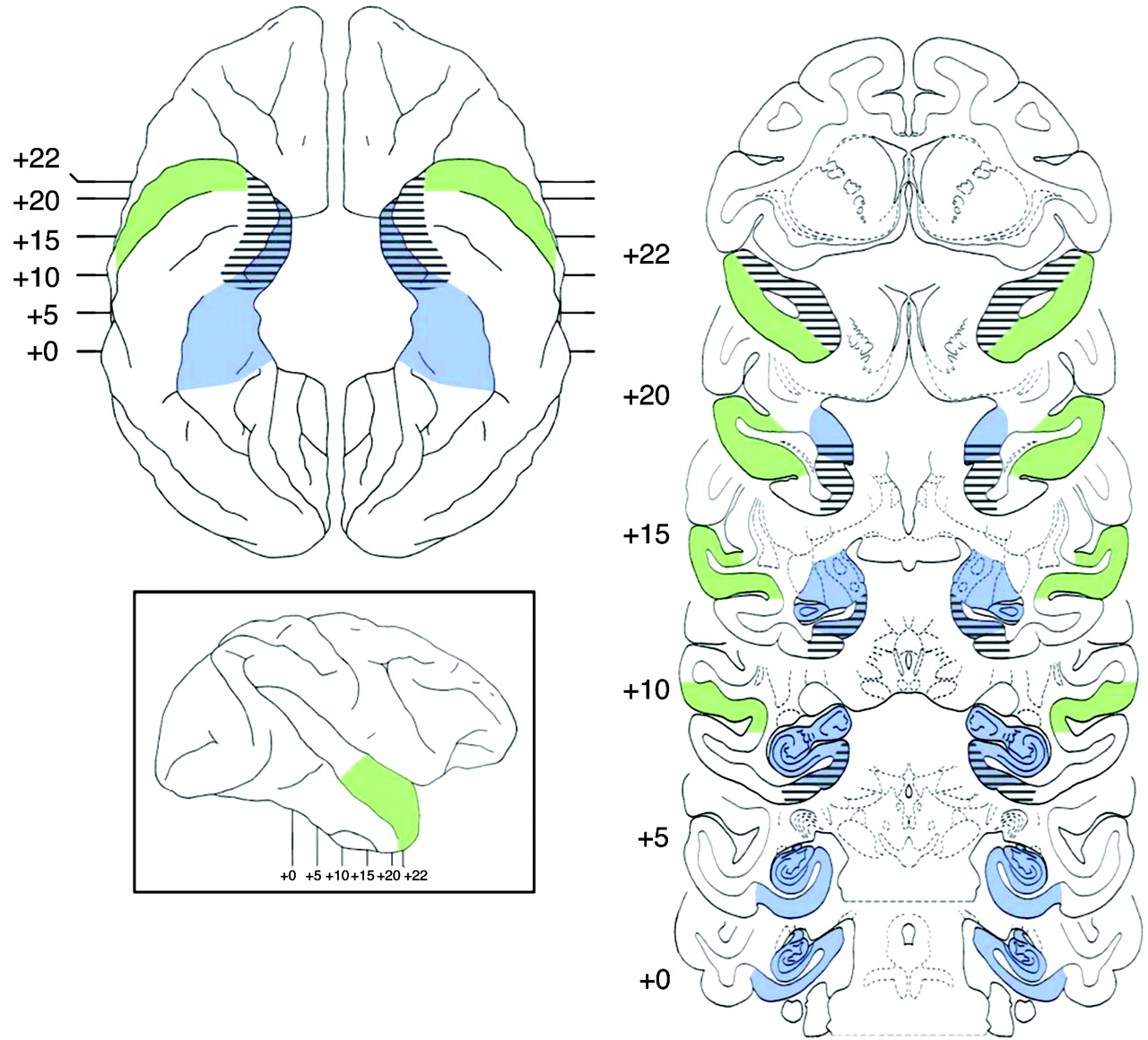
The term was coined by the little-known but influential German evolutionary biologist Richard Semon. Overall, the mechanisms of memory are poorly understood. Such brain parts as the cerebellum, striatum, cerebral cortex, hippocampus, and amygdala are thought to play an important role in memory. For example, the hippocampus is believed to be involved in spatial and declarative learning, as well as consolidating short-term into long-term memory.
read more »
Posted in Health, Language, Science |
Leave a Comment »
September 11, 2011

The US government, led by the CIA’s Special Activities Division, has made a series of attacks on targets in northwest Pakistan since 2004 using drones (unmanned aerial vehicles). These attacks are part of the US’ War on Terrorism campaign, seeking to defeat Taliban and Al-Qaeda militants in Pakistan. Most of these attacks are on targets in the Federally Administered Tribal Areas along the Afghan border in Northwest Pakistan. These strikes have increased substantially under the Presidency of Barack Obama. Generally the UAVs used are MQ-1 Predator and more recently MQ-9 Reaper firing AGM-114 Hellfire missiles. The drones have become a weapon of choice for the United States in the fight against al-Qaeda. Some media refer to the series of attacks as a ‘drone war.’ The US defence budget for 2011 asked for a 75% increase in funds to enhance the drone operations.
There is tremendous debate over the civilian casualty ratio of drone strikes. The CIA claims very few civilians are killed in relation to militants. Pakistan’s government, on the other hand publicly condemns these attacks; its Interior Minister has said ‘Drone missiles cause collateral damage. A few militants are killed, but the majority of victims are innocent citizens.’ The strikes are often linked to Anti-American sentiment in Pakistan and the growing unease with the scope of CIA activity there. However, in secret cables leaked by Wikileaks, Pakistan’s Army Chief not only tacitly agreed to the drone flights but in 2008 requested Americans to increase them.
read more »
Posted in Politics, Technology, War |
Leave a Comment »
September 11, 2011

In armed conflicts, the civilian casualty ratio is the ratio of civilian casualties to combatant casualties, or total casualties. The measurement can apply either to casualties inflicted by a particular belligerent, or to casualties in the conflict as a whole.
According to a 2001 Red Cross study, the civilian-to-soldier death ratio in wars fought since the mid-20th century has been 10:1, meaning ten civilian deaths for every soldier death. In 2007, Israel achieved a ratio of 1:30, or one civilian casualty for every thirty combatant casualties, in its targeted killings campaign on militants in the Gaza Strip. According to Alan Dershowitz of Harvard Law School, ‘No army in history has ever had a better ratio of combatants to civilians killed in a comparable setting.’ Richard Kemp, former Commander of British Forces in Afghanistan, made a similar assessment of Israeli operations during the Gaza War, saying this civilian causalty ratio ‘was by far the lowest in any asymmetric conflict in the history of warfare.’
read more »
Posted in Death, Politics, War |
Leave a Comment »
September 10, 2011

Tsundere [tsoon-dey-ray] is a Japanese character development process that describes a person who is cold and even hostile before gradually showing their warm side. The word is derived from the terms ‘Tsun Tsun,’ meaning to turn away in disgust, and ‘Dere Dere’ meaning to become ‘lovey dovey.’
Originally found in Japanese bishōjo games (or ‘gal games,’ a type of Japanese video game centered on interactions with attractive anime-style girls; a subset of dating simulators), the word is now part of the otaku moe phenomenon (a rarefied pseudo-love for fictional characters).
read more »
Posted in Games, Love, Sex |
Leave a Comment »
September 9, 2011

Experiential avoidance (EA) has been broadly defined as attempts to avoid thoughts, feelings, memories, physical sensations, and other internal experiences—even when doing so creates harm in the long-run. The process of EA is thought to be maintained through negative reinforcement—that is, short-term relief of discomfort is achieved through avoidance, thereby increasing the likelihood that the behavior will persist.
Importantly, the current conceptualization of EA suggests that it is not negative thoughts, emotions, and sensations that are problematic, but how one responds to them that can cause difficulties. In particular, a habitual and persistent unwillingness to experience uncomfortable thoughts and feelings (and the associated avoidance and inhibition of these experiences) is thought to be linked to a wide range of problems.
read more »
Posted in Health, Language, Science |
Leave a Comment »


 The Daily Omnivore