October 28, 2011
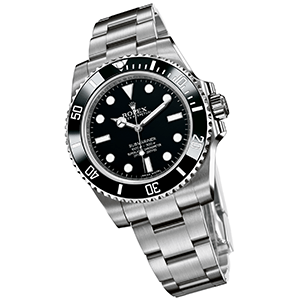
Rolex is a Swiss watchmaking manufacturer of high-quality, luxury wristwatches. Rolex watches are popularly regarded as status symbols. Rolex is also the largest single luxury watch brand, producing about 2,000 watches per day, with estimated revenues of around US$3 billion in 2003. Among the company’s innovations are: the first waterproof wristwatch (Oyster, 1923); the first wristwatch with an automatically changing date on the dial (Rolex Datejust, 1945); the first wristwatch with an automatically changing day and date on the dial (Rolex Day-Date); the first wristwatch case waterproof to 100 m (330 ft) (Rolex Oyster Perpetual Submariner); and the first wristwatch to show two time zones at once (Rolex GMT Master, 1954).
Rolex produced specific models suitable for the extremes of deep-sea diving, mountain climbing and aviation. Early sports models included the Rolex Submariner and the Rolex Oyster Perpetual Date Sea Dweller. The latter watch has a helium release valve, co-invented with Swiss watchmaker Doxa, to release helium gas build-up during decompression. The Explorer and Explorer II were developed specifically for explorers who would navigate rough terrain, such as the world famous Mount Everest expeditions. Another iconic model is the Rolex GMT Master, which was originally developed in 1954 at the request of Pan Am Airways to assist its pilots with the problem of crossing multiple time zones when on transcontinental flights (GMT standing for Greenwich Mean Time).
read more »
Posted in Money, Technology |
Leave a Comment »
October 28, 2011

A Zippo lighter is a refillable, metal lighter manufactured by Zippo Manufacturing Company of Pennsylvania. Thousands of different styles and designs have been made in the seven decades since their introduction including military ones for specific regiments. George G. Blaisdell founded Zippo Manufacturing Company in 1932, and produced the first Zippo lighter in early 1933, being inspired by an Austrian cigarette lighter of similar design. It got its name because Blaisdell liked the sound of the word ‘zipper’ and ‘zippo’ sounded more modern.
Zippo lighters became popular in the United States military, especially during World War II when Zippo ceased production of lighters for consumer markets and dedicated all manufacturing to the U.S. military. The Zippo at that time was made of brass, but as this commodity was unobtainable, Zippo used steel during the war years. While the Zippo Manufacturing Company never had an official contract with the military, soldiers and armed forces personnel insisted that Base exchange (BX) stores carry this sought-after lighter. While it had previously been common to have Zippos with authorized badges, unit crests and division insignia, it became popular among the American soldiers of the Vietnam War, to get their Zippos engraved with personal mottos. These lighters are now sought after collectors items and popular souvenirs for visitors to Vietnam.
read more »
Posted in Money, Technology, War |
Leave a Comment »
October 28, 2011
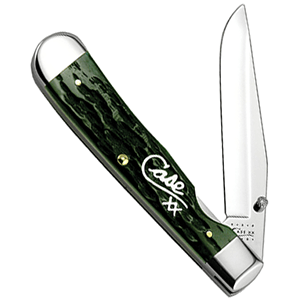
W.R. Case & Sons Cutlery Company is an American manufacturer of traditional pocketknives. The company originated in Little Valley, New York around the turn of the 20th century before relocating to its current home, Bradford, Pennsylvania, in 1905. The company’s namesake, William Russell Case, first made knives with his brothers under the name, Case Brothers Cutlery Company. His son, John Russell (‘Russ’) Case, worked as a salesman for his father’s company before founding W.R. Case & Sons.
The company’s roots extend back to 1889, when the Case brothers – William Russell (W.R.), Jean, John and Andrew Case, formerly of the Cattaraugus Cutlery Company – began selling cutlery from the back of a wagon in various small western New York villages. In January 1900, the brothers incorporated to form Case Brothers Cutlery Company.
read more »
Posted in Games, Money, War |
Leave a Comment »
October 28, 2011

After consuming large amounts of sugar or caffeine, Beavis sometimes undergoes a radical personality change, or psychotic break. He will raise his forearms in a 90-degree angle next to his chest, pull his shirt over his head, and then begin to yell or scream erratically, producing a stream of gibberish and strange noises, his eyes wide. This is an alter-ego named ‘Cornholio,’ a normally dormant persona. Cornholio tends to wander aimlessly while reciting ‘I am the Great Cornholio! I need TP for my bunghole!’ in an odd faux-Spanish accent. Sometimes Beavis will momentarily talk normally before resuming the persona of Cornholio. Once his Cornholio episode is over, Beavis usually has no memory of what happened.
In the guise of Cornholio, Beavis becomes a successful beat poet (Buttniks), and in ‘Vaya Con Cornholio’ he is deported to Mexico after wrongfully being subjected to immigration detention by an agent of the INS. During his detention the agent and his superior attempt to make sense of the gibberish that is Cornholio, going so far as to look up the definition of ‘bunghole.’ In that same episode, he claims to be from Lake Titicaca, but when asked where it was, he responded with ‘Nicaragua,’ despite the fact that Lake Titicaca is in Peru/Bolivia.
Posted in Art, Humor |
1 Comment »
October 27, 2011

Cocacolonization is a term that refers to globalization or cultural colonization. It is a portmanteau of the name of the multinational soft drink maker Coca-Cola and the word colonization. The term is used to imply either: the importation of Western (particularly American) goods; or, an invasion by Western and especially American cultural values that threatens local culture. While it is possible to use the term benignly, it has been used pejoratively to liken globalization to Westernization or Americanization.
In explaining the role of Coca-Cola as a universal influence of the ‘American way’ in the Cold War period, scholar Richard Kuisel states, ‘Perhaps no commercial product is more thoroughly identified with the United States… Coca Cola was fast becoming a universal drink.’ The dangers of cocacolonization were evoked after World War II by the French press, which regarded Coca-Cola as an American affront to the French culture. A typical cold war joke stated that, following the moon landing, the USSR leapfrogged the U.S. by painting the moon red, whilst the U.S. retaliated by going back and writing Coca-Cola in white on the red background. Seen as ‘too American’ for Communists, Pepsi was the main exported soft drink to Europe for much of the Cold War.
read more »
Posted in Food, Money, World |
Leave a Comment »
October 27, 2011

The evil empire is a term which was used by the US president Ronald Reagan to describe the Soviet Empire in 1983, which consisted of the republics of the Soviet Union and the Council for Mutual Economic Assistance (Comecon). Members of this council were satellite states, which where formally independent, but were steered by the Soviet Union with military pressure, if they considered it as necessary.
Reagan, took an aggressive, hard-line stance that favored matching and exceeding the Soviet Union’s strategic and global military capabilities, in calling for a rollback strategy that would, in his words, write the final pages of the history of the Soviet Union. The characterization demeaned the Soviet Union and angered Soviet leaders; it represented the rhetorical side of the escalation of the Cold War.
read more »
Posted in Politics, War, World |
Leave a Comment »
October 27, 2011


Megacorporation is a term popularized by science fiction author William Gibson. It has become a term popularly used in cyberpunk literature, referring to a corporation that is a massive conglomerate, holding monopolistic or near-monopolistic control over multiple markets (thus exhibiting both a horizontal and a vertical monopoly). Megacorps are so powerful that they can ignore the law, possess their own heavily-armed (often military-sized) private armies, hold ‘sovereign’ territory, and possibly even act as outright governments. They often exercise a large degree of control over their employees, taking the idea of ‘corporate culture’ to an extreme.
Such organizations are a staple of science fiction long predating cyberpunk, appearing in the works of writers such as Philip K. Dick (‘Do Androids Dream of Electric Sheep?’), Thea von Harbou (‘Metropolis’), and Robert Heinlein (‘Citizen of the Galaxy’).
read more »
Posted in Money, Politics, Technology |
Leave a Comment »
October 26, 2011

Siri is a personal assistant application for Apple iOS. The application uses natural language processing to answer questions, make recommendations, and perform actions by delegating requests to an expanding set of web services. Siri claims that the software adapts to the user’s individual preferences over time and personalizes results, as well as accomplishing tasks such as making dinner reservations and reserving a cab. Siri was acquired by Apple in 2010, and is now an integrated part of iOS 5. It offers conversational interaction with many applications, including reminders, weather, stocks, messaging, email, calendar, contacts, notes, music, clocks, web browser, Wolfram Alpha, and maps. Currently, Siri only supports English (US, UK, and Australian), German and French, and has limited functionality outside of the US. Siri’s actions and answers rely upon a growing ecosystem of partners, including: OpenTable, CitySearch, Yelp, Yahoo Local, StubHub, RottenTomatoes, New York Times, and Google.
Siri is a spin-off from the Stanford Research Institute (SRI) Artificial Intelligence Center, and is an offshoot of the Defense Advanced Research Projects Agency (DARPA)-funded CALO project, described as perhaps the largest artificial-intelligence project ever launched. CALO was an attempted to integrate numerous AI technologies into a cognitive assistant; it is an acronym for ‘Cognitive Assistant that Learns and Organizes.’ The name was inspired by the Latin word ‘alonis,’ which means ‘soldier’s servant.’ Siri has many easter eggs. Most are answers to common catchphrases from popular culture. For example, if asked to ‘Open the pod bay door,’ a question David Bowman asks HAL 9000 in ‘2001: A Space Odyssey,’ the program gives the same response as HAL: ‘I’m sorry (username), I can’t do that.’ If the request is repeated, it draws other responses, such as a threat to report the user to the Intelligent Agents Union.
Posted in Money, Technology |
Leave a Comment »
October 26, 2011

Ubik [ew-bik] is a 1969 science fiction novel by Philip K. Dick. It has been described as ‘a deeply unsettling existential horror story, a nightmare you’ll never be sure you’ve woken up from.’ The novel takes place in the ‘North American Confederation’ of 1992, wherein technology has advanced to the extent of permitting civilians to reach the Moon and psi phenomena are common. The protagonist is Joe Chip, a debt-ridden technician for Glen Runciter’s ‘prudence organization,’ which employs people with the ability to block certain psychic powers (as in the case of an anti-telepath, who can prevent a telepath from reading a client’s mind) to enforce privacy by request. Runciter runs the company with the assistance of his deceased wife Ella, who is kept in a state of ‘half-life,’ a form of cryonic suspension that gives the deceased person limited consciousness and communication ability. In the novel Ubiq, a product whose name is derived from the word ‘ubiquity,’ has the property of preserving people who are in half-life.
Dick’s former wife Tessa remarked that ‘Ubik is a metaphor for God. Ubik is all-powerful and all-knowing, and Ubik is everywhere. The spray can is only a form that Ubik takes to make it easy for people to understand it and use it. It is not the substance inside the can that helps them, but rather their faith in the promise that it will help them.’ She also interpreted the ending by writing, ‘Many readers have puzzled over the ending of Ubik, when Glen Runciter finds a Joe Chip coin in his pocket. [It] is meant to tell you that we can’t be sure of anything in the world that we call ‘reality.’ It is possible that they are all dead and in cold pac or that the half-life world can affect the full-life world. It is also possible that they are all alive and dreaming.’
Posted in Art, Language, Technology |
Leave a Comment »
October 26, 2011

Ubiquitous computing [yoo-bik-wi-tuhs] (ubicomp) is a post-desktop model of human-computer interaction in which information processing has been thoroughly integrated into everyday objects and activities. In the course of ordinary activities, someone ‘using’ ubiquitous computing engages many computational devices and systems simultaneously, and may not necessarily even be aware that they are doing so. This model is usually considered an advancement from the desktop paradigm. More formally ubiquitous computing is defined as ‘machines that fit the human environment instead of forcing humans to enter theirs.’
Mark Weiser coined the phrase ‘ubiquitous computing’ around 1988, during his tenure as Chief Technologist of the Xerox Palo Alto Research Center (PARC). Both alone and with PARC Director and Chief Scientist John Seely Brown, Weiser wrote some of the earliest papers on the subject, largely defining it and sketching out its major concerns. Recognizing that the extension of processing power into everyday scenarios would necessitate understandings of social, cultural and psychological phenomena beyond its proper ambit, Weiser was influenced by many fields outside computer science, including ‘philosophy, phenomenology, anthropology, psychology, post-Modernism, sociology of science and feminist criticism.’ He was explicit about ‘the humanistic origins of the ‘invisible ideal in post-modernist thought,” referencing as well the ironically dystopian Philip K. Dick novel ‘Ubik.’
read more »
Posted in Technology |
2 Comments »
October 25, 2011

The Salon des Refusés, French for ‘exhibition of rejects,’ is generally an exhibition of works rejected by the jury of the official Paris Salon, but the term is most famously used to refer to the Salon des Refusés of 1863. During this time, Paris was a breeding ground for artists of all forms, poets, painters, and sculptors. Paris was the place to be and the capital of the art world.
Any artist who wanted to be recognized, at that time, was required to have exhibited in a Salon, or to have gone to school in France. Being accepted into these Salons was a matter of survival for some artists; reputations and careers could be started or broken, based solely upon acceptance into these exhibits. Today by extension, salon des refusés refers to any exhibition of works rejected from a juried art show.
read more »
Posted in Art, World |
1 Comment »
October 25, 2011


The Steve Allen Theater at the Center for Inquiry (CFI) Los Angeles is a multidisciplinary resident fringe theater and theater of the absurd in Hollywood developed and helmed by Founding Artistic Director, Amit Itelman. The Center for Inquiry is a nonprofit group founded by Carl Sagan and Isaac Asimov to promote science and secular humanism. When paranormal investigator James Underdown became the Executive Director of CFI West in 2003, he named the theater after Center for Inquiry supporter and television personality Steve Allen and offered Itelman an opportunity to define an artistic vision for the space.
Itelman has booked interdisciplinary acts (music, comedy and theater) that strike a brainy and idiosyncratic chord. ‘A kind of theater that bounces off the walls.’ Itelman’s artistic credo reflects CFI’s mission of ‘not accepting things as they are’ an unlikely lab for some of the freshest, strangest work in town…The bar for eccentricity may be pretty high in Hollywood, but the Steve Allen Theater clears it easily.’
Posted in Art, Humor, Philosophy |
Leave a Comment »


 The Daily Omnivore