November 26, 2011

A body suit is an extensive tattoo, usually of a similar pattern, style or theme that covers the entire torso or the entire body. They are associated with freak show and circus performers, as well as with traditional Japanese tattooing.
Such suits are of significant cultural meaning in some traditional cultures, representing a rite of passage, marriage or a social designation.
Posted in Art |
Leave a Comment »
November 26, 2011

Lucky Diamond Rich (b. 1971) is ‘the world’s most tattooed person’ (a title formerly held by Tom Leppard), and has tattoos covering his entire body, including the inside of his foreskin, mouth and ears. He holds the Guinness world record as of 2006, being 100 percent tattooed.
He is also a performance artist and street performer whose act includes sword-swallowing, unicycling and juggling. As a young boy, he read about and began to have recurring thoughts of the most tattooed men and women. It did not go much further than just a thought until he got his first tattoo, which was of a small juggling club on his hip.
Posted in Art |
Leave a Comment »
November 25, 2011
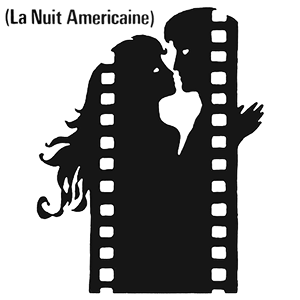
Day for night, also known as nuit américaine (‘American night’), is the name for cinematographic techniques used to simulate a night scene; such as using tungsten-balanced rather than daylight-balanced film stock or with special blue filters and also under-exposing the shot (usually in post-production) to create the illusion of darkness or moonlight. Historically, infrared movie film was used to achieve an equivalent look with black-and-white film.
Another way to achieve this effect is to tune the white balance of the camera to a yellow source if there is no tungsten setting. Another way to make a more believable night scene is to underexpose the footage to the desired degree of night/darkness. This depends on the amount of light shown or believed to be in the given scene. The title of François Truffaut’s film ‘Day for Night’ (1973) is a reference to this technique.
Posted in Art, Technology |
Leave a Comment »
November 25, 2011

In Hinduism and yoga kundalini [koon-dl-ee-nee] (literally ‘coiled’) is a ‘corporeal energy,’ an unconscious, instinctive or libidinal force or Shakti, which lies coiled at the base of the spine. It is envisioned either as a goddess or else as a sleeping serpent, hence a number of English renderings of the term such as ‘serpent power.’ The kundalini resides in the sacrum bone in three and a half coils and has been described as a residual power of pure desire.
Kundalini is described as a sleeping, dormant potential force in the human organism. It is one of the components of an esoteric description of man’s ‘subtle body,’ which consists of nadis (energy channels), chakras (psychic centers), prana (subtle energy), and bindu (drops of essence).
read more »
Posted in Philosophy, Sex |
Leave a Comment »
November 25, 2011

Ryoji Ikeda (b. 1966) is a Japanese sound artist who lives and works in Paris. Ikeda’s music is concerned primarily with sound in a variety of ‘raw’ states, such as sine tones and noise, often using frequencies at the edges of the range of human hearing. The conclusion of his album ‘+/-‘ features just such a tone; of it, Ikeda says ‘a high frequency sound is used that the listener becomes aware of only upon its disappearance.’
Rhythmically, Ikeda’s music is highly imaginative, exploiting beat patterns and, at times, using a variety of discrete tones and noise to create the semblance of a drum machine. His work also encroaches on the world of ambient music; many tracks on his albums are concerned with slowly evolving soundscapes, with little or no sense of pulse.
Posted in Art, Technology |
Leave a Comment »
November 25, 2011


Salt therapy, halotherapy or speleotherapy is the therapeutic use of salt mines, caves or other forms of exposure to salt air. These natural deposits of mineral halite are derived from evaporated ancient lakes and seas. The unrefined rock salt, primarily sodium chloride, also includes varying concentrations of other mineral salts such as calcium and magnesium, manganese and sulfates which have additional therapeutic properties, depending on the source.
Modern use of this therapy started in Germany when Dr. Karl Hermann Spannagel noticed improvement in the health of his patients after they hid in the Kluterthöhle karst cave to escape heavy bombing. It is now practised in places such as Bystrianska in Slovakia, Wieliczka in Poland, and Solotvyno in Ukraine.
read more »
Posted in Health |
Leave a Comment »
November 25, 2011

Nabiximols (trade name Sativex) is a cannabinoid mouth spray developed by the UK company GW Pharmaceuticals for multiple sclerosis (MS) patients, who can use it to alleviate neuropathic pain, spasticity, overactive bladder, and other symptoms. Nabiximols is also being developed in Phase III trials as a potential treatment to alleviate pain due to cancer. It has also been researched in various models of peripheral and central neuropathic pain.
Nabiximols is distinct from all other pharmaceutically produced cannabinoids currently available because it is derived from cannabis plants, rather than a solely synthetic process. The drug is a pharmaceutical product standardized in composition, formulation, and dose, although it is still effectively a tincture of the cannabis plant. Its principal active cannabinoid components are the cannabinoids: tetrahydrocannabinol (THC) and cannabidiol (CBD). The product is formulated as an oromucosal spray which is administered into the mouth. Each spray delivers a fixed dose of 2.7 mg THC and 2.5 mg CBD.
Posted in Drugs, Health, Politics |
Leave a Comment »
November 25, 2011
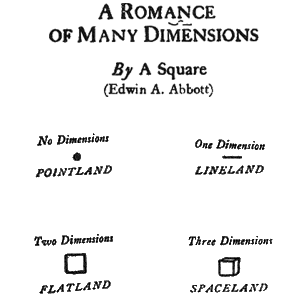
‘Flatland: A Romance of Many Dimensions’ is an 1884 satirical novella by the English schoolmaster Edwin Abbott Abbott. Writing pseudonymously as ‘A Square,’ Abbott used the fictional two-dimensional world of Flatland to offer pointed observations on the social hierarchy of Victorian culture.
However, the novella’s more enduring contribution is its examination of dimensions, for which the novella is still popular amongst mathematics, physics, and computer science students.
read more »
Posted in Art, Language, Politics |
2 Comments »
November 25, 2011

Big History is a field of historical study that examines history on large scales across long time frames through a multidisciplinary approach, focusing on both the history of the non-human world and on major adaptations and alterations in the human experience. It arose as a distinct field in the late 1980s and is related to, but distinct from, world history, as the field examines history from the beginning of time to the present day. In some respects, the field is thus similar to the older universal history (the presentation of the history of humankind as a whole, as a coherent unit).
Big history looks at the past on all time scales, from the Big Bang to modernity, seeking out common themes and patterns. It draws on the latest findings from many disciplines, such as biology, astronomy, geology, climatology, prehistory, archeology, anthropology, cosmology, natural history, and population and environmental studies. Big History arose from a desire to go beyond the specialized and self-contained fields that emerged in the 20th century and grasp history as a whole, looking for common themes across multiple time scales in history. Conventionally, the study of history concerns only the period of time since the invention of writing, and is limited to past events relating directly to the human race; yet this only encompasses the past 5,000 years or so and covers only a small fraction of the period of time that humans have existed on Earth, and an even smaller fraction of the age of the universe.
Posted in Education, Science |
Leave a Comment »
November 25, 2011
A Short History of Nearly Everything is a popular science book by American author Bill Bryson that explains some areas of science, using a style of language which aims to be more accessible to the general public than many other books dedicated to the subject.
‘A Short History’ deviates from Bryson’s popular travel book genre, instead describing general sciences such as chemistry, paleontology, astronomy, and particle physics.
read more »
Posted in Education, Language, Science |
Leave a Comment »
November 25, 2011

The fascination with death extends far back into human history. Throughout time, people have had obsessions with death and all things related to death and the afterlife. In past times, people would form cults around death gods and figures. Famously, Anubis, Osiris, and Hades have all had large cult followings.
La Santa Muerte (Saint Death), or the personification of death, is currently worshiped by many in Mexico and other countries in Central America. Day of the Dead, November 2, is a celebration for the dead.
read more »
Posted in Death, Philosophy |
Leave a Comment »
November 25, 2011

Junk food news is a sardonic term for news stories that deliver ‘sensationalized, personalized, and homogenized inconsequential trivia,’ especially when such stories appear at the expense of serious investigative journalism.
It implies a criticism of the mass media for disseminating news that, while not very nourishing, is ‘cheap to produce and profitable for media proprietors.’
read more »
Posted in Language, Money, Politics |
1 Comment »








 The Daily Omnivore