December 19, 2011

A nazar is an eye-shaped amulet believed to protect against the evil eye. In Central Asia, during the ages of Tengrism (a shamanistic religion of that region), people held similar superstitions like horseshoes, garlic, wolf’s tooth, dried thorn, lead, stones; but the crystal blue eye has always been the most popular one.
It is common in Turkey, Armenia, Iran, Greece, Cyprus and Azerbaijan. In Turkey, the nazar is often hung in homes, offices, cars, children’s clothing, or incorporated in jewelry. A typical nazar is made of handmade glass featuring concentric circles or teardrop shapes in dark blue, white, light blue and black, occasionally with a yellow/gold edge.
Posted in Philosophy |
Leave a Comment »
December 19, 2011

Taubman Sucks is an award-winning short documentary about a precedent-setting intellectual property lawsuit. The documentary was written and directed by filmmaker Theo Lipfert. The six-minute film explores Taubman v. WebFeats, a lawsuit that involved the complex relationships between domain names, trademarks, and free speech.
As the first ‘sucks.com’ case to reach the level of the United States Court of Appeals, the decision in Taubman v. WebFeats established precedents concerning the non-commercial use of trademarks in domain names.
Posted in Money, Politics, Technology |
Leave a Comment »
December 19, 2011

Article spinning is a search engine optimization technique by which blog or website owners post a unique version of relevant content on their sites by rewriting and replacing elements to provide a slightly different perspective on the topic. Many article marketers believe that article spinning helps avoid the feared penalties in the Search Engine Results pages (SERP) for using duplicate content. If the original articles are plagiarized from other websites or if the original article was used without the copyright owner’s permission, such copyright infringements may result in the writer facing a legal challenge, while writers producing multiple versions of their own original writing need not worry about such things.
Website owners may pay writers to perform spinning manually, rewriting all or parts of articles. Writers also spin their own articles, manually or automatically, allowing them to sell the same articles with slight variations to a number of clients or to use the article for multiple purposes (e.g. content and marketing). There are also a number of software applications which will automatically replace words or phrases in articles.
Posted in Money, Politics, Technology |
Leave a Comment »
December 19, 2011


In computing, spamdexing (also known as search spam or Search Engine Poisoning) is the deliberate manipulation of search engine indexes. The earliest known reference to the term is by Eric Convey in 1996 in an article, ‘Porn sneaks way back on Web,’ for ‘The Boston Herald.’ It involves a number of methods, such as repeating unrelated phrases, to manipulate the relevance or prominence of resources indexed in a manner inconsistent with the purpose of the indexing system.
Common spamdexing techniques can be classified into two broad classes: content spam (or term spam) and link spam. Content spam methods include keyword stuffing, hidden or invisible text, meta-tag stuffing, doorway pages, scraper sites, and article spinning. Link spamming methods include link farms, hidden links, Sybil attacks, spam blogs, page hijacking, buying lapsed domains (cybersquatting), and cookie stuffing.
read more »
Posted in Money, Technology |
Leave a Comment »
December 19, 2011
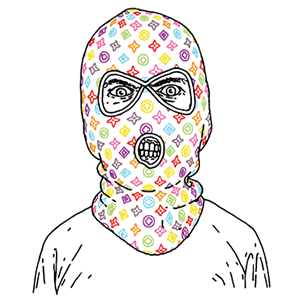
Brandjacking is an activity whereby someone acquires or otherwise assumes the online identity of another entity for the purposes of acquiring that person’s or business’s brand equity. The term combines the notions of ‘branding’ and ‘hijacking’, and has been used since at least 2007 when it appeared in a Business Week article. The tactic is often associated with use of individual and corporate identities on social media or Web 2.0 sites.
While similar to cybersquatting, identity theft, and phishing, brandjacking is usually particular to a politician, celebrity or business and more indirect in its nature. A brandjacker may attempt to use the reputation of its target for selfish reasons or seek to damage the reputation of its target for malicious or for political reasons. These reasons may not be directly financial, but the effects on the original brand-holder may often include financial loss – for example, negative publicity may result in the termination of a celebrity’s sponsorship deal, or, for a corporation, potentially lead to lost sales or a reduced share price.
Posted in Money, Politics, Technology |
1 Comment »
December 19, 2011

Cybersquatting (also known as domain squatting) is registering, trafficking in, or using a domain name with bad faith intent to profit from the goodwill of a trademark belonging to someone else. Some cybersquatter offer to sell the domain to the person or company who owns a trademark at an inflated price.
Some put up derogatory remarks about the person or company the domain is meant to represent to encourage the subject to buy the domain from them. Others post paid links via Google and other advertising networks. The term is derived from ‘squatting,’ which is the act of occupying an abandoned or unoccupied space or building that the squatter does not own, rent or otherwise have permission to use.
read more »
Posted in Money, Politics, Technology |
Leave a Comment »
December 17, 2011
The terms Google bomb and Googlewashing refer to practices, such as creating large numbers of links, that cause a web page to have a high ranking for searches on unrelated or off topic keyword phrases, often for comical or satirical purposes. In contrast, search engine optimization is the practice of improving the search engine listings of web pages for relevant search terms.
Google bombs date back as far as 1999, when a search for ‘more evil than Satan himself’ resulted in the Microsoft homepage as the top result. Some of the most famous Google bombs are also expressions of political opinions (e.g. ‘liar’ leading to Tony Blair or ‘miserable failure’ leading to the White House’s biography of George W. Bush).
read more »
Posted in Humor, Money, Technology |
Leave a Comment »
December 17, 2011

Typosquatting (URL hijacking), is a form of cybersquatting, and possibly brandjacking which relies on mistakes such as typographical errors made by Internet users when inputting a website address into a web browser. Should a user accidentally enter an incorrect website address, they may be led to an alternative website owned by a cybersquatter. Once in the typosquatter’s site, the user may also be tricked into thinking that they are in fact in the real site; through the use of copied or similar logos, website layouts or content.
In 2006, controversial evangelist Jerry Falwell failed to get the U.S. Supreme Court to review a decision allowing Christopher Lamparello to use ‘www.fallwell.com.’ Relying on a plausible misspelling of Falwell’s name, Lamparello’s gripe site presents misdirected visitors with scriptural references that counter the fundamentalist preacher’s scathing rebukes against homosexuality. In Lamparello v. Falwell, the high court let stand a 2005 lower court finding that ‘the use of a mark in a domain name for a gripe site criticizing the markholder does not constitute cybersquatting.’
Posted in Money, Politics, Technology |
1 Comment »
December 17, 2011

Mousetrapping is a technique used by websites (usually pornographic) to keep visitors from leaving their website, either by launching an endless series of pop-up ads—known colloquially as a ‘circle jerk’—or by re-launching their website in a window that cannot be closed. Many websites that do this also employ browser hijackers to reset the user’s default homepage. The Federal Trade Commission has brought suits against mousetrappers, charging that the practice is a deceptive and unfair competitive practice.
Typically, mousetrappers register URLs with misspelled names of celebrities (e.g. BrittnaySpears.com) or companies (WallStreetJournel.com). Once the viewer is at the site, a Javascript or a click induced by promises of free samples redirects the viewer to a URL and regular site of the mousetrapper’s client-advertiser, who pays him 10 to 25 cents for capturing and redirecting each potential customer. An FTC press release explaining states: ‘Schemes that capture consumers and hold them at sites against their will while exposing Internet users, including children, to solicitations for gambling, psychics, lotteries, and pornography must be stopped.’
Posted in Money, Politics, Technology |
Leave a Comment »
December 17, 2011

No poo (short for ‘no shampoo’) is a collective term for methods of washing hair without commercial shampoo. Methods for washing hair without shampoo include washing with dissolved baking soda, followed by an acidic rinse such as diluted apple cider vinegar. Also honey and various oils (such as coconut oil) can be used. The notion of non-shampooed hair being unhealthy is reinforced by the greasy feeling of the scalp after a day or two of not shampooing. However, using shampoo every day removes sebum, the oil produced by the scalp. This causes the sebaceous glands to produce oil at a higher rate to compensate for what is lost during shampooing.
A gradual reduction in shampoo use will cause the sebaceous glands to produce at a slower rate, resulting in less oil on the scalp. Shampoo typically contains chemical additives such as sulfates (e.g. sodium lauryl sulfate). These chemicals can irritate the skin of sensitive persons (or of anyone if not promptly rinsed). Some shampoos also include silicone derivatives (e.g. dimethicone), which coats the hair, protecting it and making it more manageable; however, it also prevents moisture from entering the hair, eventually drying it out. Dimethicone is a common ingredient in smoothing serums and detangling conditioners.
Posted in Health, Money |
Leave a Comment »
December 17, 2011

A cat café is a theme café whose attraction is cats that can be watched and played with. Patrons pay a cover fee, generally hourly, and thus cat cafés can be seen as a form of supervised indoor pet rental. The world’s first cat café opened in Taiwan in 1998. In Japan, the first cat café opened in Osaka in 2004. The popularity of cat cafés in Japan is attributed to many apartments forbidding pets, and to cats providing relaxing companionship in what may otherwise be a stressful and lonesome urban life; other forms of pet rental are also common in Japan.
There are various cat cafés. Some cat cafés feature specific categories of cat such as black cats, fat cats, rare breed cats, or ex-stray cats. A cat café must obtain a license and comply with the strict requirements and regulations of the Animal Treatment/Protection Law. Japanese cat cafés feature strict rules to ensure cleanliness and animal welfare, in particular seeking to ensure that the cats are not disturbed by excessive and unwanted attention, such as by young children or when sleeping. Many cat cafés also seek to raise awareness of cat welfare issues, such as abandoned and stray cats.
Posted in Food, World |
Leave a Comment »
December 17, 2011
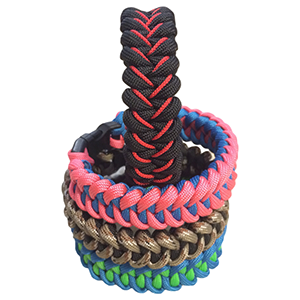
Parachute cord (also paracord or 550 cord) is a lightweight nylon kernmantle rope (consisting of two parts: an inner core, the kern and a protective sheath, the mantle ) originally used in the suspension lines of US parachutes during World War II. Once in the field, paratroopers found this cord useful for many other tasks. It is now used as a general purpose utility cord by both military personnel and civilians.
This versatile cord was even used by astronauts to repair the Hubble Space Telescope. The braided sheath has a high number of interwoven strands for its size, giving it a relatively smooth texture. The all-nylon construction makes paracord fairly elastic; depending on the application this can be either an asset or a liability.
read more »
Posted in Technology, War |
Leave a Comment »


 The Daily Omnivore