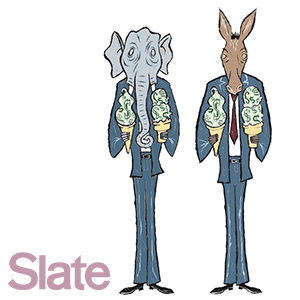
Political money in the United States is often divided into two categories, ‘hard’ money and ‘soft’ money. ‘Hard’ money is contributed directly to a candidate of a political party. It is regulated by law in both source and amount, and monitored by the Federal Election Commission (maximum $2500). ‘Soft’ money is contributed to the political party as a whole. Historically, ‘soft money’ referred to contributions made to political parties for purposes of party building and other activities not directly related to the election of specific candidates. Because these contributions were not used for specific candidate advocacy, they were not regulated by the Federal Election Campaign Act, as interpreted by the Supreme Court in Buckley v. Valeo. The Bipartisan Campaign Reform Act of 2002 (also known as McCain-Feingold) prohibited unregulated contributions to national party committees.
‘Soft money’ also refers to unlimited contributions to organizations and committees other than candidate campaigns and political parties (except, where legal, to state and local parties for use solely in state and local races). Organizations which receive ‘Soft money’ contributions are often called ‘527s,’ for the section of the tax code under which they operate. The term is generally used to refer to independent, nonprofit political organizations that are not regulated by the FEC or by a state elections commission, and are not subject to the same contribution limits as PACs. Such organizations can legally engage in political activity, but funds from ‘soft money’ contributions may not be spent on ads promoting the election or defeat of a specific candidate.


 The Daily Omnivore
Leave a comment