January 2, 2012
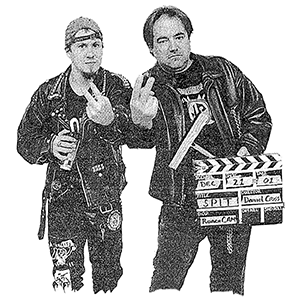
A squeegee [skwee-jee] man is a person who, washcloth and squeegee in hand, wipes windshields of cars stopped in traffic and then solicits money from drivers. While squeegee men are a feature of life in many cities around the world, the phenomenon first became prevalent in New York City in the 1980s.
Although some merely provided a service, in other cases the windshield-washing would be carried out without asking, often perfunctorily, and with subsequent demands for payment, sometimes with added threats of smashing the car’s windshield if their demands were not met. Upon his election, mayor Rudy Giuliani famously embarked on a crusade against squeegee men as part of his quality-of-life campaign, claiming that their near-ubiquitous presence created an environment of disorder that encouraged more serious crime to flourish.
Posted in Money, Politics, World |
Leave a Comment »
January 2, 2012
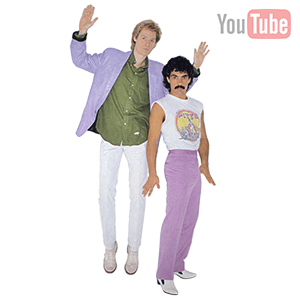
‘I Can’t Go for That (No Can Do)‘ is a 1981 song recorded by Daryl Hall and John Oates. It was the fourth number-one hit single of their career and second hit single from their album ‘Private Eyes.’ It features Charles DeChant on saxello. Daryl Hall sketched out the basic song one evening at a music studio in New York City in 1981 after a recording session for the ‘Private Eyes’ album. Hall began to play a bass line on a Korg organ, and sound engineer Neil Kernon recorded the result. Hall then came up with a guitar riff, which he and Oates worked on together. The next day, Hall and Sara Allen worked on the lyrics.
Thanks to heavy airplay on urban contemporary radio stations, it topped the U.S. R&B chart, a rare feat for a non-African American act. According to the Hall and Oates biography, Hall, upon learning that it had gone to number one wrote in his diary, ‘I’m the head soul brother in the U.S. Where to now?’ Also according to Hall, during the recording of ‘We Are the World,’ Jackson approached him and admitted to lifting the bass line for ‘Billie Jean’ from ‘I Can’t Go For That (No Can Do).’ Hall says that he told Jackson that he had lifted the bass line from another song himself, and that it was ‘something we all do.’
Posted in Art |
Leave a Comment »
January 2, 2012
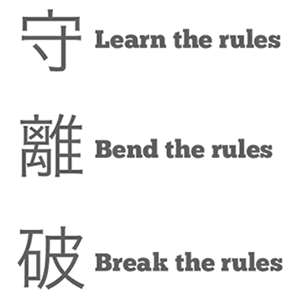
Shuhari is a Japanese martial art concept, and describes the stages of learning to mastery. It is sometimes applied to other Japanese disciplines, such as the board game Go. Shuhari roughly translates to ‘first learn, then detach, and finally transcend.
The Shuhari concept was first presented by Fuhaku Kawakami as Jo-ha-kyū in ‘Tao of Tea.’ Then, Zeami Motokiyo, the master of Noh plays, extended this concept to his dance as Shuhari, which then became a part of the philosophy of Aikido.
Posted in War, World |
Leave a Comment »
January 2, 2012

Jo-ha-kyū is a concept of modulation and movement applied in a wide variety of traditional Japanese arts. Roughly translated to ‘beginning, break, rapid,’ it essentially means that all actions or efforts should begin slowly, speed up, and then end swiftly. This concept is applied to elements of the Japanese tea ceremony, kendō and other martial arts, dramatic structure in Japanese theater and film, and traditional collaborative linked verse forms. The concept originated in court music, specifically in the ways in which elements of the music could be distinguished and described. Though eventually incorporated into a number of disciplines, it was most famously adapted, and thoroughly analyzed and discussed by the great playwright Zeami, who viewed it as a universal concept applying to the patterns of movement of all things.
Zeami described the first act as ‘Love’; the play opens auspiciously, using gentle themes and pleasant music to draw in the attention of the audience. The second act is described as ‘Warriors and Battles.’ Though it need not contain actual battle, it is generally typified by heightened tempo and intensity of plot. The third act, the climax of the entire play, is typified by pathos and tragedy. The plot achieves its dramatic climax. The fourth is a michiyuki (journey), which eases out of the intense drama of the climactic act, and often consists primarily of song and dance rather than dialogue and plot. The fifth act, then, is a rapid conclusion. All loose ends are tied up, and the play returns to an auspicious setting.
Posted in Art, Language, World |
Leave a Comment »
January 2, 2012
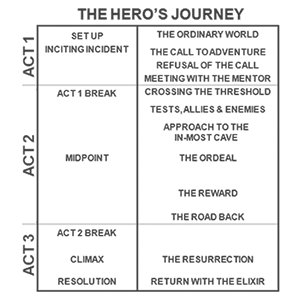
The Three-Act Structure is a model used in writing and evaluating modern storytelling which divides a screenplay into a three parts called the ‘Setup,’ ‘Confrontation,’ and ‘Resolution.’ The first act is used to establish the main characters, their relationships and the normal world they live in.
Early in the first act, a dynamic, on-screen incident occurs to the main character (the protagonist), whose response leads to a second and more dramatic situation, known as the first ‘turning point,’ which (a) signals the end of the first act, (b) ensures life will never be the same again for the protagonist, and (c) raises a dramatic question that will be answered in the climax of the film.
read more »
Posted in Art, Language |
Leave a Comment »
January 2, 2012
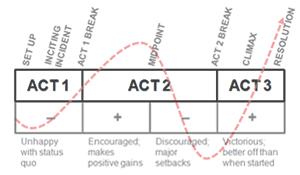
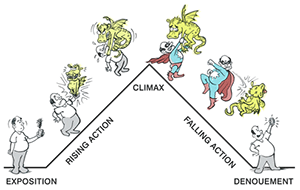
Act structure explains how a plot of a film story is composed. Just like plays (Staged drama) have ‘Acts,’ critics and screenwriters tend to divide films into acts; though films don’t require to be physically broken down as such in reality.
Whereas plays are actual performances that need ‘breaks’ in the middle for change of set, costume, or for the artists’ rest; films are recorded performances shown mechanically and therefore don’t need actual breaks. Still they are divided into acts for reasons that are in aesthetic and structural conformation with the original idea of Act in theater.
read more »
Posted in Art, Language, Money |
Leave a Comment »
January 2, 2012

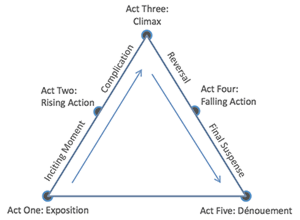
Dramatic structure is the structure of a dramatic work such as a play or film. Many scholars have analyzed dramatic structure, beginning with Aristotle in his ‘Poetics’ (c. 335 BCE). In ‘Poetics,’ Aristotle put forth the idea that ‘A whole is what has a beginning and middle and end.’ This three-part view of a plot structure (with a beginning, middle, and end – technically, the protasis, epitasis, and catastrophe) prevailed until the Roman drama critic Horace advocated a 5-act structure in his ‘Ars Poetica.’ After falling into disuse, renaissance dramatists revived the use of the 5-act structure.
Gustav Freytag’s analysis of ancient Greek and Shakespearean drama is canonical. Although Freytag’s description of dramatic structure is based on five-act plays, it can be applied (sometimes in a modified manner) to short stories and novels as well. Nonetheless it does not always translate well, especially in modern plays such as Alfred Uhry’s ‘Driving Miss Daisy,’ which is actually divided into 25 scenes without concrete acts.
read more »
Posted in Art, Language |
Leave a Comment »
January 2, 2012
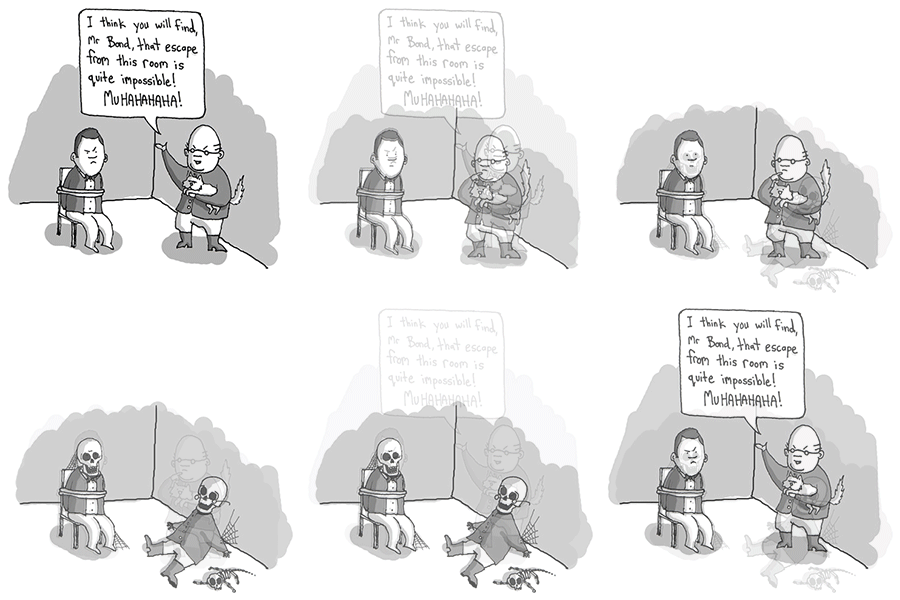
A deathtrap is a literary and dramatic plot device in which a villain, who has captured the hero or another sympathetic character, attempts to use an elaborate and usually sadistic method of murdering him/her. It is often used as a means to create dramatic tension in the story and to have the villain reveal important information to the hero, confident that the hero will shortly not be able to use it. It may also be a means to show the hero’s resourcefulness in escaping, or the writer’s ingenuity at devising a last-minute rescue or deus ex machina.
This plot device is generally believed to have been popularized by movie serials and 19th century theatrical melodramas. A well known example is the cliché of the moustache-twirling villain leaving the heroine tied to railroad tracks. Its use in the James Bond film series and superhero stories is well known.
read more »
Posted in Death, Humor, Language |
1 Comment »
January 2, 2012
When the presentation of information in fiction becomes wordy, it is sometimes referred to as an ‘information dump.’ It is expressed by characters in dialogue or monologue and sometimes referred to as ‘idiot lectures.’ They are sometimes placed at the beginning of stories as a means of establishing the premise of the plot.
They also appear in science fiction, but it is considered poor writing when characters explain things to each other that they would already know. For example, if you need to call someone, you don’t stop to explain to a colleague that you are now going to use a device controlled with digital circuits to use radio waves to transmit your voice. Why? Because your contemporaries already know how cellular radio telephones work.
read more »
Posted in Art, Humor, Language |
Leave a Comment »
January 2, 2012
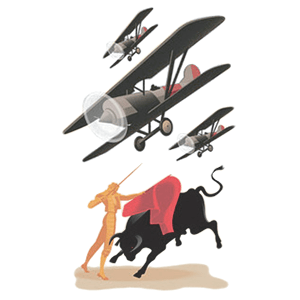
Show, don’t tell is an admonition to fiction writers to write in a manner that allows the reader to experience the story through a character’s action, words, thoughts, senses, and feelings rather than through the narrator’s exposition, summarization, and description. The advice is not to be heavy-handed, or to drown the reader in adjectives, but to allow issues to emerge from the text instead.
The advice applies equally to fiction and nonfiction, but the approach should not be applied to all incidents in the story. According to author James Scott Bell, ‘Sometimes a writer tells as a shortcut, to move quickly to the meaty part of the story or scene. Showing is essentially about making scenes vivid. If you try to do it constantly, the parts that are supposed to stand out won’t, and your readers will get exhausted.’
read more »
Posted in Art, Language |
Leave a Comment »
January 1, 2012
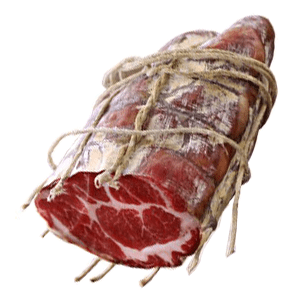
Marbled meat is meat, especially red meat, which contains various amounts of intramuscular fat, giving it an appearance similar to a marble pattern. Marbling can be influenced by selective breeding. Cattle breeds such as Angus, Murray Grey, Shorthorns, and Wagyū type cattle and dairy breeds, such as the Jersey, Holstein-Friesian, and Braunvieh have higher marbling scores on average versus other cattle such as Simmentals, Charolais, or Chianina. Veal has little to no marbling since young cattle develop subcutaneous fat first, kidney, pelvic and heart fat second, intermuscular (between the muscle, or ‘seam fat’) third and then intramuscular fat – ‘marbling’ – last.
Marbling can also be influenced by time on feed and type of feed. The longer a pen of beef cattle are on feed in the feedlot, the higher the chance they will grade higher on quality scores, but will have much lower yield grades (percentage of carcass lean to fat ratio). Feeding a high amount of cereal grains, such as corn or barley, will change the color of the carcass fat from a yellowish to a white, plus increase the chance of obtaining a higher quality grade according to the USDA. But cows evolved to feed on low calorie grasses not energy rich cereal grains and can be made ill by overfeeding.
Posted in Food |
Leave a Comment »
January 1, 2012
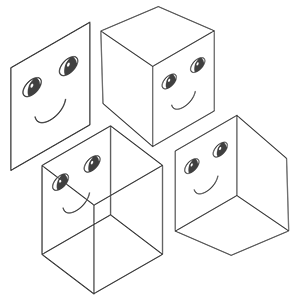
Ubiquitous [yoo-bik-wi-tuhs] gaze, also referred to as pursuing eyes, is an art term for the effect created by certain portraits, such as the ‘Mona Lisa,’ which give the impression that the subject’s eyes are following the viewer.
When such a painting is viewed from any angle, the subject’s eyes still appear to be looking straight into the viewer’s. This is an effect of perspective and may be deliberate or not. Ubiquitous gaze is a common technique of the trompe-l’œil school of painting, and can be seen in numerous works.
Posted in Art |
1 Comment »


 The Daily Omnivore