January 11, 2012


Sidney Frank (1919 – 2006) was an American businessman who became a billionaire through his promotion of Grey Goose vodka and Jägermeister. He attended Brown University, but left because he could only afford one year of tuition. He later made enormous gifts to the university to ensure that no student would ever be forced to leave Brown because of inability to pay tuition. During World War II, Frank worked for Pratt and Whitney as an aircraft engine mechanic in the South Pacific.
Frank’s first wife, Louise Rosenstiel, was the daughter of Lewis Rosenstiel, founder of Schenley Industries, one of the largest American distiller and spirit importers. Frank joined Schenley after his marriage and rose to the company presidency, but was forced out in a family dispute in 1970. In 1973 his wife died and he started his own company, Sidney Frank Importing Company, where he served as chairman and chief executive officer. The company is based in New Rochelle, New York where Frank lived part of the year (he had a home in Rancho Santa Fe, California as well).
read more »
Posted in Drugs, Food, Money |
Leave a Comment »
January 11, 2012
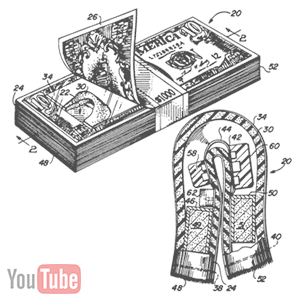
A dye pack is a radio-controlled incendiary device used by some banks to preemptively foil a bank robbery by causing stolen cash to be permanently marked with red dye shortly after a robbery. In most cases, a dye pack is placed in a hollowed-out space within a stack of banknotes, usually $10 or $20 bills. This stack of bills looks and feels similar to a real one, with new technology allowing for the manufacturing of flexible dye packs which are difficult to detect by handling the stack.
When the marked stack of bills is not used, it is stored next to a magnetic plate near a bank cashier, in standby or safe mode, ready to be handed over to a potential robber by a bank employee. When it is removed from the magnetic plate, the pack is armed, and once it leaves the building and passes through the door frame, a radio transmitter located at the door will trigger a timer (typically 10 seconds), after which the dye pack will explode and release an aerosol (sometimes tear gas, but usually of Disperse Red 9, a dye used in smoke grenades) intended to permanently stain and destroy the stolen money and mark the robber’s body with a bright red color. The chemical reaction causing the explosion of the pack and the release of the dye creates high temperatures of about 400 degrees Fahrenheit which further discourages a criminal from touching the pack or removing it from the bag or getaway vehicle.
Posted in Money, Politics, Technology |
Leave a Comment »
January 11, 2012

The New York Pizza Connection, or Pizza Principle, is a humorous but generally historically accurate ‘economic law’ proposed by native New Yorker Eric M. Bram. He noted in 1980 that from the early 1960s the price of a slice of pizza ‘matched, with uncanny precision, the cost of a New York City Subway ride.’ The term ‘Pizza Connection’ referring to this phenomenon was coined in early 2002 by ‘New York Times’ columnist Clyde Haberman. He predicted the cost of a slice of pizza would increase by as high as two dollars in midtown Manhattan.
In 2003 ‘The New Yorker’ magazine proclaimed the validity of the Pizza Connection (which they renamed the pizza principle) in accurately predicting the rise of the subway fare to $2.00 the week before. They also quoted Mr. Bram (by then a patent attorney) as warning that since the New York City Transit Authority had announced the discontinuation of the subway token itself in favor of the variable-fare cost MetroCard, the direct correlation between the cost of an off-the-street slice of cheese pizza and the cost of a subway token might not continue to hold. However, in 2005, and again in 2007, Haberman noted the price of a slice was again rising, and, citing the Pizza Connection, worried that the subway fare might soon rise again. The fare did indeed rise to $2.25 in 2009 and again in 2011 to $2.50.
Posted in Food, Humor, Money |
Leave a Comment »
January 10, 2012

Unintentional humor is the act of making other people laugh without actually meaning to. There are several different kinds of unintentional humor that arise out of various situations. It is possible for unintentional humor to arise when two different well-meaning people contribute independent pieces of information, but in combination, they contradict each other. A misstep in the (in)appropriate environment is often considered humorous, that is the tension or embarrassment it creates is released by laughter. Examples are misspeaks or falls by a famous individual, catching somebody at an official event with inappropriate manners or embarrassing body noises.
Some books, movies, and other literary works end up being unintentionally funny because they are comically clichéd or overwrought, despite appearing to be earnest and serious efforts by their creators. Examples are ‘so bad they’re good’ movies, such as ‘Plan 9 from Outer Space,’ and the style of bad writing celebrated by the Bulwer-Lytton Fiction Contest (where entrants are invited ‘to compose the opening sentence to the worst of all possible novels’).
Posted in Humor |
Leave a Comment »
January 10, 2012

The Museum of Bad Art (MOBA) is a privately owned museum whose stated aim is ‘to celebrate the labor of artists whose work would be displayed and appreciated in no other forum.’ It has branches in Dedham and Somerville, outside Boston. Its permanent collection includes 500 pieces of ‘art too bad to be ignored,’ 25 to 35 of which are on public display at any one time.
Explaining the reasoning behind the museum’s establishment, co-founder Jerry Reilly said in 1995: ‘While every city in the world has at least one museum dedicated to the best of art, MOBA is the only museum dedicated to collecting and exhibiting the worst.’ To be included in MOBA’s collection, works must be original and have serious intent, but they must also have significant flaws without being boring; curators are not interested in displaying deliberate kitsch.
read more »
Posted in Art, Humor |
1 Comment »
January 10, 2012

Fertility tourism or reproductive tourism is the practice of traveling to another country for fertility treatments. It may be regarded as a form of medical tourism. The main reasons for fertility tourism are legal regulation of the sought procedure in the home country, or lower price. In-vitro fertilization and donor insemination are major procedures involved. It has been proposed to be termed ‘reproductive exile’ to emphasis the difficulties and constraints faced by infertile patients, who are ‘forced’ to travel globally for reproductive procedures.
There is generally a demand for sperm donors who have no genetic problems in their family, 20/20 eyesight, a college degree, and sometimes a value on a certain height, age, eye color, hair texture, blood type and ethnicity. Anecdotal evidence suggests that the inventory of taller men who are blonde and blue eyed is most popular.
read more »
Posted in Politics, Sex, World |
Leave a Comment »
January 10, 2012

Snowflake children is a term used by organizations that promote the adoption of embryos left over from in vitro fertilization to describe children that result, where the children’s parents were not the original cell donors. These embryos are transferred to infertile couples via embryo adoption, although the legal process of taking ownership of an embryo differs from that of traditional adoption. The term was coined by the first agency to provide the transfer service, Nightlight Christian Adoptions. Proponents also use the term for the frozen embryos themselves.
The term ‘Snowflake babies’ was first used to describe babies born in this manner, but the first snowflake children are no longer babies. The first snowflake baby, Hannah, was born in 1998 to Marlene and John Strege. Former president George W. Bush has made public appearances together with snowflake children while speaking about his support for adult stem cell research and his opposition to embryonic stem cell research.
Posted in Politics, Sex, Technology |
Leave a Comment »
January 10, 2012


A donor offspring, or donor conceived person, is conceived via the donation of sperm (sperm donation) or ova (egg donation), or both, either from two separate donors or from a couple. In the case of embryo donation, the conceiving parents are a couple.
Donor conceived people may never learn of their true birth origins as information about their true biological parent(s) is not recorded on the birth certificate. This is compounded by the fact that only a small proportion (av. 10%) of donor conceived people will ever be informed of the nature of their conception by the recipient parent(s).
read more »
Posted in Health, Politics, Sex |
Leave a Comment »
January 10, 2012

Surrogacy [sur-uh-guh-see] is an arrangement in which a woman carries and delivers a child for another couple or person. This woman, the surrogate mother, may be the child’s genetic mother (called traditional surrogacy), or she may be biologically unrelated to the child (called gestational surrogacy).
If the surrogate receives compensation beyond the reimbursement of medical and other reasonable expenses, the arrangement is called commercial surrogacy, otherwise it is often referred to as altruistic surrogacy.
read more »
Posted in Money, Politics, Sex |
Leave a Comment »
January 6, 2012
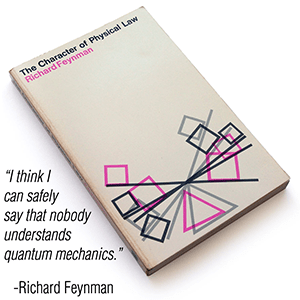
The Latin maxim ignoramus et ignorabimus, meaning ‘we do not know and will not know,’ stood for a position on the limits of scientific knowledge, in the thought of the nineteenth century. It was given credibility by Emil du Bois-Reymond, a German physiologist, in his book ‘On the limits of our understanding of nature,’ published in 1872.
In 1930, mathematician David Hilbert pronounced his disagreement with the maxim in a celebrated address to the Society of German Scientists and Physicians: ‘We must not believe those, who today, with philosophical bearing and deliberative tone, prophesy the fall of culture and accept the ignorabimus. For us there is no ignorabimus, and in my opinion none whatever in natural science. In opposition to the foolish ignorabimus our slogan shall be: Wir müssen wissen — wir werden wissen! (‘We must know — we will know!’).’
read more »
Posted in Education, Philosophy, Science |
1 Comment »
January 6, 2012
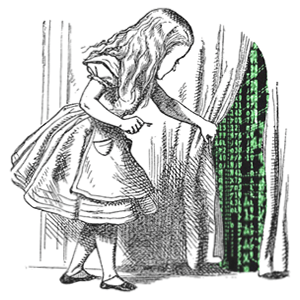
Sapere [sap-er-reh] aude [ow-day] is a Latin phrase meaning ‘dare to be wise,’ or more precisely ‘dare to know.’ Originally used by Horace, it is a common motto for universities and other institutions, after becoming closely associated with The Enlightenment by Immanuel Kant in his seminal essay, ‘What is Enlightenment?’
Kant claimed it was the motto for the entire period, and used it to explore his theories of reason in the public sphere. Later, Michel Foucault took up Kant’s formulation in an attempt for a place for the individual in his post-structuralist philosophy and come to terms with the problematic legacy of the Enlightenment.
read more »
Posted in Education, Philosophy, Science |
Leave a Comment »
January 5, 2012


Emergent gameplay refers to complex situations in video games, board games, or role-playing games that emerge from the interaction of relatively simple game mechanics. More recently game designers have attempted to encourage emergent play by providing tools to players such as placing web browsers within the game engine, providing programming languages, and fixing exchange rates.
These cases constitute intentional emergence, where creative uses of the game are intended by the designers. Since the 1970s and 1980s board games and table top role playing games such as ‘Dungeons & Dragons’ have featured intentional emergence as a primary game function by supplying players with relatively simple rules or frameworks for play that intentionally encourage them to explore creative strategies or interactions and exploit them toward victory or goal achievement.
read more »
Posted in Games, Money, Technology |
Leave a Comment »


 The Daily Omnivore