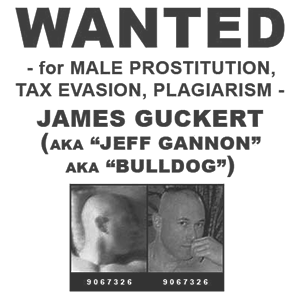
A shill, plant or stooge helps someone without disclosing that he or she has a close relationship with that person or organization. Shill typically refers to someone who purposely gives onlookers the impression that he or she is an enthusiastic independent customer of a seller that he or she is secretly working for. The person or group that hires the shill is using crowd psychology, to encourage other onlookers or audience members to make a purchase.
Shills are often employed by confidence artists. Plant and stooge more commonly refer to any person who is secretly in league with another person or organization while pretending to be neutral or actually a part of the organization he or she is planted in, such as a magician’s audience, a political party, or an intelligence organization (double agent).
Shilling is illegal in many circumstances and in many jurisdictions because of the frequently fraudulent and damaging character of the shill’s actions. However, if a shill does not place uninformed parties at a risk of loss, but merely generates ‘buzz,’ the shill’s actions may be legal. For example, a person planted in an audience to laugh and applaud when desired (part of a claque), or to participate in on-stage activities as a ‘random member of the audience,’ is a type of legal shill.
‘Shill’ can also be used pejoratively to describe a critic who appears either all-too-eager to heap glowing praise upon mediocre offerings, or who acts as an apologist for glaring flaws. In this sense, they would be an implicit ‘shill’ for the industry at large, possibly because their income is tied to its prosperity. The origin of the term shill is uncertain; it may be an abbreviation of shillaber, a word originally denoting a carnival worker who pretended to be a member of the audience in an attempt to elicit interest in an attraction.
In online discussion media, satisfied consumers or ‘innocent’ parties may express specific opinions in order to further the interests of an organization in which they have an interest, such as a commercial vendor or special interest group. In academia, this is called opinion spamming. In addition, some shills use sock puppetry where they sign on as one user soliciting recommendations for a specific product or service. They then sign on as a different user pretending to be a satisfied customer of a specific company.
In some jurisdictions this activity may be illegal. In addition, reputable organizations may prohibit their employees and other interested parties (contractors, agents, etc.) from participating in public forums or discussion groups in which a conflict of interest might arise, or will at least insist that their employees and agents refrain from participating in any way that might create a conflict of interest.
Both the illegal and legal gambling industries often use shills to make winning at games appear more likely than it actually is. For example, illegal Three-card Monte and Shell game peddlers are notorious employers of shills. These shills also often aid in cheating, disrupting the game if the ‘mark’ is likely to win. In a legal casino, however, a shill is sometimes a gambler who plays using the casino’s money in order to keep games (especially poker) going when there are not enough players (this is different from ‘proposition players’ who are paid a salary by the casino for the same purpose, but bet with their own money).
Shills, or ‘potted plants,’ are sometimes employed in auctions. Driving prices up with phony bids, they seek to provoke a bidding war among other participants. Often they are told by the seller precisely how high to bid, as the seller actually pays the price (to himself, of course) if the item does not sell, losing only the auction fees. Shilling has a substantially higher rate of occurrence in online auctions, where any user with multiple accounts can bid on their own items. Many online auction sites employ sophisticated (and usually secret) methods to detect collusion.
The term is applied metaphorically to journalists or commentators who have vested interests in or associations with parties in a controversial issue. Usually this takes the form of a show or network pretending to be offering news when in fact they are simply repeating talking points and views offered by a political party. Journalistic ethics require full disclosure of conflicts of interest, and of any interference by other parties with the reportage.
Corporate owned media outlets of radio and television are often accused of being shills for establishment political candidates. By limiting the dialogue and discourse between specific candidates and political parties, the media psychologically limits choices in the public mind and thus assures that only politicians acceptable to the ruling class and corporate structure are elected to public office. By highlighting the disparities of each candidate, the media appears as an honest broker and fair minded third party to the public, but is acting as a shill for the wealthy investment class.
More specifically, there are historical cases of journalists in private media organizations being covert representatives of government and/or businesses. In these roles the journalists will present positive stories about their respective interests at key moments in order to influence public opinion. This is often achieved by claiming to have access to anonymous government or business sources. At other times, the links may actually appear overt to some, but not to the intended audience such as with Radio Free Europe, a broadcaster which targeted Eastern European audiences on behalf of the Central Intelligence Agency.
An extension of these tactics is the practice of monitoring news outlets prior to or during publication. Often when a negative story is discovered attempts are made first to stop it. However as this can, in some societies, draw attention to what could otherwise be a minor story, shills are used to put out alternative views, either to confuse the public about the legitimacy of the story or to outright convince them that it is a lie.
A shill in a psychology experiment, or the like, is called a ‘confederate.’ In Stanley Milgram’s experiment in which the subjects witnessed people getting electric shocks, a confederate would pretend to be one of the experimental subjects who would receive the fake shocks.
In performance art, such as DECONference (Decontamination Conference), the confederates were called ‘deconfederates,’ and when a large group of (de)conference attendees were asked to remove all clothing prior to entry to the deconference, the deconfederate, planted among the attendees, would comply immediately with the request, causing all of the others to follow the orders and disrobe as well.
Police or military interrogators sometimes use undercover agents (called ‘plants’) to assist with the interrogation of an individual or suspect. The plant can pose as a fellow inmate or internee, build a rapport and earn the confidence of the interviewee. The plant may subtly suggest that telling the interrogators what they want to know is the sensible or right thing to do. Even if no outright confessions are obtained, minor details and discrepancies that come out in supposedly innocent conversation can be used to chip away at the interviewee. Some plants are in reality inmates or prisoners of war who have been promised better treatment and conditions in return for helping with the interrogation.
Puppet, Vassal, Quisling or Satellite states have been routinely used in exercises of foreign policy to give weight to the arguments of the country that controls them. Examples of this include the USSR’s use of its satellites in the United Nations during the Cold War. These states are also used to give the impression of legitimacy to domestic policies that are ultimately harmful to the population they control, while beneficial to the government that controls them.
Even outside the spectrum of sovereign powers many multiparty democratic systems give foreign powers the capacity to influence political discourse through shills and pseudo sock-puppets. Thanks to the reliance of many political parties on external sources of revenue for campaigns it can be easy for a government or business to either choose which party it funds or to outright create one. This way they can either choose to support existing minority voices that echo their views or form their own, using their funds and usually semi-covert influence to make them a more prominent voice.
Another concept in foreign policy is seen in sovereign alliances. In these instances, an allied country acts on behalf of another’s interests so that it appears that the original power does not want to get involved. This is useful in situations where there is little public support in the original country for the actions. This type of collusion is typically practiced between countries that share common goals and are capable of returning favors. An example of this may be Cuba’s role during the Cold War, in sending active combat troops to wars in Africa when it was unpalatable for the USSR to do so.
Another tool utilizing the appearance of another entity is a False Flag Operation. In these operations a government or organization attempts to impersonate another party while committing a criminal act. This allows the actual perpetrators to blame the other party and react to the offense. This is typically termed a Frameup. An example of this is the Nazi Operation to destroy German radio towers while dressed as Polish troops at the onset of WWII.
Operation Northwoods is another example of a False Flag Operation, planned at the highest levels of the U.S. Government in 1962 but never implemented. The proposals called for the CIA, or other operatives, to commit acts of terrorism in U.S. cities and elsewhere. These criminal acts were to be blamed on Cuba in order to create public support and moral justification for a war against that nation. Black operators would act as shills to frame Cuba and thereby fool the U.S. population into carrying out the intended objective, the removal of Fidel Castro by military force and installation of a pro U.S. regime in Cuba. After investigation of the JFK Assassination in 1964, Operation Northwoods was one of many government documents sealed under the justification of National Security for 75 years (until 2039). The previously Top Secret document was finally declassified 33 years later and made public in 1997, by the John F. Kennedy Assassination Records Review Board.
During covert operations or police investigations agents may routinely claim to be of political views or a part of an organization in order to gain the confidence of the people they have under surveillance. Sometimes this goes further with the agents participating in acts on behalf of the organizations they infiltrate or falsely represent as was the case during the Operations like Gladio and Chaos. Often the end goal is not just to gain information about the organization but to discredit them in the eyes of the public.


 The Daily Omnivore
Leave a comment