
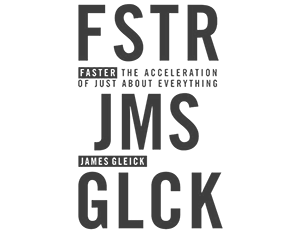
The Feiler Faster Thesis (FFT) is a theory in modern journalism that the increasing pace of society is matched by (and perhaps driven by) journalists’ ability to report events and the public’s desire for more information. The idea is credited to American author Bruce Feiler and first defined by journalist Mickey Kaus in a 2000 ‘Slate’ article, ‘Faster Politics: ‘Momentum’ ain’t what it used to be.” Kaus describes two trends: the speeding up of the news cycle and the compression of the schedule of primaries for the 2000 U.S. general election, writing: ‘Feiler’s point is that we should put these two trends together–and that when we do, Trend 1 considerably softens the impact of Trend 2.’ Kaus uses the observation to reassess the concept of momentum in politics, suggesting that there are now simply more opportunities for turns of fortune and that voters are able, for the most part, to keep up.
The idea is based on James Gleick’s 1999 book ‘Faster,’ which makes the argument that the pace of Western society, and American society in particular, has increased and that ‘a compression of time characterizes the life of the century now closing.’ Gleick documents the ways technology speeds up work and the time people spend doing various tasks, including sleeping. He points out that ‘we have learned to keep efficiency in mind as a goal, which means that we drive ourselves hard.’ Gleick’s key observation is that ‘some of us say we want to save time when really we just want to do more.’


 The Daily Omnivore
Leave a comment