February 2, 2012
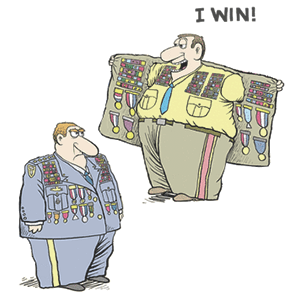
One-upmanship is the art or practice of successively outdoing a competitor. The term originated as the title of a book by Stephen Potter, published in 1952 as a follow-up to ‘The Theory and Practice of Gamesmanship (or the Art of Winning Games without Actually Cheating)’ (1947) and ‘Lifemanship’ titles in his series of tongue-in-cheek self-help books, and film and television derivatives, that teach various ‘ploys’ to achieve this. In that context, the term refers to a satiric course in the gambits required for the systematic and conscious practice of ‘creative intimidation,’ making one’s associates feel inferior and thereby gaining the status of being ‘one-up’ on them.
This satire of self-help style guides manipulates traditional stuffy British conventions for the gamester, all life being a game, who understands that if you’re not one-up, you’re one-down. Potter’s unprincipled principles apply to almost any possession, experience or situation, deriving maximum undeserved rewards and discomforting the opposition. Viewed seriously, it is a phenomenon of group dynamics that can have significant effects in the management field: for instance, manifesting in office politics. The term has been extended to a generic, often punning, extension upmanship used for any assertion of superiority: for instance, Native Upmanship.
Posted in Games, Humor |
1 Comment »
February 2, 2012

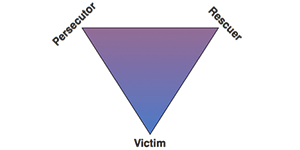
The term mind games refers to three main categories:
First, a largely conscious struggle for psychological one-upmanship, often employing passive–aggressive behavior to specifically demoralize or empower the thinking subject, making the aggressor look superior – ‘mind games or power games.’ Second, ‘The unconscious games played by innocent people engaged in duplex transactions (sending and receiving both explicit and unspoken messages) of which they are not fully aware, and which form the most important aspect of social life all over the world.’ And third, mental exercises designed to improve the functioning of mind and/or personality.
read more »
Posted in Games, Health |
Leave a Comment »
February 2, 2012

Transactional analysis, commonly known as TA to its adherents, is an integrative approach to the theory of psychology and psychotherapy. It is described as integrative because it has elements of psychoanalytic, humanist and cognitive approaches. TA was first developed by Canadian-born U.S. psychiatrist, Eric Berne, in the late 1950s.
As a theory of personality, TA describes how people are structured psychologically. It uses what is perhaps its best known model, the ego-state (Parent-Adult-Child) model, to do this. The same model helps explain how people function and express their personality in their behavior. It offers a theory for child development by explaining how adult patterns of life originated in childhood. This explanation is based on the idea of a ‘Life (or Childhood) Script’: the assumption that we continue to re-play childhood strategies, even when this results in pain or defeat. Thus it claims to offer a theory of psychopathology.
read more »
Posted in Health, Philosophy |
3 Comments »
February 2, 2012
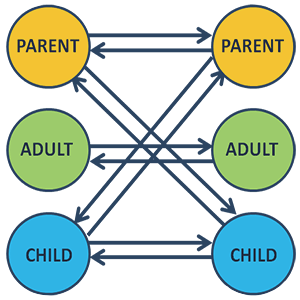
‘Games People Play: The Psychology of Human Relationships’ is a 1964 bestselling book by psychiatrist Eric Berne. Since its publication it has sold more than five million copies. The book describes both functional and dysfunctional social interactions.
In the first half of the book, Berne introduces transactional analysis as a way of interpreting social interactions. He describes three roles or ego states, known as the Parent, the Adult, and the Child, and postulates that many negative behaviors can be traced to switching or confusion of these roles. The book uses casual, often humorous phrases such as ‘See What You Made Me Do,’ ‘Why Don’t You — Yes But,’ and ‘Ain’t It Awful’ as a way of briefly describing each game. In reality, the ‘winner’ of a mind game is the person that returns to the Adult ego-state first.
read more »
Posted in Games, Health, Language |
1 Comment »
February 2, 2012
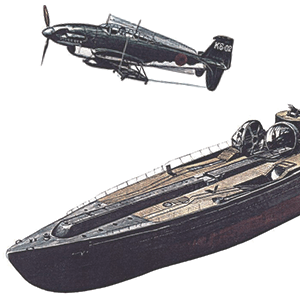
Submarine aircraft carriers are submarines equipped with fixed wing aircraft for observation or attack missions. These submarines saw their most extensive use during World War II, although their operational significance remained rather small.
The most famous of them were the Japanese I-400 class submarine and the French submarine Surcouf, although a few similar craft were built by other nations’ navies as well. Except for the I-400, submarine aircraft carriers used their aircraft in a supporting role (usually for reconnaissance), unlike the typical surface aircraft carrier, which describes a ship whose main function is serving as a base for combat aircraft.
read more »
Posted in Technology, War, World |
Leave a Comment »
February 2, 2012
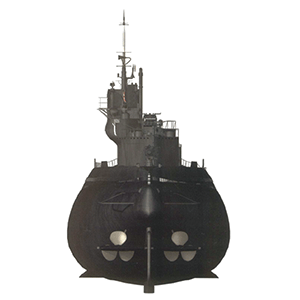
The Sen Toku I-400-class Imperial Japanese Navy submarines were the largest submarines of World War II and remained the largest ever built until the construction of nuclear ballistic missile submarines in the 1960s. They were submarine aircraft carriers able to carry three Aichi M6A Seiran aircraft underwater to their destinations. They were designed to surface, launch the planes then dive again quickly before they were discovered. They also carried torpedoes for close-range combat. The I-400-class was designed with the range to travel anywhere in the world and return. A fleet of 18 boats was planned in 1942, of which only three were completed.
Located approximately amidships on the top deck was a cylindrical watertight aircraft hangar, 31 m (102 ft) long and 3.5 m (11 ft) in diameter. The outer access door could be opened hydraulically from within or manually from the outside by turning a large hand-wheel connected to a rack and spur gear. The door was made waterproof with a 51-millimeter-thick (2 in.) rubber gasket.
Posted in Technology, War, World |
Leave a Comment »



 The Daily Omnivore