April 13, 2012

Mole [moh-ley] (from the Aztec word for ‘sauce’) is the generic name for a number of sauces used in Mexican cuisine, as well as for dishes based on these sauces. Outside of Mexico, it often refers to a specific sauce which is known in Spanish by the more specific name ‘mole poblano.’ In contemporary Mexico, the term is used for a number of sauces, some quite dissimilar to one another, including black, red, yellow, colorado, green, almendrado, and pipián. The sauce is most popular in the central and southern regions of the country, but eaten nationwide, particularly during celebrations.
In Mexico, to say ‘to go to a mole’ (‘ir a un mole’) means to go to a wedding. Three states in Mexico claim to be the origin of mole, Puebla, Oaxaca, and Tlaxcala. The states with the best known moles are Puebla and Oaxaca, but other regions in Mexico also make various types of mole sauces. Moles come in various flavors and ingredients, with chili peppers as the common factor. A classic mole poblano is a dark red or brown sauce served over meat. Mole has a strong flavor, especially the dark ones, and is considered to be an acquired taste for most. This has spawned another saying, ‘en su mero mole,’ which means something like ‘one’s cup of tea.’
read more »
Posted in Food, Money, World |
1 Comment »
April 13, 2012
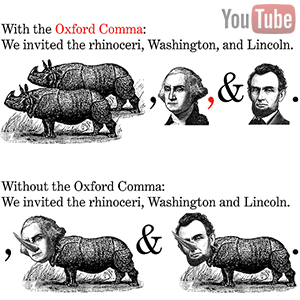
The serial comma (also known as the Oxford comma or Harvard comma) is the comma used immediately before a coordinating conjunction (usually ‘and’ or ‘or’) preceding the final item in a list of three or more items.
For example, a list of three countries can be punctuated as either ‘Portugal, Spain, and France’ (with the serial comma) or as ‘Portugal, Spain and France’ (without the serial comma).
read more »
Posted in Education, Language, World |
1 Comment »
April 12, 2012


A calligram [kal-uh-gram] is a poem, phrase, or word in which the typeface, calligraphy, or handwriting is arranged in a way that creates a visual image. The image created by the words expresses visually what the word, or words, say. In a poem, it manifests visually the theme presented by the text of the poem.
Guillaume Apollinaire was a famous calligram writer and author of a book of poems called ‘Calligrammes.’ His poem written in the form of the Eiffel Tower is an example of a calligram.
Posted in Art, Language |
Leave a Comment »
April 12, 2012

Eye music (often referred to in English by its exact German translation ‘Augenmusik’) describes graphical features of scores that when performed are unnoticeable by the listener. A clear definition of eye music is elusive, for the border between eye music, word painting, and representations of melody and form depends on the relationships of composer, performer, and listener. Word painting (also known as tone painting or text painting) is writing music that reflects the literal meaning of a song (r.g. ascending scales would accompany lyrics about going up; slow, dark music would accompany lyrics about death).
To a person well-versed in the style of Baroque music, word painting is, as intended, noticed. But someone unused to Baroque musical style may not appreciate that musical effect – to them they are merely notes and lyrics. In this case, word painting is no longer the issue. For them, the ‘leaps’ of written notes are unhearable, but are visible only to the composer or performer: a definition of eye music.
read more »
Posted in Art, Language |
Leave a Comment »
April 12, 2012
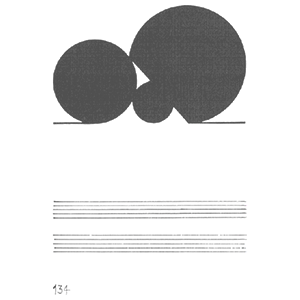
Graphic notation is the representation of music through the use of visual symbols outside the realm of traditional music notation. Graphic notation evolved in the 1950s, and it is often used in combination with traditional music notation. Composers often rely on graphic notation in experimental music, where standard musical notation can be ineffective. A common aspect of graphic notation is the use of symbols to convey information to the performer about the way the piece is to be performed. These symbols first began to appear in the works of avant-garde composers such as Morton Feldman, Karlheinz Stockhausen, and Krzysztof Penderecki, as well as the works of experimental composers such as John Cage and Earle Brown during the 1950s and 60s. In the late 1970s, the Brazilian composer Emanuel Dimas de Melo Pimenta started producing graphic notation in four dimensions, inside virtual reality.
After working as Stockhausen’s assistant, Cornelius Cardew began work on a massive graphic score, which he titled ‘Treatise.’ The piece consists of 193 pages of highly abstract scores. The score itself is almost its own separate work of art. In 2008, Theresa Sauer edited a compendium featuring graphic scores by composers from over fifty countries, demonstrating how widespread the practice has become. Notable graphic scores(in which the music is represented using symbols and illustrations) include: Hans-Christoph Steiner’s score for ‘Solitude,’ created using the Pure Data programming language. Altered Notation can be seen in George Crumb’s work, where he uses traditional notation but presents the music on the page in a graphic or nontraditional manner such as spirals or circles.
Posted in Art, Language |
Leave a Comment »
April 12, 2012
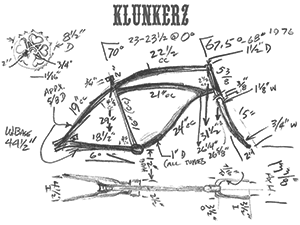

User innovation refers to innovation by intermediate users (e.g. user firms) or consumer users (individual end-users or user communities), rather than by suppliers (producers or manufacturers).
Eric von Hippel of MIT and others observed that many products and services are actually developed or at least refined, by users, at the site of implementation and use. These ideas are then moved back into the supply network. This is because products are developed to meet the widest possible need; when individual users face problems that the majority of consumers do not, they have no choice but to develop their own modifications to existing products, or entirely new products, to solve their issues. Often, user innovators will share their ideas with manufacturers in hopes of having them produce the product, a process called free revealing.
read more »
Posted in Money, Technology |
Leave a Comment »
April 12, 2012

Amateur professionalism is a socioeconomic concept that describes a blurring of the distinction between professional and amateur within any endeavour or attainable skill that could be labelled professional, whether it is in the field of writing, computer programming, music, film, etc. The idea is distinct from the sports term ‘pro–am’ (professional–amateur), though related to and ultimately derived from it.
The concept and terms have been used, since 2004, as a descriptor for an emerging sociological and economic trend of ‘people pursuing amateur activities to professional standards,’ as described by Demos, a British think tank, in the 2004 book ‘The Pro-Am Revolution’ co-authored by eclectic writer Charles Leadbeater. Leadbeater has evangelized the idea (in ‘amateur professional’ order this time) by presenting it at TEDGlobal 2005.
read more »
Posted in Games, Money, Technology |
Leave a Comment »
April 12, 2012
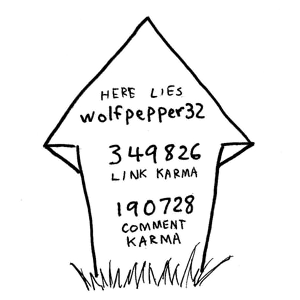
Egoboo is a colloquial expression for the pleasure received from public recognition of voluntary work. The term was in use in science fiction fandom no later than 1947, when it was used (spelled ‘ego boo’) in a letter from Rick Sneary published in the letter column of ‘Thrilling Wonder Stories.’
It was originally simply used to describe the ‘ego boost’ someone feels on seeing their name in print. As a reliable way for someone to get their name in print was to do something worth mentioning, it became caught up with the idea of voluntary community participation. As a result of this, in later years, the term grew to mean something akin to an ephemeral currency, e.g., ‘ got a lot of egoboo for editing that newsletter.’
read more »
Posted in Language, Money |
Leave a Comment »
April 12, 2012

A stand-your-ground law states that a person may use force in self-defense when there is reasonable belief of a threat, without an obligation to retreat first. In some cases, a person may use deadly force in public areas without a duty to retreat. Under these legal concepts, a person is justified in using deadly force in certain situations and the ‘stand your ground’ law would be a defense or immunity to criminal charges and civil suit. The difference between immunity and a defense is that an immunity bars suit, charges, detention, and arrest. A defense permits a plaintiff or the state to seek civil damages or a criminal conviction.
More than half of the states in the United States have adopted the Castle doctrine, stating that a person has no duty to retreat when their home is attacked. Some states go a step further, removing the duty of retreat from any location. ‘Stand Your Ground,’ ‘Line In The Sand,’ or ‘No Duty To Retreat’ laws thus state that a person has no duty or other requirement to abandon a place in which he has a right to be, or to give up ground to an assailant. Under such laws, there is no duty to retreat from anywhere the defender may legally be. Other restrictions may still exist; when in public, a person must be carrying the firearm in a legal manner, whether concealed or openly.
read more »
Posted in Death, Politics |
Leave a Comment »
April 12, 2012

A Castle Doctrine is an American legal doctrine that designates a person’s abode (or, in some states, any place legally occupied, such as a car or place of work) as a place in which the person has certain protections and immunities and may in certain circumstances attack an intruder without becoming liable to prosecution. Typically deadly force is considered justified, and a defense of justifiable homicide applicable, in cases ‘when the actor reasonably fears imminent peril of death or serious bodily harm to himself or another.’ The doctrine is not a defined law that can be invoked, but a set of principles which is incorporated in some form in the law of most states.
The term derives from the historic English common law dictum that ‘an Englishman’s home is his castle.’ This concept was established as English law by 17th century jurist Sir Edward Coke, in his ‘The Institutes of the Laws of England’ (1628). This was carried by colonists to the New World, who later removed ‘Englishman’ from the phrase, which thereby became simply the Castle Doctrine. The term has been used to imply a person’s absolute right in England to exclude anyone from their home, although this has always had restrictions, and since the late twentieth century police have also had increasing powers of entry.
read more »
Posted in Death, Politics, World |
Leave a Comment »
April 12, 2012

Good Copy Bad Copy is a documentary about copyright and culture in the context of Internet, peer-to-peer file sharing and other technological advances, directed by Andreas Johnsen, Ralf Christensen, and Henrik Moltke. It features interviews with copyright lawyers, producers, artists, and filesharing service providers.
A central point of the documentary is that ‘creativity itself is on the line’ and that a balance needs to be struck, or that there is a conflict, between protecting the right of those who own intellectual property and the rights of future generations to create. Artists interviewed include Girl Talk and Danger Mouse, popular musicians of the mashup scene who cut and remix sounds from other songs into their own. The interviews with these artists reveal an emerging understanding of digital works and the obstacle to their authoring copyright presents.
read more »
Posted in Money, Politics, Technology |
1 Comment »
April 11, 2012
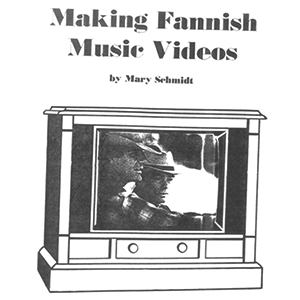
Vidding is the fan labor practice in media fandom of creating music videos from the footage of one or more visual media sources, thereby exploring the source itself in a new way. The creator may explore a single character, support a particular romantic pairing between characters, criticize or celebrate the original text, or point out an aspect of the TV show or film that they find under-appreciated. The creators refer to themselves as ‘vidders,’ their product as ‘vids,’ ‘fanvids,’ or ‘songvids,’ and the act itself as ‘vidding.’
Vidding can occur within a fandom; however, it is also often considered its own fandom, as vidding fans will often watch vids simply because they are vids. (This is distinct from fan fiction readers and other fans, for instance, who tend to choose what to engage based on source text more than form.) Accordingly, vidding has its own dedicated fan convention, Vividcon. Fan videos within the world of anime fandom are distinct from the videos created by vidders. A fan-made music video using anime footage fans is called an anime music video or AMV, not a fanvid. While a large number of anime video makers are male, the bulk of vidders in media fandom are women.
read more »
Posted in Art, Money, Technology |
1 Comment »


 The Daily Omnivore