May 4, 2012

The cute cat theory of digital activism is a theory concerning Internet activism, Web censorship, and ‘cute cats’ (a term used for any low-value, but popular online activity) developed in 2008 by Ethan Zuckerman, director of the MIT Center for Civic Media. It posits that most people are not interested in activism; instead, they want to use the web for mundane activities, including surfing for pornography and lolcats (‘cute cats’).
The tools that they develop for that, however, are very useful to social movement activists, who often lack resources to develop dedicated tools themselves, but instead, use the tools developed by others (such as Facebook, Flickr, Blogger, Twitter, and similar platforms), even though such tools were not originally intended for activism.
read more »
Posted in Humor, Politics, Technology |
Leave a Comment »
May 4, 2012

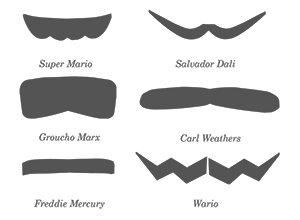
The American Mustache Institute (AMI) is an advocacy organization and registered not-for-profit based in St. Louis, Missouri. When founded in 1965, AMI was the only organization in the world working towards facial hair advocacy. AMI’s full-time staff supports a more than 700 global chapters which advocate for greater acceptance of mustaches in the workplace and throughout modern culture.
Efforts by AMI have included a 2007 campaign against ‘widespread and unacceptable discrimination in the workplace and society,’ as chronicled by media including the ‘Daily Telegraph.’
read more »
Posted in Humor, Politics |
1 Comment »
May 3, 2012

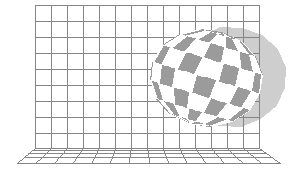
A 64k intro is a demo (a non-interactive multimedia presentation) where the size of the executable file is limited to 65,536 bytes. At demo parties there is a category for this kind of demo. 64k intros generally apply many techniques to be able to fit in the given size, usually including procedural generation, sound synthesis, and executable compression.
The size of 64 kilobytes is a traditional limit which was inherited from the maximum size of a COM file. An intro originally referred to an endless demo where all the action happened on a single graphical screen, often to promote a BBS or a game crack. Nowadays it can refer to any demo written within a strict size limit, such as 4 kB or 64 kB.
Posted in Art, Games, Technology |
Leave a Comment »
May 3, 2012

Interlingua [in-ter-ling-gwuh] is a planned language using words that are found in most West-European languages. It was made by IALA – a group of people (the most known was Alexander Gode) that worked on it for more than 20 years, and they finished and published the first dictionary in 1951. Interlingua was created on the base of languages: English, French, Spanish, Portuguese, and Italian.
‘Inter’ means ‘between’ or ‘to each other’; ‘lingua’ means ‘language.’ The goal of the language was to enable people of different countries to talk to each other easily. Because Interlingua was made by people to be easy, it is easier than natural languages to learn. Many thousands of people know Interlingua, and Interlingua speakers say that millions can understand it (read texts in it and listen to someone talk in it) without having to learn it first.
read more »
Posted in Language, Science, World |
Leave a Comment »
May 3, 2012

Basic Color Terms: Their Universality and Evolution (1969) is a book by Brent Berlin and Paul Kay, who’s work proposed that the kinds of basic color terms a culture has, such as black, brown or red, are predictable by the number of color terms the culture has.
Berlin and Kay posit seven levels in which cultures fall, with Stage I languages having only the colors black (dark–cool) and white (light–warm). Languages in Stage VII have eight or more basic color terms. This includes English, which has eleven basic color terms.
read more »
Posted in Language, Science, World |
1 Comment »
May 3, 2012

The principle of linguistic relativity holds that the structure of a language affects the ways in which its speakers are able to conceptualize their world, i.e. their world view. Popularly known as the Sapir–Whorf hypothesis, or Whorfianism, the principle is often defined as having two versions: Strong (language determines thought and that linguistic categories limit and determine cognitive categories) and Weak (linguistic categories and usage influence thought and certain kinds of non-linguistic behavior).
The term ‘Sapir-Whorf Hypothesis’ is a misnomer as the men never co-authored anything and never stated their ideas in terms of a hypothesis. The notion of ‘weak’ and ‘strong’ versions of Whorf’s principal of linguistic relativity is a misunderstanding of Whorf promulgated by Stuart Chase, whom Whorf considered ‘utterly incompetent by training and background to handle such a subject.’
read more »
Posted in Language, Science, World |
Leave a Comment »
May 3, 2012

The Culture is a fictional interstellar anarchist, socialist, and utopian society created by the Scottish writer Iain M. Banks which features in a number of science fiction novels and works of short fiction by him, collectively called the Culture series.
The Culture is characterized by being a post-scarcity society (meaning that its advanced technologies provide practically limitless material wealth and comforts for everyone for free, having all but abolished the concept of possessions), by having overcome almost all physical constraints on life (including disease and death) and by being an almost totally egalitarian, stable society without the use of any form of force or compulsion, except where necessary to protect others.
read more »
Posted in Money, Politics, Technology |
Leave a Comment »
May 3, 2012

Excession, first published in 1996, is Scottish writer Iain M. Banks’s fourth science fiction novel to feature the Culture (a fictional interstellar anarchist, socialist, and utopian society). It concerns the response of the Culture and other interstellar societies to an unprecedented alien artifact, the Excession of the title.
The book is largely about the response of the Culture’s Minds (AIs with enormous intellectual and physical capabilities and distinctive personalities) to the Excession itself and the way in which another society, whose systematic brutality horrifies the Culture, tries to use the Excession to increase its power.
read more »
Posted in Art, Language, Technology |
Leave a Comment »
May 3, 2012

Slavoj Žižek [slah-voy zhee-zhek] (b. 1949) is a Slovenian philosopher and cultural critic working. He has made contributions to political theory, film theory and theoretical psychoanalysis. Žižek is a senior researcher at the Institute of Sociology University of Ljubljana.
Žižek uses examples from popular culture to explain the theory of Jacques Lacan and uses Lacanian psychoanalysis, Hegelian philosophy, and Marxist economic criticism to interpret and speak extensively on immediately current social phenomena, including the current ongoing global financial crisis.
read more »
Posted in Money, Philosophy, Politics |
1 Comment »
May 2, 2012

Unknown knowns are the things that we know, but are unaware of knowing. The coining of the term is attributed to Slovenian Philosopher Slavoj Žižek and it refers to the unconscious beliefs and prejudices that determine how we perceive reality and intervene in it. It is the Freudian unconscious, the ‘knowledge which doesn’t know itself,’ as French psychoanalyst Jacques Lacan said.
Žižek first used the term as a response to former US Defense Secretary Donald Rumsfeld’s statement at a press briefing given in, 2002: ‘There are known knowns; there are things we know we know. We also know there are known unknowns; that is to say we know there are some things we do not know. But there are also unknown unknowns – the ones we don’t know we don’t know.’
read more »
Posted in Language, Philosophy, Politics |
1 Comment »
May 2, 2012

Yo is an English slang interjection, commonly associated with American English. It was popularized by Italian and African Americans in Philadelphia in the 1970s. It is used to signify informality, close cultural understanding, and communal bonding. It remains very popular among Philadelphia Italian Americans, possibly arising from the Italian language word ‘io’ (meaning ‘I’). In Italian, first person statements are often preceded by io.
Although often used as a greeting, yo may come at the end of a sentence, often to direct focus onto a particular individual or group or to gain the attention of another individual or group. It may specify that a certain statement that was previously uttered is more important, or may just be an ‘attention grabber’ (e.g. ‘Listen up, yo!’). In the Japanese language, the sentence-final particle ‘yo’ is used to emphasize sentences as is often the case in English slang as above, but is etymologically unrelated. ‘YŌ’ is also used by Japanese teens as casual greetings between friends, but is pronounced with a more drawn-out tone.
Posted in Language, World |
Leave a Comment »
May 2, 2012
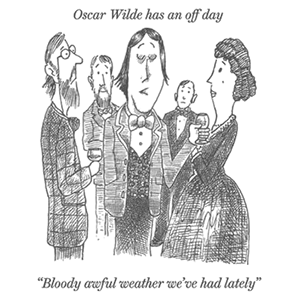
In linguistics, a phatic expression [fat-ik] is one whose only function is to perform a social task, as opposed to conveying information. The term was coined by anthropologist Bronisław Malinowski in the early 1900s from Greek ‘phanein’ (‘to show oneself,’ ‘appear’).
In Russian linguist Roman Jakobson’s work, ‘Phatic’ communication is that which concerns the channel of communication, for instance when one says ‘I can’t hear you, you’re breaking up’ in the middle of a cell phone conversation. In the modern context, this usage appears in online communities and more specifically on micro-blogging.
read more »
Posted in Language, World |
Leave a Comment »


 The Daily Omnivore