July 26, 2012

The Hidden Wiki is a website that uses hidden services available through the Tor network. The use of Tor to provide anonymity allows the site to advertise links to a range of other sites, including ones offering illegal drugs and child pornography. The site provides a range of links in a wiki format to other hidden services and sites on the clearnet (sites that can be accessed in a standard browser).
These include links to child pornography sites, sites selling drugs and other contraband such as the Silk Road. Scot Terban, an independent security researcher, commented: ‘It’s kind of like any black market operation except this one was in cyberspace and pretty much completely anonymous. Because it was anonymous, people felt free to trade openly in illegal things, mess around by putting up ads for services like hired assassins, and in the end, became a haven for pedophiles and their content.’
read more »
Posted in Money, Politics, Technology |
Leave a Comment »
July 26, 2012
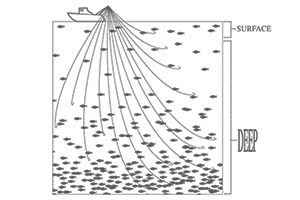

Silk Road is an online marketplace that its operators run as a Tor hidden service (anonymous and encrypted). Visitors must use Tor software to access the marketplace. The majority of products that sellers list on Silk Road qualify as contraband in most jurisdictions. ‘NPR’ has referred to the site as the ‘Amazon.com of illegal drugs.’ Buyers and sellers conduct all transactions with bitcoins (an encrypted digital currency).
Although the bitcoin’s exchange rate may fluctuate greatly in short periods of time, most of the prices on Silk Road are bound to United States dollar to prevent too drastic inflation or deflation. Buyers can register on Silk Road for free, but sellers must purchase new accounts through auctions to mitigate the possibility of malicious individuals distributing tainted goods.
read more »
Posted in Drugs, Money, Technology |
Leave a Comment »
July 26, 2012
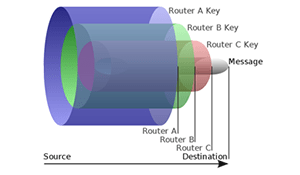

The Onion Router or Tor is a server that keeps users anonymous on the Internet. Tor client software directs internet traffic through a worldwide volunteer network of servers (making several ‘hops’) to conceal a user’s location or usage from anyone conducting network surveillance or traffic analysis.
Using Tor makes it more difficult to trace Internet activity, including visits to Web sites, online posts, and instant messages, IRC, and bittorrent and is intended to protect users’ personal freedom, privacy, and ability to conduct confidential business by keeping their internet activities from being monitored. The Tor client is free software and use of the Tor network is free of charge.
read more »
Posted in Politics, Technology, World |
Leave a Comment »
July 26, 2012


Mithridatism [mith-ri-dey-tiz-uhm] is the practice of protecting oneself against a poison by gradually self-administering non-lethal amounts. The word derives from Mithridates VI, the King of Pontus (modern-day Turkey), who so feared being poisoned that he regularly ingested small doses, aiming to develop immunity. Having been defeated by Roman general Pompey, legend has it that Mithridates tried to commit suicide using poison but failed because of his immunity and so had to resort to having a mercenary run him through with his sword.
There are only a few practical uses of mithridatism. It can be used by zoo handlers, researchers, and circus artists who deal closely with venomous animals. Mithridatization has been tried with success in Australia and Brazil and total immunity has been achieved even to multiple bites of extremely venomous cobras and pit vipers. Venomous snake handler Bill Haast used this method. Snake handlers from Burma tattoo themselves with snake venom for the same reason. Mithridatism is also used to treat peanut allergies.
read more »
Posted in Death, Drugs, Health |
1 Comment »
July 26, 2012

Physiological tolerance or drug tolerance is commonly encountered in pharmacology, when a subject’s reaction to a specific drug and concentration of the drug is progressively reduced, requiring an increase in concentration to achieve the desired effect. Drug tolerance can involve both psychological drug tolerance and physiological factors.
Tolerance rate depends on the particular drug, dosage and frequency of use, though it is typically reversible. Physiological tolerance also occurs when an organism builds up a resistance to the effects of a substance after repeated exposure. This can occur with environmental substances, such as salt or pesticides. A rapid drug tolerance is termed tachyphylaxis.
read more »
Posted in Drugs, Health |
1 Comment »
July 26, 2012

It Couldn’t Happen Here is a 1988 musical film starring the British pop duo Pet Shop Boys and based around their music. It was originally conceived as an hour-long video based around their album ‘Actually,’ but it turned into a surreal full-scale feature film directed by Jack Bond and co-starring Barbara Windsor, Joss Ackland, Neil Dickson and Gareth Hunt. The original idea of making a film emerged from the band’s immense reluctance to go on tour.
The band hoped that a film would satisfy the fans’ demand to see them in live action. Neil Tennant subsequently commented that making the film made him realize one thing, that he couldn’t act. When the film premiered in London’s West End, a crowd of fans were standing outside the cinema, waiting for the duo to arrive. However, as both Neil and Chris approached the crowd, they went completely unnoticed thanks to their anonymous appearance, and managed to walk past them.
read more »
Posted in Art |
Leave a Comment »
July 25, 2012
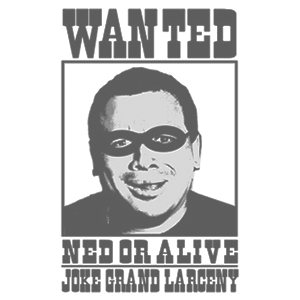
Joke thievery is the act of performing and taking credit for comic material written by another person without their consent. This is a form of plagiarism and sometimes can be copyright infringement. A common epithet for a joke thief is ‘hack,’ which is derived from the term, ‘hackneyed’ (over used and thus cheapened, or trite).
From the music hall and vaudeville beginnings of stand-up comedy, joke thievery was common as there were few chances that a performer from one area would meet one from another and a single twenty-minute set could sustain a comic for a decade. Most jokes at the time were one-liners and there was little in the way of proof of a joke’s origin, but the value of each joke was immeasurable to a comedian. Milton Berle and Bob Hope had a long-standing feud due to Hope’s accusation that Berle had stolen some of his jokes. Berle never refuted the claim, but instead embraced the title ‘The Thief of Bad Gag.’
read more »
Posted in Humor, Language, Money |
Leave a Comment »
July 25, 2012

The Frontier Thesis is an argument by historian Frederick Jackson Turner in 1893 that the origin of the distinctive egalitarian, democratic, aggressive, and innovative features of the American character has been the American frontier experience. He stressed the process—the moving frontier line—and the impact it had on pioneers going through the process.
In the thesis, the frontier established liberty by releasing Americans from European mind-sets and ending prior customs of the 19th century. Turner first announced his thesis in a paper entitled ‘The Significance of the Frontier in American History,’ delivered to the American Historical Association in 1893 in Chicago. Turner elaborated on many points in a series of essays published over the next 25 years, but never a wrote a book on the frontier.
read more »
Posted in Politics, World |
Leave a Comment »
July 25, 2012

Truthiness is a quality characterizing a ‘truth’ that a person claims to know intuitively ‘from the gut’ or because it ‘feels right’ without regard to evidence, logic, intellectual examination, or facts. American television comedian Stephen Colbert coined the word in this meaning as the subject of a segment called ‘The Wørd’ during the 2005 pilot episode of his political satire program ‘The Colbert Report.’
By using this as part of his routine, Colbert satirized the misuse of appeal to emotion and ‘gut feeling’ as a rhetorical device in contemporaneous socio-political discourse. He particularly applied it to President George W. Bush’s nomination of Harriet Miers to the Supreme Court and the decision to invade Iraq in 2003. Colbert later ascribed truthiness to other institutions and organizations, including Wikipedia. Colbert has sometimes used a mock Latin version of the term, ‘Veritasiness.’
read more »
Posted in Humor, Language, Politics |
Leave a Comment »
July 25, 2012

Common sense is ‘sound and prudent judgment based on a simple perception of the situation or facts.’ Thus, ‘common sense’ (in this view) equates to the knowledge and experience which most people already have, or which the person using the term believes that they do or should have. It is ‘the basic level of practical knowledge and judgment that we all need to help us live in a reasonable and safe way.’
However, identifying particular items of knowledge as ‘common sense’ is difficult. Philosophers may choose to avoid using the phrase when using precise language. Common sense remains a perennial topic in epistemology (the study of knowledge) and many philosophers make wide use of the concept or at least refer to it. Some related concepts include intuitions, pre-theoretic belief, ordinary language, the frame problem, foundational beliefs, good sense, endoxa, axioms, wisdom, folk wisdom, folklore, and public opinion.
read more »
Posted in Language, Philosophy, Science |
Leave a Comment »
July 25, 2012
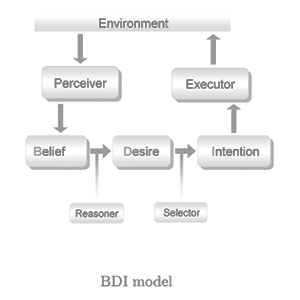
Folk psychology can be described as the common understanding of mental processes (e.g. pain, pleasure, excitement, anxiety, etc.), grounded in the use of common linguistic terms as opposed to technical or scientific jargon. Folk psychology and analogy are invariably linked, with both concepts having evolved as a result of the relationship they have with each other. Once technical terms are stripped, the easiest way to describe something is through references to familiar items. In this way, the union between analogy and folk psychology was inevitable.
Traditionally, the study of folk psychology has focused on how everyday people—those without formal training in the various academic fields of science—go about attributing mental states. This domain has primarily been centered on intentional states reflective of an individual’s beliefs and desires; each described in terms of everyday language and concepts such as ‘beliefs,’ ‘desires,’ ‘fear,’ and ‘hope.’ As a result of this among other intrinsic factors, the domain’s scope, method, and contributions are consistently subjects of dispute in many scientific quarters.
read more »
Posted in Health, Language, Science |
Leave a Comment »
July 25, 2012

Boundaries of the mind refers to a personality trait concerning the degree of separateness (‘thickness’) or connection (‘thinness’) between mental functions and processes. Thin boundaries are associated with open-mindedness, sensitivity, vulnerability, creativity, and artistic ability.
People with thin boundaries may tend to confuse fantasy and reality and tend to have a fluid sense of identity, so that they tend to merge or lose themselves in their relations with others. People with thick boundaries differentiate clearly between reality and fantasy and between self and other, and tend to prefer well-defined social structures. The concept was developed by psychoanalyst Ernest Hartmann from his observations of the personality characteristics of frequent nightmare sufferers. The construct has been particularly studied in relation to dream recall and lucid dreaming.
read more »
Posted in Health, Science |
Leave a Comment »


 The Daily Omnivore