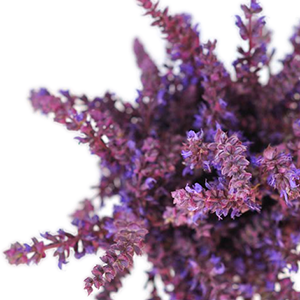
Purple Earth is an astrobiological hypothesis that life forms of early Earth were retinal-based rather than chlorophyll-based thus making Earth appear purple rather than green. According to Shil DasSarma, a microbial geneticist at the University of Maryland, chlorophyll appeared after retinal (another light-sensitive molecule) was already present on early Earth. Retinal, today found in the plum-colored membrane of a photosynthetic microbes called halobacteria, absorbs green light and reflects back red and violet light, the combination of which appears purple. Scientists believe that if future research validates the purple Earth hypothesis, it would have implications for scientists searching for life on distant worlds.
Eventually other microbes came along that used chlorophyll instead of retinal. And since all the high energy green wavelengths of sunlight were being absorbed by the retinal using microbes, in order to survive, chlorophyll made use of the available blue and red light that the retinal was reflecting. Some scientists believe that for a period of time in Earth’s history these two coexisted, but eventually the chlorophyll using microbes overcame. The retinal based microbes may have absorbed the highest energy green light waves, but the chlorophyll using microbes made better use of what energy they received and were victorious in the end.


 The Daily Omnivore
Leave a comment