August 17, 2012
Motivation is the psychological feature that arouses an organism to action toward a desired goal and elicits, controls, and sustains certain goal directed behaviors. For instance: an individual has not eaten, he or she feels hungry, and as a response he or she eats and diminishes feelings of hunger. There are many approaches to motivation: physiological, behavioral, cognitive, and social. It is the crucial element in setting and attaining goals—and research shows that subjects can influence their own levels of motivation and self-control.
A 2007 paper, ‘Where the Motivation Resides and Self-Deception Hides: How Motivated Cognition Accomplishes Self-Deception,’ examined how people remain blind to the motives underlying their flattering self-construals, attitudes, and social judgments. Motivated cognition accomplishes the goal of self-deception. Self-serving conclusions are produced and the influence of such distortions remains hidden from conscious awareness because of the ubiquitous presence and specialized nature of motivated cognition.
read more »
Posted in Education, Health, Money |
Leave a Comment »
August 16, 2012

Eugenics [yoo-jen-iks] is the study of hereditary improvement of the human race by controlled selective breeding. Eugenics rests on some basic ideas. The first is that what is true of animals is true of man. The characteristics of animals are passed on from one generation to the next in heredity, including mental characteristics. For example, the behavior and mental characteristics of different breeds of dog differ, and all modern breeds are greatly changed from wolves. The breeding and genetics of farm animals show that if the parents of the next generation are chosen, then that affects what offspring are born.
Negative eugenics aims to cut out traits that lead to suffering, by limiting people with the traits from reproducing. Positive eugenics aims to produce more healthy and intelligent humans, by persuading people with those traits to have more children. In the past, many ways were proposed for doing this, and even today eugenics means different things to different people. The idea of eugenics is controversial, because in the past it was sometimes used to justify discrimination and injustice against people who were thought to be genetically unhealthy or inferior.
read more »
Posted in Health, Politics, Sex |
Leave a Comment »
August 16, 2012
Tabula rasa [tab-yuh-luh rah-suh] (Latin: ‘blank slate’) is the theory that individuals are born without built-in mental content and that their knowledge comes from experience and perception.
The theory was discussed by Aristotle, but popularized by John Locke (the father of liberalism) in the 17th century: ‘Let us then suppose the mind to be, as we say, white paper void of all characters, without any ideas. How comes it to be furnished? … To this I answer, in one word, from EXPERIENCE.’ Locke thought all knowledge came from sense data (smells, sights, sounds, pain, etc.), and that the mind is empty at birth. Locke’s idea was immediately picked up by others.
read more »
Posted in Education, Philosophy, Science |
Leave a Comment »
August 15, 2012

In the field of psychology, nativism is the view that certain skills or abilities are ‘native’ or hard wired into the brain at birth. This is in contrast to empiricism, the ‘blank slate’ or tabula rasa view, which states that the brain has inborn capabilities for learning from the environment but does not contain content such as innate beliefs. Some nativists believe that specific beliefs or preferences are hard wired. For example, one might argue that some moral intuitions are innate or that color preferences are innate.
A less established argument is that nature supplies the human mind with specialized learning devices. This latter view differs from empiricism only to the extent that the algorithms that translate experience into information may be more complex and specialized in nativist theories than in empiricist theories. However, empiricists largely remain open to the nature of learning algorithms and are by no means restricted to the historical associationist mechanisms of behaviorism (which argued that the content of consciousness can be explained by the association and reassociation of irreducible sensory and perceptual elements).
read more »
Posted in Language, Philosophy, Science |
Leave a Comment »
August 15, 2012
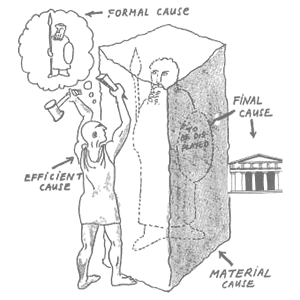
Causality is a way to describe how different events relate to one another. Suppose there are two events A and B. If B happens because A happened, then people say that A is the cause of B, or that B is the effect of A.
Aristotle looked at the problem of causality in his books ‘Posterior analytics’ and ‘Metaphysics’ he wrote: ‘All causes are beginnings; we have scientific knowledge when we know the cause; to know a thing’s nature is to know the reason why it is.’ This can be used to explain causality.
read more »
Posted in Philosophy |
Leave a Comment »
August 15, 2012

Kurdaitcha [ka-dai-tcha] (or kurdaitcha man) is a ritual ‘executioner’ in Australian Aboriginal culture. The ‘execution’ in this case is a complex ritual similar to voodoo hexes or pagan curses. The kurdaitcha ritual is a nocebo, a negative response to physically harmless stimuli.
Voodoo death, also known as psychosomatic death, is a term coined by Harvard physiologist Walter Cannon in 1942 to describe the phenomenon of sudden death as brought about by a strong emotional shock, such as fear. The word ‘kurdaitcha’ is also used by Europeans to refer to the shoes worn by the Kurdaitcha, woven of feathers and human hair and treated with blood.
read more »
Posted in Death, Health, Philosophy |
Leave a Comment »
August 15, 2012
Voodoo death, a term coined by Harvard physiologist Walter Cannon in 1942 also known as psychogenic or psychosomatic death, is the phenomenon of sudden death as brought about by a strong emotional shock, such as fear. The anomaly is recognized as psychosomatic in that death is caused by an emotional response—often fear—to some suggested outside force.
Voodoo death is particularly noted in native societies, and concentration or prisoner of war camps, but the condition is not specific to any culture or mentality.
read more »
Posted in Death, Health, Philosophy |
Leave a Comment »
August 14, 2012
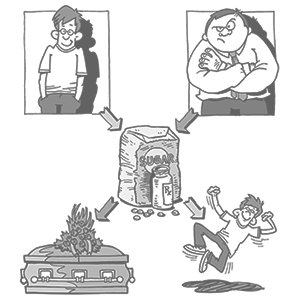
In medicine, a nocebo [no-see-bo] reaction or response refers to harmful, unpleasant, or undesirable effects a subject manifests after receiving an inert dummy drug or placebo. Nocebo responses are not chemically generated and are due only to the subject’s pessimistic belief and expectation that the inert drug will produce negative consequences. In these cases, there is no ‘real’ drug involved, but the actual negative consequences of the administration of the inert drug, which may be physiological, behavioral, emotional, and/or cognitive, are nonetheless real.
An example of nocebo effect would be someone who dies of fright after being bitten by a non-venomous snake. The term ‘nocebo’ (Latin: ‘I will harm’) was chosen by Walter Kennedy, in 1961, to denote the counterpart of one of the more recent applications of the term placebo (Latin: ‘I will please’); namely, that of a placebo being a drug that produced a beneficial, healthy, pleasant, or desirable consequence in a subject, as a direct result of that subject’s beliefs and expectations. The term ‘nocebo’ can also refer to positive outcomes based upon the patient’s expectation of that outcome.
read more »
Posted in Drugs, Health, Language |
1 Comment »
August 13, 2012

Cassette culture refers to the practices surrounding amateur production and distribution of recorded music that emerged in the late 1970s via home-made audio cassettes. It is characterized by the adoption of home-recording by independent artists, and involvement in ad-hoc self-distribution and promotion networks – primarily conducted through mail (though there were a few retail outlets, such as Rough Trade and Falling A in the UK) and fanzines.
The culture was in part an offshoot of the mail art movement of the 1970s and 1980s, and participants engaged in tape trading in addition to traditional sales. The culture is related to the DIY ethic of punk, and encouraged musical eclecticism and diversity.
read more »
Posted in Art, Money, Technology |
Leave a Comment »
August 13, 2012

Kinderwhore was an image used by a handful of mostly female punk rock bands in the US during the early to mid 1990s. The kinderwhore look consisted of torn, ripped tight or low-cut babydoll dresses or nighties, heavy makeup, and leather boots or Mary–Jane shoes of various colors.
The exact origin of the kinderwhore image is up for debate, though it is widely accepted that Kat Bjelland of Babes in Toyland was the first to define it and Courtney Love of Hole was the first to popularize it. Christina Amphlett of Divinyls can clearly be seen sporting the image on the cover of her band’s 1983 album, ‘Desperate.’ Love declared in an interview in the Los Angeles zine ‘Ben Is Dead’ that she took the style from Amphlett.
Posted in Art, Language, Sex |
1 Comment »
August 13, 2012
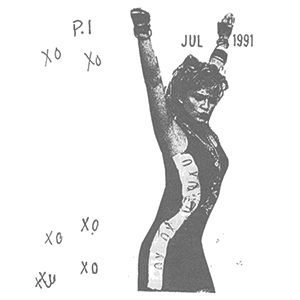
Riot grrrl is an underground feminist punk rock movement that originally started in Washington, D.C. and the Pacific Northwest in the early to mid-1990s. It is often associated with third-wave feminism which is sometimes seen as its starting point. Riot grrrl bands often address issues such as rape, domestic abuse, sexuality, racism, patriarchy, and female empowerment.
Bands associated with the movement include Bikini Kill, Jack Off Jill (and later Scarling), Bratmobile, Fifth Column, Sleater-Kinney, L7, and also queercore like Team Dresch. In addition to a music scene and genre, riot grrrl is a subculture: zines, the DIY ethic, art, political action, and activism are part of the movement.
read more »
Posted in Art, Politics, Sex |
Leave a Comment »
August 13, 2012
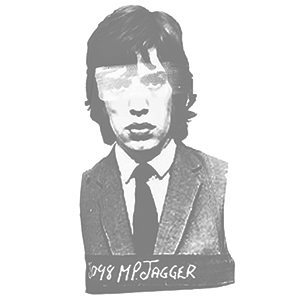
‘Who breaks a butterfly upon a wheel?‘ is a quotation – sometimes misquoted with ‘on’ in place of ‘upon’ – from Alexander Pope’s ‘Epistle to Dr Arbuthnot’ of 1735. It can be taken as referring to putting massive effort into achieving something minor or unimportant, and alludes to ‘breaking on the wheel,’ a form of torture in which victims had their long bones broken by an iron bar while tied to a Catherine wheel.
William Rees-Mogg, as editor of ‘The Times’ newspaper, used the ‘on a wheel’ version of the quotation as the heading (set in capital letters) for an editorial in 1967 about the ‘Redlands’ court case, which had resulted in prison sentences for Rolling Stones members Keith Richards and Mick Jagger. The philosopher Mary Midgley used a variation on the phrase in an article in the journal ‘Philosophy’ written to counter a review praising ‘The Selfish Gene’ by Richard Dawkins, where she cuttingly said that she had ‘not attended to Dawkins, thinking it unnecessary to break a butterfly upon a wheel.’
Posted in Language, Politics, Sex |
1 Comment »


 The Daily Omnivore