April 2, 2013

Manshiyat Naser, also known as Garbage City, is a slum settlement at the base of Mokattam Hill on the outskirts of Cairo.
Its economy revolves around the collection and recycling of the city’s garbage. Although the area has streets, shops, and apartments as other areas of the city, it lacks infrastructure and often has no running water, sewage, or electricity.
read more »
Posted in Health, Money, World |
Leave a Comment »
April 2, 2013
Garbology [gahr-bol-uh-jee] is the study of modern refuse and trash. As an academic discipline it was pioneered at the University of Arizona and long directed by archaeologist William Rathje.
The project started in 1973, originating from an idea of two students for a class project. It is a major source of information on the nature and changing patterns in modern refuse, and thereby, human society. Industries wishing to demonstrate that discards originating with their products are (or are not) important in the trash stream are avid followers of this research, as are municipalities wishing to learn whether some parts of the trash they collect has any salable value.
read more »
Posted in Science |
Leave a Comment »
April 2, 2013

Food Not Bombs is a loose-knit group of independent collectives, serving free vegan and vegetarian food to others. Food Not Bombs’ ideology is that myriad corporate and government priorities are skewed to allow hunger to persist in the midst of abundance.
To demonstrate this (and to reduce costs), a large amount of the food served by the group is surplus food from grocery stores, bakeries and markets that would otherwise go to waste. This group exhibits a form of franchise activism. The organization was founded in 1980 in Cambridge, Massachusetts by anti-nuclear activists. One of the co founders was C.T. Lawrence Butler.
Posted in Food, Politics, War |
Leave a Comment »
April 2, 2013

Dumpster diving (called ‘skipping’ in the UK) is the practice of sifting through commercial or residential waste to find items that have been discarded by their owners, but that may prove useful to the dumpster diver. Dumpster diving is also viewed as an effective urban foraging technique.
Dumpster divers will forage dumpsters for items such as clothing, furniture, food, and similar items in good working condition. The dumpster diving term originates from the best-known manufacturer of commercial trash bins, Dempster, who use the trade name ‘Dumpster’ for their bins, and the fanciful image of someone leaping head first into a dumpster as if it were a swimming pool. In practice, the size and design of most dumpsters makes it possible to retrieve many items from the outside of dumpsters without having to ‘dive’ into them.
read more »
Posted in Food, Language, Money |
Leave a Comment »
April 2, 2013
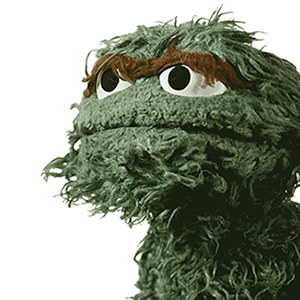
Oscar the Grouch is a Muppet character on the television program ‘Sesame Street.’ He has a green body (during the first season he was orange), has no visible nose, and lives in a trash can. His favorite thing in life is trash, as evidenced by the song ‘I Love Trash.’ A running theme is his compulsive hoarding of seemingly useless items.
‘The Grouch’ aptly describes his misanthropic interaction with the other characters, but also refers to his species. The character is performed by Caroll Spinney, and has been performed by him since the show’s first episode.
read more »
Posted in Education, Humor |
Leave a Comment »
April 1, 2013
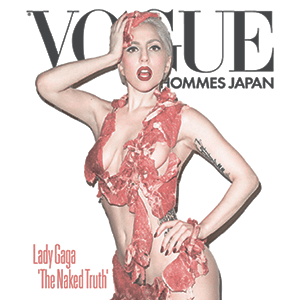
American pop singer Lady Gaga wore a dress made of raw beef, which was commonly referred to by the media as the meat dress, to the 2010 MTV Video Music Awards. Designed by Argentine designer Franc Fernandez and styled by Nicola Formichetti, the dress was condemned by animal rights groups, and named by ‘Time’ as the top fashion statement of 2010. The press speculated on the originality of the meat dress idea, with comparisons made to similar images found in contemporary art and popular culture. Architects Diller Scofidio + Renfro, for example, had designed a meat dress in 2006.
As with her other dresses, it was archived, but went on display in 2011 at the Rock and Roll Hall of Fame after being preserved by taxidermists as a type of jerky. Gaga explained following the awards ceremony that the dress was a statement about one’s need to fight for what one believes in, and highlighted her distaste for the US military’s don’t-ask-don’t-tell policy.
read more »
Posted in Food, Politics |
Leave a Comment »
April 1, 2013

A publicity stunt is a planned event designed to attract the public’s attention to the event’s organizers or their cause. Publicity stunts can be professionally organized or set up by amateurs. Such events are frequently utilized by advertisers, celebrities, athletes, and politicians. Organizations sometimes seek publicity by staging newsworthy events that attract media coverage. They can be in the form of groundbreakings, world record attempts, dedications, press conferences or organized protests. By staging and managing the event, the organization attempts to gain some control over what is reported in the media. Successful publicity stunts have news value, offer photo, video and sound bite opportunities, and are arranged primarily for media coverage.
It is sometimes hard for organizations to design successful publicity stunts that highlight the message instead of burying it. For example, it makes sense for a pizza company to bake the world’s largest pizza but it would not make sense for the YMCA to sponsor that same event. The importance of publicity stunts is generating news interest and awareness for the concept, product or service being marketed. Stunts are effective communication tools when used well and useless time wasters when they are not.
Posted in Money |
Leave a Comment »
April 1, 2013
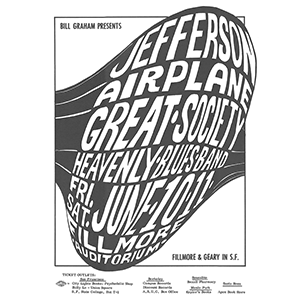
Wes Wilson (b. 1937) is an American artist and one of the leading designers of psychedelic posters. Most well known for designing posters for Bill Graham of the The Fillmore in San Francisco, he invented a style that is now synonymous with the peace movement, psychedelic era and the 1960s.
In particular, he is known for inventing and popularizing a ‘psychedelic’ font around 1966 that made the letters look like they were moving or melting.
Posted in Art |
Leave a Comment »
April 1, 2013

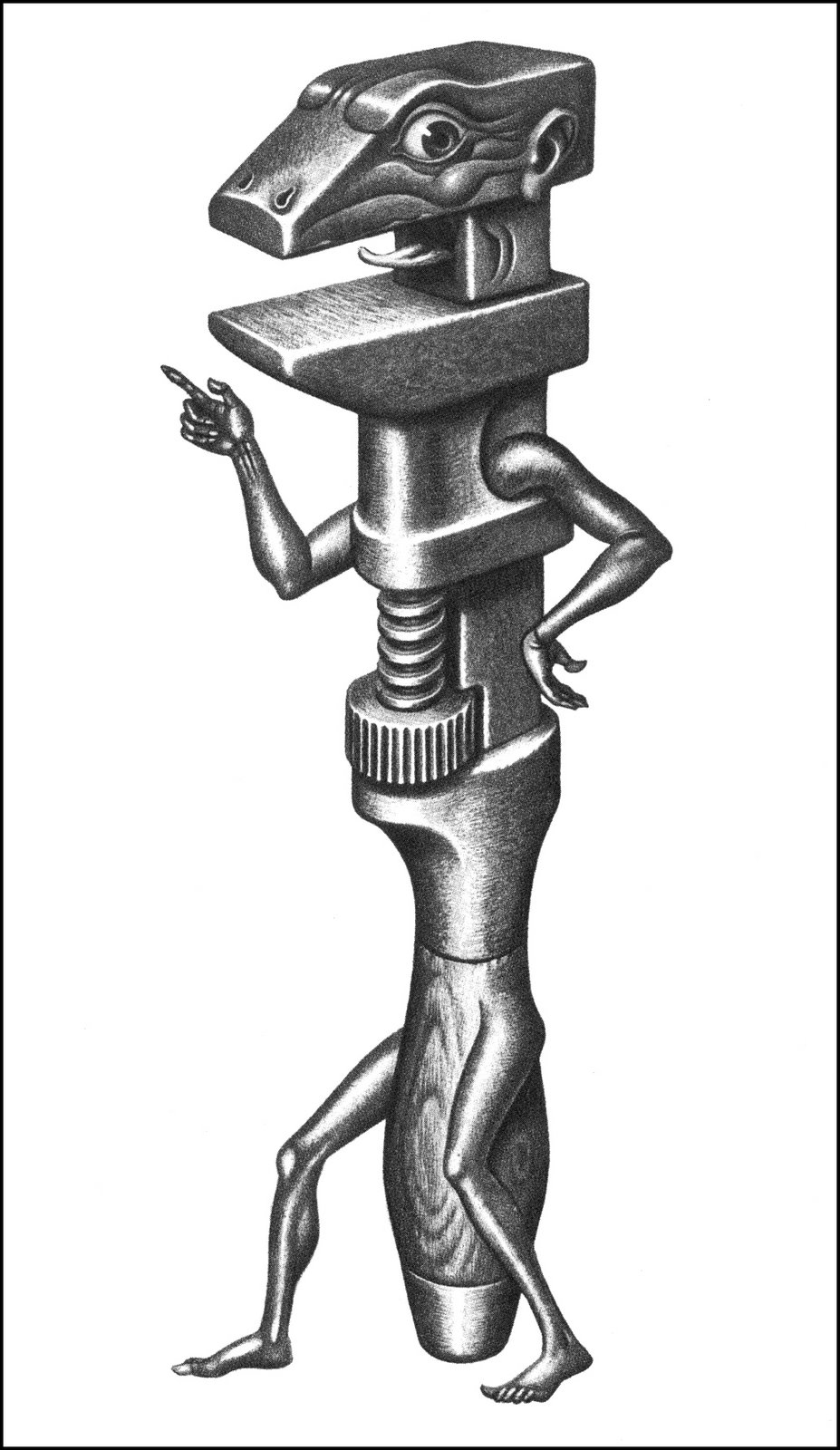
Boris Artzybasheff [ahrt-si-bah-shif] (1899 – 1965) was an American illustrator known for his strongly worked and often surreal designs. Artzybasheff was born in Ukraine, son of the author Mikhail Artsybashev. He is said to have fought as a White Russian (royalist).
During 1919 he arrived in New York City, where he worked in an engraving shop. His earliest work appeared in 1922 as illustrations for ‘Verotchka’s Tales’ and ‘The Undertaker’s Garland.’ A number of other book illustrations followed during the 1920s. Over the course of his career, he illustrated some 50 books, several of which he wrote, most notably ‘As I See.’
read more »
Posted in Art, Money |
Leave a Comment »



 The Daily Omnivore