March 5, 2014
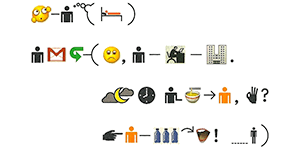

Pictograms [pik-tuh-gram] are small images that convey their meaning through a pictorial resemblance to a physical object. Early written symbols were based on pictograms (pictures which resemble what they signify) and ideograms (symbols which represent ideas). Ancient Sumerian, Egyptian, and Chinese civilizations developed them into logographic (word-based) writing systems including cuneiform and hieroglyphics, which also uses drawings as phonetic letters or determinative rhymes.
Pictograms are still in use as the main medium of written communication in some non-literate cultures in Africa, the Americas, and Oceania. In certain modern use, pictograms participate to a formal language (e.g. hazards pictograms such as the skull and crossbones, a common warning for poison). Pictograms have also been popularized in use on the web and in software, better known as ‘icons’ displayed on a computer screen in order to help user navigate a computer system or mobile device.
read more »
Posted in Language |
Leave a Comment »
March 4, 2014

Psychoactive toads are amphibians from which psychoactive substances from the family of bufotoxins can be derived. The skin and poison of Bufo alvarius (Colorado River toad or Sonoran Desert toad) contain 5-MeO-DMT and bufotenin, which both belong to the family of hallucinogenic tryptamines. The skin or poison of the toads may produce psychoactive effects when ingested. To obtain the psychoactive substances the toxin of psychoactive toads is commonly milked from their poison glands. The milking procedure does not harm the toad — it consists of stroking the animal under its chin to initiate the defensive poison response.
Once the liquid toxin has been collected and dried, it can be used for its psychedelic effects. The toad takes about a month to refill its poison glands. Rumors dating from the 1970s claimed that groups of hippies, some including teenagers, were licking the psychoactive toads to get high. Albert Most, founder of the Church of the Toad of Light and a proponent of recreational use of Bufo alvarius poison, published a booklet titled ‘Bufo alvarius: The Psychedelic Toad of the Sonoran Desert’ in 1983 which explained how to extract and smoke the secretions.
Posted in Drugs, Science |
1 Comment »
March 3, 2014

Human nature refers to the distinguishing characteristics, including ways of thinking, feeling and acting, that humans tend to have naturally, independently of the influence of culture. The questions of what these characteristics are, what causes them, and how fixed human nature is, are amongst the oldest and most important questions in western philosophy. They have particularly important implications in ethics, politics, and theology. This is partly because human nature can be regarded as both a source of norms of conduct or ways of life, as well as presenting obstacles or constraints on living a good life.
The complex implications of such questions are also dealt with in art and literature, while the multiple branches of the aptly named Humanities (e.g. history, law, religion) together form an important domain of inquiry into human nature, and the question of what it is to be human. The branches of contemporary science associated with the study of human nature include anthropology, sociology, sociobiology, and psychology (particularly in evolutionary or developmental subfields). The nature versus nurture debate is a broadly inclusive and well-known instance of a discussion about human nature in the natural sciences.
read more »
Posted in Philosophy |
Leave a Comment »
March 1, 2014
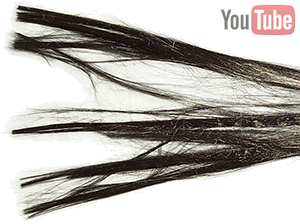

Carbon fiber is a material consisting of long thing fibers about 5–10 μm in diameter (about half the width of a human hair) and composed mostly of carbon atoms. When used in a composite material it has the highest compressive strength of any reinforcing material, and it has a high strength to weight ratio and low coefficient of thermal expansion. The density of carbon fiber is also much lower than the density of steel.
Carbon fiber reinforced polymer (carbon fiber combined with a plastic resin and wound or molded) is very strong, but extremely rigid and somewhat brittle. However, carbon fibers are also composed with other materials, such as with graphite to form carbon-carbon composites, which have a very high heat tolerance.
read more »
Posted in Science, Technology |
Leave a Comment »
March 1, 2014

Comics studies is an academic field that focuses on comics and graphic novels. Formerly dismissed as less relevant pop culture texts, scholars in fields such as Semiotics and Composition Studies are now re-considering comics and graphic novels as complex texts deserving of serious scholarly study.
‘How to Read Nancy’ is a 1988 essay by underground cartoonists Mark Newgarden and Paul Karasik. The piece examines the comic strip ‘Nancy,’ focusing on creator Ernie Bushmiller’s use of the comics language in to deliver a gag. Finding correspondences to the minimalist architecture of Mies Van Der Rohe, the essay calls ‘Nancy’ ‘a complex amalgam of formal rules laid out by [its] designer.’
read more »
Posted in Art, Education, Language |
Leave a Comment »


 The Daily Omnivore