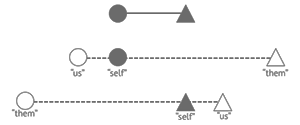

In social psychology, naïve realism is the human tendency to believe that we see the world around us objectively, and that people who disagree with us must be uninformed, irrational, or biased. It provides a theoretical basis for several other cognitive biases, which are systematic errors in thinking and decision-making.
Naïve realism causes people to exaggerate differences between themselves and others. Psychologists believe that it can spark and exacerbate conflict, as well as create barriers to negotiation through several different mechanisms.
read more »


 The Daily Omnivore