March 28, 2011

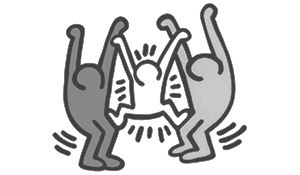
Keith Haring [hah-ring] (1958 – 1990) was an artist and social activist whose work responded to the New York City street culture of the 1980s. Born in Reading, Pennsylvania, at age 19 he moved to NYC, where he was inspired by graffiti art, and studied at the School of Visual Arts. Haring achieved his first public attention with chalk drawings in the subways. The exhibitions were filmed by the photographer Tseng Kwong Chi. Around this time, ‘The Radiant baby’ became his symbol. His bold lines, vivid colors, and active figures carry strong messages of life and unity. Starting in 1980, he organized exhibitions in Club 57, a performance venue.
He participated in the Times Square Exhibition and drew, for the first time, animals and human faces. In 1981 he sketched his first chalk drawings on black paper and painted plastic, metal and found objects. Haring died of AIDS-related complications. By expressing concepts of birth, death, love, sex and war, his imagery has become a widely recognized visual language of the 20th century. His work was featured in several of the Red Hot Organization’s efforts to raise money for AIDS and AIDS awareness. Specifically, its first two albums, ‘Red Hot + Blue’ and ‘Red Hot + Dance’ — the latter of which used Haring’s work on its cover.
Posted in Art, Politics |
Leave a Comment »
March 28, 2011
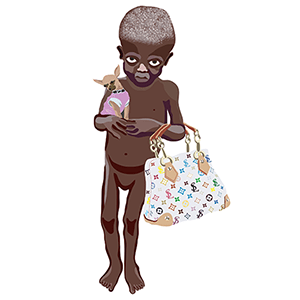
Nadia Plesner is a Danish/Dutch painter who works and lives in the Netherlands. Plesner is working on issues that lie between the editorial and advertising and often with political undertones. She trained at the Graphic Arts Institute, Copenhagen and at the Gerrit Rietveld Academie, Amsterdam. In 2010 Plesner was sued by Louis Vuitton for showing her controversial painting ‘Darfurnica.’ The painting shows a little hungry boy holding a handbag resembling one made by Louis Vuitton. The little boy is standing in the conflict-ridden region of Darfur in Sudan. The fashion giant thought that the legal rules about logo products were broken and the case was taken to court.
A Dutch court imposed daily fines for approximately 6000 US dollars. The trial attracted much international attention and several artists and celebrities supported Plesner as they believed that the case also referred to artistic expression and the right to make the world aware of international issues in an artistic way. Plesner and Louis Vuitton were also involved in a prior dispute about an artistic campaign called Simple Living in 2008. In 2011 the Dutch court reversed its decision and acquitted Nadia Plesner. ‘Darfurnica’ was sold in 2011 for approximately 45.000 US dollars.
Posted in Art, Money, Politics |
Leave a Comment »
March 28, 2011
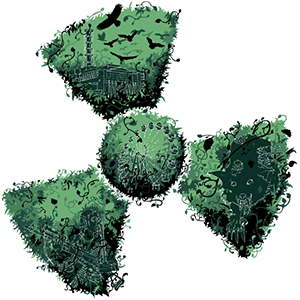
Roadside Picnic is a science fiction novella written by Arkady and Boris Strugatsky in 1971. The film ‘Stalker’ directed by Andrei Tarkovsky is loosely based on the novel, with a screenplay written by the Strugatskys. The novella was refused publication in the Soviet Union for eight years due to government censorship, numerous delays and sabotage.
The heavily censored different versions published between 1980 and 2000 have little in common with the original version written by the authors. Soviet censors rewrote major plot points, changed names of characters and dialog to better reflect the Marxist ideology (removed language deemed as ‘rude’; heavier emphasis was placed on the exploitation of the Zones for ‘materialistic’ purposes by an elite bourgeois cabal as a means to oppress the proletariat masses, etc.).
read more »
Posted in Art, World |
Leave a Comment »
March 28, 2011
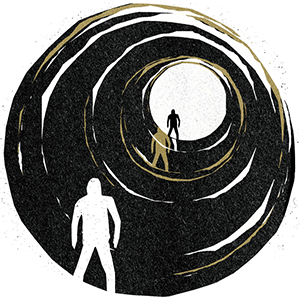
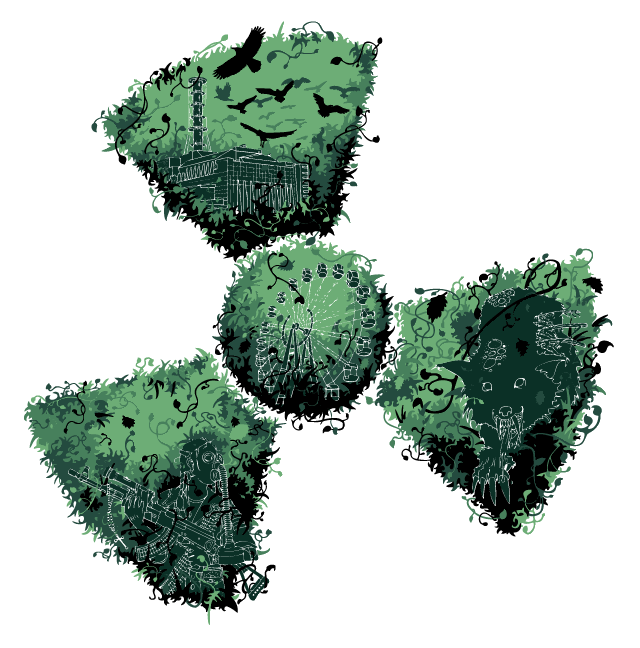
Stalker is a 1979 science fiction film directed by Andrei Tarkovsky, with a screenplay written by Boris and Arkady Strugatsky, loosely based on their novel ‘Roadside Picnic.’ It depicts an expedition led by the Stalker (guide) to bring his two clients to a site known as the Zone, which has the supposed potential to fulfil a person’s innermost desires. The title of the film, which is the same in Russian and English, is derived from the English word to stalk in the long-standing meaning of approaching furtively, much like a hunter.
The sparseness of exposition leads to ambiguity as to the nature of The Zone. Seven years after the making of the film, the Chernobyl accident led to the depopulation of an area rather like that in the film. Some of those employed to take care of the abandoned nuclear power plant refer to themselves as ‘stalkers’ and to the area around the damaged reactor as ‘The Zone.’
read more »
Posted in Art, World |
Leave a Comment »
March 28, 2011

Andrei Tarkovsky (1932 – 1986) was a Russian filmmaker, widely regarded as one of the finest of the 20th century. Tarkovsky’s films include ‘Andrei Rublev,’ ‘Solaris,’ ‘The Mirror,’ and ‘Stalker.’ He directed the first five of his seven feature films in the Soviet Union; his last two films were produced in Italy and Sweden, respectively. They are characterized by spirituality and metaphysical themes, long takes, lack of conventional dramatic structure and plot, and distinctively authored use of cinematography.
read more »
Posted in Art, Philosophy, World |
Leave a Comment »
March 26, 2011
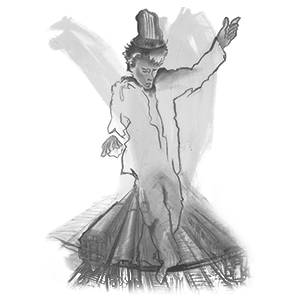
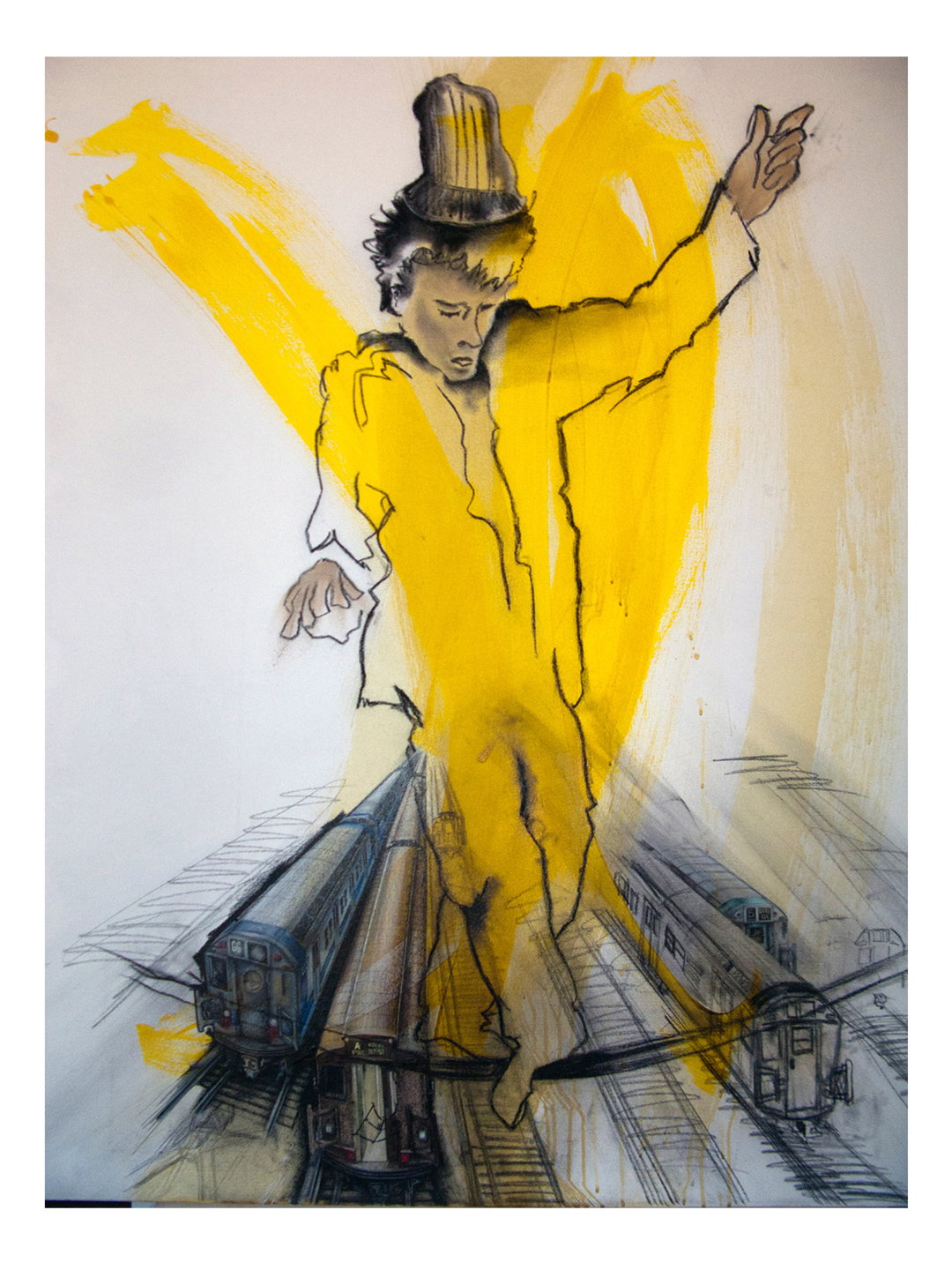
Lee Quiñones [kwi-nohn] (b. 1960) is one of several artists rising from the NYC subway graffiti movement. Born in Puerto Rico and raised in Lower East Side Manhattan, Lee was constantly drawing since the age of five and started with graffiti in 1974. By 1976, Lee was a legend, working in the shadow, leaving huge pieces of art across the subway system. His style is rooted in popular culture, often with political messages. Along with Keith Haring and Jean-Michel Basquiat, Lee Quiñones was one of the innovators of New York’s street-art movement and is considered the single most influential artist to emerge from the graffiti era.
As a subway graffiti artist, Lee almost exclusively painted whole cars (all together about 125), and he was a major contributor to the first-ever whole-train. In November 1976, ten subway cars were painted with a range of colorful murals and set a new benchmark for the scale of graffiti works. Quiñones often added poetic messages in his pieces such as: ‘Graffiti is art and if art is a crime, please God, forgive me.’ He was one of the first street artists to transition fine art. The 1979 exhibition of his canvases at Claudio Bruni’s Galleria Medusa in Rome introduced street art to the rest of the world.
Posted in Art, Money, Politics |
Leave a Comment »
March 26, 2011
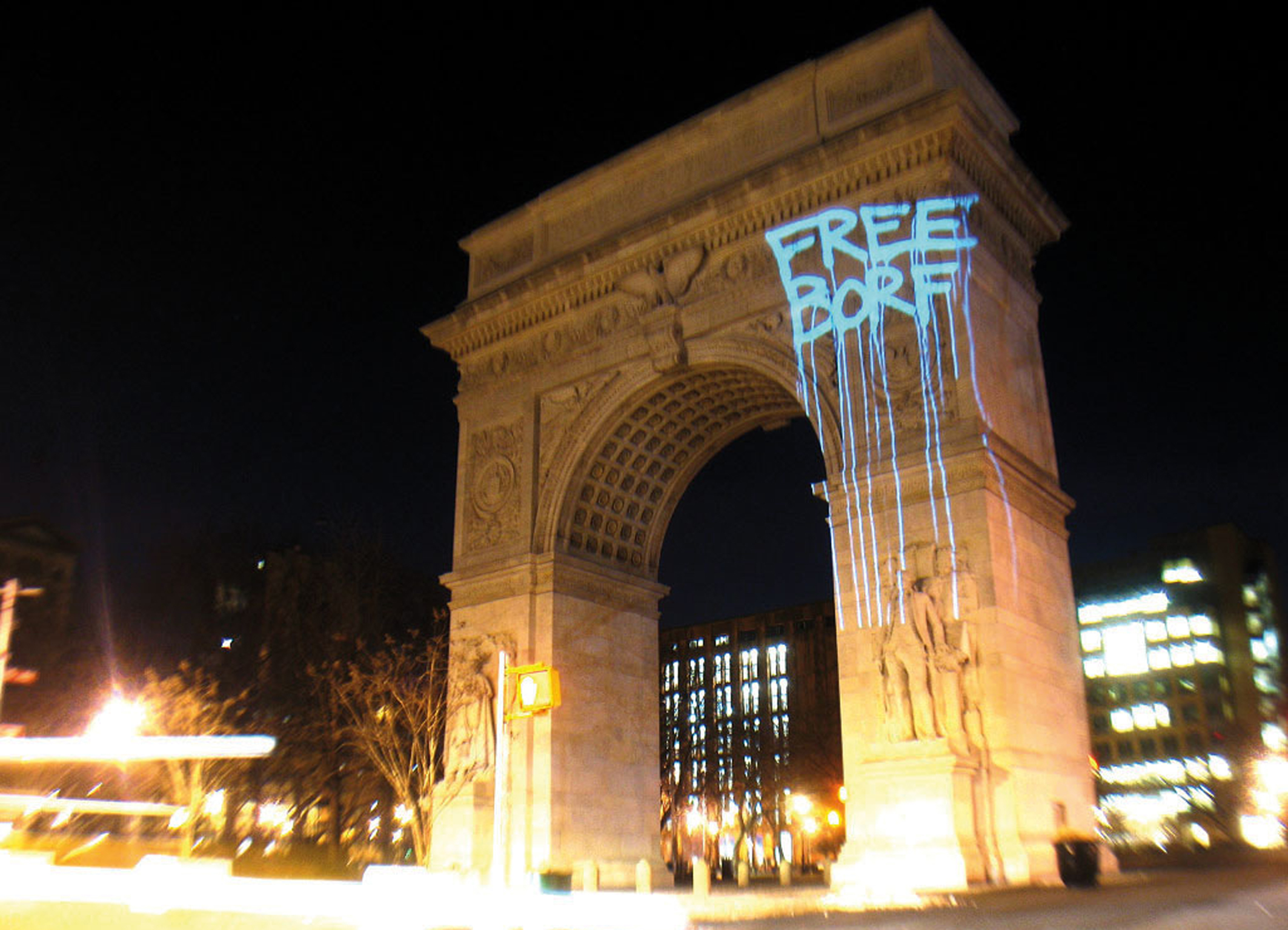
Graffiti Research Lab is a NYC art group dedicated to outfitting graffiti writers, artists and protesters with open source technologies for urban communication. The members of the group experiment in a lab and in the field to develop and test a range of experimental technologies.
The GRL is particularly well-known for inventing ‘LED Throwies.’ Each extension of Graffiti Research Lab is called a cell. Localized cells are found in Vienna, Amsterdam, and Mexico, copying and extending the work of the NY based organization. The cells cooperate and communicate, but are not one formal organization.
Posted in Art, Politics, Technology |
Leave a Comment »
March 26, 2011
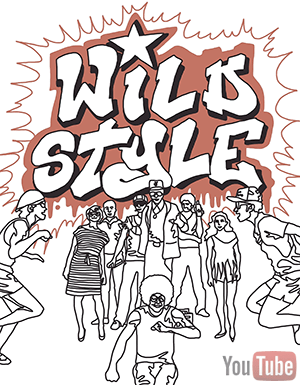
‘Wild Style‘ was the first hip hop motion picture. Released theatrically in 1983, featuring Fab Five Freddy, the Rock Steady Crew, The Cold Crush Brothers, and Grandmaster Flash. The protagonist ‘Zoro’ is played by the legendary NY subway graffiti artist Lee Quinones. An early version of the ‘Wild Style’ logo appeared in the Fall of 1981 when director Charlie Ahearn hired graffiti legend Dondi to paint the ‘window down’ subway car piece that appears in the film. The Dondi piece was the inspiration for the animated title sequence designed by the artist Zephyr in 1982.
The ‘Wild Style’ logo was designed by Zephyr and painted as a huge ‘burner’ mural by Zephyr, Revolt, and Sharp in the Summer of 1983. In addition to covering street artists, the film depicts several prominent figures from the early hip hop culture, engaging in activities such as MCing, turntablism, and breaking. The film has been sampled by many prominent hip hop artists (e.g. ‘Illmatic’ by Nas, ‘Midnight Marauders’ by A Tribe Called Quest, and ‘Check Your Head’ by Beastie Boys).
Posted in Art, Money, Politics |
Leave a Comment »
March 26, 2011
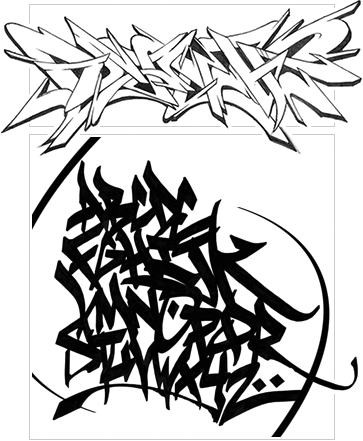
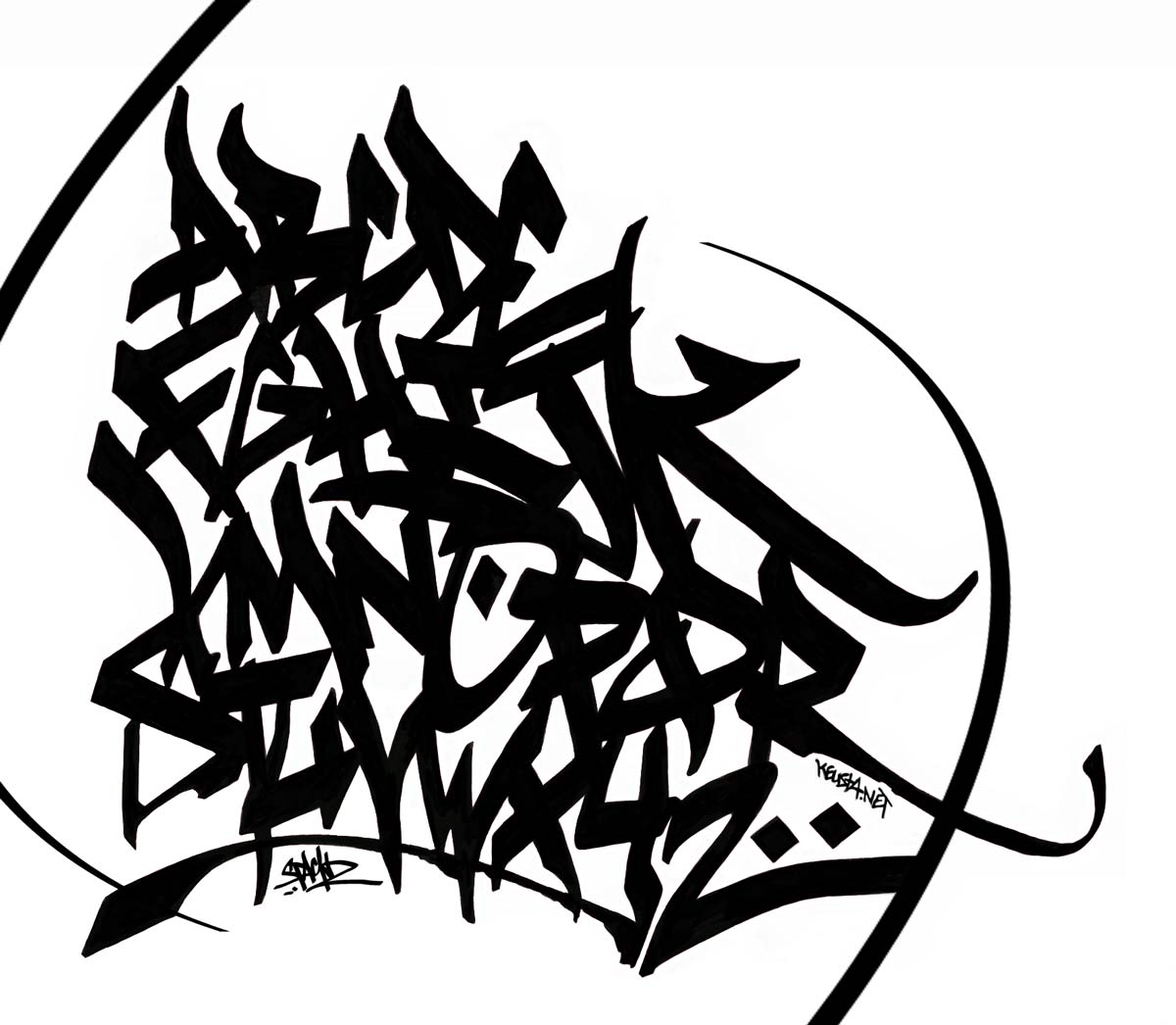
Wildstyle is a difficult and intricate form of graffiti. Due to its complexity, it is often very hard to read by people who are not familiar with it. It incorporates interwoven and overlapping letters and shapes, and may include arrows, spikes, and other decorative elements. It has also been common practice to incorporate 3D elements into the pieces, and even transform the whole letter structure into three dimensions, to add to the depth of visual perception of the work.
The numerous layers and shapes make this style extremely difficult to produce homogeneously, which is why developing an original style in this field is seen as one of the greatest artistic challenges to a graffiti writer. Wildstyle pieces are also known as ‘burners,’ meaning ‘hot’ as fire.
Posted in Art, Language |
Leave a Comment »
March 26, 2011


Graffiti refers to images or lettering scratched, scrawled, painted, or marked in any manner on property. Examples date back to Ancient Greece and the Roman Empire. The word ‘graffiti’ and the singular, ‘graffito,’ are from the Italian word ‘graffiato’ (‘scratched’).
The first known example of modern graffiti survives in the ancient Greek city of Ephesus (in modern-day Turkey). It is an advertisement for prostitution. Located near a mosaic and stone walkway, the graffiti shows a handprint that vaguely resembles a heart, along with a footprint and a number. This is believed to indicate that a brothel was nearby, with the handprint symbolizing payment and the number indicating the price.
read more »
Posted in Art, Language, Politics |
Leave a Comment »
March 25, 2011

Grisaille [gri-zahy] is a term for painting executed entirely in monochrome or near-monochrome, usually in shades of grey. It is particularly used in large decorative schemes in imitation of sculpture. Paintings executed in brown are sometimes referred to by the more specific term brunaille, and paintings executed in green are sometimes called verdaille.
A grisaille may be executed for its own sake, as underpainting for an oil painting (in preparation for glazing layers of color over it), or as a model for an engraver to work from. Full coloring of a subject makes many more demands of an artist, and working in grisaille was often chosen as being quicker and cheaper, although the effect was sometimes deliberately chosen for aesthetic reasons.
Posted in Art, Language |
Leave a Comment »
March 25, 2011

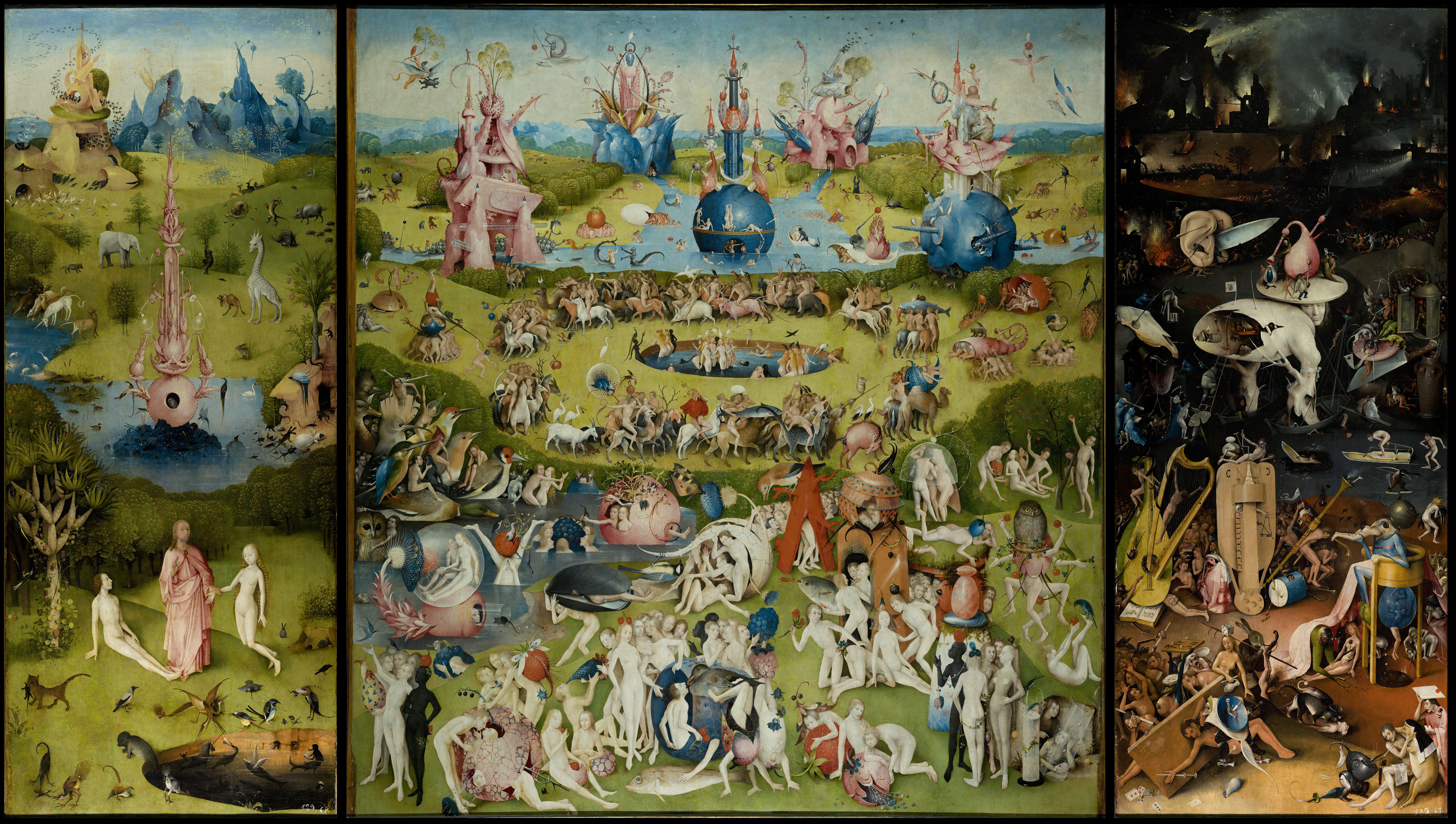
Hieronymus Bosch (c. 1450 – 1516) was an Early Netherlandish painter. His work is known for its use of fantastic imagery to illustrate moral and religious concepts and narratives. Little is known of his life or training. He left behind no letters or diaries, and nothing is known of his personality or his thoughts on the meaning of his art. Bosch produced several triptychs, panel paintings which are divided into three sections, which are hinged together and folded.
Among his most famous is ‘The Garden of Earthly Delights,’ which depicts paradise with Adam and Eve and many wondrous animals on the left panel, the earthly delights with numerous nude figures and tremendous fruit and birds on the middle panel, and hell with depictions of fantastic punishments of the various types of sinners on the right panel. When the exterior panels are closed the viewer can see, painted in grisaille (shades of grey), God creating the Earth.
Posted in Art, Philosophy |
Leave a Comment »





 The Daily Omnivore