May 4, 2016

‘The Demolished Man,’ by Alfred Bester, is an American science fiction novel and inverted detective story, that was the first Hugo Award winner in 1953. The story is a police procedural set in a future where telepathy is common, although much of its effectiveness is derived from one individual having greater telepathic skill than another. In the 24th century, telepaths—’Espers’ (short for Extrasensory perception), colloquially known as ‘peepers’—are completely integrated into all levels of a class-based society.
Class 3 Espers, the most common, can detect only conscious thoughts at the time they are formed and are often employed as secretaries or administrators; Class 2 Espers can dig more deeply, to the pre-conscious level, detecting subliminal patterns, epiphanies and tenuous associations, and they are employed in the professional middle class—lawyers, managers, psychologists, etc. Class 1 Espers can detect all of the foregoing plus sub-conscious primitive urges, and they occupy only the highest levels of power in fields such as the police, government and medicine (such as psychiatry).
Posted in Art, Philosophy, Technology |
Leave a Comment »
May 3, 2016
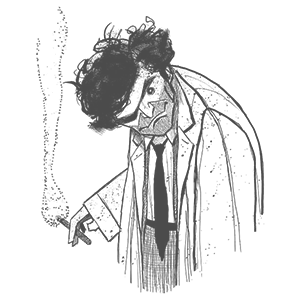
An inverted detective story, also known as a ‘howcatchem,’ is a murder mystery fiction structure in which the commission of the crime is shown or described at the beginning, usually including the identity of the perpetrator.
The story then describes the detective’s attempt to solve the mystery. There may also be subsidiary puzzles, such as why the crime was committed, but those are cleared up along the way. This format is the opposite of the more typical ‘whodunit,’ where all of the details of the crime and the perpetrator are not revealed until the story’s climax.
read more »
Posted in Art |
1 Comment »
April 25, 2016

Prince Rogers Nelson (1958 – 2016), known as Prince, was an American singer, songwriter, multi-instrumentalist, record producer, and actor. He was a musical innovator and known for his eclectic work, flamboyant stage presence, extravagant dress and makeup, and wide vocal range. His music integrates a wide variety of styles, including funk, rock, R&B, soul, psychedelia, and pop.
Prince was born in Minneapolis and developed an interest in music as a young child. He secured a recording contract with Warner Bros at the age of 18, and released his album ‘For You’ in 1978. His 1979 album ‘Prince’ went platinum, and his next three records—’Dirty Mind’ (1980), ‘Controversy’ (1981), and ‘1999’ (1982)—continued his success, showcasing Prince’s trademark of prominently sexual lyrics and blending of funk, dance, and rock music. In 1984, he began referring to his backup band as ‘The Revolution’ and released ‘Purple Rain,’ which served as the soundtrack to his film debut of the same name and was met with widespread acclaim.
read more »
Posted in Art |
Leave a Comment »
March 26, 2016
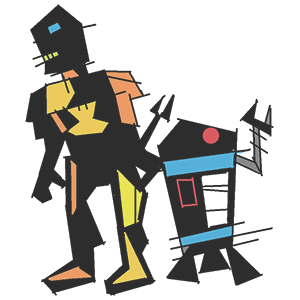
A shared universe is a set of creative works where more than one writer (or other artist) independently contributes a work that can stand alone but fits into the joint development of the storyline, characters, or world of the overall project. It is common in genres like science fiction. It differs from ‘collaborative writing’ where multiple artists are working together on the same work, and from ‘crossovers’ where the works and characters are independent except for a single meeting.
The term shared universe is also used within comics to reflect the overall milieu created by the comic book publisher in which characters, events, and premises from one product line appear in other product lines in a media franchise. The term has also been used in a wider, non-literary sense to convey interdisciplinary or social commonality, often in the context of a ‘shared universe of discourse.’
read more »
Posted in Art, Money |
Leave a Comment »
March 25, 2016

The Wolfpack is a 2015 American documentary film about a family who homeschooled and raised their seven children in the confinement of their apartment in the Lower East Side of New York City. The film, directed by Crystal Moselle, premiered at the 2015 Sundance Film Festival, where it won the US Documentary Grand Jury Prize.
Locked away for fourteen years, the Angulo family’s seven children—six brothers named Mukunda, Narayana, Govinda, Bhagavan, Krisna (Glenn), and Jagadesh (Eddie), and their sister Visnu—learned about the world through watching films. They also re-enact scenes from their favorite movies. Their father, Oscar, had the only door key and prohibited the kids and their mother from leaving the apartment except for a few strictly-monitored trips on the ‘nefarious’ streets.
read more »
Posted in Art |
Leave a Comment »
March 15, 2016
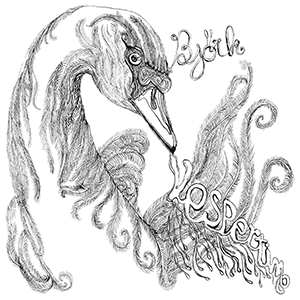
The swan dress is an iconic dress resembling a white swan worn by the Icelandic artist Björk in 2001 at the 73rd Academy Awards. Created by Macedonian fashion designer Marjan Pejoski, the dress is modeled after a swan and at the ceremony Björk mimicked laying an egg on the red carpet. She later said: “I was very aware when I went to the Academy Awards that it would probably be my first and last time. So I thought my input should really be about fertility, and I thought I’d bring some eggs.”
It was described by film critic Emanuel Levy as ‘A giant swan dress, a full-body stocking that was covered with a giant swan whose neck wrapped around her with its head and beak resting on her breasts.’ She had two copies of the dress produced, given that it could not be taken to the dry cleaners. She later wore that dress on the cover of her 2001 record album ‘Vespertine’ and variations of it many times on the ‘Vespertine World Tour.’
read more »
Posted in Art, Humor |
1 Comment »
March 2, 2016

A sneakerhead is a person who collects, trades or admires sneakers as a hobby. The birth of sneakerhead culture in the United States came in the 1980s and can be attributed to two major sources: basketball, specifically the emergence of Michael Jordan and his eponymous Air Jordan line of shoes released in 1985, and the growth of hip hop music. The boom of signature basketball shoes during this era provided the sheer variety necessary for a collecting subculture, while the Hip-Hop movement gave the sneakers their street credibility as status symbols.
Several popular brands and styles of sneakers have emerged as collectors items in the sneakerhead subculture, including Air Jordans, Air Force Ones, Nike Dunks, Nike Skateboarding (SB), Nike Foamposites, Nike Air Max, and in the past few years, the Nike Air Yeezy. Shoes that have the most value are usually exclusive or limited editions. Also certain color schemes may be rarer relative to others in the same sneaker, inflating desirability and value. Recently, sneaker customs, or one-of-a-kind sneakers that have been hand-painted, have become popular as well.
Posted in Art, Games, Money |
Leave a Comment »
February 23, 2016
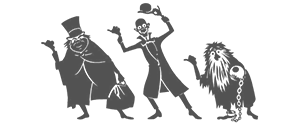
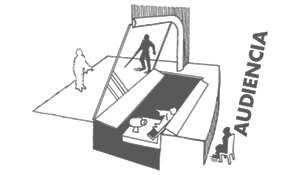
Pepper’s ghost is an illusion technique used in theater, amusement parks, museums, television, and concerts. It is named after John Henry Pepper, a scientist who popularized the effect in a famed demonstration in 1862. It has a long history, dating into the 16th century, and remains widely performed today.
Notable examples of the illusion are the ‘Girl-to-Gorilla’ trick found in old carnival sideshows and the appearance of ‘ghosts’ at the ‘Haunted Mansion’ at Disneyland. Teleprompters are a modern implementation of Pepper’s ghost. They reflect a speech or script and are commonly used for live broadcasts such as news programs. Examples of concert illusions based on Pepper’s ghost are the appearance of Tupac Shakur onstage with Dr. Dre and Snoop Dogg at the 2012 Coachella Music and Arts Festival and Michael Jackson at the 2014 Billboard Music Awards.
read more »
Posted in Art, Technology |
Leave a Comment »
February 15, 2016
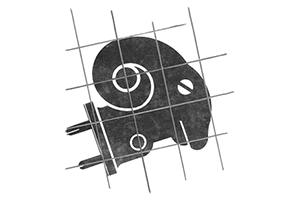

Do Androids Dream of Electric Sheep? is a science fiction novel by American writer Philip K. Dick. First published in 1968, the novel is set in a post-apocalyptic San Francisco, where Earth’s life has been greatly damaged by nuclear global war. Most animal species are endangered or extinct due to extreme radiation poisoning, so that owning an animal is now a sign of status and empathy, an attitude encouraged towards animals. The book served as the primary basis for the 1982 film ‘Blade Runner.’
The main plot follows a single day in the life of Rick Deckard, a bounty hunter hired by the San Francisco Police Department to ‘retire’ (kill) six escaped androids. A secondary plot follows John Isidore, a driver for an electric-animal repair company, who is a ‘special’ (a radioactively-damaged, intellectually slow human whose status prohibits him from emigrating). In connection with Deckard’s mission, the novel explores the issue of what it is to be human. Unlike humans, the androids are claimed to possess no sense of empathy.
read more »
Posted in Art, Language, Technology |
1 Comment »
February 9, 2016
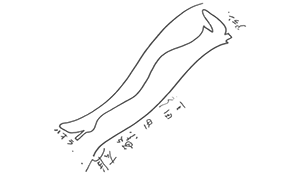

Ma is a Japanese word which can be roughly translated as ‘gap,’ ‘space,’ ‘pause,’ or ‘the space between two structural parts.’ It is best described as a consciousness of place, not in the sense of an enclosed three-dimensional entity, but rather the simultaneous awareness of form and non-form, similar to the concept of ‘negative space’ in graphic design. Ma is not something that is created by compositional elements; it is the thing that takes place in the imagination of the human who experiences these elements. Therefore, ma can be defined as experiential place understood with emphasis on interval.
In his 2001 book ‘The Art of Looking Sideways,’ graphic designer Alan Fletcher discusses the importance of exemplifying ‘space’ as a substance: ‘Cézanne painted and modelled space. Giacometti sculpted by ‘taking the fat off space.’ Mallarmé conceived poems with absences as well as words. Ralph Richardson asserted that acting lay in pauses… Isaac Stern described music as ‘that little bit between each note – silences which give the form’… The Japanese have a word (‘ma’) for this interval which gives shape to the whole. In the West we have neither word nor term. A serious omission.’
Posted in Art, Philosophy, World |
Leave a Comment »
February 8, 2016

Helmut Krone (1925 – 1996) was a pioneer of modern advertising. He spent over 30 years at the advertising agency Doyle Dane Bernbach where he was the art director for the popular 1960s campaign for the Volkswagen Beetle, which featured a large unadorned photo of the car with the tiny word ‘Lemon’ underneath it. He was also responsible for the series of ‘When you’re only No. 2, you try harder’ advertisements for Avis, and the creation of Juan Valdez, who personified Colombian coffee. His work has been collected by the Museum of Modern Art and the Smithsonian. Krone’s ‘Think Small’ advertisement for Volkswagen was voted the best campaign of all time in Advertising Age’s 1999 ‘The Century of Advertising issue.’
Krone was born in Yorkville, on the upper east side of Manhattan, which was at that time a German neighborhood. He attended Public School 77 in Queens before enrolling at the School of Industrial Art, where he hoped to become a product designer. When he was 21, he took his first step towards advertising, working with designer Robert Greenwell doing freelance advertisements for magazines. He followed naval service in World War II with postwar classes with Alexey Brodovitch and stints at ‘Esquire’ and ‘Sudler & Hennessey.’ Then, at the age of 29, he began to work for Doyle Dane Bernbach.
Posted in Art, Money |
Leave a Comment »
January 29, 2016


A Raisin in the Sun is a play by African American playwright Lorraine Hansberry that debuted on Broadway in 1959. The title comes from the poem ‘Harlem’ by Langston Hughes: ‘What happens to a dream deferred? Does it dry up like a raisin in the sun?’ The story tells a black family’s experiences in the Washington Park Subdivision of Chicago’s Woodlawn neighborhood as they attempt to ‘better’ themselves with an insurance payout from the death of the father.
Walter and Ruth Younger, their son Travis, along with Walter’s mother Lena (Mama) and sister Beneatha, live in poverty in a dilapidated two-bedroom apartment on Chicago’s south side. Walter is barely making a living as a limousine driver. Though Ruth is content with their lot, Walter is not and desperately wishes to become wealthy. His plan is to invest in a liquor store in partnership with Willy and Bobo, street-smart acquaintances of Walter’s.
read more »
Posted in Art, Language, Politics |
Leave a Comment »


 The Daily Omnivore